EV Battery Chemistry Explained: LFP vs NMC vs NCA
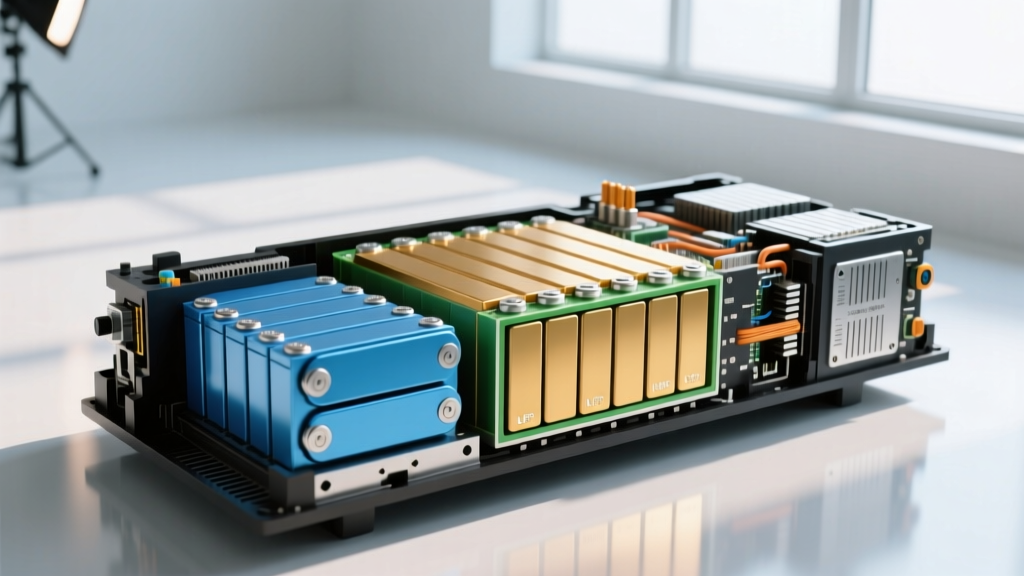
The single most consequential spec on any electric vehicle isn't horsepower or 0–60 time — it's the battery chemistry packed inside the high-voltage traction pack. In 2026, virtually every mainstream EV sold in the U.S. uses one of two lithium-ion chemistries: lithium iron phosphate (LFP) or nickel manganese cobalt / nickel cobalt aluminum (NMC/NCA). Each carries distinct trade-offs in energy density, cycle life, cold-weather behavior, and cost that directly shape real-world ownership.
kW vs kWh — the critical distinction: kW (kilowatts) measures power — how fast energy flows, such as a 250 kW DC fast-charge rate. kWh (kilowatt-hours) measures energy capacity — how much the battery holds, like an 82 kWh usable pack. Never confuse them.
| Attribute | LFP (Lithium Iron Phosphate) | NMC / NCA (Nickel-Based) |
|---|---|---|
| Energy density | ~160–180 Wh/kg (cell level) | ~230–300 Wh/kg (cell level) |
| Typical cycle life | 3,000–5,000+ cycles to 80% SoH | 1,000–2,500 cycles to 80% SoH |
| Cold-weather performance | More range loss below 32°F; slower cold charging | Better low-temp conductivity; less winter range penalty |
| Thermal stability / safety | Excellent — higher thermal runaway threshold | Good — requires more active thermal management |
| Cost per kWh (pack level) | ~$95–$115/kWh | ~$120–$150/kWh |
| Optimal daily SoC | 100% daily charging recommended | 80% daily; 100% only for trips |
| Notable 2026 vehicles | Tesla Model 3/Y RWD, Ford Mustang Mach-E Select (LFP option), BYD models | Hyundai Ioniq 5/6, Kia EV6/EV9, Tesla LR/Performance, Rivian, GM Ultium |
Which is better? There is no universal winner. LFP excels for buyers who prioritize longevity, lower cost, and daily full charges — ideal for commuters with home charging. NMC/NCA delivers more range per pound, making it the choice for long-range trims, towing, and cold-climate drivers who can't afford winter range penalties. Tesla's standard-range Models 3 and Y use CATL-supplied LFP; their Long Range variants stick with NMC for the density advantage.
How Long Do EV Batteries Actually Last?
The fear that EV batteries need replacement every few years is not supported by fleet data. Modern liquid-cooled packs routinely exceed 150,000–200,000 miles before degrading to 80% of original capacity — and many outlast the vehicles they're installed in.
Real-world degradation data from multiple sources paints a consistent picture:
Typical EV Battery Degradation Curve (Liquid-Cooled Packs, 2020–2026 Models)
- Year 1 / ~15,000 mi: 2–5% capacity loss (initial formation drop)
- Year 3 / ~45,000 mi: 5–8% total loss
- Year 5 / ~75,000 mi: 8–12% total loss
- Year 8 / ~120,000 mi: 10–15% total loss
- Year 10+ / ~150,000–200,000 mi: 15–20% total loss (approaching 80% SoH threshold)
Sources: Geotab fleet data (6,300+ EVs), Recurrent Auto battery health reports, Tesla Impact Reports.
Tesla's 2024 Impact Report stated that Model 3/Y batteries retained approximately 85% capacity at 200,000 miles. Chevrolet Bolt EV owners on fueleconomy.gov forums and Recurrent's dataset show similar trajectories for GM's earlier liquid-cooled packs. The key insight: degradation is non-linear. The steepest drop occurs in the first year or two, then the curve flattens considerably.
For context, if your EV started with an EPA-rated 310 miles of range, expect roughly 265–280 miles at the five-year mark and 250–265 miles at year eight — still entirely usable for daily driving and most road trips.
Federal Battery Warranty Requirements and What They Cover
Every EV sold in the U.S. carries a federally mandated minimum battery warranty of 8 years / 100,000 miles (whichever comes first). California Air Resources Board (CARB) states extend this to 10 years / 150,000 miles for vehicles certified to CARB standards — which includes most major automakers.
| Manufacturer | Warranty Period | Capacity Retention Threshold | Notes |
|---|---|---|---|
| Tesla (Model 3/Y RWD — LFP) | 8 yr / 100,000 mi | 70% | LR/Performance: 8 yr / 120,000 mi |
| Hyundai / Kia (E-GMP platform) | 10 yr / 100,000 mi | 70% | Among the longest coverage |
| GM (Ultium — Blazer EV, Equinox EV, Silverado EV) | 8 yr / 100,000 mi | 70% | Module-level replacement available |
| Ford (Mustang Mach-E, F-150 Lightning) | 8 yr / 100,000 mi | 70% | F-150 Lightning: 8 yr / 100,000 mi |
| Rivian (R1T / R1S) | 8 yr / 175,000 mi | 70% | Higher mileage threshold |
| BMW (i4, iX, i7) | 8 yr / 100,000 mi | 70% | Module replacement strategy |
What triggers a warranty claim? If your battery's State of Health (SoH) drops below the stated threshold — typically 70% of original capacity — within the warranty window, the manufacturer must repair or replace it at no cost. Importantly, most manufacturers now replace individual modules rather than the entire pack, which reduces downtime and cost. The warranty covers defects and abnormal degradation; it does not cover damage from collisions, flooding, or unauthorized modifications.
EV Battery Replacement Cost: What to Budget and When
Out-of-warranty battery replacement is the number-one concern among prospective EV buyers. The reality is less alarming than internet forums suggest — but the costs are real and vary enormously by vehicle and pack size.
| Vehicle (Example) | Pack Size (kWh usable) | Battery Cost (parts) | Labor + Total Estimate |
|---|---|---|---|
| Tesla Model 3 RWD (LFP) | ~57 kWh | $7,000–$9,000 | $9,000–$12,000 |
| Hyundai Ioniq 5 / Kia EV6 | ~72.6 kWh | $10,000–$14,000 | $13,000–$17,000 |
| Ford F-150 Lightning (Extended Range) | ~131 kWh | $18,000–$25,000 | $22,000–$30,000 |
| Chevrolet Bolt EV/EUV | ~65 kWh | $8,000–$11,000 | $10,000–$14,000 |
| Rivian R1T (Large Pack) | ~128 kWh | $17,000–$22,000 | $20,000–$26,000 |
When is replacement actually needed? Most EV batteries never need a full replacement during the vehicle's useful life. Data from Recurrent Auto shows that fewer than 1.5% of EVs in their dataset have required battery replacement outside of recall campaigns. The packs in 2020+ liquid-cooled vehicles are engineered to retain 70–80% capacity at 200,000 miles. If you plan to keep an EV for 10+ years and 150,000+ miles, budgeting for a potential module repair (often $2,000–$5,000 for a single module) is more realistic than planning a full pack swap.
For buyers of older, used EVs — particularly those approaching 100,000 miles — a pre-purchase battery health check (see the SoH section below) is the single most important inspection step.
Factors That Accelerate (or Slow) Battery Degradation
Battery chemistry sets the ceiling for longevity, but owner behavior determines where you land on that spectrum. The five most impactful factors, ranked by effect size:
Battery Longevity Checklist
- Avoid sustained high State of Charge (NMC/NCA): For nickel-based packs, daily charging to 80% rather than 100% can extend cycle life by 30–50%. Set your charge limit in the vehicle app. LFP packs are the exception — charge to 100% regularly for accurate BMS calibration.
- Minimize DC fast charging when possible: Frequent use of 150+ kW DC fast chargers generates sustained heat. Studies from Geotab show EVs that fast-charge more than 3x/week degrade roughly 1–2% faster over 4 years than those primarily using Level 2. Road-trip fast charging is fine; daily fast charging is the concern.
- Manage extreme temperatures: Battery degradation accelerates above 95°F ambient and below 15°F. Garage parking and preconditioning (warming the battery while plugged in before departure) significantly reduce thermal stress. Heat pumps, now standard on most 2025+ EVs, help manage cabin heating without over-taxing the pack in cold weather.
- Avoid deep discharges: Letting the pack regularly drop below 10% SoC stresses the cells. Plug in when you hit 15–20% for daily driving.
- Use preconditioning for DC fast charging: Navigating to a Supercharger or Electrify America station with the car's built-in nav triggers battery preconditioning — warming the pack to optimal temperature for faster, gentler charging. This matters most in cold weather, where an un-preconditioned battery may accept only 30–50 kW initially instead of its 250 kW peak.
How to Check Your EV Battery's State of Health (SoH)
State of Health (SoH) is the percentage of original capacity your battery currently retains. A new EV has 100% SoH; a pack at 85% SoH holds 85% of its original kWh. Monitoring SoH is essential for used-EV buyers and long-term owners.
Methods for Checking SoH
1. In-vehicle diagnostics: Some manufacturers (notably Hyundai/Kia, BMW, and Mercedes) expose a battery health percentage in the service menu or companion app. Tesla does not display SoH directly, but third-party tools can read it via the OBD-II port.
2. OBD-II dongle + app: Devices like the OBDLink MX+ paired with apps such as EV Health, Scan My Tesla, or LeafSpy (for Nissan) can pull SoH data directly from the Battery Management System (BMS). This is the most reliable consumer-accessible method and costs roughly $50–$120 for the hardware.
3. Dealer diagnostic report: Any authorized service center can run a full battery health report, typically during scheduled maintenance. Request this before purchasing a used EV — it's often free or under $100.
4. Recurrent Auto (free): The Recurrent platform connects to your vehicle's telematics and provides ongoing SoH tracking, benchmarked against similar vehicles in their fleet database.
5. Real-world range test: Charge to 100%, drive a consistent route at moderate speed, and compare actual miles to the EPA sticker. A 310-mile EPA vehicle delivering only 230 miles at 100% SoC in mild weather likely has significant degradation — though this method is imprecise because temperature, terrain, and driving style all affect results.
Emerging Battery Technologies: Solid-State and Silicon Anodes
Next-generation battery technologies promise transformative improvements — but realistic timelines matter more than press-release hype.
Solid-state batteries replace the liquid electrolyte with a solid ceramic, glass, or polymer separator. The theoretical benefits are substantial: 40–50% higher energy density (enabling 400+ mile packs at lower weight), faster charging (potential for 10–80% in under 10 minutes), and improved safety due to the elimination of flammable liquid electrolyte. Toyota has announced a solid-state battery targeting 2027–2028 production in limited volumes, initially in hybrid applications. Samsung SDI and QuantumScape are targeting 2028–2030 for broader EV deployment. As of early 2026, no mass-market EV uses a solid-state pack. Treat any vehicle claiming "solid-state" availability before 2028 with skepticism.
Silicon anode technology replaces or supplements the graphite anode with silicon, which can store roughly 10x more lithium ions per gram. Companies like Sila Nanotechnologies (partnered with Mercedes-Benz and Panasonic) and Group14 (backed by Porsche) are bringing silicon-dominant anodes to production in 2025–2027. The Mercedes G-Class electric variant is expected to be among the first to use Sila's silicon anode cells. Expect 15–25% energy density improvement in early commercial implementations — meaningful but incremental, not revolutionary.
Sodium-ion batteries are emerging as a low-cost alternative for entry-level EVs, using abundant sodium instead of lithium. CATL has begun production for Chinese-market vehicles, and the technology may reach U.S. models by 2028–2029. Energy density is lower than LFP, so sodium-ion is best suited for city cars and short-range applications.
The practical takeaway: today's LFP and NMC packs are mature, well-understood, and backed by extensive warranty coverage. Waiting for solid-state means waiting years for limited availability at premium prices. For buyers shopping in 2026, current-generation chemistry is the rational choice.
EV Battery FAQ
How long do EV batteries last in years and miles?
Modern liquid-cooled EV batteries typically last 150,000–200,000 miles (10–15 years) before degrading to 80% of original capacity. Fleet data from Geotab and Recurrent Auto confirms that fewer than 2% of EVs require battery replacement during normal ownership. Most batteries outlast the vehicles they power.
How much does an EV battery cost to replace?
Out-of-warranty replacement costs range from approximately $9,000 for a compact pack (Tesla Model 3 RWD, ~57 kWh) to $22,000–$30,000 for large truck packs (F-150 Lightning Extended Range, ~131 kWh). However, full replacement is rarely needed — module-level repairs cost $2,000–$5,000, and most packs remain functional well past 150,000 miles.
What does the EV battery warranty cover?
Federal law mandates a minimum 8-year/100,000-mile battery warranty (10 years/150,000 miles in CARB states). The warranty covers capacity loss below a threshold — typically 70% of original capacity — due to defects or abnormal degradation. It does not cover collision damage, flood damage, or unauthorized modifications. Check your specific manufacturer's terms, as some (Hyundai, Kia, Rivian) exceed the federal minimum.
How do I maximize my EV battery's lifespan?
For NMC/NCA packs: charge to 80% daily, avoid frequent DC fast charging (more than 3x/week), precondition in cold weather, and avoid letting the battery sit at 100% SoC for extended periods. For LFP packs: charge to 100% regularly for BMS calibration. For all chemistries: avoid deep discharges below 10%, park in shade or a garage when possible, and use the vehicle's built-in navigation to trigger preconditioning before DC fast charging.
LFP vs NMC — which battery chemistry is better for me?
Choose LFP if you want maximum cycle life (3,000–5,000+ cycles), lower cost, and plan to charge at home daily to 100%. Choose NMC/NCA if you need maximum range per charge, frequently drive in cold weather, or need towing capability. LFP is the commuter's battery; NMC is the road-tripper's battery. Neither is objectively superior — the right choice depends on your driving pattern and climate.
Can I check my EV battery health myself?
Yes. The most reliable consumer method is an OBD-II dongle (such as OBDLink MX+, ~$60–$120) paired with a compatible app that reads State of Health directly from the Battery Management System. Alternatively, request a battery health report from your dealer during service, or use a platform like Recurrent Auto for ongoing tracking.
Will solid-state batteries make current EVs obsolete?
Not in the near term. Solid-state batteries are expected to enter limited production in 2027–2028, initially in premium vehicles at high cost. Mass-market adoption at competitive pricing is unlikely before 2030–2032. Current LFP and NMC packs offer proven reliability, strong warranty coverage, and declining costs. Buying an EV today does not mean missing a transformative technology shift — it means benefiting from mature, well-supported battery systems.