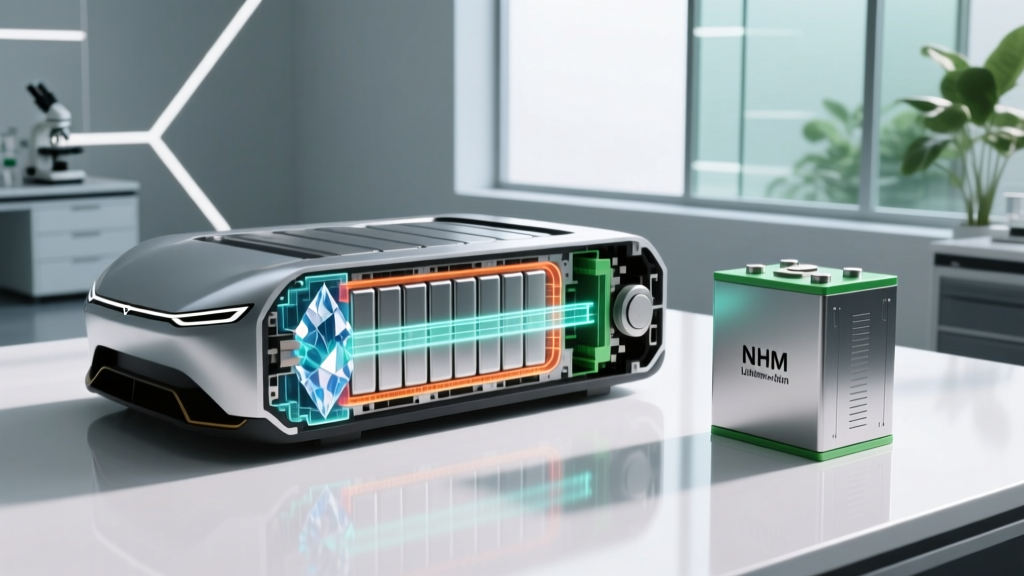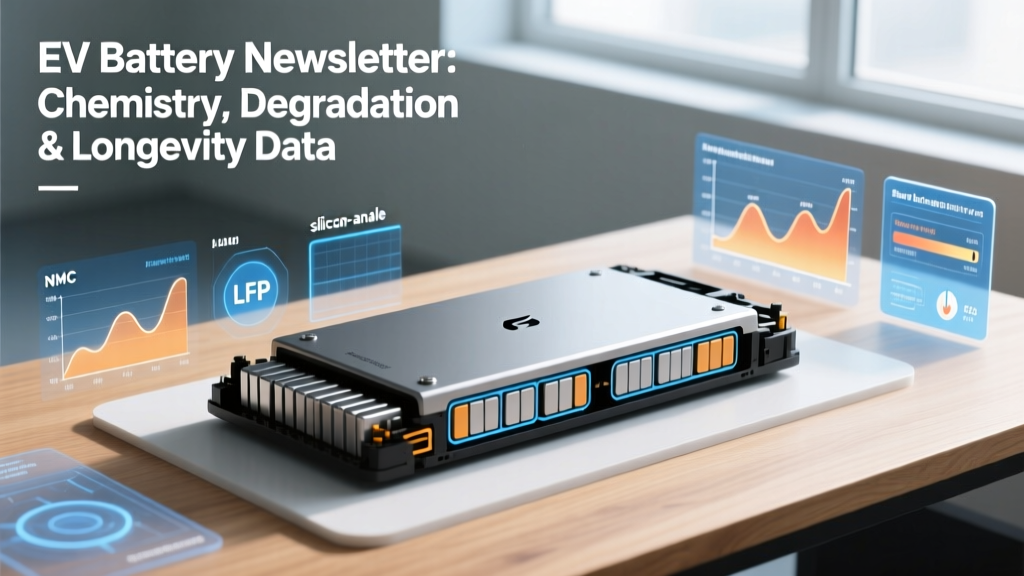
If you've been following the EV space long enough, you've probably seen a flood of conflicting claims about battery life, replacement costs, and which chemistry is "best." Think of this guide as the battery newsletter you actually need — a data-driven breakdown of what happens inside your EV's high-voltage traction pack over 5, 10, and 15 years of real ownership. We'll cover LFP vs. NMC/NCA trade-offs, actual degradation curves, federal warranty mandates, replacement economics, and the daily habits that meaningfully extend battery life.
One important distinction up front: when we say "EV battery" here, we mean the high-voltage traction battery — the 50–120 kWh pack that propels the vehicle. Every EV also has a standard 12V auxiliary battery that powers lights, infotainment, and computers, and that one follows conventional replacement cycles (typically 3–5 years, $150–$300). This guide focuses entirely on the traction pack.
LFP vs. NMC/NCA: Which Chemistry Powers Your EV?
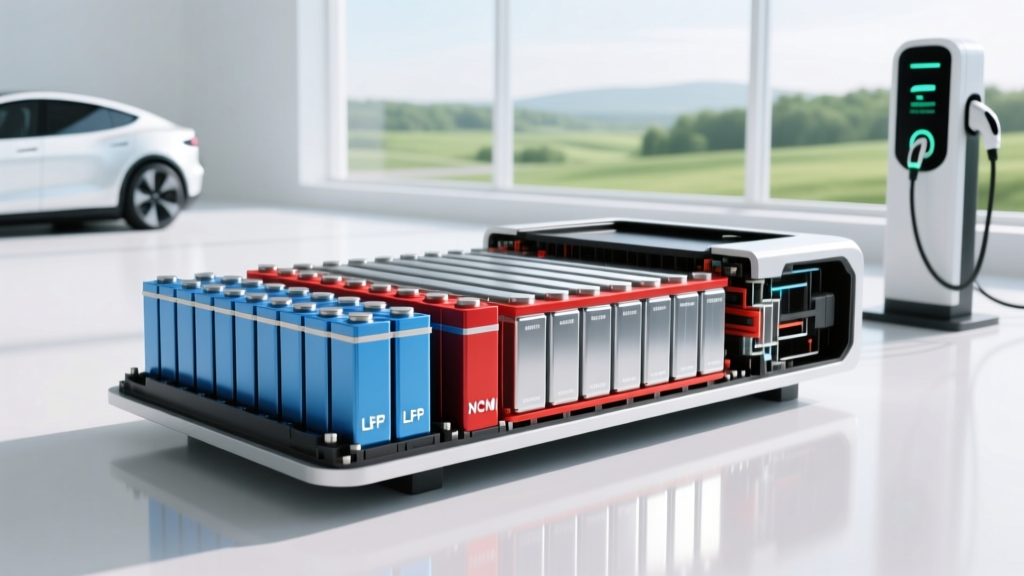
The two dominant lithium-ion chemistries in 2026 EVs are LFP (lithium iron phosphate, LiFePO₄) and NMC/NCA (nickel manganese cobalt / nickel cobalt aluminum). Each has distinct physics-driven trade-offs that affect range, charging behavior, longevity, and cost. Understanding these helps you choose the right pack for your driving pattern.
| Attribute | LFP (Lithium Iron Phosphate) | NMC / NCA (Nickel-Based) |
|---|---|---|
| Energy Density | Lower (~150–180 Wh/kg cell-level) | Higher (~220–300 Wh/kg cell-level) |
| Typical Range per Pack Size | Less range for same kWh; heavier pack | More range per kWh; lighter pack |
| Cycle Life | 3,000–5,000+ full cycles | 1,000–2,000 full cycles |
| Calendar Aging | Slower; retains capacity well at rest | Faster at high SoC; prefers ~50% storage |
| Optimal Daily SoC | 100% daily charging is fine (recommended) | 80% daily; 100% for trips only |
| Cold-Weather Performance | Weaker below 32°F; slower charge acceptance | Better low-temp performance with thermal mgmt |
| DC Fast-Charge Tolerance | Moderate peak kW; prefers preconditioning | Higher peak kW (250–350 kW on latest packs) |
| Cost per kWh | Lower ($90–$115/kWh pack-level, 2026 est.) | Higher ($120–$150/kWh pack-level, 2026 est.) |
| Critical Mineral Exposure | No cobalt or nickel; simpler supply chain | Requires cobalt, nickel; sourcing complexity |
| Common 2026 Applications | Tesla Model 3/Y RWD, Ford Mustang Mach-E Select (LFP option), BYD, standard-range models | Tesla Long Range/Performance, Hyundai Ioniq 5/6, Rivian, most long-range/AWD models |
Which Is Better — LFP or NMC?
Neither is universally superior. LFP wins for daily commuters and high-mileage drivers who can charge to 100% every night without degradation anxiety, need maximum cycle life, and don't regularly face sub-freezing mornings. NMC/NCA wins for long-range and performance applications where energy density matters — you need a lighter, more compact pack to hit 300+ EPA miles or to support towing and AWD powertrains. If you live in Minnesota and need 320 miles of range, NMC with active thermal management is still the pragmatic choice in 2026.
How Long Do EV Batteries Actually Last?
The short answer: most modern EV traction batteries outlast the vehicles they're installed in. Data from fleet operators, manufacturer warranty claims, and independent studies consistently show that liquid-cooled packs from major OEMs degrade far more slowly than early EV skeptics predicted.
Typical Degradation Curve — Real-World Data Points
Based on aggregated fleet data and owner-reported measurements (sources include Recurrent Auto and Tesla Impact Reports):
- Year 1 / 15,000 mi: ~2–4% capacity loss (initial formation period)
- Year 3 / 45,000 mi: ~5–8% total loss; degradation curve flattens significantly
- Year 5 / 75,000 mi: ~7–10% total loss for NMC; ~5–7% for LFP
- Year 8 / 120,000 mi: ~10–14% total loss (NMC); ~7–10% (LFP)
- Year 10 / 150,000 mi: ~12–18% total loss (NMC); ~9–12% (LFP)
The degradation curve is non-linear: the steepest drop happens in the first 12–18 months, then the rate slows dramatically. A 2023 Tesla Model 3 with an NMC pack showing 92% State of Health (SoH) at 40,000 miles is typical — and that pack should still hold ~82–85% at 150,000 miles.
For context, a pack retaining 80% of its original capacity still delivers substantial range. A 75 kWh NMC pack that started at 310 EPA miles would still provide ~250 real-world miles at 80% SoH — more than adequate for 90% of daily driving needs.
What Does the Battery Warranty Cover?
Federal law mandates that EV battery warranties cover a minimum of 8 years / 100,000 miles (in California Air Resources Board states, it's 10 years / 150,000 miles). Most manufacturers exceed the federal minimum. Here's what that warranty actually guarantees:
| Manufacturer / Model | Warranty Period | Mileage Cap | Capacity Retention Threshold | Notes |
|---|---|---|---|---|
| Tesla Model 3/Y (LFP, RWD) | 8 years | 100,000 mi | 70% | Standard-range LFP pack |
| Tesla Model 3/Y (Long Range, NMC) | 8 years | 120,000 mi | 70% | Higher mileage cap on LR |
| Hyundai Ioniq 5 / Ioniq 6 | 10 years | 100,000 mi | 70% | Among the longest terms |
| Ford Mustang Mach-E | 8 years | 100,000 mi | 70% | Covers battery + hybrid/EV components |
| Rivian R1T / R1S | 8 years | 175,000 mi | 70% | Highest mileage cap in segment |
| Chevrolet Equinox EV / Blazer EV | 8 years | 100,000 mi | 60–70% | Varies by model year; confirm at purchase |
Key warranty details buyers miss:
- The threshold (usually 70%) means the warranty only triggers if your pack drops below that level within the term. Gradual degradation from 100% to 72% over 8 years is considered normal and is not a warranty claim.
- Warranties cover defects and abnormal degradation, not damage from accidents, flooding, or unauthorized modifications.
- Some manufacturers offer prorated replacement — you may pay a portion based on the pack's age and mileage at the time of failure.
- Warranty is tied to the vehicle, not the owner. A certified pre-owned EV with a transferable battery warranty retains that coverage.
EV Battery Replacement Cost: What Owners Actually Pay
This is the question that generates the most anxiety — and the most misinformation. Let's anchor this in real numbers.
| Vehicle | Pack Size (kWh) | Chemistry | New Pack Cost (Parts + Labor) | Remanufactured / Refurbished Option |
|---|---|---|---|---|
| Tesla Model 3 RWD | ~60 kWh | LFP | $10,000–$14,000 | $7,000–$9,000 |
| Tesla Model Y Long Range | ~75 kWh | NMC | $13,000–$17,000 | $9,000–$12,000 |
| Hyundai Ioniq 5 | 77.4 kWh | NMC | $14,000–$18,000 | Available via Hyundai program |
| Ford Mustang Mach-E Ext. Range | 91 kWh | NMC | $16,000–$22,000 | Limited availability |
| Rivian R1T (Large Pack) | ~128 kWh | NMC | $22,000–$28,000 | Rivian service program |
| Chevrolet Bolt EV (2022+) | 65 kWh | NMC | $11,000–$14,000 | $8,000–$10,000 |
When is replacement actually needed? In practice, full pack replacement due to degradation alone is extremely rare within the first 10–12 years. The scenarios that trigger replacement are:
- Manufacturing defect — cell imbalance or BMS failure (covered by warranty).
- Physical damage — collision, ground strike, or water intrusion (covered by insurance).
- Extreme degradation — below warranty threshold within the term (covered by warranty).
- Out-of-warranty age — 12–15+ years, where the owner chooses to replace rather than sell or scrap. By this point, pack costs will likely be substantially lower than today's figures.
Pack-level pricing has declined roughly 10–15% per year over the past five years. Industry analysts project sub-$80/kWh pack costs by 2028–2029, which would bring a 75 kWh replacement down to the $6,000–$8,000 range. The fear of a $25,000 surprise bill on a 5-year-old EV is not supported by current data.
Factors That Accelerate (or Slow) Battery Degradation
Battery chemistry sets the ceiling, but your daily habits determine where you land on the curve. Here are the variables with the strongest evidence behind them:
Habits That Accelerate Degradation
- Frequent DC fast charging without preconditioning: Repeatedly hitting a 150–350 kW charger with a cold battery stresses cells. Always enable navigation-based preconditioning (Tesla, Hyundai, Ford all support this) to warm the pack before arrival.
- Sustained 100% SoC on NMC packs: Sitting at full charge for days accelerates calendar aging. NMC owners should set daily charge limits to 80% and reserve 100% for road trips.
- Deep discharge cycles: Regularly draining below 10% stresses cell chemistry. Try to keep the floor around 15–20%.
- Extreme heat exposure: Parking in 110°F+ ambient heat without thermal management active (e.g., unplugged in Phoenix summer) accelerates degradation. Plug in when possible so the car can run its cooling loop.
- High-mileage fast-charge-only patterns: Fleet data shows vehicles that rely exclusively on DCFC (no Level 2 home charging) degrade 2–4% more over 100,000 miles than those primarily charging at home.
Habits That Maximize Longevity
- LFP owners: Charge to 100% regularly — Tesla and BYD both recommend this. LFP cells need full-charge calibration for accurate SoC readings, and the chemistry tolerates it well.
- NMC/NCA owners: Set daily charge limit to 80%. Charge to 100% only when departing on a trip, and try to time it so the car doesn't sit at full charge overnight.
- Use Level 2 home charging as your primary routine. Slow, overnight charging at 7–11 kW generates far less thermal stress than DCFC.
- Enable preconditioning for both cabin and battery before fast-charging stops and before cold-weather departures.
- Avoid leaving the car at very low SoC for extended periods. If storing for weeks, set to ~50% and leave plugged in with a charge limit.
- Keep software updated. OEM battery management system (BMS) updates often refine thermal strategies and charge curves.
How to Check Your EV Battery's State of Health (SoH)
State of Health (SoH) is the percentage of original capacity your pack can still hold. A new pack is 100% SoH; a pack that held 75 kWh when new and now holds 67.5 kWh is at 90% SoH. Here's how to monitor it:
In-Vehicle and App-Based Methods
- Tesla: The mobile app's "Battery Health" section (added in 2023–2024 updates) shows a degradation percentage. Third-party tools like TeslaFi or Stats log detailed SoH data over time by reading the vehicle's API.
- Hyundai / Kia: The infotainment system's EV diagnostics menu displays battery condition. The Carista OBD-II adapter with EV-specific software can pull detailed cell-voltage data.
- Ford: The FordPass app provides battery state information. Dealership service can run a full pack-health diagnostic.
- Universal OBD-II tools: Devices like the OBDLink MX+ paired with apps such as EVNotify or LeafSpy (Nissan-specific) can read SoH, cell voltages, and pack temperature from most EVs.
When to Get a Professional Diagnostic
If you notice a sudden range drop (more than 5% in a short period), inconsistent SoC readings, or frequent fast-charge throttling that's new for your vehicle, schedule a dealer diagnostic. They can identify individual weak cells, BMS calibration issues, or thermal management faults that may be warranty-covered.
SoH for Used-EV Buyers
If you're evaluating a pre-owned EV, request a battery health report from the seller or dealer. Services like Recurrent provide independent SoH assessments. A 3-year-old EV with 40,000 miles showing 91–94% SoH is typical and healthy. Anything below 85% at that age warrants investigation.
Emerging Battery Tech: Solid-State, Silicon Anodes, and What's Real
The battery lab pipeline is packed with promising technology. Here's a grounded assessment of what's on the horizon — and what's still years away from your driveway.
Solid-State Batteries
Solid-state cells replace the liquid electrolyte with a solid material (ceramic, sulfide, or polymer), promising higher energy density (~400+ Wh/kg cell-level), faster charging, and improved safety (no flammable electrolyte). Toyota has announced a solid-state EV targeted for 2027–2028 production, initially in limited volumes for the Japanese market. Samsung SDI and QuantumScape are in pilot production phases. Realistic timeline for mainstream US-market availability: 2029–2032. Early deployments will likely be in premium, low-volume models before scaling to mainstream pricing.
Silicon-Dominant Anodes
Replacing graphite anodes with silicon (or silicon-carbon composites) can boost energy density by 20–40%. Companies like Sila Nanotechnologies and Group14 are already shipping silicon-anode materials to cell manufacturers. You'll see this tech appearing incrementally in 2026–2028 model-year vehicles as a cell-level improvement rather than a branded "new battery type." Expect modest range bumps (10–20 miles per pack size) rather than transformative leaps.
Sodium-Ion Batteries
CATL and BYD have begun producing sodium-ion cells for smaller, lower-cost EVs in China. Sodium-ion offers lower energy density than LFP but dramatically lower material costs and better cold performance. US-market relevance: 2028+ at the earliest, likely in entry-level models or as grid-storage crossover tech.
None of these technologies should delay a 2026 EV purchase. Current LFP and NMC packs already deliver 250,000+ mile usable lifespans with proper care, and the next-gen improvements will arrive incrementally rather than as a single leap.
Frequently Asked Questions
How long do EV batteries last in years and miles?
Based on fleet data and manufacturer claims, most modern liquid-cooled EV traction batteries retain 80–90% of original capacity at 150,000 miles / 10 years. Many will exceed 200,000 miles before dropping below the 70% warranty threshold. LFP packs generally outlast NMC packs in cycle life, though both chemistries are proven to outlive the typical vehicle ownership period.
How much does it cost to replace an EV battery?
Full traction battery replacement costs range from approximately $10,000 to $28,000 depending on pack size and chemistry (see our cost table above). Remanufactured packs can reduce this by 25–40%. However, the vast majority of EVs never need an out-of-warranty battery replacement due to degradation alone. Most replacements are due to collision damage (insurance-covered) or manufacturing defects (warranty-covered).
What does the EV battery warranty actually cover?
Federal law mandates 8 years / 100,000 miles minimum coverage (10 years / 150,000 miles in CARB states). The warranty covers capacity loss below a specified threshold (typically 70% of original capacity), manufacturing defects, and BMS failures. It does not cover damage from accidents, misuse, or unauthorized modifications. Normal gradual degradation above the threshold is expected and not warrantable.
How do I check and maximize my EV battery health?
Monitor SoH through your vehicle's app, infotainment diagnostics, or an OBD-II reader with EV-compatible software. To maximize longevity: use Level 2 home charging as your primary routine, avoid sustained 100% SoC on NMC packs (LFP is fine at 100%), enable battery preconditioning before DC fast charging, avoid deep discharges below 15%, and keep your vehicle plugged in during extreme heat so the thermal management system can operate.
LFP vs. NMC — which battery chemistry should I choose?
Choose LFP if you want maximum cycle life, can charge at home nightly to 100%, drive mostly in moderate climates, and prioritize lower cost over maximum range. Choose NMC/NCA if you need 300+ miles of EPA range, live in a cold climate where low-temperature charge acceptance matters, tow frequently, or want the lightest possible pack for performance handling. Both chemistries are proven and well-supported in 2026; neither is a wrong choice for the right use case.
Will solid-state batteries make my current EV obsolete?
Not for many years. Solid-state EVs are expected in limited premium models starting around 2028–2030, with mainstream availability likely in the 2030–2033 timeframe. Current LFP and NMC packs already deliver 200,000+ mile lifespans. The technology improvements in your current EV's battery will come through software-optimized BMS updates and incremental cell improvements, not a generational leap that invalidates today's vehicles.
Sources: EPA fuel economy data via fueleconomy.gov; battery degradation research from Recurrent Auto; federal warranty requirements per EPA Green Vehicles; manufacturer warranty specifications from Tesla, Hyundai, Ford, and Rivian official documentation.