Why Your EV Battery Will Likely Outlast the Car
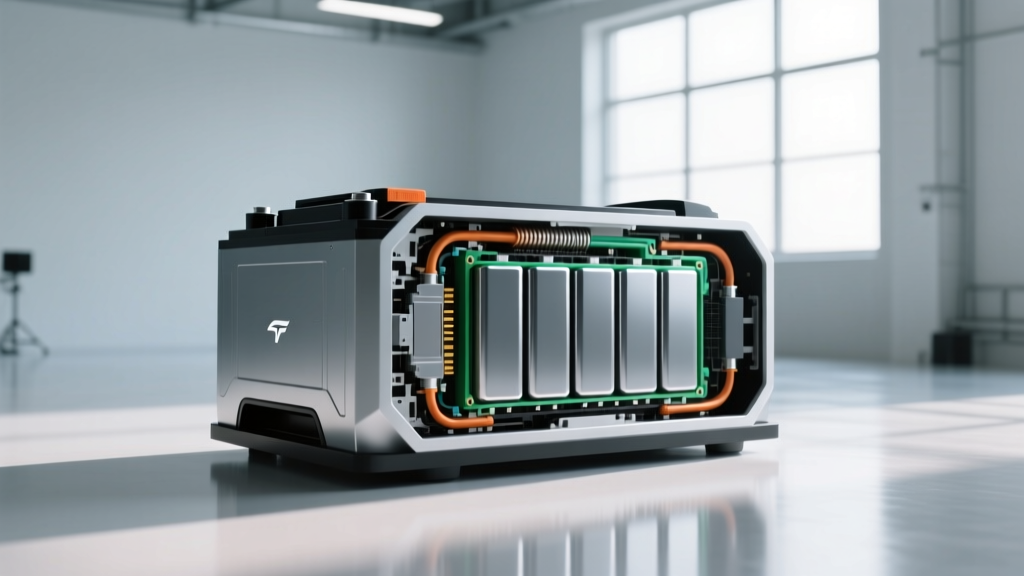
The single biggest concern among prospective EV buyers remains the high-voltage traction battery — what it costs, how long it lasts, and whether it will need replacing. Whether you're cross-shopping a Tesla Model Y with an LFP pack, evaluating a Hyundai Ioniq 5 with its NMC chemistry, or simply trying to understand why a search for a replacement battery for any EV (even a compact e-bike battery like a Rad Bikes battery) yields such a wide range of prices, the underlying science and economics follow predictable patterns.
This guide breaks down everything you need to know about modern EV battery technology in 2026: the chemistry trade-offs that determine your real-world range, the degradation data that proves most packs outlive the vehicles they power, the warranty protections that back them up, and the emerging technologies that will reshape the next generation of electric vehicles.
LFP vs NMC/NCA: The Chemistry Decision That Shapes Your EV
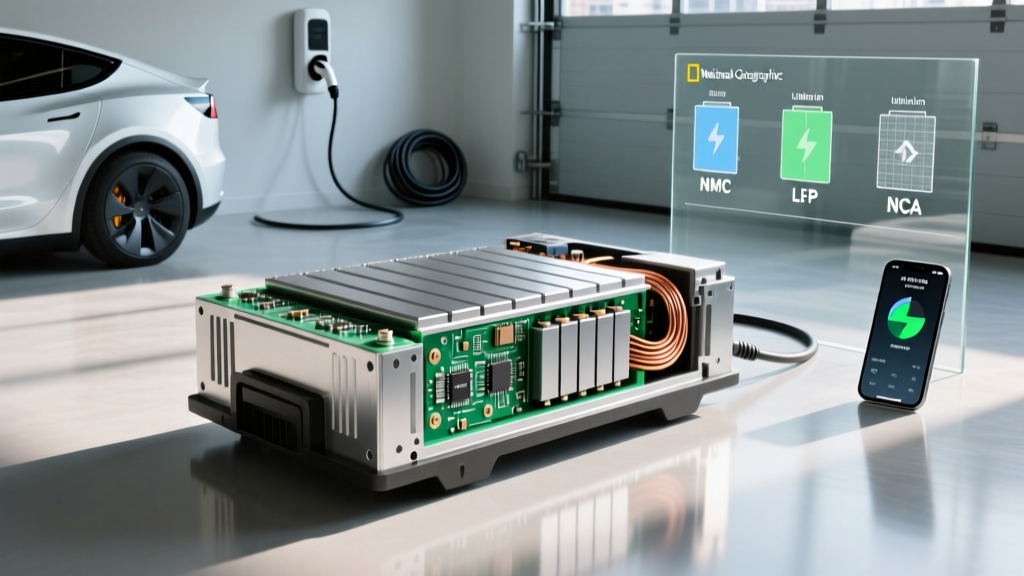
Not all lithium-ion batteries are created equal. The cathode chemistry — the specific combination of metals and compounds on the positive electrode — determines your battery's energy density, cycle life, thermal stability, cold-weather performance, and cost. In 2026, two dominant chemistries power the vast majority of EVs sold in the United States:
- LFP (Lithium Iron Phosphate): Used in Tesla Model 3/Y Standard Range, Ford Mustang Mach-E Select, and many BYD models imported globally. Contains no cobalt or nickel.
- NMC (Nickel Manganese Cobalt) / NCA (Nickel Cobalt Aluminum): Found in Tesla Long Range/Performance variants, Hyundai Ioniq 5/6, Kia EV6/EV9, Rivian R1T/R1S, and most premium/long-range EVs.
| Attribute | LFP (Lithium Iron Phosphate) | NMC/NCA (Nickel-based) |
|---|---|---|
| Energy Density | 160–180 Wh/kg (lower) | 220–300 Wh/kg (higher) |
| Typical Cycle Life | 3,000–5,000+ cycles to 80% SoH | 1,500–2,500 cycles to 80% SoH |
| Cold-Weather Performance | Reduced; slower charging below 32°F without preconditioning | Better low-temp performance; still loses 15–30% range in deep cold |
| Thermal Stability | Excellent; higher thermal runaway threshold | Good but requires more robust thermal management |
| Recommended Daily SoC | 100% daily charging is fine (no upper-buffer concern) | 80% daily recommended; 100% for road trips only |
| Cost per kWh (pack-level) | $80–$110 (2026 avg) | $110–$150 (2026 avg) |
| Cobalt/Nickel Content | None (simpler supply chain) | Contains both (subject to critical-mineral sourcing rules) |
| Best For | Standard-range daily drivers, fleet/high-mileage, budget-conscious buyers | Long-range, performance, towing, cold-climate drivers |
The practical takeaway: LFP is the durability and cost champion — you can charge it to 100% every night without accelerated degradation, and it will typically outlast an NMC pack by a significant margin. NMC/NCA is the range and performance champion — it packs more energy into less weight and volume, enabling 300+ mile EPA ranges in smaller vehicles, but requires more careful charging habits for maximum longevity.
Real-World Degradation: What the Data Actually Shows
EV battery degradation follows a predictable curve: a steeper initial drop in the first 1–2 years (typically 2–5%), followed by a long, slow linear decline. Most modern EV batteries are engineered to retain 70–80% of their original capacity after 8 years or 100,000+ miles. Here's what the real-world data shows:
Typical Degradation Curve (NMC, liquid-cooled pack, 2020–2026 models):
- Year 1 / 15,000 miles: ~3–5% capacity loss (initial formation loss)
- Year 3 / 45,000 miles: ~6–8% total loss
- Year 5 / 75,000 miles: ~8–10% total loss
- Year 8 / 120,000 miles: ~10–15% total loss (85–90% SoH)
- Year 10 / 150,000 miles: ~15–20% total loss (80–85% SoH)
Source: Recurrent Auto battery degradation study, analyzing data from 15,000+ EVs across multiple model years.
LFP packs degrade even more slowly. Tesla's own Impact Report and fleet data from high-mileage Model 3 Standard Range vehicles (LFP) show many retaining 90%+ SoH after 100,000 miles. The chemistry's inherent stability, combined with the ability to regularly charge to 100% (which helps with cell balancing), contributes to this superior longevity.
Critical context: A battery at 80% SoH is not "dead." A 300-mile EPA-range vehicle with 80% SoH still delivers ~240 miles of range — more than sufficient for 95% of daily driving needs. Most EV batteries will never need replacement during the typical ownership lifecycle.
EV Battery Warranty Terms: What's Actually Covered
Federal law mandates a minimum 8-year/100,000-mile warranty on EV battery packs (10 years/150,000 miles in CARB states like California, New York, and Massachusetts). Most manufacturers exceed this baseline. Here's how major 2026-model warranties compare:
| Manufacturer / Model | Warranty Term | Capacity Retention Threshold | Chemistry |
|---|---|---|---|
| Tesla Model 3/Y (Standard Range, LFP) | 8 yr / 100,000 mi | 70% minimum | LFP |
| Tesla Model 3/Y (Long Range, NMC) | 8 yr / 120,000 mi | 70% minimum | NMC/NCA |
| Hyundai Ioniq 5 / Kia EV6 | 10 yr / 100,000 mi | 70% minimum | NMC |
| Ford Mustang Mach-E | 8 yr / 100,000 mi | 70% minimum | NMC (Extended Range) / LFP (Select) |
| Rivian R1T / R1S | 8 yr / 175,000 mi | 70% minimum | NMC (Large/Max Pack) |
| Chevrolet Equinox EV / Blazer EV | 8 yr / 100,000 mi | 60% minimum (notable lower threshold) | NMC (Ultium) |
| BMW i4 / iX | 8 yr / 100,000 mi | 70% minimum | NMC |
What the warranty covers: Battery capacity loss below the stated threshold (typically 70% of original capacity), manufacturing defects, and cell/module failures. If your pack drops below the threshold within the warranty period, the manufacturer will repair or replace it — either with a new or refurbished pack — at no cost to you.
What it doesn't cover: Damage from accidents, flooding, improper modifications, or using non-OEM charging equipment that causes damage. Normal degradation above the threshold is expected behavior and not warrantable. Check your specific owner's manual for full terms, as IRS §30D tax credit eligibility for replacement batteries may have separate sourcing requirements.
EV Battery Replacement Cost: The Numbers Without the Fear
The headline replacement cost for an EV battery pack can look alarming — but context matters enormously. The vast majority of EV batteries never need replacement. When they do, costs have been declining steadily as pack-level prices drop and the used/refurbished market grows.
| Vehicle / Battery Size | Battery Capacity (kWh) | Estimated Replacement Cost (Parts + Labor) | Typical Replacement Trigger |
|---|---|---|---|
| Tesla Model 3 Standard Range (LFP) | 60 kWh (usable) | $8,000–$12,000 | Rare before 200,000+ mi |
| Tesla Model Y Long Range (NMC) | 75 kWh (usable) | $12,000–$16,000 | Rare before 150,000+ mi |
| Hyundai Ioniq 5 (NMC) | 77.4 kWh (usable) | $13,000–$18,000 | Covered by 10-yr warranty in most cases |
| Ford F-150 Lightning (Extended Range) | 131 kWh (usable) | $20,000–$28,000 | Very rare; large pack degrades slowly |
| Chevrolet Bolt EV/EUV (older models) | 65 kWh (usable) | $9,000–$14,000 | Post-recall replacement packs available |
| Rivian R1T (Large Pack) | 128 kWh (usable) | $20,000–$25,000 | Covered to 175,000 mi under warranty |
Key context on cost:
- Pack-level battery prices have fallen from over $1,000/kWh in 2010 to roughly $100–$140/kWh in 2026, per BloombergNEF annual surveys.
- Module-level replacement (replacing individual faulty modules rather than the entire pack) is increasingly available and can cost $2,000–$6,000 depending on the vehicle.
- Refurbished and remanufactured packs are becoming available for older models at 30–50% below new-pack pricing.
- For comparison, a gasoline vehicle's engine and transmission replacement can cost $5,000–$15,000+ — and those failures are statistically more common than EV battery failures within the first 150,000 miles.
Factors That Accelerate (or Preserve) Battery Health
Battery degradation is not purely a function of time — how you use and charge your EV has a measurable impact on long-term State of Health (SoH). Here are the evidence-based factors, ranked by impact:
Battery Care Best Practices
- Avoid sustained high SoC (NMC/NCA only): For NMC packs, set your daily charge limit to 80%. Charging to 100% occasionally for road trips is fine, but don't let the car sit at 100% for extended periods. LFP packs can and should be charged to 100% regularly for cell balancing.
- Minimize DC fast charging frequency: Occasional DC fast charging (1–2 times per week) has minimal impact. Daily DC fast charging at 150+ kW can add 1–3% additional degradation per year compared to Level 2 home charging. The heat generated during high-rate charging is the primary stressor.
- Precondition before fast charging: Always use your EV's navigation-based battery preconditioning when heading to a DC fast charger. A cold battery charging at high rates experiences more stress and charges more slowly. Preconditioning warms the pack to optimal temperature (typically 95–104°F / 35–40°C).
- Avoid extreme SoC in extreme heat: Don't leave your EV sitting at 100% SoC in 100°F+ ambient heat for days. If parking in extreme heat, aim for 50–60% SoC. Most EVs have thermal management that activates even when parked, but this consumes energy and still stresses the pack.
- Use Level 2 for daily charging: A home Level 2 charger (7–11.5 kW / 240V) is the ideal daily charging method. It's fast enough to replenish any daily driving, generates minimal heat in the pack, and costs significantly less than public DC fast charging.
- Don't baby it excessively: Modern battery management systems (BMS) are sophisticated. They maintain buffer zones (typically 3–5% at the top and bottom of the pack that you never access), manage cell balancing, and control thermal conditions. Drive your EV normally — the BMS is designed to protect the pack under real-world use.
What about small-pack EVs and e-bikes?
The same chemistry and care principles apply to smaller electric vehicle batteries, including e-bike packs. If you've ever searched for a Rad Bikes battery replacement or investigated the lifespan of a compact lithium-ion pack, the fundamentals are identical: LFP cells last longer than NMC, extreme heat and full-charge storage accelerate degradation, and proper charging habits extend life. The primary difference is scale — a 60 kWh car battery costs $10,000+ to replace, while a 0.7 kWh e-bike battery costs $500–$800 — but the per-kWh economics and chemistry trade-offs remain consistent.
How to Check and Monitor Your Battery's State of Health
State of Health (SoH) is expressed as a percentage of your battery's current maximum capacity relative to its original capacity when new. A brand-new battery is at 100% SoH; a battery that can now hold only 85% of its original charge is at 85% SoH. Here's how to monitor it:
Built-In Vehicle Tools
- Tesla: The mobile app displays estimated range at 100% charge. Compare this to the original EPA-rated range for a rough SoH estimate. Third-party apps like Tessie or Stats for Tesla provide more granular SoH tracking using OBD-II data.
- Hyundai/Kia: The infotainment system includes an EV battery health indicator. Some models display SoH percentage directly in the diagnostic menus.
- GM (Ultium-based): The myChevrolet/myCadillac app provides battery health status and can flag warranty-covered degradation.
- OBD-II Scanners: Devices like the OBDLink SX or MX+, paired with apps such as ABRP (A Better Route Planner) or Car Scanner, can read the battery's reported SoH directly from the BMS. This is the most accurate consumer-accessible method.
Dealer and Third-Party Diagnostics
Most dealerships can run a full battery health diagnostic that provides a detailed SoH report, cell voltage balance data, and thermal management system status. If you suspect your battery is approaching the warranty threshold (e.g., below 70% SoH within the warranty period), request this diagnostic in writing to create a paper trail for a potential warranty claim.
Emerging Battery Technologies: What's Coming and When
Several next-generation battery technologies promise significant improvements in energy density, charging speed, and cost. Here's a realistic assessment of their timelines, based on current industry development trajectories:
Solid-State Batteries
Solid-state batteries replace the liquid electrolyte with a solid material (ceramic, sulfide, or polymer), enabling the use of lithium-metal anodes. This could theoretically double energy density (400–500 Wh/kg) and enable 10-minute fast charging with improved safety. Realistic timeline: Limited production in premium vehicles beginning 2027–2028 (Toyota, Samsung SDI, QuantumScape have announced pilot programs), with mainstream cost-competitive availability not expected before 2030–2032. Manufacturing yield and cost remain significant hurdles.
Silicon-Dominant Anodes
Replacing graphite anodes with silicon (or silicon-carbon composites) can increase energy density by 20–40%. Companies like Sila Nanotechnologies and Group14 Technologies are already shipping early silicon-anode materials. Realistic timeline: Appearing in select 2025–2026 model-year vehicles in limited capacity (5–15% silicon content in the anode blend). Higher-silicon-content anodes (50%+) expected in production vehicles by 2028–2030.
Sodium-Ion Batteries
Sodium-ion chemistry eliminates lithium entirely, using abundant and inexpensive sodium. Energy density is lower (~120–160 Wh/kg), making it suitable for budget/short-range EVs and stationary storage. Realistic timeline: Already in production in China (BYD, CATL) for low-cost city cars. US-market availability in entry-level EVs possible by 2027–2028.
Bottom line: These technologies are real and progressing, but none are available in mainstream US-market EVs today. If you're buying an EV in 2026, current LFP and NMC chemistries are mature, well-understood, and backed by extensive warranty protections. Waiting for solid-state is not a practical strategy for most buyers.
Frequently Asked Questions
How long do EV batteries actually last?
Most modern EV batteries (2020+ models with active liquid cooling) are designed to retain 70–80% of their original capacity after 8–10 years or 100,000–150,000 miles. Many will last 15–20 years before dropping below 70% SoH. Data from Recurrent Auto's fleet analysis shows that battery replacements under warranty are rare — fewer than 2% of EVs in their dataset required a battery replacement, and most of those were due to manufacturing defects, not age-related degradation.
How much does an EV battery cost to replace?
Full pack replacement costs range from roughly $8,000 for a smaller pack (Tesla Model 3 Standard Range, 60 kWh LFP) to $25,000+ for large truck packs (Ford F-150 Lightning Extended Range, 131 kWh). However, most batteries never need replacement during normal ownership, and module-level repairs can cost significantly less. Prices continue to decline as battery manufacturing scales and the refurbished market grows.
What does the EV battery warranty cover?
Federal law requires a minimum 8-year/100,000-mile warranty (10 years/150,000 miles in CARB states) covering capacity loss below a stated threshold — typically 70% of original capacity. The warranty also covers manufacturing defects and cell failures. It does not cover damage from accidents, flooding, or unauthorized modifications. Always review your specific manufacturer's warranty documentation for exact terms.
How do I check my EV battery health?
Use your vehicle's built-in battery health display (varies by brand), connect an OBD-II scanner with EV-compatible software (OBDLink + Car Scanner or ABRP), or request a dealer diagnostic. Compare your current 100%-charge range to the original EPA-rated range for a quick SoH estimate. For warranty purposes, a dealer-certified diagnostic report provides the most authoritative SoH measurement.
LFP vs NMC — which battery chemistry is better?
Neither is universally "better" — they serve different priorities. LFP wins on longevity (3,000–5,000+ cycles), cost ($80–$110/kWh), thermal safety, and charging convenience (100% daily charging is fine). NMC wins on energy density (220–300 Wh/kg), enabling longer range in a smaller/lighter pack, and better cold-weather performance. Choose LFP for a daily commuter or high-mileage driver. Choose NMC for maximum range, performance, or cold-climate driving.
Does fast charging damage my EV battery?
Occasional DC fast charging has a minimal impact on battery health — studies show an additional 1–3% degradation per year compared to exclusive Level 2 charging for frequent fast chargers. The primary stressor is heat. Modern EVs mitigate this with active liquid cooling and charge-curve tapering (reducing charge rate above 80% SoC). For daily charging, Level 2 at home remains the best practice. Use DC fast charging for road trips without concern.
Will solid-state batteries make current EVs obsolete?
Not in the near term. Solid-state batteries remain in limited pilot production as of 2026, with mainstream cost-competitive availability not expected before 2030–2032. Current LFP and NMC batteries are mature, reliable, and backed by strong warranties. The EV you buy today will not be "obsolete" when solid-state arrives — just as a 2018 Tesla Model 3 with 90% SoH remains a highly capable vehicle today.