Whether you're shopping for a 6-volt ride-on toy for your toddler or evaluating a 100 kWh traction pack in a full-size electric SUV, the underlying science is the same: lithium-ion cells storing and releasing energy through electrochemical reactions. Understanding how EV batteries actually work — the chemistry, the degradation, the warranty fine print — is the single most important factor in making a confident electrified-vehicle purchase.
This guide breaks down battery chemistry trade-offs, real-world degradation data from high-mileage fleets, federal warranty mandates, replacement costs, and practical care routines. We'll also touch on why even battery powered childrens cars share core design principles with the packs in a Tesla Model Y or Ford F-150 Lightning, and what that means for your expectations as an EV owner.
LFP vs NMC vs NCA: Which Battery Chemistry Powers Your EV?
Not all lithium-ion batteries are created equal. The cathode chemistry determines energy density, cycle life, thermal stability, and cost. In 2026, three chemistries dominate the EV market:
- LFP (Lithium Iron Phosphate): Used in standard-range Tesla Model 3/Y, Ford Mustang Mach-E Select, and many Chinese-market EVs. Lower energy density but superior cycle life and thermal stability.
- NMC (Nickel Manganese Cobalt): Found in Hyundai Ioniq 5, Kia EV6, BMW iX, and most long-range EVs. Higher energy density, moderate cycle life.
- NCA (Nickel Cobalt Aluminum): Primarily Tesla's long-range and performance models. Highest energy density, slightly lower thermal margin than LFP.
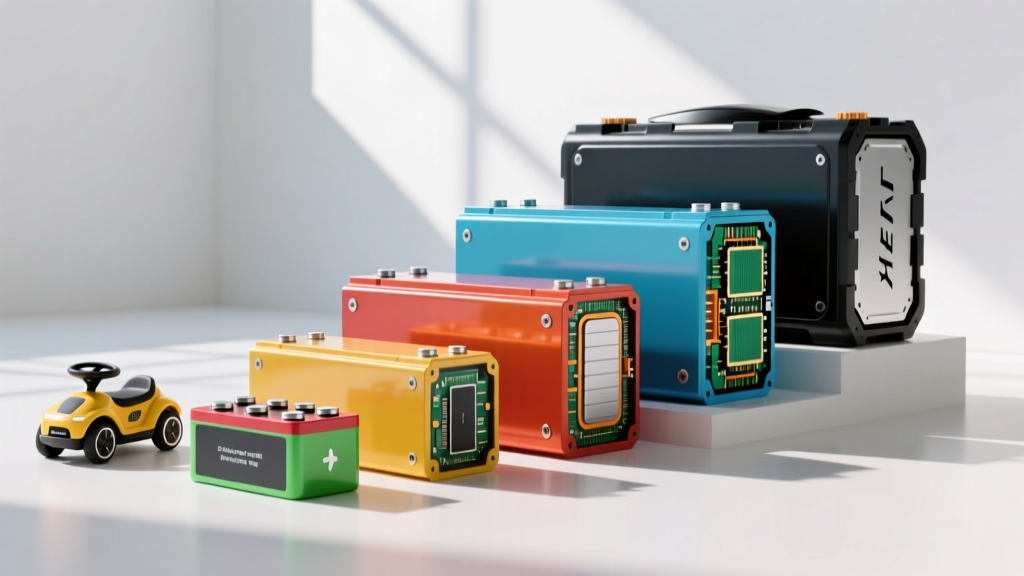
Even the small sealed lead-acid or lithium cells inside battery powered childrens cars follow similar engineering trade-offs: manufacturers choose between energy density (longer run time per charge) and cycle life (how many charge cycles before the toy needs a new battery). The stakes are just scaled down.
| Attribute | LFP | NMC 811 | NCA |
|---|---|---|---|
| Energy Density (Wh/kg, cell-level) | 160–180 | 220–260 | 250–280 |
| Typical Cycle Life (to 80% SoH) | 3,000–5,000+ | 1,500–2,500 | 1,200–2,000 |
| Cold-Weather Performance | Moderate (greater range loss below 32°F) | Better low-temp conductivity | Better low-temp conductivity |
| Thermal Stability | Excellent (higher runaway threshold) | Good (requires robust BMS) | Good (requires robust BMS) |
| Cobalt Content | None | Low (~5–10%) | Low (~5%) |
| Relative Cost ($/kWh, pack-level) | ~$100–$115 | ~$125–$145 | ~$120–$140 |
| Recommended Daily SoC Limit | 100% (no degradation penalty) | 80–90% | 80–90% |
The takeaway: LFP wins on longevity and cost; NMC/NCA wins on range per kilogram. If you plan to keep your EV for 200,000+ miles, LFP offers a meaningful cycle-life advantage. If you need maximum range in a smaller pack, NMC remains the default.
How Long Do EV Batteries Actually Last?
The short answer: far longer than most buyers expect. Data from fueleconomy.gov and real-world fleet studies consistently show that modern liquid-cooled EV batteries lose roughly 1–2% of total capacity per year under normal use.
Here's what degradation looks like in practice, compiled from owner-reported data and manufacturer testing:
- Year 1 / 15,000 miles: ~2–3% loss (initial formation loss)
- Year 3 / 45,000 miles: ~5–7% cumulative loss
- Year 5 / 75,000 miles: ~8–10% cumulative loss
- Year 8 / 120,000 miles: ~10–15% cumulative loss
- Year 10 / 150,000 miles: ~12–18% cumulative loss
At the 8-year mark, most packs still retain 85–90% of original capacity — well above the 70% threshold that triggers a warranty claim. A 2023 study by Recurrent Auto analyzing over 15,000 EVs found that the average battery retained 92% of its original range after five years of use.
The parallel to battery powered childrens cars is instructive: a typical 12V ride-on toy battery lasts 1–3 years with regular use before needing replacement — roughly 300–500 charge cycles for a sealed lead-acid cell. A modern EV pack is engineered for 1,500–5,000+ cycles depending on chemistry. The engineering ambition is fundamentally different.
What Does the Federal Battery Warranty Cover?
U.S. federal law (EPA emissions warranty provisions and California Air Resources Board requirements) mandate that EV batteries carry a minimum warranty of 8 years or 100,000 miles (whichever comes first). In California and states adopting CARB standards, that extends to 10 years or 150,000 miles.
Here's how major manufacturers structure their battery warranties for 2026 models:
| Manufacturer | Warranty Period | Mileage Cap | Capacity Retention Threshold |
|---|---|---|---|
| Tesla (Model 3/Y LFP) | 8 years | 100,000 mi | 70% |
| Tesla (Model S/X) | 8 years | 150,000 mi | 70% |
| Hyundai / Kia | 10 years | 100,000 mi | 70% |
| Ford (Mach-E, Lightning) | 8 years | 100,000 mi | 70% |
| BMW (iX, i4) | 8 years | 100,000 mi | 70% |
| Chevrolet (Equinox EV, Blazer EV) | 8 years | 100,000 mi | 60–70% (varies by model) |
| Rivian (R1T, R1S) | 8 years | 175,000 mi | 70% |
The critical detail: the warranty covers capacity retention below the stated threshold, not gradual degradation above it. If your 82 kWh pack degrades to 75 kWh (91% retention) after six years, that's normal wear. If it drops to 55 kWh (67%), that's a warranty claim.
EV Battery Replacement Cost: What You'll Actually Pay
This is the number that generates the most anxiety — and the most misinformation. Let's ground it in data.
Full battery pack replacement is rare. The vast majority of EVs are retired or sold before the pack reaches end-of-life. When replacement is needed, it's typically due to a manufacturing defect (covered by warranty) or physical damage (covered by insurance), not gradual wear.
| Vehicle / Pack Size | Battery Capacity | Out-of-Warranty Replacement Cost | Typical Replacement Trigger |
|---|---|---|---|
| Tesla Model 3 Standard Range | 60 kWh (LFP) | $12,000–$16,000 | Rare before 200k mi |
| Hyundai Ioniq 5 | 77.4 kWh (NMC) | $15,000–$20,000 | Rare before 180k mi |
| Ford F-150 Lightning Ext. Range | 131 kWh (NMC) | $25,000–$35,000 | Rare before 150k mi |
| Chevrolet Bolt EV (2022+) | 65 kWh (NMC) | $14,000–$17,000 | Recall-related replacements |
| BMW iX xDrive50 | 111.5 kWh (NMC) | $22,000–$30,000 | Rare before 150k mi |
| Battery powered childrens cars (12V ride-on) | 12 Ah SLA | $25–$50 | Every 1–3 years |
For context, a complete engine and transmission replacement on a conventional vehicle runs $4,000–$10,000+ — and those failures are statistically more common than EV battery failures within the first 150,000 miles. Pack-level battery prices have also continued to decline, with BloombergNEF reporting average pack prices below $130/kWh in 2025, meaning replacement costs will continue trending downward.
Factors That Accelerate (or Slow) Battery Degradation
Battery longevity isn't random — it's a function of how you treat the cells. Here are the five biggest factors, ranked by impact:
✅ Battery Care Best Practices
- State of Charge habits: For NMC/NCA batteries, keep daily SoC between 20–80%. Charge to 100% only for road trips. LFP batteries can be charged to 100% daily without penalty — Tesla and Ford explicitly recommend this for LFP packs to allow the BMS to recalibrate.
- DC fast charging frequency: Occasional DC fast charging (1–2x per week) has negligible impact. Daily DC fast charging at 150+ kW can add ~1–2% additional degradation over 100,000 miles versus exclusive Level 2 home charging, per Idaho National Laboratory studies.
- Extreme temperature exposure: Sustained operation or storage above 95°F accelerates calendar aging. Preconditioning the battery before fast charging (most EVs do this automatically when a Supercharger/DC station is navigated to) protects the cells. Cold weather temporarily reduces range but doesn't cause permanent damage.
- Depth of discharge: Shallow cycles (e.g., charging from 40% to 70%) are easier on cells than deep cycles (10% to 100%). You don't need to obsess over this, but avoiding habitual deep discharges below 10% helps.
- Storage conditions: If storing an EV for weeks or months, leave it at ~50% SoC in a temperature-moderate environment. Storing at 100% SoC in summer heat is the single worst thing you can do to a lithium-ion pack.
How to Check and Monitor Your Battery's State of Health
State of Health (SoH) is the percentage of original capacity your battery can still hold. A new EV has 100% SoH; a pack that originally held 82 kWh and now holds 74 kWh sits at ~90% SoH.
Here's how to monitor it:
- In-vehicle displays: Many EVs (Tesla, BMW, Mercedes EQ) show estimated range that adjusts with degradation. Some offer a direct SoH percentage in the service menu.
- OBD-II diagnostic tools: Devices like the OBDLink SX paired with apps such as EVNotify or LeafSpy (Nissan Leaf) can read BMS-reported SoH data directly. Tesla owners can use the TeslaFi or Tessie apps for detailed battery analytics.
- Dealer diagnostic reports: Request a battery health report during service visits. Manufacturers can pull cell-level voltage delta and capacity data.
- Manual calculation: Charge to 100% (on an LFP vehicle) or a known SoC, then divide the energy added (in kWh, shown on your charger or EV app) by the SoC change. Example: adding 40 kWh to go from 20% to 75% (55% change) means your pack's total capacity is roughly 40 ÷ 0.55 = 72.7 kWh.
Tracking SoH every 3–6 months is sufficient. Degradation is slow and non-linear — you'll see faster loss in year one (formation), then a long plateau, then gradual decline.
Emerging Battery Tech: Solid-State, Silicon Anodes, and What's Real
The next frontier in battery technology promises step-change improvements, but timelines matter more than headlines.
Solid-state batteries: Replace the liquid electrolyte with a solid ceramic or polymer separator, enabling lithium-metal anodes for 40–50% higher energy density and faster charging. Toyota has announced a solid-state EV for 2027–2028 with ~470 miles of range and 10-minute 10–80% charging. Samsung SDI, QuantumScape (partnered with Volkswagen), and Solid Power (BMW/Ford) are all targeting limited production between 2027 and 2030. These are announced/preliminary — not available in any production vehicle as of 2026.
Silicon-dominant anodes: Companies like Sila Nanotechnologies and Group14 are replacing graphite anodes with silicon composites, boosting energy density 20–40% at the cell level. The Mercedes G-Class electric SUV (2025+) uses Sila's silicon anode material. This tech is real and shipping now, but limited to premium applications.
Sodium-ion batteries: CATL and BYD are producing sodium-ion packs for lower-cost, shorter-range EVs (primarily in China). Energy density is ~30% lower than LFP, but cost is significantly lower and cold-weather performance is superior. Expect to see sodium-ion in budget EVs and possibly in battery powered childrens cars and light electric vehicles before full-size passenger EVs.
The honest timeline: solid-state will appear in limited premium models by 2028–2030 and won't reach mainstream price parity until the early 2030s. Silicon anodes are the nearer-term improvement, incrementally boosting range in today's NMC cells.
EV Battery FAQ: Your Top Questions Answered
How long do EV batteries last in years and miles?
Modern liquid-cooled EV batteries are engineered to last 15–20 years or 200,000+ miles before dropping below 70% of original capacity. Fleet data from Recurrent Auto shows the average EV retains 92% of its range after five years. Most EV batteries will outlast the vehicle they're installed in.
How much does an EV battery cost to replace?
Out-of-warranty replacement costs range from $12,000 for a 60 kWh pack (Tesla Model 3 SR) to $35,000 for a 131 kWh pack (F-150 Lightning Extended Range). However, full replacements due to wear are extremely rare — most are covered by the 8-year/100,000-mile warranty or insurance for damage claims. Pack-level prices continue declining ~8–12% annually.
What does the EV battery warranty actually cover?
The federal minimum is 8 years/100,000 miles (10 years/150,000 miles in CARB states) against capacity loss below 70% of original. This covers defects and abnormal degradation, not damage from accidents or improper use. Some manufacturers like Hyundai offer 10 years/100,000 miles nationwide.
LFP vs NMC — which battery chemistry is better?
It depends on your priorities. LFP offers longer cycle life (3,000–5,000 cycles vs 1,500–2,500), better thermal safety, no cobalt, and lower cost — but ~20% less energy density, meaning heavier packs or shorter range. NMC delivers more range per kilogram and better cold-weather performance. For a daily commuter planning 200k+ miles, LFP is the longevity pick. For maximum range in a lighter package, NMC wins.
How do I check my EV battery's State of Health?
Use your vehicle's built-in range estimator, third-party apps like TeslaFi or EVNotify, OBD-II diagnostic tools, or request a dealer health report. For a manual check, charge to a known SoC and divide kWh added by the SoC percentage change to estimate total pack capacity.
Does fast charging damage my EV battery?
Occasional DC fast charging has minimal impact. Daily use of 150+ kW chargers can add ~1–2% extra degradation over 100,000 miles compared to Level 2 home charging. Modern thermal management systems and charge-curve tapering (the car automatically slows charging above 80% SoC) protect the cells. For daily use, Level 2 home charging at 7–11 kW remains the gentler option.
Do battery powered childrens cars use the same technology as full-size EVs?
They share the same lithium-ion or lead-acid electrochemistry at a vastly smaller scale. A typical ride-on toy uses a 6V or 12V sealed lead-acid battery (12–20 Ah), while a full-size EV uses a 400V–800V lithium-ion pack (60–130 kWh). The engineering trade-offs — energy density vs cycle life vs cost — are identical. The main difference is that EV traction packs use sophisticated battery management systems (BMS) with liquid cooling and cell-level monitoring, which is why they last 10x longer than toy batteries.