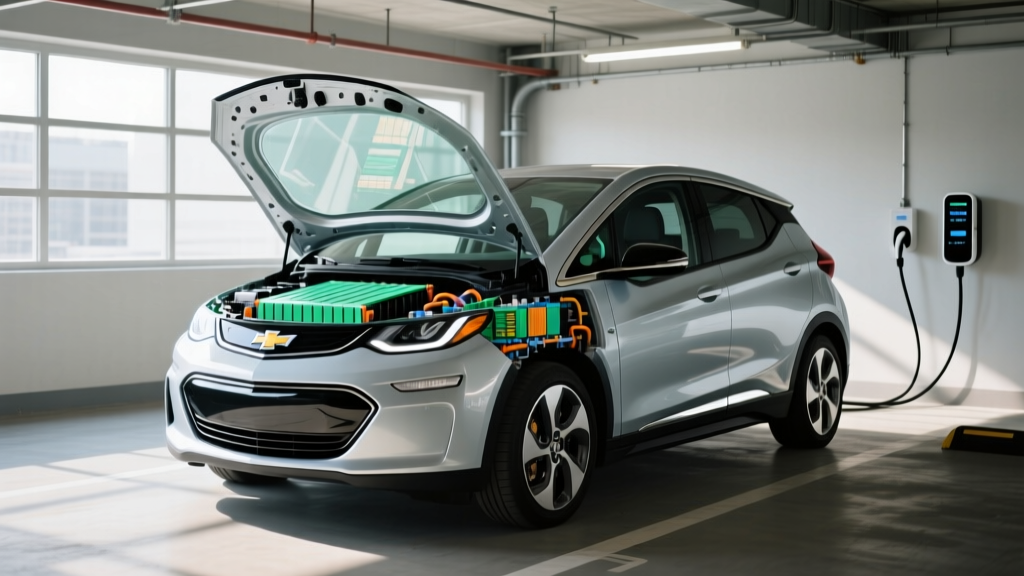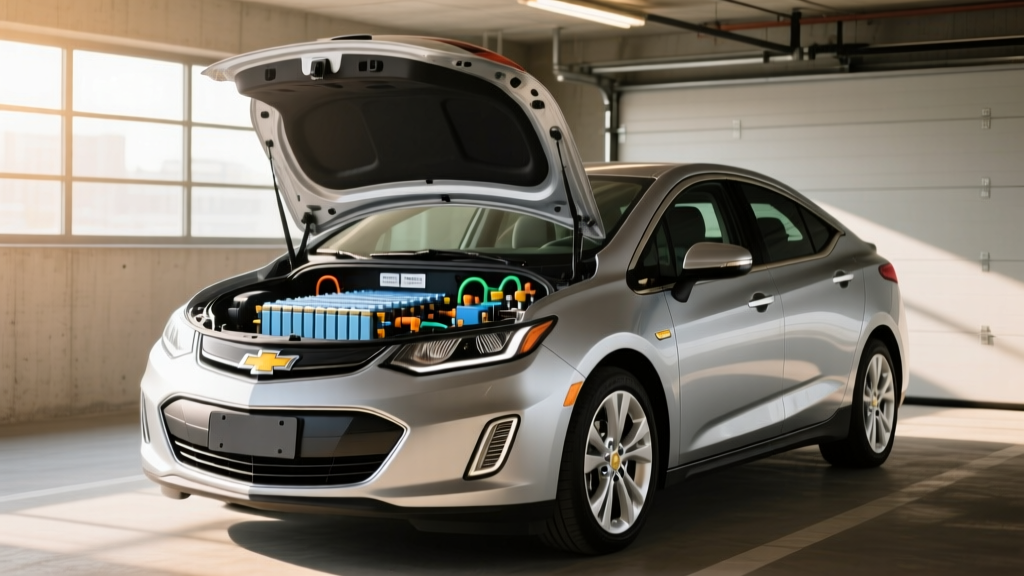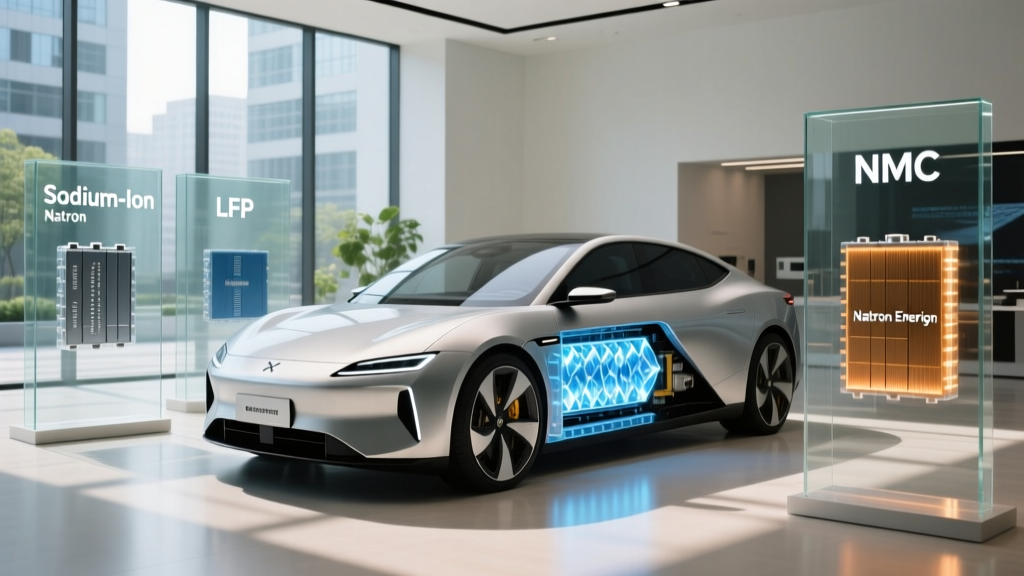
Searches for "how to charge battery in car" often point to one of two things: the 12V auxiliary battery that powers your infotainment and door locks, or the high-voltage traction battery that actually moves the vehicle. If you own or are shopping for an electric vehicle, you almost certainly mean the latter. This guide covers everything a current or prospective EV owner needs to know about charging habits that preserve battery health, the chemistry inside your pack, real-world degradation data, warranty protections, and what replacement actually costs in 2026.
EV Battery Chemistry 101: LFP vs NMC vs NCA
The two dominant lithium-ion chemistries in passenger EVs today are LFP (lithium iron phosphate) and NMC/NCA (nickel manganese cobalt / nickel cobalt aluminum). Your vehicle's chemistry determines how you should charge it, how it behaves in cold weather, and how long it will last. Here's how they compare on the metrics that matter to owners:
| Attribute | LFP (e.g., Tesla Model 3 RWD, Ford Mustang Mach-E Select) | NMC/NCA (e.g., Hyundai Ioniq 5, Tesla Model Y Long Range) |
|---|---|---|
| Energy density | Lower (~160 Wh/kg cell-level) — heavier pack for same range | Higher (~250 Wh/kg cell-level) — more range per kg |
| Typical cycle life | 3,000–5,000+ full cycles before 80% SoH | 1,500–2,500 full cycles before 80% SoH |
| Daily charging recommendation | Charge to 100% regularly (Tesla recommends at least weekly) | Charge to 80% daily; 100% only for long trips |
| Cold-weather performance | Weaker — greater range loss below 32°F; preconditioning essential | Better low-temp conductivity; still loses 15–30% range in deep cold |
| Cost | ~15–20% cheaper per kWh to manufacture | Higher raw-material cost (cobalt, nickel) |
| Thermal stability | Excellent — higher runaway threshold | Good but lower thermal runaway margin |
| SoC estimation accuracy | Flatter voltage curve makes SoC harder to gauge; periodic 100% calibrations help | More linear voltage curve; SoC readout more accurate |
Which is better? Neither is universally superior. LFP wins on longevity and cost — ideal for daily commuters who can charge to 100% without worry. NMC wins on range-per-kilogram and cold-weather usability — better for long-distance drivers and colder climates. Check your vehicle's spec sheet or owner's manual before setting a charge limit; the wrong habit for your chemistry accelerates degradation.
How Long Do EV Batteries Actually Last?
The short answer: longer than most buyers assume. The high-voltage traction battery in a modern EV is designed to outlast the vehicle's economic life. Data from fleet operators, manufacturer reports, and independent testing bodies show that most packs retain 85–92% of original capacity after 100,000 miles.
Here's what real-world degradation data looks like across popular platforms:
- Tesla Model 3/Y (NMC, 2018–2023): ~12% average capacity loss at 150,000 miles per Tesla's 2023 Impact Report. Degradation curve flattens significantly after the initial 5–10% drop in the first 20,000 miles.
- Chevrolet Bolt EV/EUV (NMC, 2017–2023): Recurrent Auto data shows ~8–10% loss at 100,000 miles; relatively linear curve with no catastrophic drop-off observed in fleet samples.
- Nissan Leaf (NMC, passive air cooling, 2011–2025): Earlier air-cooled models showed 15–25% loss at 80,000–100,000 miles in hot climates — a cautionary tale for thermal management importance. Liquid-cooled 2018+ models improved significantly.
- Hyundai Ioniq 5 / Kia EV6 (NMC, 2022–present): Early data from Recurrent shows ~3–5% loss at 30,000 miles; too early for long-term conclusions but consistent with modern thermal management expectations.
- Tesla Model 3 RWD (LFP, 2021–present): LFP packs show minimal measurable degradation in fleet data; several 100,000+ mile examples retain 95%+ SoH.
The pattern is consistent: expect a 2–5% capacity drop in the first year (the "break-in" phase), then a slow linear decline of roughly 0.5–1.5% per year under normal use. A well-cared-for pack should deliver 80%+ capacity at 150,000–200,000 miles.
What Does the Battery Warranty Cover?
Federal law mandates a minimum 8-year/100,000-mile warranty on EV battery packs for emissions-related compliance, and most manufacturers match or exceed this. California Air Resources Board (CARB) states require 10-year/150,000-mile coverage. The key metric is the capacity retention threshold — the point at which the manufacturer must repair or replace the pack at no cost.
| Manufacturer | Warranty Period | Mileage Cap | Capacity Retention Threshold |
|---|---|---|---|
| Tesla | 8 years | 100,000–120,000 mi (varies by model) | 70% |
| Hyundai / Kia | 10 years | 100,000 mi | 70% |
| Ford | 8 years | 100,000 mi | 70% |
| General Motors (Chevrolet, Cadillac) | 8 years | 100,000 mi | 70% (60% for Bolt fleet replacements) |
| Volkswagen | 8 years | 100,000 mi | 70% |
| BMW | 8 years | 100,000 mi | 70% |
| Rivian | 8 years | 120,000–175,000 mi (varies by pack) | 70% |
Critical nuance: The warranty covers defects and abnormal degradation below the threshold — not gradual capacity loss that remains above 70%. If your 8-year-old pack shows 72% SoH, you're still within warranty spec, even though you've lost 28% of original range. Most owners never hit the threshold, which is why out-of-pocket replacement is rare during the warranty window.
How Much Does an EV Battery Cost to Replace?
Replacement cost is the most fear-inducing number in EV ownership — and the most misunderstood. The vast majority of EV batteries never need replacement. When they do, it's typically due to a manufacturing defect (covered under warranty) or damage from a collision or flood, not end-of-life wear.
| Vehicle | Pack Size (kWh usable) | Chemistry | Estimated Replacement Cost |
|---|---|---|---|
| Tesla Model 3 RWD | ~57 kWh | LFP | $12,000–$15,000 |
| Tesla Model Y Long Range | ~75 kWh | NMC | $15,000–$20,000 |
| Hyundai Ioniq 5 | ~77.4 kWh | NMC | $16,000–$22,000 |
| Ford F-150 Lightning (Extended Range) | ~131 kWh | NMC | $25,000–$35,000 |
| Chevrolet Bolt EV | ~65 kWh | NMC | $14,000–$18,000 |
| BMW i4 eDrive40 | ~81.5 kWh | NMC | $18,000–$25,000 |
These figures include the pack and labor but can vary by region and service center. Module-level repairs (replacing individual degraded modules rather than the entire pack) are increasingly available at independent EV shops for $3,000–$8,000, depending on the fault. Refurbished packs from salvaged vehicles are also entering the market at 40–60% of new-pack pricing.
When is replacement typically needed? Almost never during normal ownership. The packs that do get replaced outside of warranty are overwhelmingly from early-generation vehicles (2011–2016 Nissan Leaf, early Tesla Roadster) with inferior thermal management. Modern liquid-cooled packs from 2018 onward are lasting far longer.
Factors That Affect EV Battery Life (and How to Charge Smart)
This is where "how to charge battery in car" gets practical. Your daily habits have a measurable impact on State of Health over time. Here are the factors ranked by impact, with actionable guidance:
Daily Charging Habits (High Impact)
- NMC owners: Set your daily charge limit to 80%. Reserve 100% for road trips and enable it the morning of departure, not the night before.
- LFP owners: Charge to 100% at least once per week for SoC calibration. Daily 100% is fine — LFP chemistry tolerates it.
- Avoid habitual deep discharge: Try not to regularly drop below 10–15% SoC. Occasional low states are fine; sitting at 0% for days is not.
- Don't leave the car at extreme SoC: A car sitting at 100% or 0% for weeks (airport parking, vacation) accelerates calendar degradation. Aim for ~50% if storing.
DC Fast Charging Frequency (Moderate Impact)
- Exclusive DC fast charging (150–350 kW) has been shown in Recurrent Auto's research to add roughly 1–3% additional degradation over 100,000 miles compared to primarily Level 2 charging.
- This is not a reason to avoid road trips — modern BMS (battery management systems) actively manage heat during fast charging. But if you have home Level 2 access, use it for daily needs and save DCFC for travel.
- Above 80% SoC, charge speed tapers significantly (the "charge curve"). Charging from 80–100% on DCFC is slow and generates disproportionate heat. Unplug or switch to Level 2 above 80%.
Temperature Management (High Impact)
- Extreme heat is worse than extreme cold for long-term degradation. Sustained pack temperatures above 95°F (35°C) accelerate chemical aging. Garage parking in hot climates pays dividends.
- Preconditioning matters: Before DC fast charging in cold weather, use your vehicle's preconditioning feature (navigation to a charger typically triggers this automatically). A cold pack charges slowly and generates more internal resistance heat.
- Cold-weather range loss is temporary: Expect 15–30% range reduction below freezing due to cabin heating and increased battery resistance. This is not degradation — capacity returns when temperatures rise.
Driving Style (Low–Moderate Impact)
- Aggressive acceleration and sustained high-speed driving (85+ mph) generate more pack heat. Occasional spirited driving is fine; daily track use is not what these packs are optimized for.
- Regenerative braking on high settings reduces mechanical brake wear but does not meaningfully affect battery longevity either way.
How to Check and Monitor Battery Health (SoH)
State of Health (SoH) represents your battery's current maximum capacity as a percentage of its original capacity. Here's how to monitor it across different platforms:
- Tesla: The vehicle doesn't display SoH directly, but you can estimate it by charging to 100% and comparing the displayed range to the original EPA rating. Third-party tools like TeslaFi or Scan My Tesla (via OBD-II) pull BMS data for more precise readings.
- Hyundai/Kia: The infotainment system includes a battery health screen (EV settings → Battery) showing SoH percentage directly on most 2022+ models.
- Ford: The FordPass app and SYNC system display estimated range at full charge; compare to original specs. Dealers can pull detailed SoH via diagnostic tools.
- Universal OBD-II tools: Devices like the OBDLink MX+ paired with apps such as Leaf Spy (Nissan), ABRP, or manufacturer-specific diagnostic apps can read BMS-reported SoH, cell voltage variance, and pack temperature.
- Dealer diagnostics: Any authorized service center can perform a battery health check. Request one during routine service — it's typically free under warranty and provides a printed SoH report useful for resale.
A healthy pack shows cell voltage variance under 20–30 mV at rest. Wider variance suggests module imbalance that may warrant service before it triggers a warranty claim.
What's Next: Solid-State and Silicon-Anode Batteries
Next-generation battery technologies promise step-change improvements in energy density and charge speed — but realistic timelines matter. Here's where things stand in 2026:
- Toyota solid-state: Toyota has announced pilot production of sulfide-based solid-state cells for a limited-run 2027–2028 vehicle. Projected specs: ~750 km (466 mi) range, 10–80% charge in ~10 minutes. Mass production at scale remains unproven; cost per kWh is expected to be significantly above current NMC for years.
- Samsung SDI solid-state: Prototype cells demonstrated at industry events; Samsung targets 2027 for initial automotive customer samples. No confirmed vehicle programs yet.
- Silicon-anode cells (Sila Nanotechnologies, Group14): Already in limited production for consumer electronics and entering automotive via the Mercedes-AMG ONE and upcoming G-Class EV. Silicon anodes offer ~20–40% energy density improvement over graphite, with near-term availability in premium segments.
- Sodium-ion: CATL and BYD are producing sodium-ion packs for budget Chinese-market EVs. Lower energy density but cheaper and cobalt-free. US-market availability is not yet confirmed for passenger vehicles.
Bottom line: None of these technologies are available in a production EV you can buy in the US today. If you need a vehicle now, current-generation LFP and NMC packs are mature, well-understood, and backed by substantial warranty coverage. Waiting for solid-state means waiting at least 2–4 years for limited availability at premium pricing.
Frequently Asked Questions
How long do EV batteries last in years and miles?
Modern liquid-cooled EV batteries typically retain 85–92% of original capacity at 100,000 miles and 80%+ at 150,000–200,000 miles. In years, that translates to 15–20+ years for the average driver covering 10,000–15,000 miles annually. Most packs outlive the vehicle's economic life.
How much does an EV battery cost to replace?
Full pack replacement ranges from roughly $12,000 for a compact pack (57 kWh LFP) to $35,000 for a large truck pack (131 kWh NMC). Module-level repairs cost $3,000–$8,000. However, most batteries never need replacement — defects are covered under the 8-year/100,000-mile warranty, and wear-related failures are rare in modern liquid-cooled designs.
What does the EV battery warranty cover?
Manufacturer warranties cover defects in materials and workmanship plus abnormal capacity loss below a defined threshold (typically 70% retention) within 8 years or 100,000 miles (10 years/150,000 miles in CARB states). Normal gradual degradation above the threshold is not covered. Review your specific warranty booklet — terms vary by manufacturer and model year.
How do I check my EV battery health?
Check your vehicle's infotainment battery screen (Hyundai/Kia), compare displayed range at 100% charge to original EPA figures (Tesla, Ford), or use an OBD-II diagnostic tool to pull BMS-reported State of Health. Dealers can run a formal health check during service visits and provide a printed SoH report.
LFP vs NMC — which battery chemistry is better?
LFP offers longer cycle life (3,000–5,000 cycles), lower cost, and the convenience of daily 100% charging — ideal for commuters. NMC offers higher energy density (more range per pound), better cold-weather performance, and more accurate SoC estimation — better for long-distance and cold-climate drivers. Neither is universally superior; the right choice depends on your driving pattern and climate.
Should I avoid DC fast charging to preserve my battery?
Exclusive DC fast charging adds roughly 1–3% additional degradation over 100,000 miles compared to primarily Level 2 home charging, per Recurrent Auto fleet data. This is a modest difference, not a reason to avoid road trips. Use Level 2 for daily charging if available and DCFC for travel — that's the optimal balance.
Does cold weather permanently damage my EV battery?
No. Cold-weather range loss (15–30% below freezing) is temporary and reversible — it's caused by increased internal resistance and cabin heating demand, not chemical degradation. However, charging a cold pack at high power without preconditioning can cause lithium plating, which is why modern EVs automatically limit charge speed until the pack warms up. Always use preconditioning before DC fast charging in cold weather.
Is it safe to leave my EV plugged in overnight or for days?
Yes. Modern EVs have sophisticated BMS that stop charging at the set limit and maintain the pack at optimal temperature. Leaving the car plugged in at a Level 2 charger set to 80% (NMC) or 100% (LFP) is the recommended practice — the car manages the rest. For multi-week storage, set the limit to ~50%.
For current federal EV tax credit rules that may apply to your next purchase, consult the IRS Clean Vehicle Credit page — eligibility depends on MSRP caps, buyer income limits, and battery-sourcing requirements that change periodically. For EPA range and efficiency data on specific models, the fueleconomy.gov database remains the authoritative source.