EV Battery Lifespan: What the Data Actually Shows
The single most persistent question among prospective EV buyers isn't about range or charging speed — it's about what happens when the high-voltage traction battery degrades. Unlike the 12V auxiliary battery (which powers lights, infotainment, and computers and is a routine replacement item on any car), the traction battery stores the energy that moves the vehicle. It's the most expensive component in an EV, and its health directly determines usable range.
The good news, backed by fleet data and manufacturer warranty commitments, is that modern EV batteries are outlasting initial projections. According to analysis by Geotab's fleet study of over 10,000 electric vehicles, the average EV battery retains roughly 88% of its original capacity after 8 years of real-world use — translating to about 1.5% annual degradation. Most EV batteries will outlive the vehicle they're installed in.
That said, degradation isn't linear, and chemistry matters enormously. Let's break down what determines how long your battery lasts, what it costs if something goes wrong, and which charging habits actually move the needle.
Battery Chemistry: LFP vs NMC vs NCA Explained
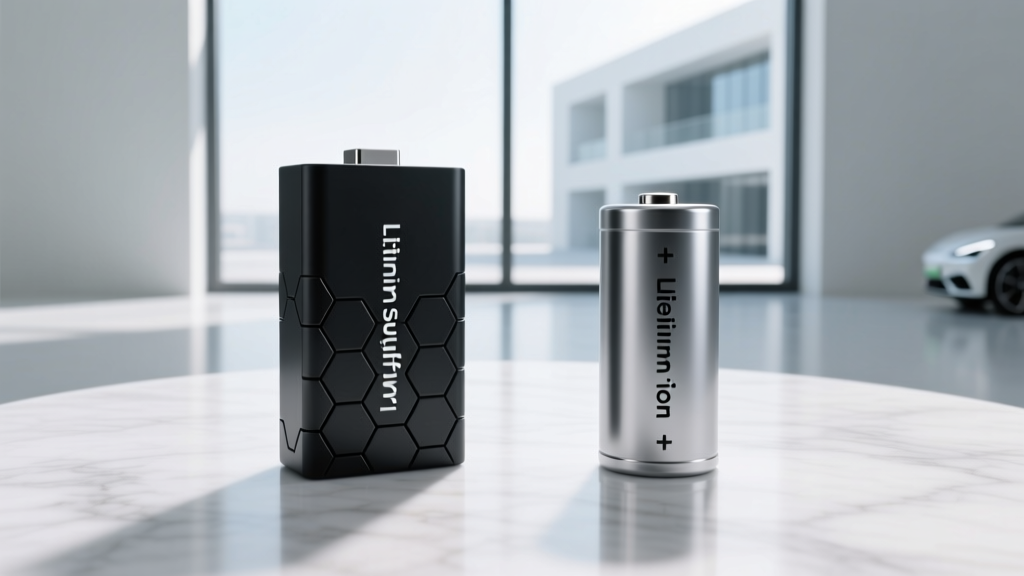
Not all lithium-ion batteries are built the same. The cathode chemistry determines energy density, lifespan, cost, and cold-weather behavior. As of 2026, two chemistries dominate the EV market:
- NMC (Nickel Manganese Cobalt) / NCA (Nickel Cobalt Aluminum): Higher energy density, meaning more range in a lighter, smaller pack. Used in most long-range EVs including the Tesla Model 3 Long Range, Hyundai Ioniq 5, and Ford Mustang Mach-E Extended Range.
- LFP (Lithium Iron Phosphate): Lower energy density but significantly longer cycle life, lower cost, and no cobalt. Increasingly used in standard-range models like the Tesla Model 3 RWD, Ford F-150 Lightning Pro (standard range), and several Chinese-market EVs now entering global markets.
| Attribute | LFP (Lithium Iron Phosphate) | NMC / NCA (Nickel-based) |
|---|---|---|
| Energy density (cell-level) | ~160-180 Wh/kg | ~220-300 Wh/kg |
| Cycle life (to 80% capacity) | 3,000-6,000+ cycles | 1,000-2,500 cycles |
| Calendar life expectation | 15-20+ years | 10-15 years |
| Cost per kWh (cell-level, 2026) | ~$70-$90/kWh | ~$100-$130/kWh |
| Cold-weather performance | Moderate — greater range loss below freezing | Better low-temp discharge characteristics |
| Recommended daily charge limit | 100% (LFP tolerates full SoC well) | 80-90% for daily; 100% only for trips |
| Thermal runaway risk | Very low | Low (but higher than LFP) |
| Typical applications | Standard-range models, fleet vehicles, stationary storage | Long-range and performance models |
LFP vs NMC — Which Is Better and Why?
Neither chemistry is universally superior; the answer depends on your use case. If you drive a standard-range commute vehicle, charge at home nightly, and want maximum cycle life with minimal babysitting (charge to 100% without worry), LFP is the pragmatic choice. If you need 300+ miles of EPA range, tow frequently, or live in a cold climate where every percentage point of winter range matters, NMC/NCA remains the better fit.
One practical distinction: LFP's flatter voltage curve makes state-of-charge estimation trickier for the battery management system (BMS). Some LFP owners report the range estimate "jumping" after a full charge recalibration. This is cosmetic, not a defect — but it's worth knowing.
How Long Do EV Batteries Last?
The short answer: typically 15-20 years or 200,000+ miles before capacity falls below 80% of original. The longer answer requires separating degradation into two components:
Cycle Degradation (Use-Based)
Every full charge-discharge cycle causes incremental lithium plating and electrolyte breakdown. For an NMC pack rated at 1,500 cycles to 80% health, that translates to roughly 450,000 miles of driving in a vehicle averaging 300 miles per full cycle. Most drivers will never reach this threshold.
Calendar Degradation (Time-Based)
Batteries degrade even when parked. High ambient temperatures and sustained high state-of-charge accelerate chemical side reactions. A vehicle parked at 100% SoC in a 95°F Phoenix driveway for months will lose more capacity than one stored at 50% SoC in a cool garage — even with identical mileage.
Real-World Degradation Data Points
| Vehicle / Source | Timeframe | Mileage | Capacity Retained | Chemistry |
|---|---|---|---|---|
| Tesla Model 3/Y fleet (Tesla Impact Report 2023) | ~5 years avg | ~100,000 mi | ~88% | NMC/NCA |
| Nissan Leaf (2011-2017, passive cooling) | 8-10 years | 80,000-120,000 mi | 70-80% | NMC (no active thermal mgmt) |
| Chevrolet Bolt EV/EUV (Geotab fleet data) | 5 years | ~75,000 mi | ~90% | NMC (liquid-cooled) |
| Hyundai Ioniq 5 (owner-reported aggregations) | 3 years | ~45,000 mi | ~93-95% | NMC (liquid-cooled) |
| Tesla Model 3 LFP (fleet data, high-cycle taxi use) | 3 years | ~150,000 mi | ~90% | LFP |
Note: Older Nissan Leaf models with passive (air) cooling showed significantly worse degradation than liquid-cooled competitors. Active thermal management is now standard on virtually all new EVs and is the single biggest factor in long-term battery health.
EV Battery Warranty Terms: What's Actually Covered
Federal law mandates that EV batteries carry a minimum warranty of 8 years or 100,000 miles (10 years/150,000 miles in California and states that follow CARB standards). Most manufacturers exceed this baseline. Here's how the major warranties stack up:
| Manufacturer | Warranty Period | Capacity Threshold | Notes |
|---|---|---|---|
| Tesla (Model 3/Y) | 8 yr / 120,000 mi (LR/AWD); 8 yr / 100,000 mi (RWD) | 70% retention | Long Range has longer mileage cap |
| Hyundai / Kia (Ioniq 5, EV6, EV9) | 10 yr / 100,000 mi | 70% retention | Among the longest periods in the industry |
| Ford (Mach-E, F-150 Lightning) | 8 yr / 100,000 mi | 70% retention | Covers battery and hybrid/electric components |
| General Motors (Equinox EV, Blazer EV, Silverado EV) | 8 yr / 100,000 mi | 70% retention (some Ultium models: 60%) | Verify specific model threshold |
| Rivian (R1T, R1S) | 8 yr / 175,000 mi | 70% retention | Highest mileage cap among mainstream OEMs |
| BMW (i4, iX, i7) | 8 yr / 100,000 mi | 70% retention | Includes battery conditioning system |
What the warranty covers: If your battery's usable capacity falls below the stated threshold (typically 70% of original) within the warranty period, the manufacturer will repair or replace the battery pack — or, in some cases, replace degraded modules rather than the entire pack. This covers abnormal degradation, not damage from accidents, flooding, or aftermarket modifications.
What it doesn't cover: Normal wear within the threshold. If your battery retains 72% capacity at year 8, you're above the threshold and the warranty expires without remedy. Also note that some warranties are voided if the vehicle is used commercially (ride-hailing, delivery) beyond certain mileage limits — check your specific terms.
EV Battery Replacement Cost: What to Expect
Here's the number that generates the most anxiety — and the most misinformation. Yes, a full battery pack replacement is expensive. But context matters enormously:
| Vehicle | Battery Size (usable kWh) | Chemistry | Estimated Replacement Cost |
|---|---|---|---|
| Tesla Model 3 RWD | ~57 kWh | LFP | $7,000 – $10,000 |
| Tesla Model Y Long Range | ~75 kWh | NMC | $12,000 – $16,000 |
| Hyundai Ioniq 5 (Long Range) | ~77.4 kWh | NMC | $10,000 – $14,000 |
| Ford F-150 Lightning (Extended Range) | ~131 kWh | NMC | $18,000 – $25,000+ |
| Chevrolet Bolt EV | ~65 kWh | NMC | $9,000 – $14,000 |
| Rivian R1T (Large Pack) | ~128 kWh | NMC | $18,000 – $22,000 |
When is replacement typically needed? For the vast majority of owners, it isn't — at least not within the vehicle's useful life. Data consistently shows that batteries reaching 70-80% capacity at 150,000-200,000 miles still provide functional daily range. A Model 3 Long Range with 80% of its original 75 kWh still holds ~60 kWh — enough for 220+ real-world miles. Many EVs are scrapped for unrelated reasons (collision damage, frame rust, electronics failure) with the battery still serviceable.
Module-level repair is also increasingly common. Rather than replacing the entire pack, shops can identify and swap degraded modules for $2,000-$5,000, depending on the vehicle. This option is expanding as third-party EV service networks grow.
Factors That Affect Battery Life — and What You Can Control
Battery degradation is inevitable, but the rate varies significantly based on how you charge, drive, and store your EV.
Charging Habits That Accelerate Degradation
- Frequent DC fast charging above 150 kW: High-power charging generates heat. Occasional fast charging is fine — road trips won't kill your battery. But daily reliance on 250-350 kW chargers without preconditioning adds cumulative stress. The EPA's EV technology overview notes that thermal management is critical to longevity.
- Sustained 100% state of charge (NMC/NCA): Parking a nickel-based battery at full charge for days or weeks accelerates calendar degradation. Charge to 80-90% for daily use; reserve 100% for trip days.
- Deep discharges to 0%: Regularly running the battery to near-empty stresses the cells. Most BMS systems maintain a bottom buffer (~2-5% of gross capacity is hidden), but habitually arriving at 2-3% displayed SoC isn't ideal.
- Charging at extreme temperatures without preconditioning: Plugging into a DC fast charger with a battery at 20°F forces the pack to accept charge while cold, promoting lithium plating. Most modern EVs precondition the battery when you navigate to a charger — always use this feature.
Habits That Maximize Battery Longevity
- Level 2 home charging as your primary method: Slower charging (7-11 kW) generates far less heat than DC fast charging. For daily use, a home Level 2 charger is the single best thing you can do for battery health.
- Maintain 20-80% SoC for NMC; LFP owners can charge to 100%: The "middle of the curve" is where lithium-ion cells are most stable. LFP chemistry tolerates full charge far better, which is why Tesla recommends 100% for LFP Model 3 RWD owners.
- Use scheduled charging and departure timers: Set your car to finish charging right before you leave, rather than sitting at full charge overnight.
- Garage parking in extreme climates: Keeping the battery out of 100°F+ summer heat and sub-zero winter cold reduces both cycle and calendar stress.
- Keep thermal management active: Never disable battery preconditioning or climate preconditioning to "save energy." The small energy cost is far outweighed by the longevity benefit.
Quick Battery Care Checklist
- ☐ Install a Level 2 home charger (7-11 kW) for daily use
- ☐ Set daily charge limit to 80% (NMC/NCA) or 100% (LFP)
- ☐ Enable battery preconditioning when navigating to DC fast chargers
- ☐ Avoid letting SoC sit at 0% or 100% for extended periods (NMC)
- ☐ Use scheduled charging to minimize time at high SoC
- ☐ Garage-park when possible in extreme heat or cold
- ☐ Limit DC fast charging to road trips; don't rely on it daily
- ☐ Check State of Health (SoH) annually via app or dealer diagnostic
Monitoring Battery Health: How to Check State of Health (SoH)
State of Health (SoH) is a percentage representing your battery's current maximum capacity relative to its original capacity when new. A new EV starts at 100% SoH; at 70% SoH, your 80 kWh pack effectively holds 56 kWh.
How to Check SoH
- Manufacturer apps: Tesla's app shows estimated range at 100% charge, which you can compare to the original EPA figure. Some OEMs (BMW, Mercedes) display SoH directly in the infotainment or app.
- OBD-II diagnostic tools: Devices like the OBDLink SX paired with apps such as ABRP (A Better Route Planner) or Torque Pro can read battery SoH directly from the BMS on many EVs.
- Dealer diagnostics: Most dealerships can run a full battery health report during service visits. Request this at least annually, especially as you approach the warranty mileage threshold.
- Third-party services: Companies like Recurrent (now part of Recurrent Auto) offer battery health reports based on connected-car data, often used for pre-purchase inspections on used EVs.
What's normal vs. concerning: Losing 2-3% per year is typical. If you observe 5%+ annual loss, investigate whether a BMS fault, cooling system issue, or defective module is the cause — and file a warranty claim if you're within the coverage window.
Emerging Battery Technology: What's on the Horizon
While current lithium-ion batteries are proving durable enough for most ownership scenarios, next-generation technologies are advancing. Here's what's realistic vs. speculative:
Solid-State Batteries
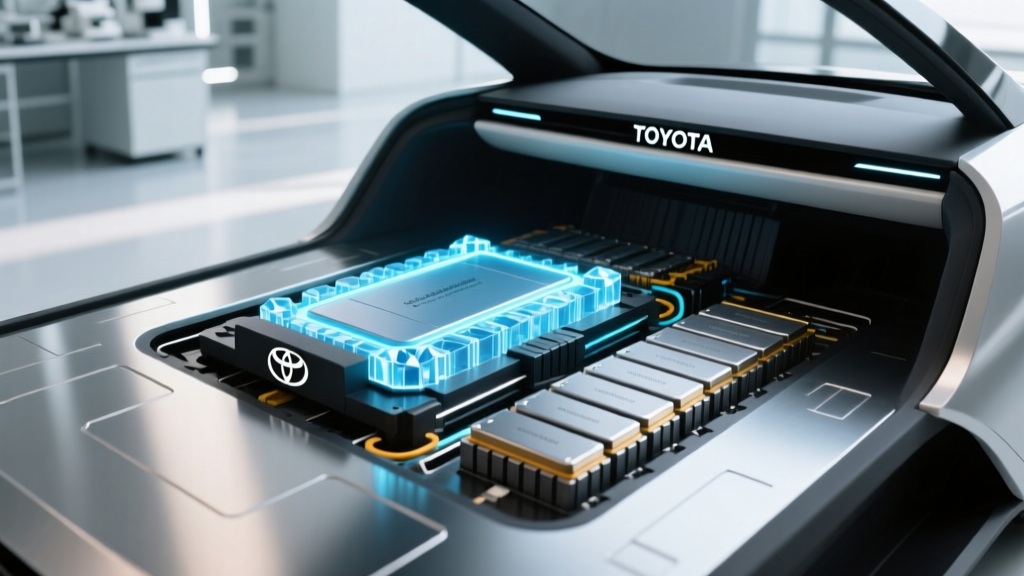
Solid-state cells replace the liquid electrolyte with a solid material, promising higher energy density (potentially 400-500 Wh/kg at the cell level), faster charging, and improved safety. Toyota has announced limited solid-state production for 2027-2028, initially in small volumes for premium models. Samsung SDI and QuantumScape are targeting similar timelines. Realistic availability for mainstream EVs: 2029-2032. These are not currently available in any production vehicle sold in the US.
Silicon-Dominant Anodes
Replacing graphite anodes with silicon can increase energy density by 20-40%. Sila Nanotechnologies and Group14 are already supplying silicon-composite anode materials for select applications. Expect incremental adoption in 2026-2028 model-year vehicles, particularly in performance-oriented models where range-per-kg matters most.
Sodium-Ion Batteries
CATL and other manufacturers are producing sodium-ion cells for lower-cost, lower-range applications. These won't compete with NMC on energy density but could appear in budget city EVs and stationary storage within 1-2 years. US-market availability is still uncertain.
Bottom line on future tech: None of these technologies change the current buying calculus. Today's lithium-ion batteries — whether LFP or NMC — are proven, warrantied, and lasting longer than most buyers expected. Waiting for solid-state is waiting for a 2030+ reality while today's EVs already deliver 250-350 real-world miles with batteries that will outlast the car's body.
Frequently Asked Questions
How long do EV batteries last in years and miles?
Most modern liquid-cooled EV batteries retain 85-90% capacity after 8 years and 100,000 miles, based on fleet data from Geotab and manufacturer impact reports. Full replacement is typically not needed until 200,000+ miles or 15-20 years — and many batteries are still functional beyond that point, just with reduced range.
How much does an EV battery cost to replace?
Replacement costs range from approximately $7,000 for a standard-range pack (Tesla Model 3 RWD, ~57 kWh LFP) to $25,000+ for a large pack (Ford F-150 Lightning Extended Range, ~131 kWh NMC). However, most batteries outlive the vehicle, and module-level repairs ($2,000-$5,000) are increasingly available as an alternative to full-pack replacement.
What does the EV battery warranty cover?
Federal law requires a minimum 8-year/100,000-mile warranty on EV batteries. Most manufacturers warrant the battery to retain at least 70% of original capacity within that period. If degradation exceeds the threshold, the manufacturer will repair or replace the pack or individual modules at no cost. The warranty covers abnormal degradation but not accident damage or misuse.
How do I check and maximize my EV battery health?
Monitor State of Health through your vehicle's app, OBD-II diagnostic tools, or dealer service reports. To maximize longevity: use Level 2 home charging as your primary method, set daily charge limits to 80% (NMC) or 100% (LFP), enable battery preconditioning before DC fast charging, avoid prolonged storage at extreme SoC levels, and garage-park in extreme temperatures.
LFP vs NMC — which battery chemistry is better?
LFP offers longer cycle life (3,000-6,000+ cycles), lower cost, and tolerance for 100% daily charging, but with lower energy density and more cold-weather range loss. NMC/NCA provides higher energy density for longer range and better cold performance, but with shorter cycle life and a recommended 80% daily charge limit. Choose LFP for standard-range commuting and fleet use; choose NMC for maximum range, towing, and cold-climate driving.
Does frequent DC fast charging damage my battery?
Occasional DC fast charging (road trips, a few times per month) has minimal impact on modern liquid-cooled batteries. However, daily reliance on high-power (150-350 kW) charging without preconditioning accelerates degradation due to heat. For daily charging, a Level 2 home charger at 7-11 kW is the optimal balance of convenience and battery health.
Will my EV battery need to be replaced before the car wears out?
Statistically, probably not. Fleet data shows that most EV batteries retain sufficient capacity for practical daily use well beyond 150,000 miles. EVs are more commonly retired due to collision damage, body rust, or electronics obsolescence than battery failure. The battery warranty (8-10 years) provides a strong safety net for the minority of packs that degrade abnormally.