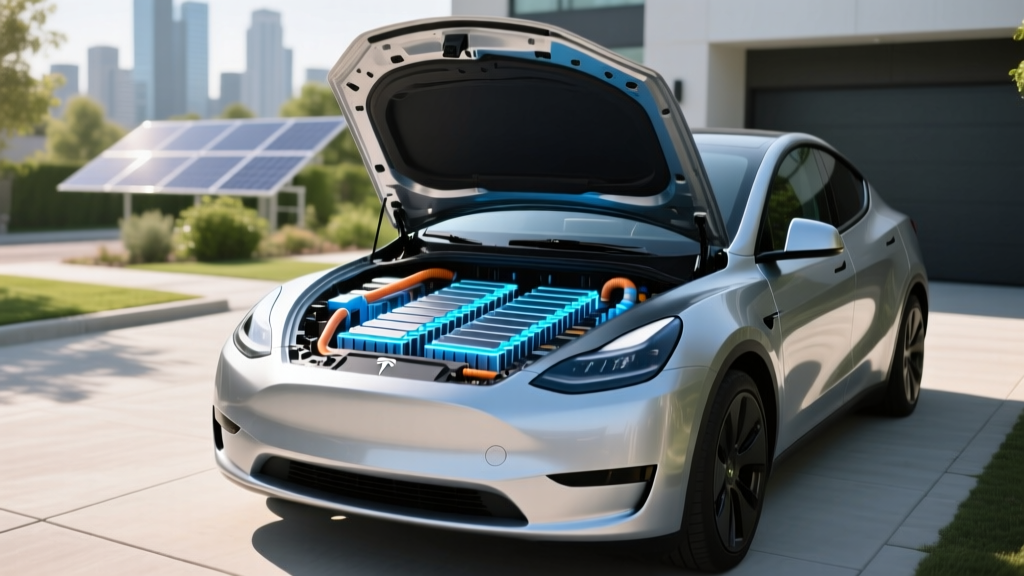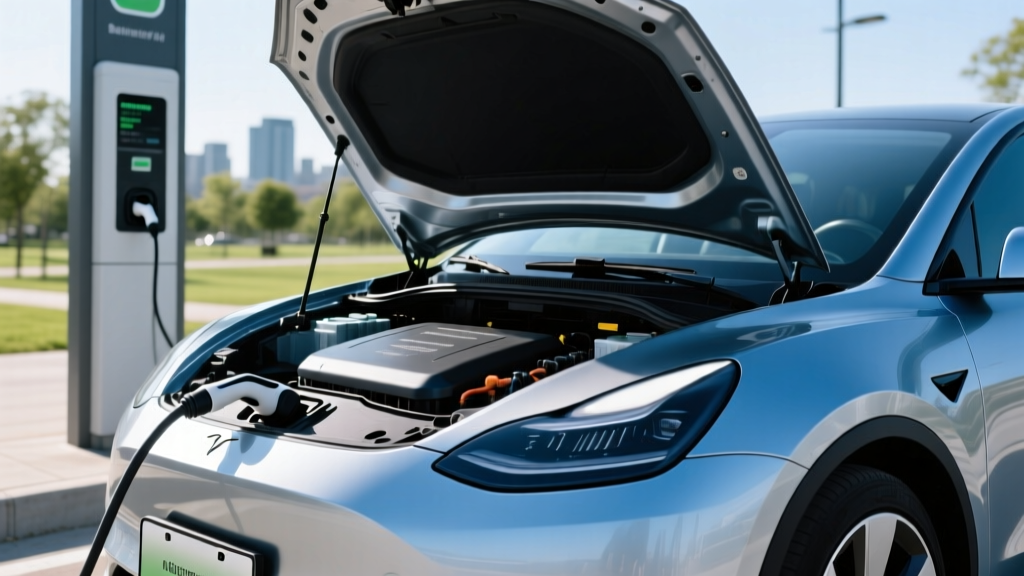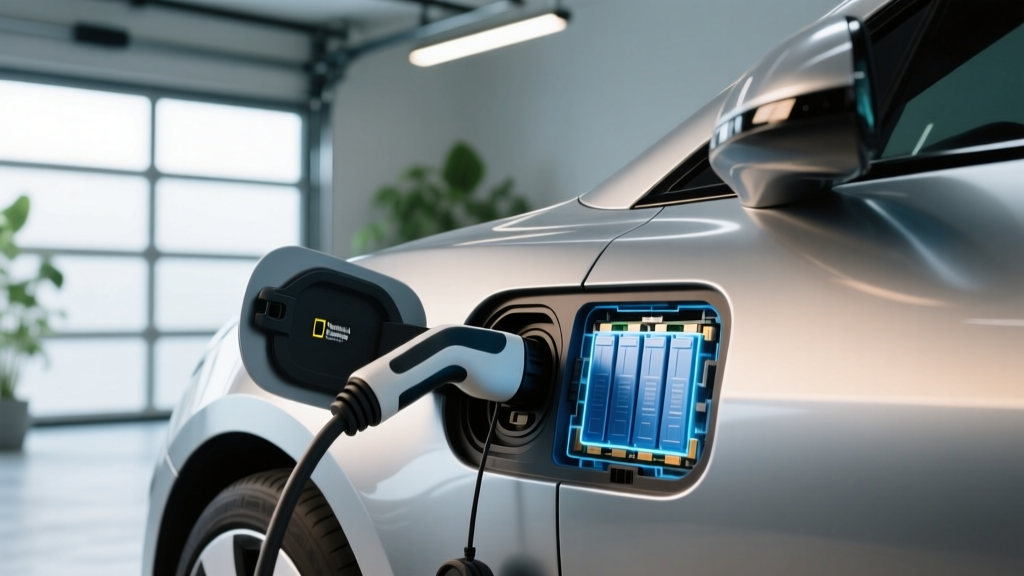
Whether you're plugging into a home Level 2 wallbox, topping off at a DC fast charger, or simply wondering what happens inside your EV's high-voltage pack when electrons flow, understanding how charging connects to your battery is the foundation of smart EV ownership. This guide walks through the physical and chemical realities of EV battery charging, longevity, and care — with exact numbers, real-world data, and no marketing fluff.
Before we go further, a critical distinction: this article covers the high-voltage traction battery — the large lithium-ion pack that powers your electric motor and stores energy measured in kilowatt-hours (kWh). It does not cover the 12-volt auxiliary battery that runs your lights, infotainment, and electronics. The 12V battery is charged automatically by the traction battery via a DC-DC converter; you never connect a charger to it in normal operation.
How Charging Connects to Your EV Battery: The Basics
When you plug a charging cable into your EV, here's the chain of events:
- Connector handshake: The vehicle and charger communicate via the connector (NACS, CCS1, or CHAdeMO) to negotiate power delivery. The car tells the charger its maximum acceptance rate and current state of charge (SoC).
- Onboard charger (Level 1/2 AC): For AC charging, grid power enters the car as alternating current. The onboard charger converts AC to DC and regulates voltage to match the battery pack. Most 2026 EVs have onboard chargers rated at 11.5 kW (some up to 19.2 kW on vehicles like the Ford F-150 Lightning Extended Range).
- Direct DC (DC fast charging): At a DC fast charger, the AC-to-DC conversion happens inside the charger cabinet. DC current flows directly into the battery at high power — typically 50 kW to 350 kW depending on the vehicle and station.
- Battery Management System (BMS): The BMS constantly monitors cell voltages, temperatures, and current flow. It balances cells, manages thermal conditioning, and tapers charge rate as the pack fills to protect longevity.
The physical connection depends on your vehicle's charge port standard:
- NACS (North American Charging Standard): Used by Tesla and adopted by Ford, GM, Rivian, Volvo, Polestar, BMW, Hyundai/Kia, and most major automakers for 2025–2026 models. Single compact connector handles both AC and DC.
- CCS1 (Combined Charging System): Still found on older VW ID.4 models, some pre-2025 Hyundai/Kia vehicles, and remaining Stellantis EVs. Larger connector with separate AC and DC pins.
- CHAdeMO: Legacy standard, primarily on the Nissan Leaf. Effectively discontinued for new vehicles after 2025.
LFP vs NMC: Which Battery Chemistry Is in Your EV?
Not all lithium-ion batteries are the same. The cathode chemistry determines your EV's range, charging behavior, longevity, and cold-weather performance. In 2026, two chemistries dominate the US market:
| Attribute | LFP (Lithium Iron Phosphate) | NMC/NCA (Nickel Manganese Cobalt / Nickel Cobalt Aluminum) |
|---|---|---|
| Energy density | Lower (~160–180 Wh/kg cell-level) | Higher (~230–270 Wh/kg cell-level) |
| Typical range impact | ~10–15% less range for same pack weight | Maximum range per kWh of pack mass |
| Cycle life | 3,000–5,000+ full cycles | 1,000–2,000 full cycles |
| Cold-weather performance | Greater range loss below 32°F (~30–40% loss at 20°F) | Better cold retention (~20–30% loss at 20°F) |
| Charging to 100% | Recommended periodically for BMS calibration | Better kept at 80–90% daily; 100% for trips only |
| Cost | ~15–25% cheaper per kWh | Higher due to nickel/cobalt content |
| Thermal stability | Superior — less prone to thermal runaway | Good, but requires more active thermal management |
| 2026 vehicles using it | Tesla Model 3/Y RWD, Ford Mustang Mach-E Select, Rivian Standard, base Chevy Equinox EV | Tesla Long Range, Hyundai Ioniq 5/6, Kia EV6/EV9, BMW iX, Mercedes EQS, Porsche Taycan |
The practical takeaway: If you prioritize daily commuting, lower cost, and maximum cycle life — and don't need 350+ miles of range — LFP is the superior choice. If you need maximum range, tow frequently, or live in extreme cold, NMC/NCA delivers better real-world performance. Neither is "better" universally; the right choice depends on your driving profile.
How Long Do EV Batteries Actually Last?
The short answer: in most cases, the battery will outlast the vehicle itself. But "lasting" doesn't mean zero degradation — it means retaining enough capacity to remain practical.
Real-world degradation data (compiled from fleet studies and owner reports):
- Year 1 / 15,000 miles: ~2–4% capacity loss (initial "break-in" degradation)
- Year 3 / 45,000 miles: ~5–8% total capacity loss
- Year 5 / 75,000 miles: ~8–12% total capacity loss
- Year 8 / 120,000 miles: ~10–15% total capacity loss (within warranty threshold for most manufacturers)
- Year 10+ / 150,000+ miles: ~12–20% total capacity loss; pack still functional but noticeably reduced range
Sources: Geotab fleet battery study, Recurrent Auto battery data reports, manufacturer warranty filings.
Key insight: degradation is non-linear. Most loss occurs in the first 1–2 years (the "break-in" curve), then slows significantly. A 2026 Tesla Model 3 Long Range with an EPA-rated 363 miles and a 75 kWh usable NMC pack might realistically deliver 330 miles after 50,000 miles — still eminently practical for most drivers.
Factors that accelerate degradation:
- Frequent DC fast charging (3+ sessions per week without home L2 use)
- Regularly charging NMC packs to 100% and letting them sit at full SoC
- Repeatedly discharging below 10% SoC
- Prolonged exposure to extreme heat (sustained ambient above 95°F, especially without garage parking)
- Aggressive driving with constant high-current discharge
What Does the EV Battery Warranty Actually Cover?
Federal law mandates a minimum 8-year/100,000-mile warranty on EV battery packs (10 years/150,000 miles in CARB states including California, New York, Massachusetts, and others). Here's what the major manufacturers offer in 2026:
| Manufacturer | Warranty Period | Capacity Retention Threshold | Notes |
|---|---|---|---|
| Tesla | 8 yr / 120,000 mi (Long Range); 8 yr / 100,000 mi (RWD) | 70% retention | Covers defects and capacity below threshold |
| Hyundai / Kia | 10 yr / 100,000 mi | 70% retention | Among the longest in the industry |
| Ford | 8 yr / 100,000 mi | 70% retention | Covers Mach-E, F-150 Lightning |
| GM (Chevy/Cadillac) | 8 yr / 100,000 mi | 70% retention | Ultium-based packs |
| BMW | 8 yr / 100,000 mi | 70% retention | Includes i4, iX, i7 |
| Rivian | 8 yr / 175,000 mi (Max/Standard); 8 yr / 120,000 mi (Standard) | 70% retention | Higher mileage cap on larger packs |
What's covered: Manufacturing defects, cell failures, and capacity degradation below the stated threshold (typically 70% of original capacity). If your 75 kWh pack degrades to below 52.5 kWh within the warranty period, the manufacturer must repair or replace it.
What's typically NOT covered: Damage from accidents, aftermarket modifications, improper charging equipment, or failure to follow manufacturer maintenance guidelines. Normal degradation above the 70% threshold is considered expected wear.
EV Battery Replacement Costs: What to Budget
Battery replacement is the scenario most EV shoppers fear — but the data shows it's rare within the first 10–15 years. When it is needed (usually due to cell failure, physical damage, or end-of-life degradation beyond 30%), here's what it costs in 2026:
| Vehicle / Pack Size | Battery Capacity | Estimated Replacement Cost (Parts + Labor) | Typical Replacement Trigger |
|---|---|---|---|
| Tesla Model 3 RWD (LFP) | ~60 kWh | $8,000 – $12,000 | Rare before 200,000+ mi |
| Tesla Model Y Long Range | ~75 kWh | $10,000 – $15,000 | Rare before 200,000+ mi |
| Hyundai Ioniq 5 | 77.4 kWh | $12,000 – $18,000 | Rare before 150,000+ mi |
| Ford F-150 Lightning Ext. Range | 131 kWh | $20,000 – $30,000 | Rare before 150,000+ mi |
| Chevy Equinox EV | ~85 kWh | $10,000 – $16,000 | Rare before 150,000+ mi |
| Porsche Taycan | 93.4 kWh (Performance Plus) | $20,000 – $28,000 | Rare before 120,000+ mi |
Context matters: the average US vehicle age is now over 12.6 years (S&P Global Mobility, 2025). Most EV batteries will retain 75–85% capacity at that age, meaning replacement is statistically unlikely during typical first- and second-owner lifecycles. When replacement does occur, refurbished or remanufactured packs (using salvaged cells from totaled EVs) are increasingly available at 40–60% of new-pack pricing.
How to Maximize Your EV Battery's Health
Battery longevity isn't just about chemistry — your daily habits have a measurable impact. Here's a practical care framework based on BMS engineering principles and fleet data:
- Set charge limits: For NMC/NCA packs, set daily charge limit to 80–90%. Charge to 100% only before long trips and drive soon after. For LFP packs, charge to 100% at least once per week for accurate SoC calibration.
- Prefer Level 2 home charging: Overnight AC charging at 7–11.5 kW generates far less heat than DC fast charging. Use DCFC for road trips, not daily commuting.
- Precondition before fast charging: Most 2026 EVs automatically precondition the battery when you navigate to a DC fast charger. This warms the pack to optimal temperature (~77–95°F) for faster, healthier charging. Always use the nav-to-charger feature rather than driving to a charger cold.
- Avoid deep discharge: Try not to let SoC drop below 10–15% regularly. The BMS maintains a buffer (typically 3–5% below displayed 0%), but repeated deep cycling stresses cells.
- Park smart in heat: Garage parking or shaded spots reduce pack temperature during summer. Sustained 100°F+ ambient with a full battery accelerates calendar degradation.
- Don't store at extremes: If leaving the car unused for weeks, set SoC to 50–60% (NMC) or 50–70% (LFP). Never store at 100% or below 10% for extended periods.
- Use scheduled charging: Most EVs allow you to schedule charging to finish just before departure. This minimizes time spent at high SoC and ensures the pack is at optimal temperature when you drive.
How to Check Your Battery's State of Health (SoH)
State of Health (SoH) is the percentage of your battery's original capacity that remains usable. A new pack is 100% SoH; at 70% SoH, your 75 kWh pack effectively holds 52.5 kWh.
How to check SoH in 2026:
- In-vehicle displays: Tesla shows battery health estimates in the Service menu (via the app or touchscreen). Hyundai/Kia displays SoH in the EV settings menu on newer models. BMW provides battery health data through the iDrive system.
- OBD-II diagnostic tools: Third-party apps like OBDeleven (VW/Audi/BMW), Scan My Tesla, or LeafSpy (Nissan) read BMS data directly through the OBD-II port, showing cell voltages, pack SoH, and degradation curves.
- Third-party services: Companies like Recurrent Auto offer free battery health reports that aggregate your charging data and compare your degradation against fleet averages for your specific model.
- Dealer diagnostics: Any authorized service center can pull a full battery health report. Request this during routine service visits or before purchasing a used EV.
When to be concerned: If your SoH drops more than 3–4% per year after the initial break-in period, or if individual cell voltage variance exceeds 0.1V (visible via OBD-II tools), consult a service center. Sudden range drops of 10%+ in a single month warrant immediate inspection.
What's Next: Solid-State and Silicon-Anode Batteries
Emerging battery technologies promise transformative improvements, but realistic timelines matter:
Solid-state batteries replace the liquid electrolyte with a solid material (ceramic, sulfide, or polymer), offering:
- 30–50% higher energy density (potentially 400+ mile packs in compact vehicles)
- Faster charging (theoretical 10–80% in under 10 minutes)
- Improved safety (no flammable liquid electrolyte)
- Longer cycle life
Timeline: Toyota has announced limited solid-state production for 2027–2028, initially in small volumes for premium models. Samsung SDI and QuantumScape are targeting 2028–2030 for broader availability. Widespread, cost-competitive solid-state packs in mainstream vehicles are not expected before 2030–2032.
Silicon-anode batteries (from companies like Sila Nanotechnologies and Group14) replace graphite anodes with silicon, offering 10–20% energy density gains. These are closer to market — Mercedes-Benz has integrated Sila's silicon-anode material into the G-Class EV, and broader adoption across premium segments is expected through 2026–2028.
Sodium-ion batteries use abundant sodium instead of lithium, dramatically reducing cost. CATL has begun production in China, and US-market vehicles using sodium-ion packs (likely in budget segments) may appear by 2027–2028. Trade-off: lower energy density limits these to shorter-range, urban-focused vehicles.
None of these technologies are available in mainstream 2026 US-market EVs. If you're buying today, LFP and NMC are mature, proven, and well-supported.
Frequently Asked Questions
How long do EV batteries last in years and miles?
Most modern EV batteries retain 75–85% of original capacity after 10 years or 150,000 miles. Total pack failure before 200,000 miles is rare. Fleet data from Geotab and Recurrent shows that degradation slows significantly after the first 2–3 years, and most packs remain practical well beyond typical vehicle lifespans.
How much does an EV battery cost to replace?
Replacement costs range from approximately $8,000 for smaller packs (Tesla Model 3 RWD, ~60 kWh) to $20,000–$30,000 for large packs (Ford F-150 Lightning, 131 kWh). However, statistically most EV batteries never need replacement during normal ownership. Refurbished packs are increasingly available at 40–60% of new-pack cost.
What does the EV battery warranty cover?
Federal law mandates a minimum 8-year/100,000-mile warranty covering manufacturing defects and capacity degradation below 70% of original capacity. Hyundai and Kia extend this to 10 years/100,000 miles. CARB states require 10 years/150,000 miles. The warranty does not cover accident damage, aftermarket modifications, or normal degradation above the threshold.
How do I check my EV battery's health?
Check SoH through your vehicle's built-in display (Tesla Service menu, Hyundai EV settings, BMW iDrive), OBD-II diagnostic apps like OBDeleven or LeafSpy, third-party services like Recurrent Auto, or dealer diagnostic reports. Monitor for more than 3–4% annual loss after break-in or sudden range drops.
LFP vs NMC — which battery chemistry is better?
LFP offers superior cycle life (3,000–5,000 cycles), lower cost, better thermal safety, and can be charged to 100% daily. NMC delivers higher energy density (more range per pound), better cold-weather performance, and faster peak charging speeds. Choose LFP for daily commuting and longevity; choose NMC for maximum range, towing, and cold climates.
Is DC fast charging bad for my battery?
Occasional DC fast charging (road trips, 1–2 times per week) has minimal impact on modern batteries with active thermal management. However, exclusive reliance on DCFC (3+ sessions weekly with no Level 2 use) can accelerate degradation by 1–3% over the pack's lifetime. For daily use, Level 2 home charging at 7–11.5 kW is gentler and more cost-effective.
Does cold weather permanently damage EV batteries?
No. Cold weather causes temporary range loss (20–40% depending on chemistry and severity) because the battery's internal resistance increases and energy is diverted to cabin and pack heating. This range recovers when temperatures rise. Permanent damage occurs only if a pack is charged at high rates while below freezing without preconditioning — modern BMS systems prevent this by restricting charge rate until the pack warms.
Understanding how charging connects to your EV battery — and how chemistry, habits, and thermal management affect longevity — removes the uncertainty from EV ownership. The data is clear: modern packs are engineered to last, warranties protect against worst-case scenarios, and simple daily practices can extend battery life well beyond the vehicle's useful lifespan.