How Long Does It Actually Take to Charge an EV Battery?
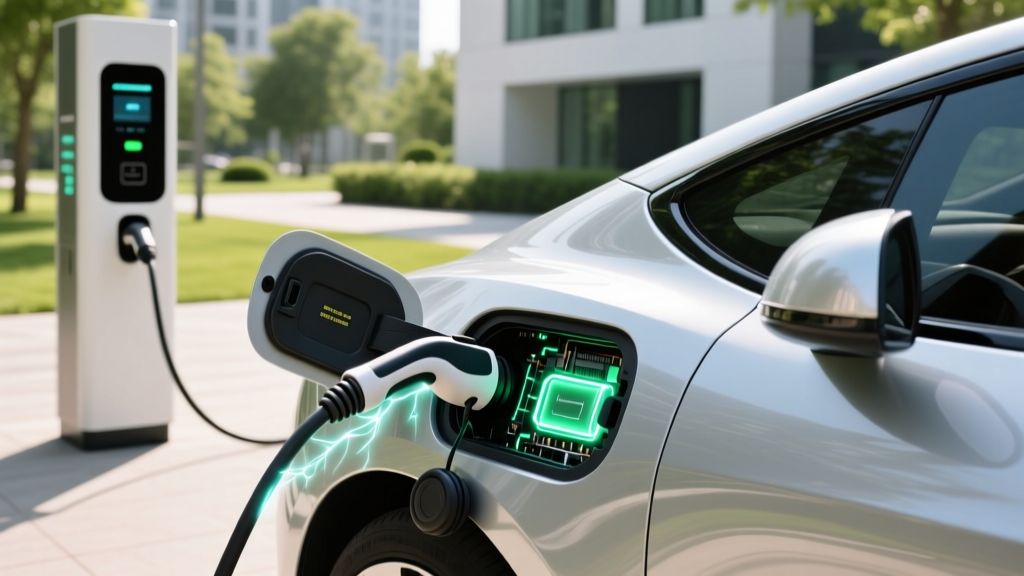
When new EV owners ask "how long to charge a battery," the answer depends entirely on which charging level you're using and how large the battery pack is. Charging time is a function of two numbers: the battery's capacity in kilowatt-hours (kWh) and the charger's output in kilowatts (kW). Divide usable kWh by kW, factor in the charge curve taper above 80%, and you have your answer.
Here's what that looks like across the three charging levels most EV owners encounter:
| Level | Voltage / Power | Typical Use Case | Miles of Range Added per Hour | 10–80% Time (80 kWh Pack) |
|---|---|---|---|---|
| Level 1 | 120V AC / 1.4–1.9 kW | Emergency / overnight trickle | 3–5 mi/hr | ~45–60 hours |
| Level 2 | 240V AC / 7.2–11.5 kW | Home, workplace, destination | 20–40 mi/hr | ~7–11 hours |
| DC Fast Charging | 400–800V DC / 50–350 kW | Road trips, highway corridors | 150–400+ mi/hr (peak) | ~18–45 minutes |
A few realities that spec sheets gloss over:
- Peak kW is not sustained kW. A vehicle advertising "250 kW peak" may hold that rate only between 10–40% state of charge (SoC). By 60% SoC, the rate tapers to perhaps 150 kW; by 80%, it may drop to 50–70 kW. This is called the charge curve, and it's why manufacturers quote 10–80% times rather than 0–100%.
- Preconditioning matters. Most modern EVs (Tesla, Hyundai/Kia E-GMP, BMW, Rivian) warm the battery to its optimal temperature when you navigate to a DC fast charger. Without preconditioning — especially in cold weather — peak kW can be cut by 30–50%.
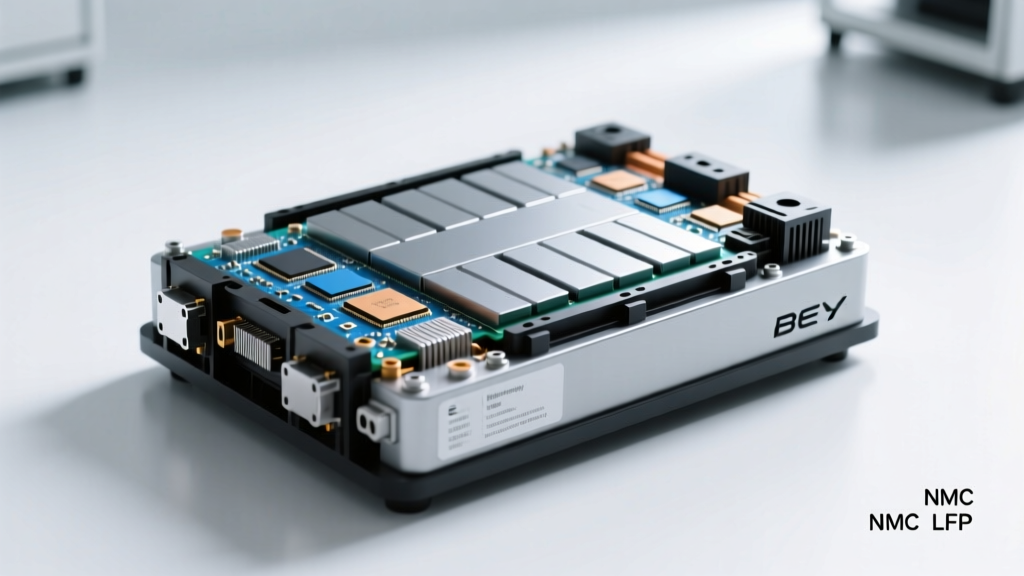
- Battery chemistry affects charge speed. LFP (lithium iron phosphate) packs tolerate frequent 100% charges but often have slightly lower peak charge rates than NMC/NCA chemistry packs of similar size.
Battery Chemistry: LFP vs NMC vs NCA — Which Is Better?
The two dominant lithium-ion chemistries in 2026 EVs are LFP and NMC/NCA. Neither is universally superior — the right choice depends on your driving pattern, climate, and budget.
| Attribute | LFP (Lithium Iron Phosphate) | NMC / NCA (Nickel-based) |
|---|---|---|
| Energy Density | Lower (~160–180 Wh/kg cell-level) | Higher (~220–280 Wh/kg cell-level) |
| Range per kWh | Comparable at vehicle level; heavier pack offsets cell efficiency | Higher range for a given pack weight |
| Cycle Life | 3,000–5,000+ full cycles before 80% capacity | 1,000–2,000 full cycles before 80% capacity |
| Cold-Weather Performance | More range loss in sub-freezing temps (15–25% loss typical) | Better cold performance (10–18% loss typical) |
| Charge to 100% Daily? | Yes — recommended by most OEMs for LFP | No — daily 80% limit recommended for longevity |
| Thermal Stability / Safety | Superior — far less prone to thermal runaway | Good with active thermal management, but higher risk profile |
| Cost | Lower raw-material cost (no nickel or cobalt) | Higher due to nickel and cobalt content |
| Common in (2026) | Tesla Model 3 RWD, Model Y RWD, Ford Mustang Mach-E Select, BYD models | Tesla Long Range/Performance, Hyundai Ioniq 5/6, Rivian, BMW iX, most premium trims |
Bottom line: If you want maximum range and don't mind an 80% daily charge limit, NMC/NCA delivers. If you want a battery that tolerates daily 100% charges, lasts longer in total cycle count, and costs less — and you can accept slightly less range — LFP is the pragmatic pick. For most commuters who charge at home nightly, LFP's cycle-life advantage is significant.
How Long Do EV Batteries Last? Real Degradation Data
EV battery degradation follows a non-linear curve: the steepest loss occurs in the first year or two (roughly 2–5%), followed by a long, gradual decline. Most modern EV batteries outlast the vehicles they're installed in.
Typical Degradation Trajectory (NMC, liquid-cooled, moderate use):
- Year 1 / 15,000 mi: ~2–4% capacity loss (96–98% State of Health)
- Year 3 / 45,000 mi: ~5–8% loss (92–95% SoH)
- Year 5 / 75,000 mi: ~8–12% loss (88–92% SoH)
- Year 8 / 120,000 mi: ~10–15% loss (85–90% SoH)
- Year 10 / 150,000 mi: ~12–18% loss (82–88% SoH)
LFP packs tend to degrade more slowly — some fleet data shows Tesla Model 3 RWD (LFP) packs retaining 90%+ SoH at 100,000 miles. Data sources include fueleconomy.gov efficiency ratings and manufacturer-reported fleet studies.
An EV with an original EPA range of 310 miles and 12% degradation after eight years still delivers approximately 273 miles — well within usable daily range for virtually all drivers. The fear of an EV "becoming useless" after a few years is not supported by fleet data.
What Does the EV Battery Warranty Actually Cover?
Federal law mandates that EV batteries carry a minimum warranty of 8 years / 100,000 miles (10 years / 150,000 miles in California Air Resources Board states). Most manufacturers exceed this floor.
| Manufacturer | Warranty Period | Mileage Cap | Capacity Retention Threshold |
|---|---|---|---|
| Tesla (Model 3/Y LFP) | 8 years | 100,000 mi | 70% minimum SoH |
| Tesla (Model 3/Y Long Range) | 8 years | 120,000 mi | 70% minimum SoH |
| Hyundai / Kia (E-GMP) | 10 years | 100,000 mi | 70% minimum SoH |
| Ford (Mustang Mach-E) | 8 years | 100,000 mi | 70% minimum SoH |
| BMW (iX / i4) | 8 years | 100,000 mi | 70% minimum SoH |
| Rivian (R1T / R1S) | 8 years | 120,000 mi | 70% minimum SoH |
| Chevrolet (Equinox EV / Blazer EV) | 8 years | 100,000 mi | 60–70% minimum SoH |
What triggers a warranty claim? The battery must fall below the stated SoH threshold (usually 70%) within the warranty period. A gradual 10% loss over eight years does not qualify — that's normal degradation. A sudden capacity drop, cell imbalance, or manufacturing defect that pushes SoH below the threshold does qualify, and the manufacturer must repair or replace the pack at no cost to you.
What's NOT covered: Damage from collisions, flooding, or modifications; capacity loss from consistently ignoring charge-limit recommendations (rarely enforced but theoretically excludable); and the 12V auxiliary battery, which is a separate component with its own shorter warranty.
How Much Does It Cost to Replace an EV Battery?
Battery replacement costs vary enormously by pack size, chemistry, and whether you need a full pack or a partial module swap. Here's the current landscape:
| Vehicle / Pack Size | Chemistry | Estimated Full-Pack Replacement Cost | Module-Level Repair (if available) |
|---|---|---|---|
| Tesla Model 3 RWD (~60 kWh) | LFP | $12,000–$16,000 | $3,000–$6,000 per module group |
| Tesla Model Y LR (~82 kWh) | NMC | $14,000–$20,000 | $4,000–$8,000 per module group |
| Hyundai Ioniq 5 (~77.4 kWh) | NMC | $15,000–$22,000 | $4,000–$7,000 per module |
| Ford Mustang Mach-E ER (~91 kWh) | NMC | $18,000–$25,000 | $5,000–$9,000 per module |
| Rivian R1T (~128 kWh Large) | NMC | $22,000–$30,000 | $5,000–$10,000 per module |
| Chevrolet Bolt EV (~65 kWh) | NMC | $14,000–$17,000 | N/A — full pack replacement typical |
When is replacement actually needed? Rarely within the first 10–12 years for liquid-cooled packs. The vast majority of EV batteries are never replaced during the vehicle's useful life. Out-of-warranty replacements are most common after 150,000–200,000 miles, when degradation may bring range below the owner's daily needs. By that point, the vehicle's resale value has typically dropped well below the replacement cost, and most owners trade in or sell rather than invest in a new pack.
Prices have been declining steadily. According to industry tracking, average pack-level pricing fell below $130/kWh at the cell level in 2025, though installed replacement costs include labor, diagnostics, and dealer markup. Refer to IRS §30D guidelines for how battery sourcing may affect tax credit eligibility on replacement packs.
Factors That Accelerate (or Protect) Battery Health
Not all miles are equal when it comes to battery wear. Here are the variables you control:
Practices That Extend Battery Life
- Daily charge limit of 80% (NMC/NCA) or 100% (LFP — OEM-recommended for LFP)
- Home Level 2 charging as your primary method — slower charging generates less heat
- Precondition the battery before DC fast charging and before driving in cold weather
- Park in shade or a garage when possible — prolonged heat exposure (above 95°F ambient) accelerates degradation
- Keep SoC between 20–80% for daily use on NMC packs; avoid prolonged storage below 10% or above 90%
- Use DC fast charging sparingly — weekly or less is fine; daily DCFC adds measurable wear over years
Practices That Accelerate Degradation
- Frequent DC fast charging without preconditioning (high charge rates on a cold battery)
- Regularly charging NMC to 100% and letting the car sit at full SoC for days
- Deep discharges — regularly running the pack below 5% SoC
- Prolonged storage at extreme SoC (0% or 100%) in hot climates
- Towing or repeated high-power acceleration in hot weather without allowing cooldown
A practical rule: if 90% of your charging happens at home on Level 2 with an 80% limit, your battery will likely retain 88–92% capacity at 100,000 miles. If you rely on DCFC daily in a hot climate, expect that figure to drop to 82–86%.
How to Check and Monitor Your Battery's State of Health
State of Health (SoH) is the percentage of original capacity your battery can still hold. A new pack is 100% SoH; a pack that held 80 kWh originally but now holds 72 kWh is at 90% SoH.
Methods to Check SoH
- In-vehicle display: Some manufacturers (BMW, Mercedes, Tesla via the service menu) show a SoH percentage or degradation estimate directly in the vehicle settings.
- Manufacturer app: Tesla, Hyundai, and Ford provide battery health data through their companion apps, though granularity varies.
- OBD-II diagnostic tools: Third-party tools like OBDeleven, LeafSpy (Nissan), or Scan My Tesla can read the battery management system (BMS) and report SoH, cell voltage variance, and cycle count.
- Dealer diagnostic: A service center can pull a full battery health report, often free during scheduled maintenance.
- Manual calculation: Charge to 100% (or your known max SoC), note the displayed range, and compare to the original EPA range adjusted for your driving conditions. This is imprecise but directionally useful.
For used-EV buyers, requesting a SoH report before purchase is essential. A 2023 model with 40,000 miles should show 93–97% SoH. Anything below 90% at that mileage warrants investigation.
What's Next? Solid-State and Silicon-Anode Batteries
Forward-looking context — these technologies are not yet available in production consumer EVs as of 2026.
Solid-state batteries replace the liquid electrolyte with a solid material, promising higher energy density (potentially 400+ Wh/kg at the cell level), faster charging, and improved safety. Toyota, Samsung SDI, and QuantumScape are leading development, with limited production runs expected in 2027–2028 and broader commercialization projected for 2029–2032. Expect early adoption in premium vehicles first, at significant cost premiums.
Silicon-anode batteries (from companies like Sila Nanotechnologies and Amprius) replace graphite anodes with silicon-dominant composites, boosting energy density by 20–40%. These are closer to market — limited deployment in the Mercedes G-Class EV (announced) and select high-performance applications — but scaling to mass-market EV pricing remains a challenge.
For buyers today: current liquid-cooled lithium-ion packs (both LFP and NMC) are mature, well-understood, and backed by extensive warranty coverage. Waiting for solid-state is not a practical strategy unless your purchase timeline is 2029 or beyond.
Frequently Asked Questions
How long to charge a battery at home on Level 2?
For a typical 75–80 kWh battery on an 11.5 kW Level 2 home charger, expect a full 10–80% charge in approximately 7–8 hours. Most owners plug in overnight and wake to a full or near-full battery every morning. A 48-amp (11.5 kW) hardwired unit requires a 60-amp circuit; a 32-amp (7.7 kW) unit needs a 40-amp circuit. Installation costs typically run $800–$2,000 depending on panel proximity and local permitting, per U.S. Department of Energy guidance.
Does fast charging damage my EV battery?
Occasional DC fast charging — a few times per month for road trips — causes negligible additional degradation. The concern arises with daily DCFC use, especially without battery preconditioning. Studies from Recurrent Auto and fleet data from Tesla taxis show that vehicles DCFC-ing more than 90% of the time see roughly 2–4% additional degradation over 100,000 miles compared to primarily Level 2-charged vehicles. Meaningful, but not catastrophic.
LFP vs NMC — which should I choose?
Choose LFP if: you want to charge to 100% daily without worry, you prioritize cycle longevity, you live in a moderate climate, and you can accept slightly less range. Choose NMC/NCA if: you need maximum range, you drive in consistently cold weather, and you're comfortable setting an 80% daily charge limit. Both chemistries are proven and will outlast the typical ownership period.
Is it worth replacing an EV battery out of warranty?
Rarely. A $15,000–$25,000 replacement on a vehicle worth $18,000–$28,000 at 150,000 miles is difficult to justify economically. Most owners in this situation sell or trade the vehicle. The exception is if you love the car, plan to keep it another 5+ years, and can source a refurbished or module-level repair at a lower cost.
How do extreme temperatures affect my battery?
Cold weather (below 32°F) temporarily reduces range by 15–30% due to increased energy used for cabin heating and reduced battery efficiency. This is not permanent degradation — range returns when temperatures rise. Hot weather (above 95°F sustained) causes more concern for long-term health; the battery's thermal management system works harder, and prolonged heat exposure accelerates chemical aging. Garage parking and preconditioning mitigate both effects.
What's the difference between kW and kWh?
kW (kilowatts) measures power — the rate at which energy flows, like water pressure in a hose. kWh (kilowatt-hours) measures energy — the total amount stored or delivered, like gallons in a tank. A 75 kWh battery charged at 11.5 kW takes roughly 6.5 hours from empty to full (75 ÷ 11.5). Confusing these two is the most common mistake in EV discussions.