If you're shopping for an electric vehicle or optimizing your current one, two questions dominate: how long will it take to charge a battery from empty to full, and how many years will that battery last before needing replacement? The answer to both depends on battery size (measured in kilowatt-hours, or kWh), the charger's power output (measured in kilowatts, or kW), and the chemistry inside the pack. This guide gives you the exact numbers — charge times by charger type, degradation data, warranty thresholds, and replacement costs — so you can plan your ownership with precision.
How Long Will It Take to Charge a Battery? Times by Charger Level
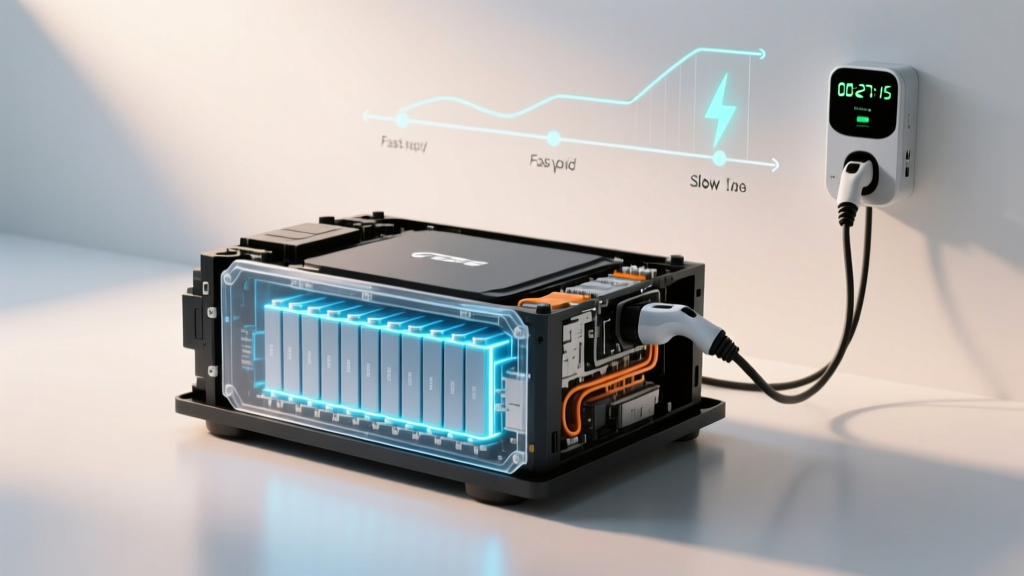
Charge time is a function of battery capacity divided by charger power, adjusted for real-world losses (typically 10-15% for Level 2 AC charging) and charge-curve tapering on DC fast chargers. Here's what to expect across the three charging levels for common EV battery sizes in the 2025-2026 model years.
| Level | Voltage / Power | Miles of Range per Hour | 60 kWh Battery (0-100%) | 85 kWh Battery (0-100%) | 100 kWh Battery (0-100%) |
|---|---|---|---|---|---|
| Level 1 (120V household) | 1.0–1.4 kW | 3–5 mi/hr | ~50–60 hours | ~70–85 hours | ~80–100 hours |
| Level 2 (240V home/public) | 7.2–11.5 kW | 25–44 mi/hr | ~6–9 hours | ~8–12 hours | ~10–14 hours |
| DC Fast Charge (public) | 50–350 kW | 150–1,000+ mi/hr (peak) | 10–80% in ~18–35 min | 10–80% in ~20–40 min | 10–80% in ~25–45 min |
Real-World Examples: Popular 2025-2026 EVs
To make this concrete, here are charge times for specific models based on manufacturer data and independent testing:
- Tesla Model Y Long Range (75 kWh usable, NMC): At a 250 kW Supercharger, 10–80% in approximately 20–25 minutes. On an 11.5 kW home Level 2, 0–100% in roughly 7.5 hours.
- Hyundai Ioniq 5 (77.4 kWh usable, NMC): On a 350 kW charger with its 800V architecture, 10–80% in approximately 18 minutes — one of the fastest in its class. Home Level 2 at 10.9 kW: ~8 hours.
- Ford F-150 Lightning Extended Range (131 kWh usable, NMC): Peak 150 kW DC fast charge, 15–80% in roughly 41 minutes. Level 2 at 19.2 kW (80A Ford Charge Station Pro): ~8 hours.
- BYD Seal / Tesla Model 3 RWD (LFP, ~60 kWh): Peak DC fast charge 170 kW, 10–80% in roughly 26 minutes. LFP packs can be charged to 100% regularly without degradation concerns — a key advantage discussed below.
How Long Do EV Batteries Last? Degradation Data
Modern EV batteries are engineered to outlast the typical ownership period. According to data aggregated from fleet studies and owner reports, most lithium-ion EV packs retain 85–95% of original capacity after 100,000 miles. The rate of degradation is non-linear: expect a steeper drop of 2–5% in the first year or 20,000 miles, followed by a slow, gradual decline of roughly 1–2% per year thereafter.
Real-world data points from major sources:
- Tesla Impact Report (2023): Model 3/Y batteries retain approximately 85% capacity after 200,000 miles. Model S/X retain roughly 88% at the same mileage.
- Geotab fleet study (2024, 10,000+ EVs): Average annual degradation across all brands was 1.8% per year, meaning a typical pack retains ~82% after 10 years.
- Consumer Reports survey data: Only about 4% of EV owners reported needing a battery replacement outside of warranty, and most of those were early-generation models (pre-2018).
Year 1 / 15,000 mi: ~96–98% State of Health (SoH)
Year 3 / 45,000 mi: ~92–95% SoH
Year 5 / 75,000 mi: ~89–93% SoH
Year 8 / 120,000 mi: ~85–90% SoH
Year 10 / 150,000 mi: ~82–87% SoH
Note: LFP packs typically show slower degradation, with some fleet data suggesting 90%+ SoH at 200,000 miles.
LFP vs NMC/NCA: Which Battery Chemistry Is Better?
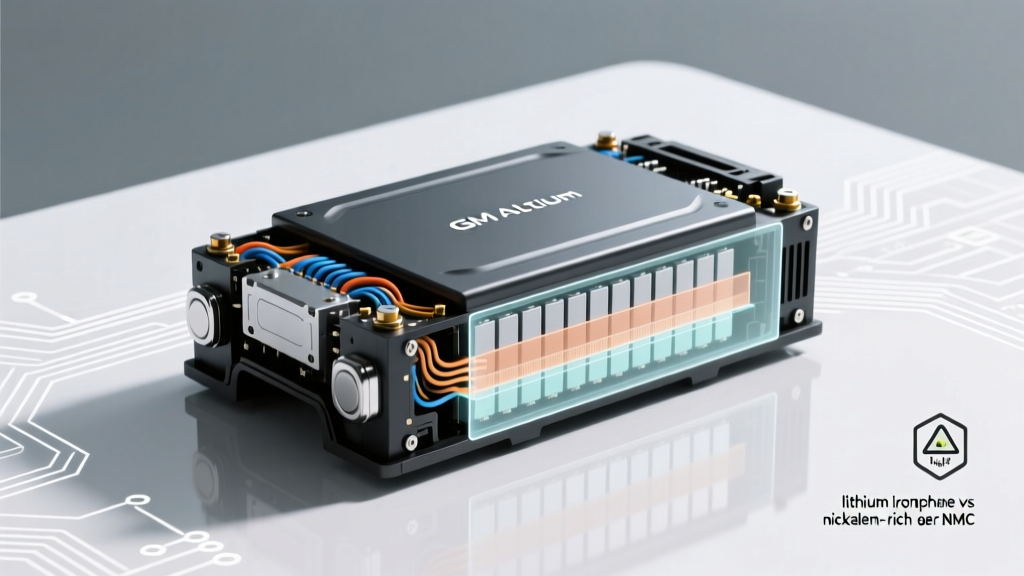
Battery chemistry is the single biggest factor in longevity, charging habits, and cost. The two dominant chemistries in 2025–2026 EVs are Lithium Iron Phosphate (LFP) and Nickel Manganese Cobalt (NMC) or Nickel Cobalt Aluminum (NCA). Neither is universally "better" — the right choice depends on your driving pattern.
| Attribute | LFP (Lithium Iron Phosphate) | NMC / NCA (Nickel-based) |
|---|---|---|
| Energy Density | Lower (~160–180 Wh/kg cell-level) — heavier pack for same range | Higher (~220–300 Wh/kg) — lighter, more range per kWh |
| Cycle Life | 3,000–5,000+ cycles — significantly longer lifespan | 1,000–2,000 cycles — adequate for vehicle lifetime but shorter |
| Cold-Weather Performance | Weaker in extreme cold — greater range loss below 20°F | Better cold-weather efficiency with active thermal management |
| Charging to 100% | Recommended regularly — no degradation penalty; needed for BMS calibration | Daily charge limit of 80% recommended; 100% only for trips |
| Cost | ~20–30% cheaper per kWh — no cobalt or nickel | More expensive due to cobalt/nickel supply chain |
| Thermal Stability / Safety | Superior — less prone to thermal runaway | Good with active cooling, but higher runaway risk at cell level |
| Common In (2025–2026) | Tesla Model 3 RWD, Model Y RWD, BYD models, base trims | Tesla Long Range/Performance, Hyundai Ioniq 5/6, Ford F-150 Lightning, most AWD/LR trims |
The verdict: Choose LFP if you want maximum longevity, lower cost, and plan to charge to 100% daily at home. Choose NMC if you need maximum range, better cold-weather performance, or faster DC fast charging. For most commuters with home charging, LFP is the smarter long-term bet. For road-trippers and cold-climate drivers, NMC offers practical advantages.
What Does the EV Battery Warranty Cover?
Federal law mandates that EV batteries carry a minimum warranty of 8 years / 100,000 miles (10 years / 150,000 miles in California and states that follow CARB standards). Most manufacturers exceed this baseline. The warranty guarantees that the battery will retain a specified percentage of its original capacity — typically 70% — over the warranty period.
| Manufacturer | Warranty Period | Capacity Retention Threshold | Notes |
|---|---|---|---|
| Tesla | 8 yr / 120,000 mi (Model 3/Y LR); 8 yr / 100,000 mi (RWD) | 70% | Covers defects and excessive degradation below threshold |
| Hyundai / Kia | 10 yr / 100,000 mi | 70% | Among the longest coverage in the industry |
| Ford | 8 yr / 100,000 mi | 70% | Covers battery components and capacity loss |
| GM (Chevrolet, Cadillac) | 8 yr / 100,000 mi | 70% (some Ultium models: 60% retained capacity threshold) | Verify specific model terms — Bolt EV was 8yr/100k at 60% |
| BMW | 8 yr / 100,000 mi | 70% | Includes i4, i5, i7, iX models |
What triggers a warranty claim? If your battery's State of Health (SoH) drops below the threshold percentage during the warranty period — confirmed by a dealer diagnostic scan — the manufacturer must repair or replace the pack at no cost. In practice, very few owners hit this threshold. A 2024 study by Geotab found that even high-mileage fleet EVs rarely dropped below 80% SoH within 8 years.
How Much Does an EV Battery Cost to Replace?
Out-of-warranty battery replacement is the number-one fear among prospective EV buyers. Here's the reality: most EV batteries never need replacement during the vehicle's usable life. But if you do need one — typically due to physical damage, manufacturing defect discovered after warranty, or extreme degradation on an older vehicle — here's what it costs in 2025–2026.
| Model | Battery Size (kWh) | Estimated Replacement Cost | Cost per kWh |
|---|---|---|---|
| Tesla Model 3 RWD (LFP) | ~60 kWh | $8,000–$12,000 | ~$130–$200 |
| Tesla Model Y Long Range | ~75 kWh | $12,000–$16,000 | ~$160–$215 |
| Hyundai Ioniq 5 | 77.4 kWh | $12,000–$18,000 | ~$155–$230 |
| Ford F-150 Lightning Ext. Range | 131 kWh | $20,000–$30,000 | ~$150–$230 |
| Chevrolet Bolt EV/EUV | 65 kWh | $14,000–$16,000 (post-recall replacement packs) | ~$215–$245 |
Key context: Battery pack prices have fallen from over $1,000/kWh in 2010 to approximately $130–$160/kWh at the cell level in 2025, according to BloombergNEF. Installed/replacement costs are higher due to labor, module integration, and dealer markup. The trend continues downward. Additionally, many replacement scenarios involve swapping individual modules (a fraction of the full pack cost) rather than the entire battery. As fueleconomy.gov notes, EV battery technology has matured to the point where most packs are designed to last the life of the vehicle.
Factors That Affect EV Battery Lifespan
Not all batteries age equally. Your habits and environment play a measurable role in how quickly capacity degrades. Here are the primary factors, ranked by impact:
- Avoid sustained 100% SoC (NMC/NCA only): Set daily charge limit to 80%. Charge to 100% only when you need the full range for a trip. LFP owners: charge to 100% at least weekly for BMS calibration.
- Minimize DC fast charging as your primary method: Occasional road-trip fast charging is fine. Daily reliance on 150+ kW DC charging accelerates degradation by an estimated 0.5–1% additional per year versus Level 2 only.
- Precondition before fast charging: Use your EV's built-in navigation-to-charger feature (Tesla, Hyundai, Ford, BMW all offer this) to warm the battery to optimal temperature. Cold batteries charge slower and experience more stress.
- Avoid extreme SoC in extreme heat: Don't leave your EV sitting at 100% SoC in 100°F+ weather for days. If storing, set to 50–60% SoC.
- Use Level 2 home charging as your daily routine: Slow, moderate-speed AC charging generates less heat and stress than high-power DC. This is the single best habit for longevity.
- Keep the thermal management system active: Don't disable preconditioning or cabin-overheat-protection features. They protect the battery too.
Cold Weather Impact on Battery Health and Range
Cold temperatures don't permanently damage EV batteries, but they do cause temporary range loss of 20–40% at temperatures below 20°F, primarily due to increased internal resistance and energy used for battery and cabin heating. An EV rated at 300 miles EPA may deliver 180–240 miles in deep winter conditions. This loss is reversible — capacity returns when temperatures warm. Vehicles with heat pumps (standard on most 2024+ EVs from Hyundai, Tesla, BMW, and others) mitigate this loss by 5–10 percentage points compared to resistive heating.
How to Check and Monitor Your Battery's State of Health
State of Health (SoH) is the percentage of original capacity your battery currently holds. A new EV has 100% SoH; a battery at 85% SoH that originally held 75 kWh now holds approximately 63.75 kWh usable. Here's how to check it:
- In-vehicle diagnostics: Some EVs display SoH or a battery health indicator directly in the infotainment system. Nissan Leaf has long offered a battery health bar. Tesla does not natively display SoH, but third-party apps can estimate it.
- OBD-II dongles and apps: Devices like the OBDLink SX paired with apps such as Leaf Spy (Nissan), TeslaFi, or Scan My Tesla can read battery SoH, cell voltage variance, and degradation curves from the vehicle's CAN bus.
- Dealer diagnostic scan: Any authorized dealer can run a battery health report. This is the official method for warranty claims. Request one before purchasing a used EV.
- Charging data analysis: If you track how many kWh it takes to charge from a known SoC to a higher SoC, you can estimate current capacity. Example: if charging from 20% to 80% requires 48 kWh from the wall (accounting for ~10% charging loss), your usable capacity is approximately 48 / 0.6 / 0.9 ≈ 88.9 kWh — compared to the original spec.
Emerging Battery Technology: What's Coming Next
While current lithium-ion technology is mature and reliable, several next-generation technologies are in development. These are not yet available in production vehicles as of 2026, but they represent the trajectory of the industry:
- Solid-state batteries: Replace the liquid electrolyte with a solid material, promising higher energy density (potentially 400+ Wh/kg at cell level), faster charging, and improved safety. Toyota has announced plans for limited production in 2027–2028, but mass-market availability is likely 2029 or later. Samsung SDI and QuantumScape are also developing solid-state cells with prototype demonstrations.
- Silicon anode batteries: Replacing graphite anodes with silicon can increase energy density by 20–40%. Companies like Sila Nanotechnologies and Group14 are supplying early production cells. The Mercedes-AMG G-Class 580e (2025) uses a silicon-anode battery from Group14, marking one of the first production applications. Expect broader adoption by 2027–2028.
- Sodium-ion batteries: Use abundant sodium instead of lithium, offering lower cost (potentially under $80/kWh) but lower energy density. CATL and BYD are producing sodium-ion cells for small EVs in China. US-market adoption is expected in budget segments by 2028+.
For buyers in 2026, today's LFP and NMC batteries are the proven, warrantied, and well-understood choice. Wait for solid-state only if your purchase timeline extends to 2029 or beyond.
Frequently Asked Questions
How long will it take to charge a battery at home overnight?
With a Level 2 home charger (most commonly 7.2 kW or 11.5 kW on a 240V circuit), most EVs charge from near-empty to full in 6–12 hours. Since the average American drives 37 miles per day (per EPA data), a nightly top-up from 60% to 80% takes just 1.5–3 hours on Level 2 — well within any overnight window.
Does fast charging damage the battery?
Modern EVs have sophisticated thermal management systems that protect the battery during DC fast charging. However, exclusive reliance on DC fast charging (150+ kW) as your only charging method can add approximately 0.5–1% additional degradation per year compared to Level 2 charging alone. For daily use, Level 2 at home is ideal. Fast charging on road trips — a few times per month — has minimal long-term impact.
Can I replace just one module instead of the whole battery?
Yes, in many cases. Most EV battery packs are composed of multiple modules (typically 4–16 depending on the vehicle). If a single module fails or degrades disproportionately, a qualified technician can replace just that module for $1,500–$4,000 rather than $12,000–$30,000 for a full pack. Tesla, Nissan, and Hyundai service centers routinely perform module-level repairs.
Is it better to buy an EV with LFP or NMC battery?
For most buyers who charge at home and drive under 250 miles daily, LFP is the better long-term choice: lower cost, longer cycle life, and no anxiety about charging to 100%. If you regularly drive 300+ miles between charges, live in a very cold climate, or need the lightest possible vehicle for performance, NMC offers higher energy density and better cold-weather efficiency.
Will my EV battery need to be replaced before I sell the car?
Statistically, very unlikely. Data from Geotab and Consumer Reports shows that fewer than 5% of EV batteries require replacement within the first 10 years, and the vast majority of those are covered under warranty. At the current degradation rate of ~1.8% per year, a 10-year-old EV battery still retains roughly 82% of its original capacity — plenty of usable range for daily driving.
How does the federal tax credit relate to battery sourcing?
The IRS §30D clean vehicle credit offers up to $7,500 for qualifying new EVs, but eligibility depends on battery component manufacturing and critical mineral sourcing requirements that phase in progressively through 2026. As of the 2026 tax year, both the battery component and critical mineral requirements must be met for the full credit. MSRP caps ($55,000 for sedans, $80,000 for SUVs/trucks/vans) and buyer income limits ($150,000 single / $300,000 joint AGI) also apply. Consult a tax professional for your specific eligibility — rules change frequently.