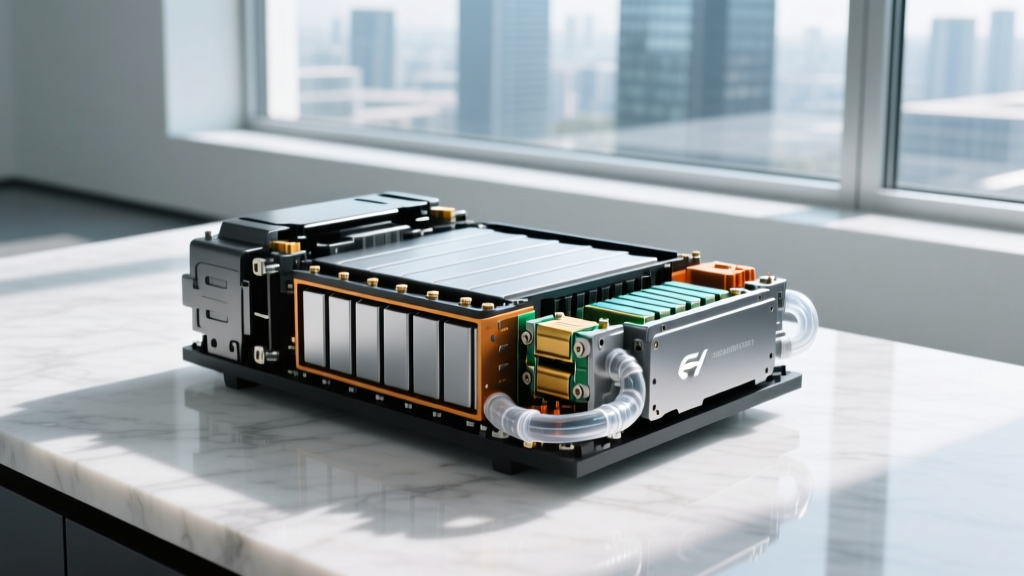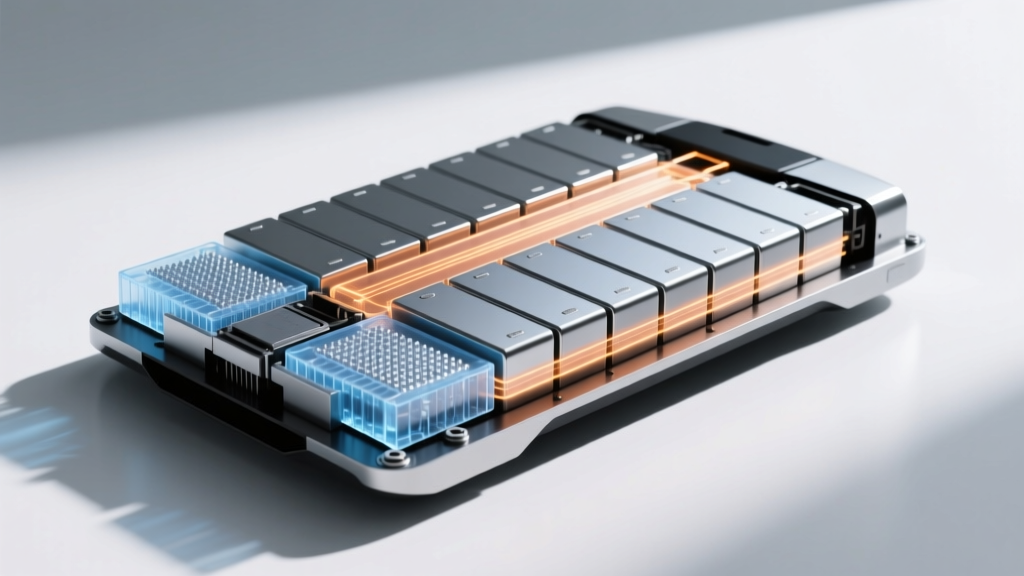
The single most expensive component in any electric vehicle is the high-voltage traction battery — the pack that actually propels the car. Yet most EV owners have only a vague sense of how their battery ages, what voids its warranty, or which daily habits accelerate capacity loss. If you've ever typed "how to charge battery for car" into a search bar hoping for straight answers about your EV's long-term health, this guide is built for you.
We'll walk through the chemistry inside modern packs, the real-world degradation data that manufacturers don't always highlight, warranty fine print, and the specific charging habits that meaningfully extend — or shorten — your battery's useful life. Every figure here comes from manufacturer specifications, fueleconomy.gov, and peer-reviewed fleet data.
LFP vs NMC vs NCA: The Chemistry Inside Your Pack
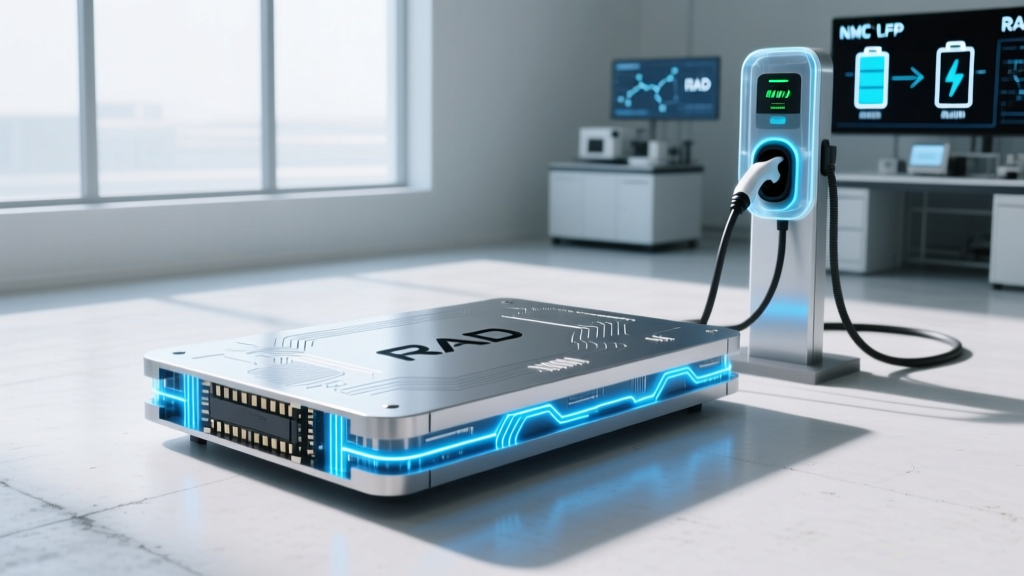
Not all EV batteries are the same. The cathode chemistry determines energy density, cycle life, cold-weather behavior, and cost. In 2026, three chemistries dominate the US market:
- LFP (Lithium Iron Phosphate): Used in standard-range Tesla Model 3/Y, base Ford Mustang Mach-E, and several BYD models entering global markets.
- NMC (Nickel Manganese Cobalt): Found in Hyundai Ioniq 5/6, Kia EV6/EV9, BMW iX, Rivian R1T/R1S, and most long-range packs.
- NCA (Nickel Cobalt Aluminum): Primarily Tesla long-range and performance variants.
| Attribute | LFP | NMC | NCA |
|---|---|---|---|
| Energy Density (Wh/kg cell-level) | ~160–180 | ~220–260 | ~240–270 |
| Typical Cycle Life (to 80% SoH) | 3,000–5,000+ | 1,000–2,000 | 1,000–1,500 |
| Cold-Weather Range Loss (20°F) | ~35–40% | ~25–30% | ~25–30% |
| Recommended Daily SoC Ceiling | 100% (manufacturer-approved) | 80% (for daily use) | 80% (for daily use) |
| Cost per kWh (pack-level, 2026) | ~$90–$110 | ~$120–$145 | ~$125–$150 |
| Cobalt Content | None | Low–moderate | Low |
| Example Vehicles | Tesla Model 3 RWD, Mach-E Select SR | Ioniq 5, EV6, Rivian R1T, BMW iX | Tesla Model Y LR, Model S |
Which is better — LFP or NMC?
It depends on your use case, not an absolute ranking:
- Choose LFP if you want maximum cycle life, plan to keep the car 10+ years, mostly charge at home, and don't need the longest single-charge range. LFP tolerates daily 100% charging without meaningful penalty, which simplifies ownership.
- Choose NMC/NCA if you need the longest EPA range per charge (300+ miles), frequently road-trip in cold climates, or tow heavy loads. These chemistries pack more energy into the same volume but degrade faster if habitually held at 100% SoC.
How Long Do EV Batteries Actually Last?
The short answer: far longer than most buyers fear. Fleet data from Tesla's 2025 Impact Report and independent analyses by Geotab show that modern liquid-cooled packs typically retain 85–92% of original capacity after 150,000 miles. Complete failure before 200,000 miles is rare.
- Tesla Model 3/Y (NCA/NMC): ~12% average capacity loss at 150,000 miles; curve flattens significantly after 50,000 miles.
- Chevrolet Bolt EV/EUV (NMC, 65 kWh): ~8–10% loss at 100,000 miles per owner-reported data on Bolt forums and Recurrent Auto.
- Hyundai Ioniq 5 (NMC, 77.4 kWh): Early fleet data (~80,000 miles) shows ~6–8% loss; thermal management is aggressive and effective.
- Tesla Model 3 RWD (LFP, ~60 kWh): Sub-5% loss reported at 80,000 miles in multiple fleet samples — consistent with LFP's higher cycle-life rating.
The degradation curve is non-linear. Most packs lose 2–5% in the first year (the "break-in" drop), then settle into a slow linear decline of roughly 1–2% per year under normal use. A pack that shows 90% State of Health (SoH) at 60,000 miles is on track for 80%+ at 200,000 miles.
What the Battery Warranty Actually Covers
Federal law (EPA emissions warranty precedent and CARB-influenced standards) has pushed manufacturers to offer robust high-voltage battery warranties. In 2026, the typical floor is 8 years / 100,000 miles, with California Air Resources Board (CARB) states often requiring 10 years / 150,000 miles.
| Vehicle | Warranty Term | Capacity Retention Threshold | Notes |
|---|---|---|---|
| Tesla Model 3/Y (all trims) | 8 yr / 120,000 mi (LR, Perf); 8 yr / 100,000 mi (RWD) | 70% | Covers defect + capacity below threshold |
| Hyundai Ioniq 5 / Ioniq 6 | 10 yr / 100,000 mi | 70% | Among the longest terms in the segment |
| Kia EV6 / EV9 | 10 yr / 100,000 mi | 70% | Same powertrain warranty structure as Hyundai |
| Ford Mustang Mach-E | 8 yr / 100,000 mi | 70% | Extended-range pack included |
| Rivian R1T / R1S | 8 yr / 175,000 mi | 70% | Notable for high mileage cap |
| BMW iX / i4 | 8 yr / 80,000 mi | 70% | Lower mileage cap than most competitors |
| Chevrolet Equinox EV / Blazer EV | 8 yr / 100,000 mi | 60% (some trims 70%) | Verify threshold by specific trim year |
Critical fine print: Warranties cover capacity falling below the stated threshold — not any degradation at all. A pack at 72% SoH at 95,000 miles on a Tesla is technically within warranty spec, even though you've lost over a quarter of your original range. Warranties also exclude damage from collisions, flooding, improper modifications, or use of non-compliant charging equipment.
EV Battery Replacement Cost: What to Budget (and Why You Probably Won't Need To)
Here's the number that causes the most anxiety — and the one most likely to be irrelevant to your ownership. Replacement costs are real but rarely incurred by first or even second owners.
| Vehicle | Pack Size (kWh usable) | Chemistry | Replacement Cost Range (parts + labor) |
|---|---|---|---|
| Tesla Model 3 RWD | ~57.5 | LFP | $10,000–$14,000 |
| Tesla Model Y Long Range | ~75 | NCA/NMC | $13,000–$18,000 |
| Hyundai Ioniq 5 | 77.4 | NMC | $14,000–$20,000 |
| Ford F-150 Lightning (Extended) | ~98 | NMC | $18,000–$28,000 |
| GMC Hummer EV | ~212 | NMC | $35,000–$45,000 |
| Chevrolet Bolt EV (post-recall replacement) | 65 | NMC | $14,000–$16,000 (historical; covered under recall) |
| Rivian R1T (Large Pack) | ~128 | NMC | $22,000–$30,000 |
Context that matters: According to data aggregated by Recurrent Auto and fleet operators, fewer than 2–3% of EVs have required a full pack replacement within the first 150,000 miles — and most of those were covered under warranty. Pack costs have declined roughly 8–12% per year since 2020. If you do need a replacement in 2032, expect the price to be substantially lower than today's figures.
Module-level repair is also increasingly common. Many packs allow individual module replacement for $2,000–$6,000 rather than a full pack swap, and independent EV repair shops are expanding this capability.
7 Habits That Actually Affect Battery Longevity
Not all miles are equal when it comes to degradation. Here are the factors ranked by measurable impact, based on fleet-telemetry research and manufacturer guidance:
- State of Charge (SoC) extremes. Storing a pack at 100% SoC for days at a time — especially in heat — accelerates calendar aging. For NMC/NCA, daily charging to 80% and avoiding sitting at 100% overnight is the single highest-impact habit. LFP owners can charge to 100% daily per manufacturer guidance, but should still avoid leaving the car at 100% for multi-day storage.
- DC fast-charging frequency. Occasional road-trip fast charging has negligible impact. However, exclusive reliance on 150+ kW DC fast charging — particularly without preconditioning — measurably increases degradation. Tesla's own data shows vehicles that fast-charge >90% of the time exhibit ~1–2% additional loss at 100,000 miles vs. primarily Level 2 charging.
- Thermal extremes. Battery packs degrade faster when repeatedly exposed to sustained ambient temperatures above 95°F or below 10°F without thermal management. Modern liquid-cooled systems mitigate this heavily, but parking in shade/garages in Arizona summers still helps.
- Preconditioning before fast charging. Cars that precondition the battery (Tesla's "on-route" warmup, Hyundai's battery conditioning mode) before DC fast charging experience less lithium plating stress. Always enable navigation-routed preconditioning.
- Depth of discharge patterns. Shallow cycles (charging from 40% to 80%) are less stressful than deep cycles (10% to 100%). You don't need to obsess over this, but avoiding regular sub-10% SoC helps.
- Calendar aging. Even a parked EV battery degrades over time. A car stored at 50% SoC in moderate temperatures ages slowest. Avoid long-term storage at 100% or below 20%.
- Aftermarket modifications. Non-OEM chargers, third-party battery heaters, or firmware tweaks can void warranty coverage. Stick with certified equipment.
- Set charge limit to 80% for daily driving (NMC/NCA); 100% is fine for LFP daily use.
- Enable scheduled charging so the car finishes charging right before departure — minimizes time at high SoC.
- Use Level 2 home charging as your primary method; reserve DC fast charging for road trips.
- Enable battery preconditioning when navigating to a fast charger.
- In extreme heat, park in shade or a garage when possible.
- For multi-week storage, set SoC to ~50% and plug in with a charge limit of 50–60%.
- Check tire pressure monthly — underinflated tires increase energy draw and indirectly stress the pack with higher discharge rates.
How to Check Your Battery's State of Health (SoH)
State of Health (SoH) is the percentage of your battery's current maximum capacity relative to its original factory capacity. A new pack is 100% SoH; a pack that held 77.4 kWh when new but now holds 69.7 kWh is at ~90% SoH.
Built-in Vehicle Methods
- Tesla: The in-car energy app shows projected range at 100% — compare this to the original EPA rating. Third-party apps like Tessie or Stats for Tesla pull more granular SoH estimates from the BMS (Battery Management System) via the vehicle's API.
- Hyundai/Kia: The EV menu in the infotainment system displays battery health status. Dealers can pull detailed SoH via the KDS (Kia Diagnostic System) or GDS (Genesis/Hyundai Diagnostic System) tool.
- Ford: The FordPass app shows estimated range; dealers can run an OBD-II battery health report.
- BMW: The iDrive system includes a battery health indicator; detailed SoH is accessible via the dealer diagnostic system or the My BMW app's vehicle details.
Third-Party and OBD-II Tools
- OBD-II dongles + apps: Devices like the OBDLink MX+ paired with apps such as ABRP (A Better Route Planner) or Car Scanner can read BMS-reported SoH, cell voltage variance, and pack temperature.
- Recurrent Auto: A free service (for participating owners) that tracks real-world range and SoH over time, comparing your pack against a fleet of identical vehicles.
- Dealer health check: Most manufacturers will perform a battery health report at no charge during scheduled service. Request one annually or before a warranty claim.
What's normal vs. concerning: A SoH reading of 88–94% at 50,000 miles is typical and healthy. Below 80% before 80,000 miles may indicate a defective module and is worth a warranty claim. Cell voltage variance above 200 mV between the highest and lowest cell in the pack suggests imbalance that a dealer should investigate.
Emerging Battery Tech: Solid-State, Silicon Anode, and What's Real
Headlines promise revolutionary batteries every year. Here's where next-generation technologies actually stand as of 2026 — and when they'll reach production vehicles you can buy:
- Solid-state batteries: Toyota has announced limited production of solid-state-equipped vehicles for 2027–2028, initially in Japan, with US availability likely 2029+. Samsung SDI and QuantumScape are in pilot production. These promise ~35–50% higher energy density and faster charging, but manufacturing yield and cost remain unsolved at scale. Not available in any 2026 production vehicle.
- Silicon-dominant anodes: Companies like Sila Nanotechnologies and Group14 are shipping silicon-composite anode materials to manufacturers. The Mercedes G-Class 580e (2025) uses a silicon-anode pack from Factorial Energy with ~25% higher energy density than conventional graphite anodes. Expect broader adoption in premium models by 2027–2028.
- Sodium-ion batteries: CATL and BYD are producing sodium-ion packs for lower-cost, shorter-range vehicles — primarily in China. US-market adoption is unlikely before 2028 due to supply chain and regulatory timelines.
- LFP improvements: CATL's "Shenxing" LFP cells (announced 2024, in production 2025–2026) achieve 4C charging rates — 10–80% in approximately 10 minutes — closing the fast-charge gap with NMC while retaining LFP's longevity advantages.
Practical takeaway: If you're buying an EV in 2026, today's lithium-ion chemistries (LFP and NMC) are mature, well-understood, and backed by robust warranties. Waiting for solid-state means waiting 3–5+ years for limited availability at premium pricing.
Frequently Asked Questions
How long do EV batteries last in years and miles?
Most modern liquid-cooled EV batteries retain 80–90% of original capacity at 150,000–200,000 miles, which typically translates to 12–20 years of average driving (13,500 miles/year per FHWA data). The battery will usually outlast other major vehicle components. Complete failure before 200,000 miles is statistically rare (under 3% of vehicles).
How much does an EV battery cost to replace?
Full pack replacement ranges from approximately $10,000 for a Tesla Model 3 RWD (LFP, ~57.5 kWh) to $35,000–$45,000 for a GMC Hummer EV (~212 kWh). Most mainstream packs (75–100 kWh) fall in the $14,000–$28,000 range including labor. However, fewer than 3% of EVs require full replacement within the first 150,000 miles, and most such replacements are covered under the 8-year/100,000-mile minimum warranty. Module-level repairs cost $2,000–$6,000.
What does the battery warranty cover?
EV battery warranties cover manufacturing defects and capacity loss below a stated threshold — typically 70% State of Health — within the warranty period (commonly 8 years/100,000 miles; Hyundai/Kia offer 10 years/100,000 miles; Rivian covers 8 years/175,000 miles). They do not cover gradual degradation above the threshold, damage from accidents, flooding, or unauthorized modifications. In CARB states (California and adopting states), minimum coverage is often 10 years/150,000 miles.
How do I check and maximize my battery's health?
Check SoH via your vehicle's built-in energy display, the manufacturer's mobile app, an OBD-II dongle with BMS-reading capability, or a dealer diagnostic report. To maximize health: charge NMC/NCA to 80% daily (LFP to 100% is acceptable), use Level 2 home charging as primary, enable battery preconditioning before DC fast charging, avoid storing at 100% or below 20% SoC, and park in moderate temperatures when possible.
LFP vs NMC — which is better and why?
Neither is universally better. LFP offers longer cycle life (3,000–5,000+ cycles vs. 1,000–2,000 for NMC), lower cost (~$90–$110/kWh vs. $120–$145/kWh), no cobalt, and tolerance for daily 100% charging. NMC/NCA offers higher energy density (longer range in the same pack volume), better cold-weather performance, and faster peak DC charging speeds. For city commuters and long-term keepers, LFP is often the pragmatic choice. For road-trippers and cold-climate drivers, NMC/NCA provides more usable range.
Does fast charging damage my EV battery?
Occasional DC fast charging has minimal measurable impact. However, exclusive reliance on 150+ kW DC fast charging — especially without battery preconditioning — adds approximately 1–2% additional capacity loss over 100,000 miles compared to primarily Level 2 charging. Modern BMS systems actively manage charge rates and temperature to limit damage, so the risk is incremental, not catastrophic. For daily use, Level 2 at 7–11.5 kW remains the healthiest charging method.