EV Battery Longevity: What the Data Actually Shows
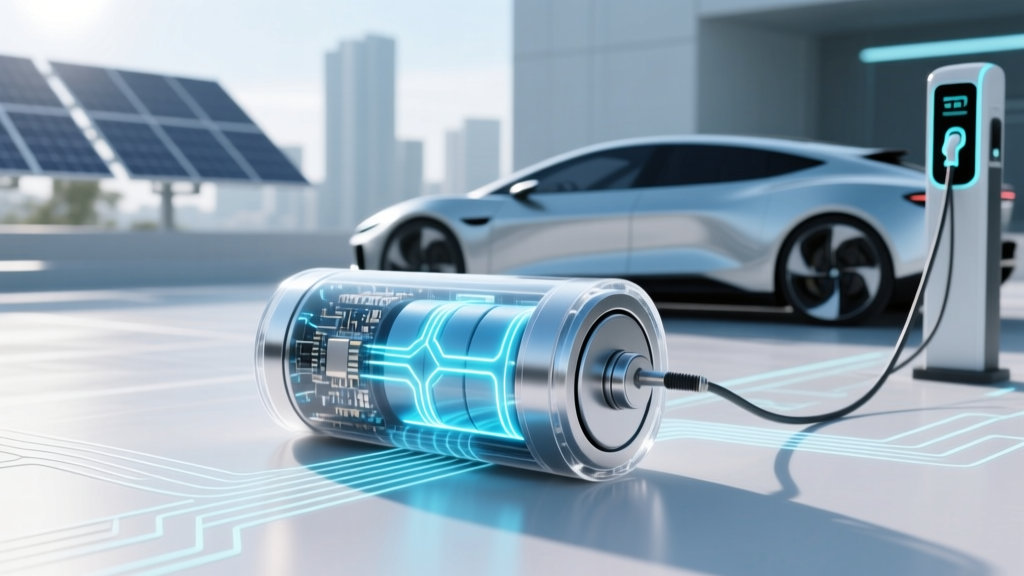
If you're researching electric vehicles, one question dominates the decision: how long will the battery last, and what happens when it degrades? The phrase "battery charge car" might bring up everything from daily charging routines to decade-long lifespan concerns. This guide cuts through the noise with hard data on chemistry, degradation curves, warranty coverage, and real replacement costs — so you can buy with confidence.
The short answer: most modern EV traction batteries (the high-voltage pack that drives the wheels, not the 12V auxiliary battery) are engineered to outlast the vehicle itself. But the details — chemistry choice, charging habits, and climate — matter enormously. Let's break it all down.
LFP vs NMC vs NCA: Choosing Your Battery Chemistry
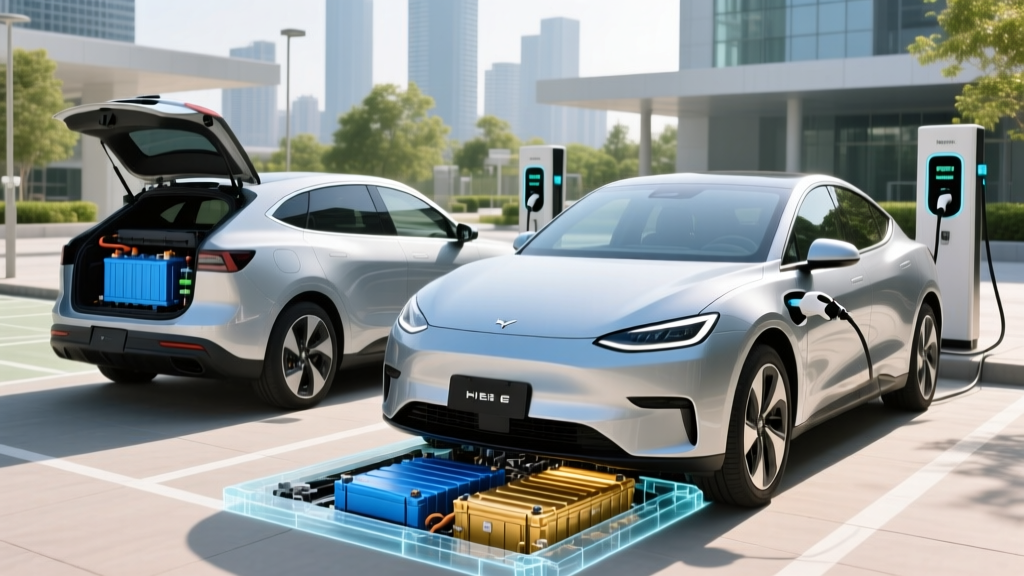
Not all EV batteries are built the same. The two dominant lithium-ion chemistries in 2026 passenger vehicles are LFP (lithium iron phosphate) and NMC/NCA (nickel manganese cobalt / nickel cobalt aluminum). Each has distinct trade-offs that affect range, longevity, cold-weather performance, and price.
| Attribute | LFP (LiFePO₄) | NMC / NCA |
|---|---|---|
| Energy Density | Lower (~160-180 Wh/kg cell-level) | Higher (~220-260 Wh/kg cell-level) |
| Typical Vehicles | Tesla Model 3/Y RWD, Ford Mustang Mach-E Select (LFP trims), BYD models | Tesla Long Range, Hyundai Ioniq 5/6, Kia EV6/EV9, Rivian, most premium EVs |
| Cycle Life | 3,000-5,000+ cycles to 80% capacity | 1,500-2,500 cycles to 80% capacity |
| State of Charge (SoC) Tolerance | Can be charged to 100% daily without harm | Best kept between 20-80% for daily use; 100% for road trips only |
| Cold-Weather Performance | More range loss in freezing temps (~30-40% reduction) | Better cold performance (~20-30% reduction), especially with heat pump |
| Cost | Lower — no cobalt or nickel; ~$100-120/kWh pack-level | Higher — commodity-sensitive; ~$120-150/kWh pack-level |
| Thermal Stability | Excellent — inherently more stable, lower thermal runaway risk | Good — requires more active thermal management |
| Best For | Daily commuters, high-mileage drivers, warm climates, budget-conscious buyers | Long-range needs, cold climates, performance-oriented buyers, towing |
Which Is Better — LFP or NMC?
There is no universal winner. Choose LFP if you prioritize longevity (you plan to keep the car 10+ years or drive 200,000+ miles), want the simplicity of charging to 100% daily, live in a mild climate, and value lower upfront cost. Choose NMC/NCA if you need maximum range per charge, regularly drive in freezing temperatures, tow, or want the highest performance. For most buyers doing 12,000-15,000 miles/year in moderate climates, either chemistry will comfortably exceed the vehicle's useful life.
Real-World Battery Degradation: What Owners Actually See
Battery degradation is the gradual loss of usable capacity over time and charge cycles. It's not a cliff — it's a curve that's steepest in the first year or two, then flattens significantly. Here's what real-world fleet data shows:
| Age / Mileage | Average Capacity Retained | Notes |
|---|---|---|
| Year 1 / ~12,000 mi | 95-97% | Initial "break-in" loss; steepest part of the curve |
| Year 3 / ~40,000 mi | 91-94% | Degradation slows significantly after Year 2 |
| Year 5 / ~70,000 mi | 88-92% | Most owners notice minimal day-to-day difference |
| Year 8 / ~100,000 mi | 85-90% | Warranty threshold period; most packs still above 70% |
| Year 10+ / ~150,000+ mi | 80-88% | LFP packs often retain 90%+; NMC packs trend toward 82-86% |
Key data point: According to analysis by Recurrent Auto, which tracks over 15,000 EVs in real-world conditions, the median battery degradation at 100,000 miles is approximately 10-12% for NMC packs and 6-8% for LFP packs. Outliers exist — packs exposed to frequent DC fast charging in extreme heat without preconditioning degrade faster — but catastrophic failure before 150,000 miles is rare in modern liquid-cooled packs.
For context: a 2026 Tesla Model 3 Long Range with an EPA-rated 363 miles and an NMC pack losing 12% over 100,000 miles still delivers roughly 319 miles of rated range — more than adequate for nearly all drivers.
Battery Warranty Terms: What's Actually Covered
Federal law mandates a minimum EV battery warranty of 8 years or 100,000 miles (whichever comes first) for emissions-related components, which California and CARB-adopting states have pushed to 10 years / 150,000 miles. Most manufacturers meet or exceed these thresholds. Here's how major brands structure coverage in 2026:
| Manufacturer | Warranty Period | Capacity Retention Threshold | Notes |
|---|---|---|---|
| Tesla (Model 3/Y) | 8 yr / 120,000 mi (LR); 8 yr / 100,000 mi (RWD) | 70% | Covers defects and capacity below threshold |
| Hyundai / Kia | 10 yr / 100,000 mi | 70% | Among the most generous terms |
| Ford (Mach-E, F-150 Lightning) | 8 yr / 100,000 mi | 70% | Covers battery and EV components |
| GM (Ultium-based: Equinox EV, Blazer EV, Silverado EV) | 8 yr / 100,000 mi | 70% | Some commercial fleet models: 8 yr / 150,000 mi |
| Rivian (R1T, R1S) | 8 yr / 175,000 mi | 70% | Higher mileage cap reflects truck/SUV use case |
| BMW (i4, iX, i7) | 8 yr / 100,000 mi | 70% | Extends to 10 yr in some markets |
What triggers a warranty claim? If your battery's State of Health (SoH) drops below the stated threshold — typically 70% of original capacity — within the warranty period, the manufacturer must repair or replace the pack at no cost. In practice, this almost always means replacing defective modules rather than the entire pack. According to fueleconomy.gov, very few modern EVs require warranty battery replacement.
EV Battery Replacement Cost: When and How Much
This is the fear that keeps many buyers on the sideline. Let's put it in perspective: most EV batteries never need replacement during typical ownership. But if you're buying a high-mileage used EV, planning to keep a vehicle 15+ years, or suffer an out-of-warranty failure, here's what replacement costs look like in 2026:
| Vehicle | Battery Size | Chemistry | Replacement Cost Range | Notes |
|---|---|---|---|---|
| Tesla Model 3 RWD | ~60 kWh | LFP | $10,000 – $13,000 | LFP packs are cheaper; module-level repair may cost $3,000-$5,000 |
| Tesla Model 3/Y Long Range | ~75-82 kWh | NMC | $14,000 – $18,000 | Full pack replacement; module repairs available at lower cost |
| Hyundai Ioniq 5 | ~77.4 kWh | NMC | $13,000 – $17,000 | 10-year warranty reduces likelihood significantly |
| Ford F-150 Lightning (Extended Range) | ~131 kWh | NMC | $22,000 – $30,000 | Largest packs carry highest replacement cost |
| Chevrolet Equinox EV | ~85 kWh | NMC (Ultium) | $14,000 – $18,000 | GM's modular Ultium platform allows partial replacement |
| Nissan Ariya | ~91 kWh | NMC | $15,000 – $19,000 | Liquid-cooled; significant improvement over older LEAF air-cooled packs |
Critical context: Battery pack prices have fallen from over $1,000/kWh in 2010 to approximately $110-140/kWh at the pack level in 2026, according to BloombergNEF. By the time a 2026 EV actually needs an out-of-warranty replacement (likely 2038-2040), replacement costs will almost certainly be substantially lower. Additionally, independent EV shops increasingly offer module-level repairs — replacing only the degraded or defective cells within the pack — for $3,000 to $7,000, a fraction of full-pack cost.
Factors That Accelerate (or Slow) Battery Degradation
Your battery's lifespan isn't just a function of time — how you use it matters. Here are the biggest factors, ranked by impact:
Battery Care Best Practices
- Minimize DC fast charging when possible. Frequent use of 150+ kW DC fast chargers generates significant heat. Occasional road-trip fast charging is fine; relying on it as your daily charging method accelerates degradation. Aim for Level 2 home charging as your primary routine.
- Avoid extreme State of Charge (SoC) for extended periods. For NMC/NCA packs, don't store the car at 100% or 0% for days. Set your charge limit to 80% for daily driving and bump to 100% only before long trips. LFP packs are the exception — manufacturers recommend periodic 100% charges for cell balancing.
- Use preconditioning before fast charging. Most modern EVs automatically precondition the battery when you navigate to a DC fast charger. This warms or cools the pack to the optimal temperature window (roughly 77-95°F / 25-35°C), enabling faster charging and reducing thermal stress. In cold weather, preconditioning can cut your 10-80% charge time nearly in half.
- Garage your car when possible. Prolonged exposure to ambient temperatures above 100°F or below 10°F while parked at high SoC accelerates calendar degradation. A garage or shaded spot makes a measurable difference over years.
- Don't obsess over regenerative braking settings. Regen sends energy back to the battery, but the currents involved are well within the pack's design tolerances. Use whatever setting you prefer for driving comfort.
- Keep software updated. Over-the-air updates frequently refine the battery management system (BMS), improving thermal management algorithms and charge curves.
How to Monitor Your Battery's State of Health (SoH)
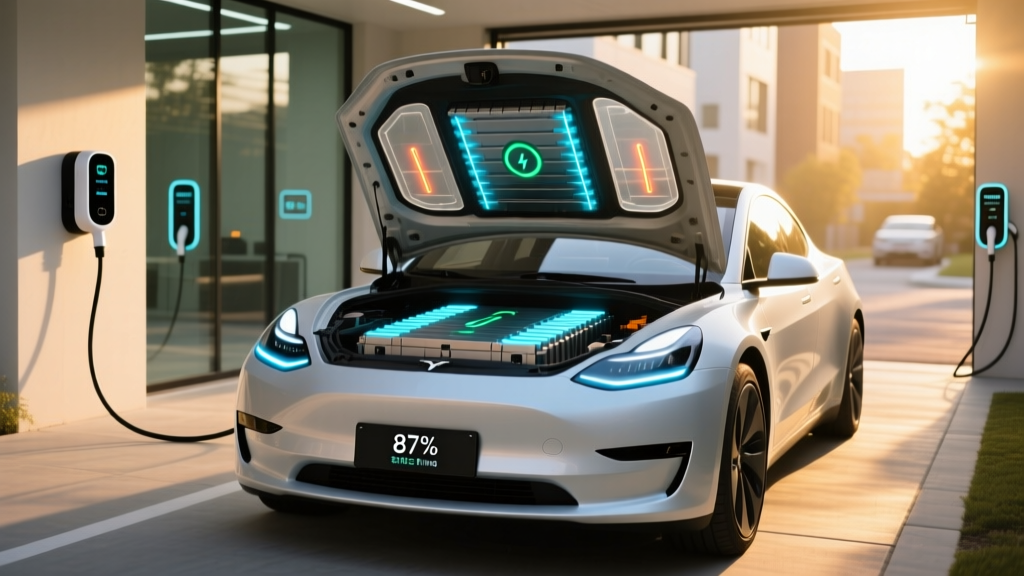
State of Health (SoH) is the percentage of original battery capacity that remains usable. A new EV starts at 100% SoH; if it drops to 85%, your 300-mile EPA-rated car now effectively has about 255 miles of range. Here's how to check it:
In-Vehicle and App-Based Monitoring
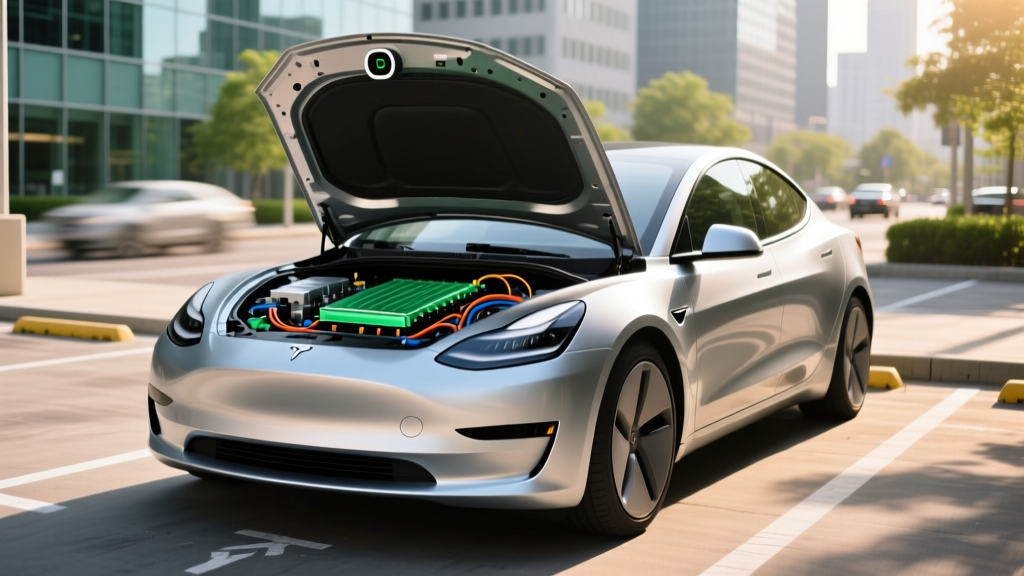
Most 2026 EVs display battery health information in the vehicle settings menu or companion app. Tesla's service menu shows estimated range at 100% SoC, which you can compare to the original EPA figure. Hyundai/Kia's infotainment includes an EV battery diagnostics page. Ford and GM offer battery health indicators in their respective apps.
OBD-II Diagnostic Tools
For more granular data, an OBD-II dongle paired with an app like Car Scanner, Leaf Spy (Nissan), or Scan My Tesla can read the BMS directly, showing SoH percentage, individual cell voltages, pack temperature, and cycle count. These tools cost $20-$50 for the hardware and are invaluable when evaluating a used EV.
Third-Party Battery Health Reports
Services like Recurrent Auto offer battery health reports based on connected-vehicle data. When buying a used EV, requesting a battery health report from the seller or an independent diagnostic is as important as checking the Carfax.
Emerging Battery Technology: What's Next (and When)
The battery landscape is evolving rapidly, but it's essential to separate lab breakthroughs from showroom-ready products:
Silicon-Anode Batteries (Near-Term: 2026-2028)
Companies like Sila Nanotechnologies and Group14 are replacing graphite anodes with silicon-dominant materials, boosting energy density by 20-40%. Early implementations are appearing in premium vehicles — the Mercedes-Benz G-Class EV uses silicon-anode cells from Group14. Expect broader adoption in 2027-2028 model-year vehicles, primarily in high-performance and luxury segments where cost is less constraining.
Solid-State Batteries (Mid-Term: 2028-2032)
Solid-state batteries replace the liquid electrolyte with a solid material, promising higher energy density (potentially 400+ Wh/kg at the cell level), faster charging, and improved safety. Toyota, Samsung SDI, and QuantumScape are leading development. Toyota has announced a solid-state EV targeted for 2027-2028 production, but at very limited volumes and premium pricing. Widespread, cost-competitive solid-state EVs are realistically a 2030-2032 proposition. Don't delay a 2026 EV purchase waiting for solid-state — current lithium-ion technology is mature, reliable, and improving incrementally every model year.
Sodium-Ion Batteries (Emerging: 2026-2029)
CATL and BYD are commercializing sodium-ion batteries for entry-level EVs, particularly in China. These offer lower energy density but dramatically lower cost and no lithium, cobalt, or nickel dependency. US-market availability is uncertain before 2028-2029 and would likely appear in budget-oriented models.
Frequently Asked Questions
How long do EV batteries last in years and miles?
Modern liquid-cooled EV batteries typically retain 85-90% capacity at 100,000 miles and 80-88% at 150,000+ miles. In years, expect 15-20+ years of service before capacity drops below 70%. LFP packs often exceed 200,000 miles with 90%+ retention. Most EV batteries outlive the vehicles they're installed in.
How much does an EV battery cost to replace in 2026?
Full pack replacement ranges from approximately $10,000 for a ~60 kWh LFP pack (Tesla Model 3 RWD) to $22,000-$30,000 for a ~131 kWh NMC pack (F-150 Lightning Extended Range). However, most replacements are covered under warranty, and module-level repairs cost $3,000-$7,000. Battery prices continue to fall annually.
What does the EV battery warranty actually cover?
Manufacturer warranties cover defects in materials/workmanship AND capacity loss below a stated threshold (typically 70% of original capacity) within the warranty period (usually 8 years/100,000 miles). If your battery degrades to 68% capacity at year 6, the manufacturer must repair or replace it at no cost. Warranties do not cover damage from accidents, improper modifications, or extreme neglect.
How do I check and maximize my EV battery health?
Check SoH through your vehicle's settings menu, companion app, or an OBD-II diagnostic tool. To maximize longevity: use Level 2 home charging as your primary method, set NMC charge limits to 80% for daily use (LFP can go to 100%), precondition before DC fast charging, avoid parking at extreme SoC in extreme temperatures, and keep up with software updates.
Is LFP better than NMC for my EV battery?
LFP offers superior cycle life (3,000-5,000+ cycles vs. 1,500-2,500), lower cost, the ability to charge to 100% daily, and better thermal stability. NMC offers higher energy density (more range in a smaller, lighter pack), better cold-weather performance, and higher power output. If you plan to keep your EV 10+ years, drive in warm climates, and don't need maximum range, LFP is the longevity winner. If you need 300+ miles of range, tow, or live where winters are harsh, NMC is the better fit.
Does fast charging damage my EV battery?
Occasional DC fast charging — like on road trips — has minimal impact on modern batteries with active thermal management. However, making 150-350 kW DC fast charging your daily routine will measurably accelerate degradation compared to Level 2 charging. The heat generated at high charge rates is the primary stressor. Always use your vehicle's preconditioning feature when navigating to a fast charger, and rely on home Level 2 charging for day-to-day use.
Will my EV battery need to be replaced?
Statistically, probably not. Data from Recurrent Auto and fleet operators shows that fewer than 1.5% of modern EV batteries require replacement due to degradation or failure. The vast majority of EVs are retired for reasons unrelated to the battery — body damage, other component failure, or simply being traded in for a newer model — long before the battery reaches end-of-life.