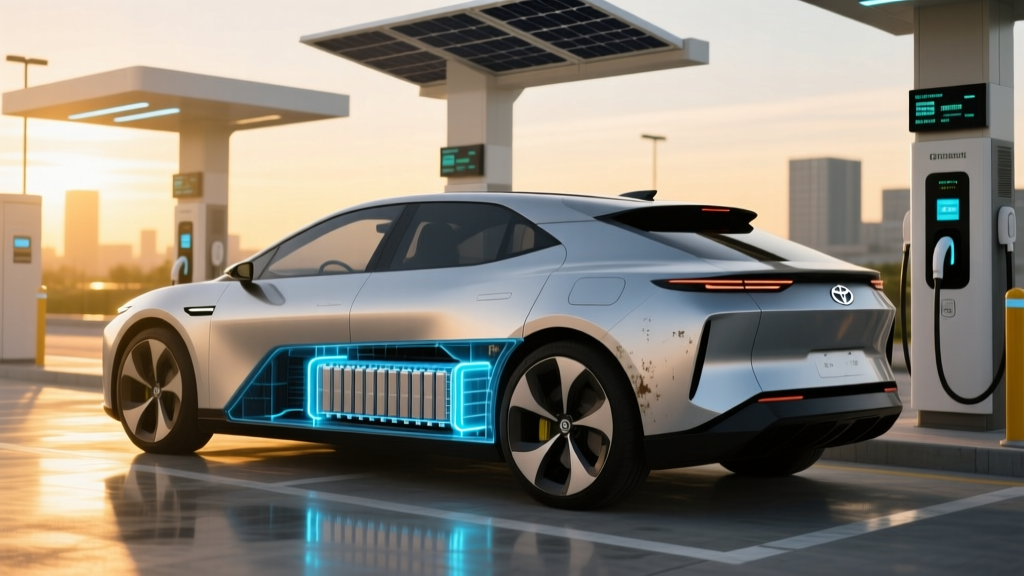
The single most common question from new EV owners isn't about range or performance — it's about how to charge the battery without wrecking its long-term health. Unlike a gas car where the fuel tank is essentially immortal, an EV's high-voltage traction battery is a consumable component that degrades with time, mileage, and charging habits. The good news? Modern EV batteries are engineered to outlast the vehicles they're installed in, with most retaining 85–95% of their original capacity after 100,000 miles. But how you charge matters — a lot.
This guide covers everything you need to know about EV battery longevity: the chemistry inside your pack, real-world degradation data, what warranties actually cover, what a replacement would cost (and when you'd need one), and the daily charging habits that add years of life to your battery.
LFP vs NMC/NCA: Which Battery Chemistry Is in Your EV?
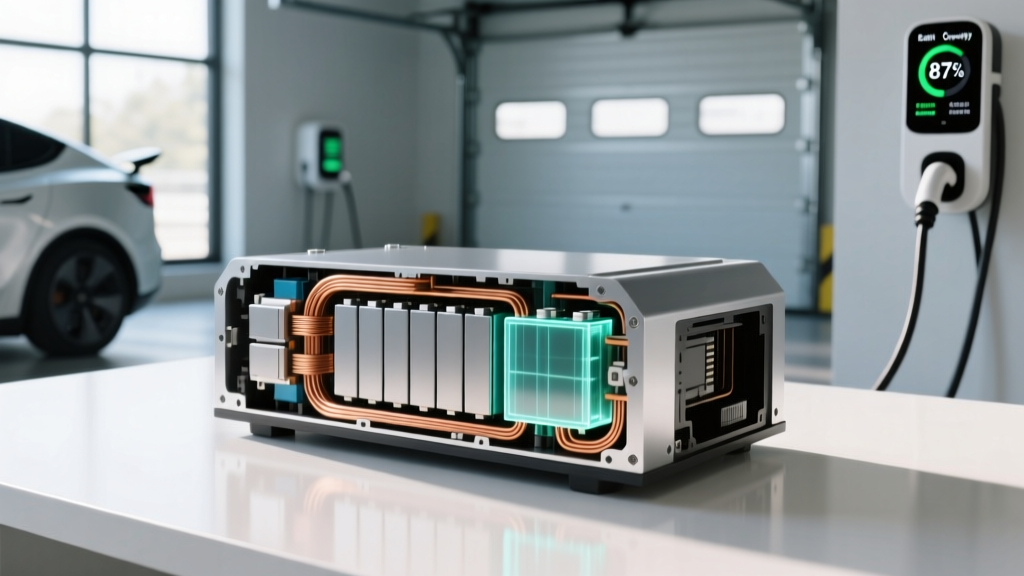
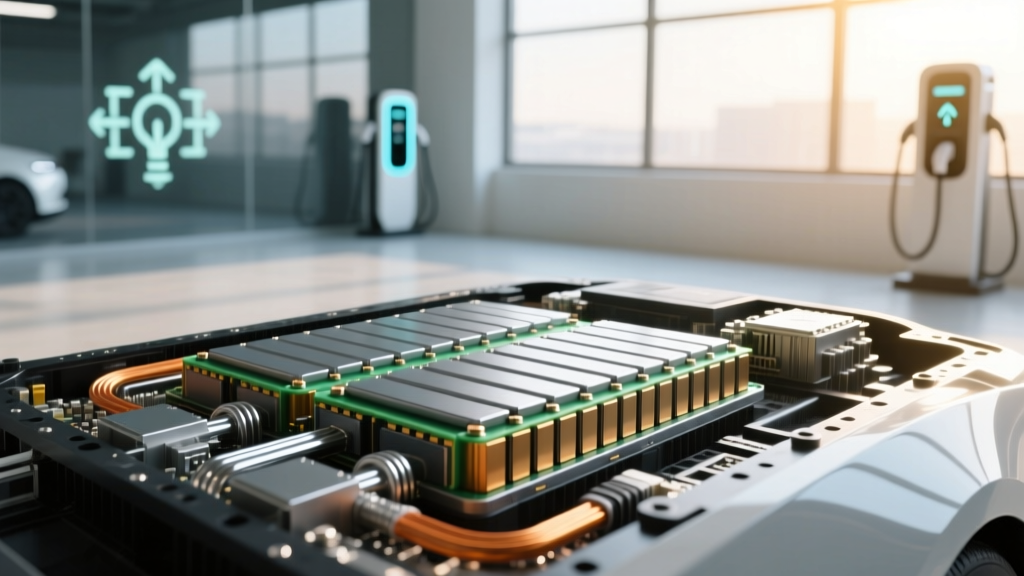
Not all EV batteries are built the same. The two dominant lithium-ion chemistries in 2026 are NMC/NCA (nickel-manganese-cobalt / nickel-cobalt-aluminum) and LFP (lithium iron phosphate). The chemistry determines your pack's energy density, cycle life, cold-weather behavior, and cost. Knowing which one you have changes how you should charge and care for it.
| Attribute | LFP (Lithium Iron Phosphate) | NMC / NCA (Nickel-Based) |
|---|---|---|
| Energy Density | Lower (~160 Wh/kg cell-level) | Higher (~250–300 Wh/kg cell-level) |
| Cycle Life | 3,000–5,000+ cycles | 1,000–2,000 cycles |
| Cold Performance | Weaker below 32°F; slower charging | Better low-temp discharge and charge acceptance |
| Thermal Stability | Excellent — less prone to thermal runaway | Good, but requires more active thermal management |
| Cost | Lower — no cobalt or nickel | Higher — commodity-priced metals |
| Charging to 100% | Recommended periodically for BMS calibration | Generally advised to stop at 80–90% daily |
| Typical Use Cases | Standard-range models (Tesla Model 3 RWD, base Chevy Equinox EV) | Long-range/performance models (Model 3 LR, Ioniq 5, F-150 Lightning Extended) |
Which is better? It depends on your use case. If you prioritize maximum range per charge and strong cold-weather performance, NMC/NCA delivers higher energy density in a lighter, more compact pack. If you want the longest possible cycle life, lower replacement cost, and don't mind slightly less range, LFP is the durability champion. Tesla has shifted its standard-range vehicles to LFP globally, and BYD's entire lineup uses its Blade LFP cells — a strong endorsement of the chemistry's viability at scale.
How Long Do EV Batteries Actually Last?
The short answer: far longer than most buyers expect. Data from fleet operators, manufacturer reports, and independent testing consistently show that modern liquid-cooled EV batteries lose roughly 1–2% of total capacity per year under normal use, with degradation front-loaded (steeper loss in year one, then a long, slow taper).
Typical Degradation Curve (NMC, Liquid-Cooled)
| Milestone | Avg. Capacity Retained | Source / Context |
|---|---|---|
| Year 1 / ~15,000 mi | ~95–97% | Initial formation loss; steepest drop |
| Year 3 / ~45,000 mi | ~91–94% | Recurrrrent data from Tesla fleet reports |
| Year 5 / ~75,000 mi | ~88–92% | Geotab fleet study of 6,300+ EVs |
| Year 8 / ~120,000 mi | ~83–88% | Still above most warranty thresholds |
| Year 10 / ~150,000 mi | ~78–85% | Projected; varies with climate and habits |
Geotab's long-term study of over 10,000 electric vehicles found an average annual degradation rate of 1.8% across all models and climates. Tesla's 2025 Impact Report states its fleet retains approximately 85% of original range at 200,000 miles. LFP packs tend to degrade even more slowly — Tesla and BYD have reported LFP packs retaining over 90% capacity at 100,000 miles in controlled fleet data.
For context, the average US driver covers about 13,500 miles per year according to FHWA data. At that rate, hitting 200,000 miles takes roughly 15 years — well beyond the ownership period of most buyers. Catastrophic battery failure (sudden, total loss) is extremely rare in modern liquid-cooled packs; the realistic concern is gradual range reduction, not a dead battery.
What Does the Battery Warranty Actually Cover?
Federal law mandates a minimum EV battery warranty of 8 years or 100,000 miles (whichever comes first). In California and states that have adopted CARB's ZEV program, the requirement extends to 10 years or 150,000 miles. Most automakers meet or exceed these floors.
| Manufacturer | Warranty Term | Capacity Retention Threshold |
|---|---|---|
| Tesla (Model 3/Y NMC) | 8 yr / 120,000 mi | 70% |
| Tesla (Model 3/Y LFP) | 8 yr / 100,000 mi | 70% |
| Hyundai / Kia | 10 yr / 100,000 mi | 70% |
| Ford (F-150 Lightning, Mustang Mach-E) | 8 yr / 100,000 mi | 70% |
| Chevrolet (Equinox EV, Blazer EV) | 8 yr / 100,000 mi | 70% |
| BMW | 8 yr / 100,000 mi | 70% |
| Rivian | 8 yr / 175,000 mi | 70% |
The critical detail is the capacity retention threshold — typically 70%. If your battery drops below 70% of its original usable capacity within the warranty window, the manufacturer must repair or replace it at no cost. In practice, almost no modern liquid-cooled EV battery falls below 70% within 8 years under normal use. Warranty claims are overwhelmingly driven by manufacturing defects (bad cells, BMS faults, coolant leaks) rather than age-related degradation.
Important: warranties typically do not cover damage from accidents, flooding, unauthorized modifications, or using the vehicle as a stationary power source outside of approved V2H/V2L systems. Read your specific warranty booklet — terms vary.
How Much Does an EV Battery Cost to Replace?
This is the question that generates the most fear — and the most misinformation. Let's look at actual numbers.
| Vehicle | Battery Size (kWh) | Estimated Replacement Cost |
|---|---|---|
| Tesla Model 3 (LFP, Standard Range) | ~60 kWh | $8,000–$12,000 |
| Tesla Model Y (NMC, Long Range) | ~75 kWh | $12,000–$16,000 |
| Hyundai Ioniq 5 | ~77.4 kWh | $13,000–$18,000 |
| Ford F-150 Lightning (Extended Range) | ~131 kWh | $20,000–$30,000 |
| Chevrolet Bolt EV (older NMC) | ~65 kWh | $9,000–$14,000 |
| BMW i4 eDrive40 | ~83.9 kWh | $16,000–$22,000 |
These figures include the battery pack and labor but can vary by region, dealer vs. independent shop, and whether the pack is new, remanufactured, or refurbished. Battery pack prices have fallen from over $200/kWh in 2018 to roughly $110–$130/kWh at the cell level in 2025–2026, with pack-level costs around $140–$160/kWh after BMS, cooling, and housing.
The reality most fear-based articles omit: the vast majority of EV owners never replace their battery. The pack typically outlasts the vehicle's economic life. Out-of-warranty failures after year 8 are uncommon in liquid-cooled designs, and when they do occur, module-level repair (replacing individual bad cell modules rather than the entire pack) is increasingly available for $2,000–$5,000 from specialized EV shops.
How to Charge the Battery for Maximum Lifespan
How you charge has a measurable impact on long-term battery health. Here are the factors that matter most, ranked by impact:
Daily Charging Habits That Extend Battery Life
- Set a daily charge limit of 80% for NMC/NCA packs. Sustained high state of charge (above 90%) accelerates electrolyte decomposition and cathode wear. LFP packs are the exception — charge to 100% at least once a week so the BMS can calibrate cell voltages accurately.
- Minimize DC fast charging when possible. Occasional fast charging is fine — modern thermal management systems precondition the battery and manage heat well. But daily reliance on 150+ kW DC fast charging does accelerate degradation. Research from the Idaho National Laboratory found that vehicles charged exclusively via DC fast charging showed roughly 5–8% more degradation over 50,000 miles compared to Level 2-only charging. Use Level 2 at home for daily needs; save DC fast charging for road trips.
- Avoid extreme states of charge in extreme temperatures. Don't leave an NMC pack sitting at 100% SoC on a 100°F day, and don't leave any pack at near 0% SoC in sub-zero weather for extended periods. If storing the vehicle, aim for 40–60% SoC.
- Use preconditioning. Most EVs allow you to schedule departure times or precondition the battery via the app before driving or charging. This warms or cools the pack to its optimal operating temperature, reducing stress during charge acceptance and regenerative braking.
- Don't baby it too much. The difference between "perfect" charging habits and "normal" habits is typically 2–4% of additional capacity over a decade. Drive your car. The BMS is sophisticated enough to protect the pack within normal operating parameters.
Factors That Accelerate Degradation
- Heat exposure: Sustained pack temperatures above 95°F (35°C) are the single biggest degradation accelerator. This is why liquid-cooled packs (standard on virtually all 2026 EVs) outperform passively cooled packs by a wide margin.
- High-frequency DC fast charging: As noted, daily 150+ kW sessions add up over years. The charging curve taper above 80% exists partly to protect the cells.
- Sustained 100% SoC (NMC/NCA): High voltage at the cathode promotes micro-cracking and electrolyte oxidation. Set your charge limit and forget it.
- Deep discharge to 0%: Dropping below the low-voltage cutoff stresses the anode. The car's buffer (typically 2–5 kWh hidden below the "0%" display) protects against true deep discharge, but habitually arriving at 0% is still unnecessary stress.
How to Check and Monitor Battery Health (SoH)
State of Health (SoH) is the percentage of your battery's current maximum capacity compared to its original factory capacity. A brand-new pack is 100% SoH; a pack that held 75 kWh originally but now holds 67.5 kWh is at 90% SoH.
Here's how to check it:
- In-vehicle displays: Some manufacturers (notably Tesla via the Service Mode menu, and Hyundai/Kia via the infotainment engineering menu) expose SoH or capacity data directly. Access methods vary by model year.
- OBD-II apps: Third-party tools like LeafSpy (Nissan Leaf), Scan My Tesla, or ABRP's OBD integration can read SoH, cell voltage delta, and pack temperature directly from the BMS. An OBD-II dongle costs $20–$50.
- Dealer diagnostic reports: Any authorized service center can run a battery health check. Ask for a printout showing SoH percentage and individual module voltages. This is free or low-cost under warranty.
- Manual calculation: Charge to 100% (or a known SoC), note the displayed range, and compare it to the EPA-rated range at the same SoC. If your Model 3 Long Range (EPA 341 mi at 100%) now shows 305 mi at 100%, your rough SoH is about 89%. This isn't perfectly precise (the displayed range estimate uses recent driving efficiency) but gives a usable ballpark.
For used-EV buyers, always request a battery health report before purchase. Services like Recurrent provide battery health certificates based on telematics data that are increasingly accepted by dealers and lenders.
What's Next: Solid-State and Silicon-Anode Batteries
The next generation of battery technology is in advanced development, but it's important to separate announcements from availability.
Solid-state batteries replace the liquid electrolyte with a solid ceramic, polymer, or sulfide material. The theoretical benefits are substantial: higher energy density (potentially 400+ Wh/kg at the cell level), faster charging, improved safety, and longer cycle life. Toyota has announced a solid-state battery targeting 2027–2028 production in limited volumes. Samsung SDI and QuantumScape are also in late-stage testing with OEM partners. However, manufacturing yield, cost, and scalability remain unsolved at production volumes. Expect solid-state batteries in premium, low-volume applications by 2028–2029, with mainstream cost parity likely not until the early 2030s.
Silicon-anode technology is closer to market. Companies like Sila Nanotechnologies and Group14 are supplying silicon-dominant anode materials to battery manufacturers now, enabling 15–25% energy density improvements over conventional graphite anodes. Mercedes-Benz's upcoming G-Class EV is expected to feature silicon-anode cells. This is an incremental improvement, not a revolution — but it's real and arriving in 2026–2027 model-year vehicles.
For buyers today: don't delay an EV purchase waiting for solid-state. Current lithium-ion technology is mature, well-warrantied, and demonstrably durable over 200,000+ miles.
Frequently Asked Questions
How long do EV batteries last in years and miles?
Most modern liquid-cooled EV batteries last 15–20 years or 200,000+ miles before dropping below 70% capacity. Fleet data from Tesla and Geotab shows average annual degradation of 1.5–2.0%, meaning a typical pack retains 80–88% of its original capacity at the 10-year mark. Catastrophic failure is rare.
How much does an EV battery cost to replace?
Replacement costs range from roughly $8,000 for a small LFP pack (e.g., Tesla Model 3 Standard Range) to $30,000 for a large NMC pack (e.g., F-150 Lightning Extended Range at 131 kWh). However, the vast majority of EV owners never need a replacement — the battery typically outlasts the vehicle's economic life. Module-level repairs for isolated cell failures cost $2,000–$5,000.
What does the EV battery warranty cover?
Federal law requires a minimum 8-year/100,000-mile battery warranty (10 years/150,000 miles in CARB states). Coverage applies if the battery drops below the manufacturer's stated capacity threshold (usually 70%) within the warranty period. Defects in materials, manufacturing, and the BMS are covered. Damage from accidents, misuse, or unauthorized modifications is not.
How do I check my EV's battery health?
You can check State of Health (SoH) through the vehicle's service menu (Tesla Service Mode, Hyundai/Kia engineering menu), OBD-II diagnostic apps like Scan My Tesla or LeafSpy, a dealer battery health report, or by manually comparing your displayed range at full charge to the original EPA rating.
Is LFP or NMC better for my EV?
LFP offers superior cycle life (3,000–5,000+ cycles), lower cost, better thermal safety, and the convenience of regular 100% charging. NMC/NCA offers higher energy density (more range in a lighter, smaller pack) and better cold-weather performance. For daily commuting and high-mileage drivers, LFP is the longevity pick. For maximum range and cold-climate driving, NMC/NCA remains the better choice.
Does fast charging damage my EV battery?
Occasional DC fast charging does not meaningfully harm modern batteries — thermal management systems precondition the pack and regulate temperature. However, Idaho National Laboratory research found that exclusive DC fast charging (no Level 2) resulted in 5–8% more degradation over 50,000 miles. For daily charging, Level 2 at home is ideal; use DC fast charging for road trips.
Should I charge my EV to 100% every night?
For NMC/NCA batteries: no. Set your daily charge limit to 80% and reserve 100% for road trips. For LFP batteries: yes, charge to 100% at least once per week so the battery management system can balance and calibrate cell voltages. Check your owner's manual for chemistry-specific guidance.