If you've searched "can I charge a battery with my car," you're likely asking one of two things: whether your electric vehicle can replenish its own high-voltage traction battery through regenerative driving, or whether the car can serve as a power source to charge external devices. The short answer to both is yes — but with critical nuances around how EV batteries charge, how long they last, and what happens when they degrade. This guide covers everything a current or prospective EV owner needs to know about traction battery health, chemistry, lifespan, and replacement economics in 2026.
How Your EV Battery Actually Charges (And Discharges)
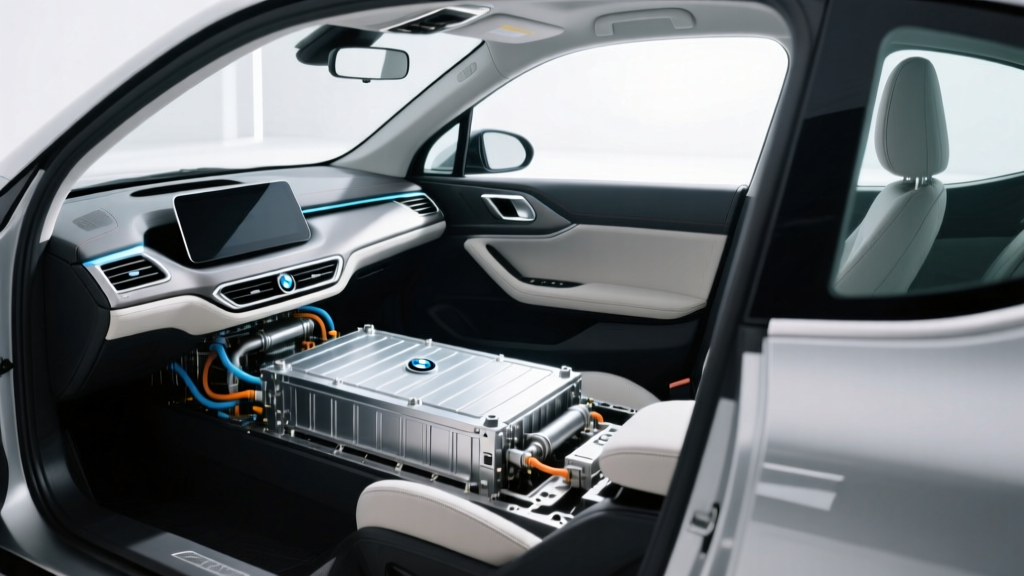
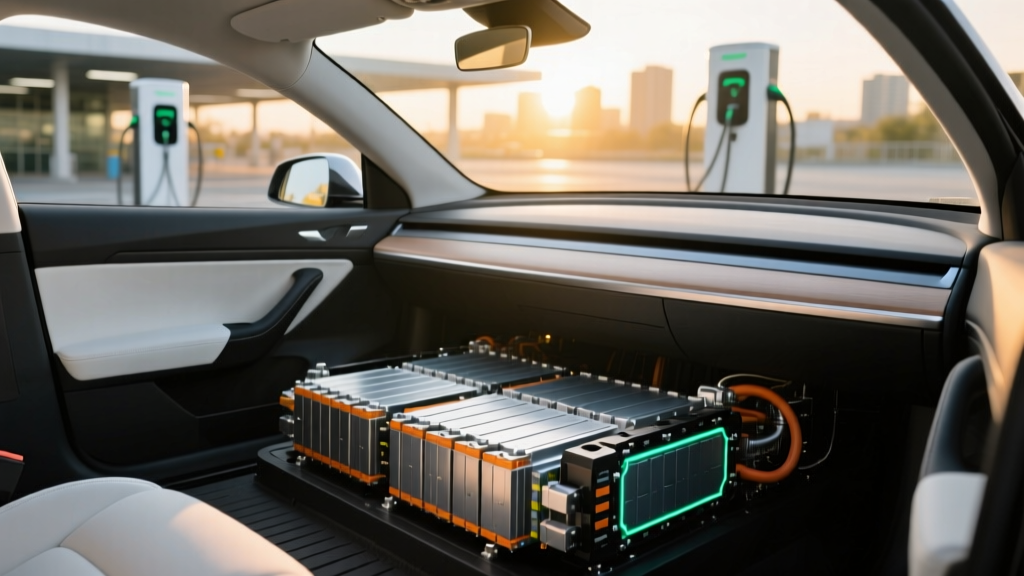
Every EV has two batteries: a standard 12V auxiliary battery (like a gas car's) and the high-voltage traction battery — the large lithium-ion pack that powers the electric motor. When people ask "can I charge a battery with my car," they're usually referring to the traction pack.
The traction battery charges in three ways:
- Plug-in charging — Level 1 (120V, ~1.4 kW), Level 2 (240V, 7–19 kW), or DC fast charging (50–350+ kW).
- Regenerative braking — The electric motor reverses into a generator during deceleration, sending energy back into the pack. This recaptures roughly 15–30% of kinetic energy in stop-and-go driving, but it cannot fully recharge a depleted battery on its own.
- Vehicle-to-Load (V2L) / Vehicle-to-Home (V2H) — Some 2025–2026 models like the Hyundai Ioniq 5, Ford F-150 Lightning, and Kia EV9 can discharge their traction battery to power external devices, tools, or even home circuits. This is the reverse: your car charges other batteries.
Regenerative braking is real, but it supplements plug-in charging — it doesn't replace it. No production EV is self-sustaining through regen alone. You will always need to plug in.
LFP vs NMC: Which Battery Chemistry Is in Your EV?
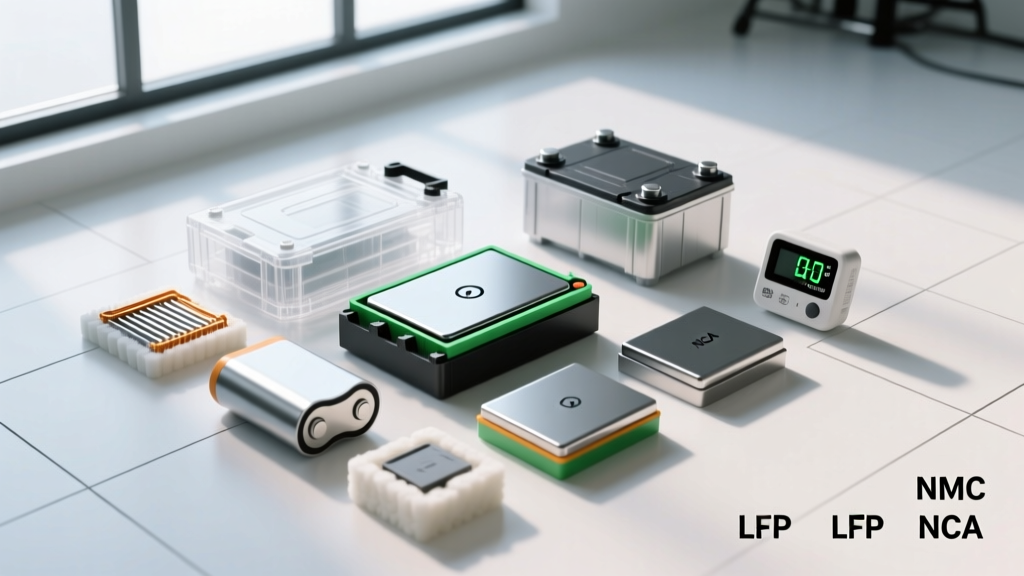
The two dominant lithium-ion chemistries in 2026 EVs are LFP (Lithium Iron Phosphate) and NMC/NCA (Nickel Manganese Cobalt / Nickel Cobalt Aluminum). Your chemistry dictates energy density, longevity, cold-weather behavior, and cost. Here's how they compare:
| Attribute | LFP (e.g., Tesla Model 3 RWD, base BYD) | NMC/NCA (e.g., Tesla Long Range, Hyundai Ioniq 5, Rivian) |
|---|---|---|
| Energy Density | Lower (~160–180 Wh/kg cell-level) | Higher (~220–260 Wh/kg cell-level) |
| Typical Pack Size | 50–65 kWh | 70–110 kWh |
| Cycle Life | 3,000–5,000+ cycles to 80% SoH | 1,500–2,500 cycles to 80% SoH |
| Recommended Daily SoC | 100% (charge to full regularly) | 80% daily; 100% only before long trips |
| Cold-Weather Performance | Weaker — greater range loss below 32°F | Better low-temp discharge and charge acceptance |
| Cost per kWh (pack-level, 2026) | ~$90–$110 | ~$120–$150 |
| Cobalt Content | None | Some (ethical sourcing considerations) |
| EPA Range Examples | Tesla Model 3 RWD: 272 mi | Tesla Model 3 LR AWD: 341 mi |
The trade-off is clear: LFP wins on longevity and cost but sacrifices range and cold-weather efficiency. NMC wins on energy density and winter performance but costs more and degrades faster if routinely charged to 100%. Tesla recommends LFP owners charge to 100% at least weekly to help the Battery Management System (BMS) calibrate; NMC owners should set daily limits to 80%.
How Long Do EV Batteries Last? Real Degradation Data
The fear that EV batteries "die" at 100,000 miles is outdated. Data from fleet operators, fueleconomy.gov, and long-term owner studies consistently show modern packs retain 85–95% of original capacity after 100,000 miles.
Here's what typical degradation looks like across major platforms:
Observed Capacity Retention (State of Health) by Mileage:
- Year 1 / ~15,000 mi: 95–98% SoH (initial "break-in" drop of 2–5% is normal)
- Year 3 / ~45,000 mi: 91–96% SoH
- Year 5 / ~75,000 mi: 88–94% SoH
- Year 8 / ~120,000 mi: 82–90% SoH
- Year 10 / ~150,000 mi: 78–88% SoH (NMC); 85–93% SoH (LFP)
Sources: Recurrent Auto fleet data (2025 report), Geotab longitudinal study of 10,000+ EVs, Tesla Impact Report 2024.
Key insight: degradation is non-linear. The steepest drop occurs in the first 20,000–30,000 miles, then the curve flattens considerably. Most EVs will reach 200,000 miles before the pack hits 70% capacity — the typical warranty threshold.
Real-world range loss mirrors this. A 2024 Tesla Model 3 Long Range with an EPA rating of 341 miles at new might deliver 310–320 real-world highway miles at 50,000 miles and 280–300 at 120,000 miles. In cold weather (below 32°F), subtract another 15–30% from those figures regardless of battery age.
What Does the EV Battery Warranty Actually Cover?
Federal law mandates that EV batteries carry a minimum warranty of 8 years or 100,000 miles (whichever comes first). In California Air Resources Board (CARB) states — including CA, CO, CT, ME, MA, NJ, NY, OR, RI, VT, and WA — the mandate extends to 10 years or 150,000 miles for PZEV/EZEV components.
| Manufacturer | Warranty Period | Capacity Retention Threshold | Notes |
|---|---|---|---|
| Tesla (Model 3/Y NMC) | 8 yr / 120,000 mi | 70% | Long Range & Performance trims |
| Tesla (Model 3 RWD LFP) | 8 yr / 100,000 mi | 70% | Standard Range RWD |
| Hyundai / Kia | 10 yr / 100,000 mi | 70% | Ioniq 5, EV6, EV9 |
| Ford (Mustang Mach-E, F-150 Lightning) | 8 yr / 100,000 mi | 70% | Covers traction battery components |
| Chevrolet (Blazer EV, Equinox EV) | 8 yr / 100,000 mi | 60% | Lower threshold — read fine print |
| Rivian (R1T, R1S) | 8 yr / 175,000 mi | 70% | Longest mileage coverage in segment |
| BMW (i4, iX) | 8 yr / 100,000 mi | 70% | Includes battery management system |
Critical detail: The warranty threshold (usually 70%) means the manufacturer will repair or replace the pack only if it drops below that capacity within the warranty window. A pack at 71% SoH at 99,000 miles is considered "within spec." Most degradation claims that get honored involve defective modules, not gradual wear.
For current IRS §30D federal tax credit purposes, battery capacity and sourcing requirements apply at purchase — but the warranty protects you long after. Consult IRS.gov for current-year eligibility rules, including MSRP caps ($55,000 for sedans, $80,000 for SUVs/trucks/vans) and buyer income limits ($150,000 single / $300,000 joint for new vehicles).
How Much Does an EV Battery Replacement Cost?
If your battery degrades below warranty threshold after the warranty expires, or if it suffers physical damage (flood, collision, road debris), replacement is the owner's responsibility. Costs vary enormously by pack size and chemistry:
| Vehicle / Pack Size | Chemistry | Estimated Replacement Cost (Parts + Labor) |
|---|---|---|
| Tesla Model 3 RWD (~57 kWh) | LFP | $10,000 – $13,000 |
| Tesla Model Y LR (~75 kWh) | NMC | $14,000 – $18,000 |
| Hyundai Ioniq 5 (~77 kWh) | NMC | $15,000 – $20,000 |
| Ford F-150 Lightning Ext. Range (~131 kWh) | NMC | $25,000 – $32,000 |
| Chevrolet Silverado EV (~200 kWh) | NMC | $35,000 – $45,000 |
| Rivian R1T Large Pack (~128 kWh) | NMC | $22,000 – $28,000 |
Context that matters: These costs sound alarming, but battery replacement rates are extremely low. According to data from Recurrent Auto, fewer than 1.5% of EVs have required a traction battery replacement outside of recalls. Most packs outlast the vehicle's body, interior, and suspension components. The average EV is scrapped or retired at 15–18 years with the original pack still functional at 75–85% SoH.
When replacements are needed, many shops now offer refurbished or remanufactured packs (using salvaged modules from low-mileage totaled EVs) at 40–60% of the cost of a new OEM pack. Companies like Redwood Materials and Spiers New Technologies are building this secondary market.
Factors That Accelerate (or Slow) Battery Degradation
Not all miles are equal for battery health. Here's what actually moves the needle on longevity:
Habits That Preserve Battery Health:
- Keep daily State of Charge between 20–80% (NMC) or charge to 100% weekly (LFP)
- Use Level 2 home charging as your primary method — slower charge rates generate less heat
- Precondition the battery before DC fast charging (most EVs do this automatically when you navigate to a charger)
- Avoid letting the battery sit at 100% SoC for extended periods (days/weeks)
- Drive moderately in extreme heat — sustained high-speed driving in 95°F+ temps stresses thermal management
- Keep the EV plugged in during extreme cold so the thermal management system can maintain pack temperature
Habits That Accelerate Degradation:
- Frequent DC fast charging (more than 3–4 sessions per week, consistently) — the heat from 150–350 kW charge rates stresses cells
- Regularly charging to 100% and leaving it there overnight (NMC specifically)
- Deep discharges to 0% or below 5% — the low-voltage cutoff protects cells, but repeatedly hitting it causes stress
- Storing the vehicle at high SoC in hot climates (e.g., 100% SoC in a Phoenix summer garage)
- Aftermarket modifications that bypass the BMS or alter thermal management
The DC fast charging nuance: Tesla's own published data (2024 Impact Report) shows that Model 3/Y vehicles that fast-charged more than 90% of the time showed only ~2% additional degradation over 150,000 miles compared to vehicles that primarily used Level 2. Modern BMS and liquid cooling have substantially mitigated fast-charge damage. The concern is real but smaller than early-EV-era fears suggested.
How to Check Your EV's Battery Health (State of Health)
Monitoring State of Health (SoH) — the percentage of original capacity remaining — is essential for resale value and peace of mind. Here's how to check it:
- In-car displays: Tesla shows a battery health graph in the Service menu. Hyundai/Kia's infotainment includes an EV battery diagnostics screen. BMW iDrive has a dedicated battery health readout.
- OBD-II dongles + apps: Devices like the OBDLink MX+ paired with apps such as Leaf Spy (Nissan Leaf), Scan My Tesla, or Carista can pull BMS data including SoH, cell voltage variance, and cycle count.
- Dealer diagnostic reports: Any authorized service center can run a full pack health report. Request one before buying a used EV — it's the EV equivalent of a compression test.
- Third-party services: Companies like Recurrent offer battery health reports based on connected-car data, often included with insurance or lease agreements.
What to look for: Cell voltage variance above 50 mV between the highest and lowest cells suggests module imbalance. A SoH reading below 90% on a vehicle with fewer than 50,000 miles may indicate a defective module worth investigating under warranty.
What's Next: Solid-State and Silicon-Anode Batteries
Emerging battery technologies promise to reshape longevity and charging speed, but timelines remain measured:
- Solid-state batteries replace the liquid electrolyte with a solid conductor, enabling higher energy density (~400+ Wh/kg cell-level), faster charging, and reduced fire risk. Toyota has announced solid-state production for 2027–2028, initially in limited-volume models. Samsung SDI and QuantumScape (backed by Volkswagen) are targeting similar timelines. Expect initial solid-state packs in luxury/flagship models at premium pricing before trickling down to mainstream EVs by 2030–2032.
- Silicon-anode batteries replace graphite anodes with silicon, boosting energy density by 20–40%. Sila Nanotechnologies (partnered with Mercedes-Benz) and Group14 (backed by Porsche) have begun limited production in 2025–2026. The Mercedes-AMG EQG (G-Wagon EV) is expected to be among the first production vehicles using silicon-anode cells.
- Sodium-ion batteries use abundant sodium instead of lithium, cutting cost dramatically. CATL has begun mass production in China for city EVs. US-market availability remains uncertain and likely post-2028.
Realistic expectation: These technologies are real but not imminent for most buyers. If you're purchasing an EV in 2026, today's LFP and NMC packs — with their proven 150,000–200,000+ mile lifespans — are mature, reliable, and well-warranted. Waiting for solid-state means waiting 3–5+ years for meaningful market penetration.
Frequently Asked Questions
Can regenerative braking fully recharge my EV battery?
No. Regen recaptures 15–30% of kinetic energy during deceleration — helpful in city driving but insufficient to recharge a depleted pack. You must plug in to fully charge.
Does fast charging ruin my EV battery?
Modern liquid-cooled packs handle DC fast charging well. Tesla's fleet data shows only ~2% additional degradation at 150,000 miles for vehicles that fast-charge 90%+ of the time vs. Level 2 users. Occasional fast charging is essentially a non-issue; daily exclusive fast-charging adds modest but measurable wear.
Should I charge my EV to 100% every night?
For NMC batteries, no — set your daily limit to 80% and charge to 100% only before long trips. For LFP batteries, Tesla and BYD recommend charging to 100% at least weekly to help the BMS calibrate cell balancing.
What happens if my EV battery hits 0%?
The BMS maintains a hidden buffer (typically 2–5 kWh) below the displayed 0% to protect cells from deep-discharge damage. However, if you leave the vehicle unplugged at 0% for weeks, parasitic drain can deplete the buffer and cause permanent cell damage. Keep it above 10% if storing.
Is it cheaper to replace individual battery modules instead of the whole pack?
Yes, significantly. Many EV packs use 8–16 individual modules. If one module fails, a qualified EV shop can replace just that module for $2,000–$5,000 instead of $15,000–$30,000 for a full pack. This requires specialized equipment and should only be done by certified technicians.
Does cold weather permanently damage my EV battery?
No. Cold weather causes temporary range loss (15–30% below 32°F) due to increased internal resistance and cabin heating demands, but it does not cause permanent degradation. In fact, cool climates are generally better for long-term battery health than hot climates like Arizona or Texas.
Can I use my EV to charge another car's battery or power my home?
If your EV supports V2L (Vehicle-to-Load), yes — the Hyundai Ioniq 5, Kia EV9, and Ford F-150 Lightning can output 1.9–9.6 kW to external devices. V2H (Vehicle-to-Home) requires a compatible bidirectional charger like the Ford Charge Station Pro and a home transfer switch. This uses your traction battery to power external loads — it's the literal answer to "can I charge a battery with my car" in reverse.
How do I maximize resale value related to battery health?
Maintain documented charging habits (avoid chronic 100% SoC on NMC), get a dealer battery health report before listing, and keep all service records. A documented SoH above 90% at 50,000 miles commands a premium in the used EV market.
EV batteries in 2026 are more durable, more warrantied, and more predictable than the public perception suggests. The question "can I charge a battery with my car" has layered answers — from regen to V2L — but the core truth is that modern traction packs, whether LFP or NMC, will likely outlast your ownership of the vehicle. Charge smart, monitor health, and let the data — not the fear — drive your decisions.