The single most expensive component in any electric vehicle is the high-voltage traction battery. It determines your range, your charging speed, and ultimately your long-term ownership cost. Yet confusion around battery chemistry, degradation rates, and replacement timelines remains the top barrier for EV shoppers in 2026. This guide cuts through the noise with real data, chemistry trade-offs, and actionable ownership advice — so you can make a confident purchase decision and protect your battery charge capacity for the long haul.
How Long Do EV Batteries Actually Last?
The short answer: far longer than most buyers fear. Modern EV traction batteries are engineered to outlast the vehicles they power. Based on fleet data and manufacturer reports compiled through 2025, the average lithium-ion EV battery retains roughly 90-95% of its original capacity after 5 years and 80-90% after 10 years or 150,000 miles, depending on chemistry and usage patterns.
Tesla's 2024 Impact Report showed that Model 3 and Model Y vehicles retained approximately 85% of original range at 200,000 miles. Meanwhile, LFP-equipped vehicles (like the Tesla Model 3 RWD and BYD models) are demonstrating even slower degradation curves in early fleet data, with some packs showing less than 5% loss over 100,000 miles.
- Year 1: 2-4% loss (initial formation period — both chemistries)
- Years 2-5: ~1-2% per year (NMC); ~0.5-1.5% per year (LFP)
- Years 5-10: ~1% per year (NMC); ~0.5-1% per year (LFP)
- Year 10+: NMC packs typically at 80-85% SoH; LFP packs at 85-92% SoH
Data synthesized from Tesla Impact Reports, Geotab fleet studies, and manufacturer warranty thresholds. Individual results vary with climate, charging habits, and thermal management system quality.
The critical takeaway: battery failure (sudden, catastrophic loss) is exceedingly rare. What owners experience is gradual capacity loss — similar to a smartphone, but far slower due to active thermal management systems that keep cells within optimal temperature ranges.
LFP vs NMC vs NCA: Which Battery Chemistry Is Right for You?
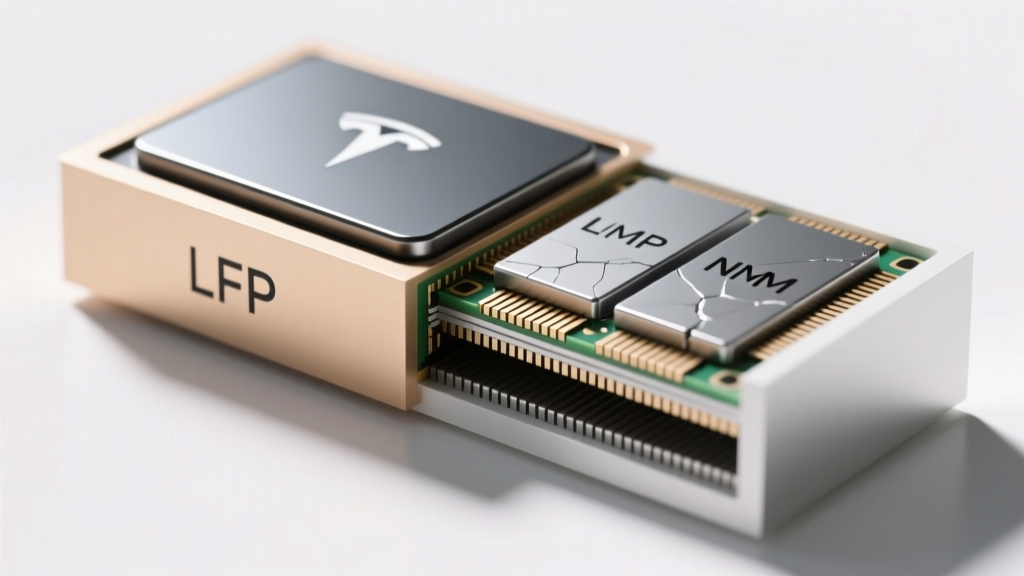
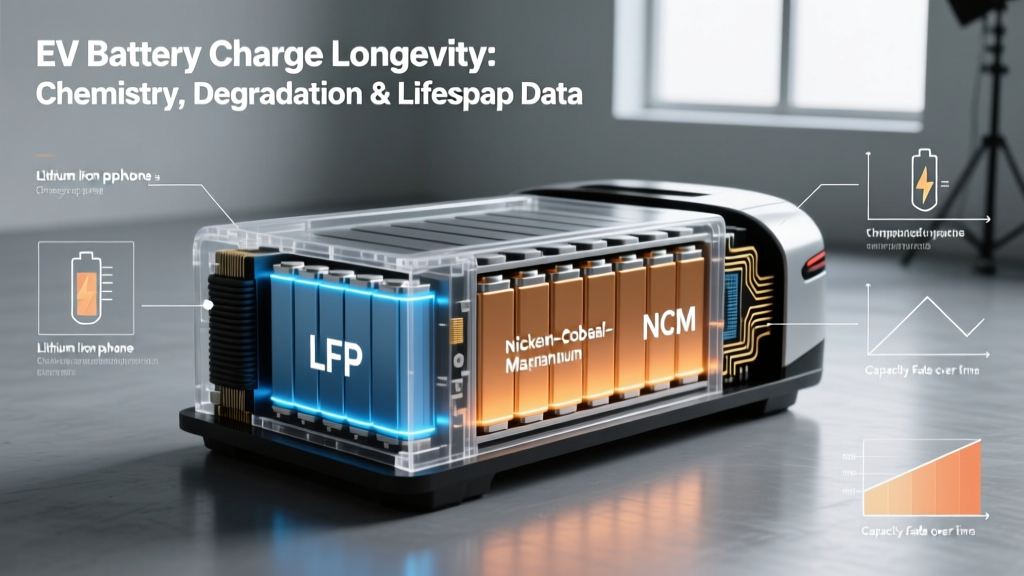
Not all EV batteries are the same. The cathode chemistry determines energy density, lifespan, cost, and cold-weather behavior. In 2026, two chemistry families dominate the market: LFP (Lithium Iron Phosphate) and NMC/NCA (Nickel Manganese Cobalt / Nickel Cobalt Aluminum).
| Attribute | LFP (LiFePO₄) | NMC / NCA |
|---|---|---|
| Energy Density | Lower (~160-180 Wh/kg cell-level) | Higher (~220-300 Wh/kg cell-level) |
| Cycle Life | 3,000-6,000+ cycles | 1,000-2,500 cycles |
| Cost per kWh | Lower (~$80-100/kWh pack-level) | Higher (~$110-140/kWh pack-level) |
| Cold Performance | Moderate — greater range loss below freezing | Better — less range loss in cold |
| Thermal Stability | Excellent — highly resistant to thermal runaway | Good — requires more robust BMS |
| Charging to 100% | Recommended regularly (helps BMS calibration) | Best kept at 80-90% daily; 100% for trips only |
| SoC Estimation | Harder — flatter voltage curve makes % estimation less precise | Easier — steeper voltage curve aids accuracy |
| Common Vehicles (2026) | Tesla Model 3 RWD, Model Y RWD, BYD Atto 3, Ford Mustang Mach-E Select (LFP option) | Tesla Model 3 LR, Hyundai Ioniq 5/6, Kia EV6/EV9, BMW i4/iX, Rivian R1T/R1S |
The verdict: If you want maximum range per pound and live in a cold climate, NMC/NCA is the better fit. If you prioritize longevity, lower cost, and can accept slightly less range, LFP is the superior long-term play — especially for daily commuters who charge at home.
What Does the EV Battery Warranty Actually Cover?
Federal law in the United States mandates that EV batteries carry a minimum warranty of 8 years or 100,000 miles (whichever comes first). In California and states adopting CARB standards, that extends to 10 years or 150,000 miles. Most manufacturers exceed these minimums.
| Manufacturer | Coverage Period | Capacity Retention Threshold |
|---|---|---|
| Tesla (Model 3/Y) | 8 years / 120,000 mi (LR: 120k; RWD: 100k) | 70% minimum |
| Hyundai / Kia | 10 years / 100,000 mi | 70% minimum |
| Ford (Mach-E, F-150 Lightning) | 8 years / 100,000 mi | 70% minimum |
| BMW | 8 years / 100,000 mi | 70% minimum |
| Rivian | 8 years / 175,000 mi | 70% minimum |
| GM (Ultium-based) | 8 years / 100,000 mi | 70% minimum (some models 60% for Lyft/commercial) |
The key detail most buyers miss: warranty replacement is triggered only when capacity drops below the stated threshold (typically 70%). A battery at 72% State of Health (SoH) after 95,000 miles is technically within spec — even though you've lost 28% of your original range. In practice, very few batteries fall below the warranty threshold under normal use. According to Geotab's fleet analysis of over 10,000 EVs, the average degradation rate is approximately 1.8% per year, meaning most packs remain well above 70% at the 8-year mark.
How Much Does an EV Battery Replacement Cost?
This is the question that fuels the most anxiety — and the most misinformation. Let's anchor the discussion in actual numbers.
| Vehicle | Battery Size (kWh) | Estimated Replacement Cost | Cost per kWh |
|---|---|---|---|
| Tesla Model 3 RWD (LFP) | ~60 kWh | $8,000 - $12,000 | ~$135-200/kWh |
| Tesla Model 3 Long Range (NMC) | ~75 kWh | $12,000 - $16,000 | ~$160-215/kWh |
| Hyundai Ioniq 5 | 77.4 kWh | $13,000 - $18,000 | ~$170-235/kWh |
| Ford F-150 Lightning (Extended) | ~131 kWh | $20,000 - $30,000 | ~$155-230/kWh |
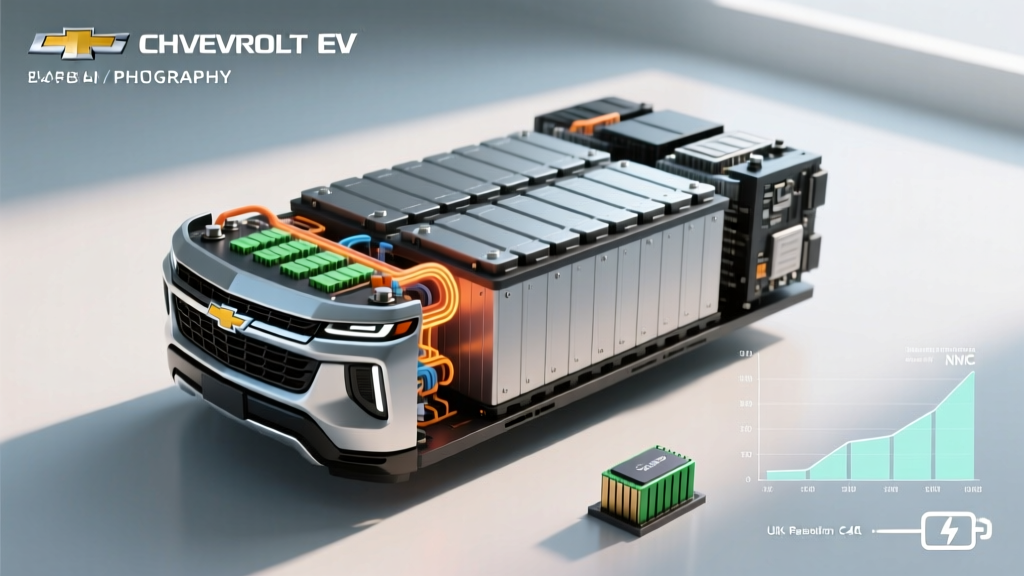
| Chevrolet Bolt EV/EUV | 65 kWh | $9,000 - $14,000 | ~$140-215/kWh |
These figures include the battery pack and labor but can vary by region and dealer. The important context: most EV batteries never need replacement during typical ownership. Pack-level pricing continues to decline — BloombergNEF's 2025 survey reported average lithium-ion pack prices falling below $120/kWh at the cell level, with further declines expected through 2028. If you do need a replacement at year 12 or 15, it will cost significantly less than today's estimates.
Additionally, module-level repair is increasingly viable. Many packs use modular architectures (e.g., Hyundai/Kia, BMW, GM Ultium) where individual modules can be replaced for $2,000-$5,000 rather than swapping the entire pack.
Factors That Accelerate (or Slow) Battery Degradation
Your battery's lifespan isn't fixed — it's heavily influenced by how you charge, drive, and store the vehicle. Here's what the data shows matters most:
- Avoid frequent DC fast charging: Occasional road-trip fast charging is fine, but daily 150+ kW sessions generate sustained heat that accelerates cell wear. A 2024 Geotab study found vehicles that fast-charged more than 3x per week degraded roughly 2-3% faster over 4 years than those primarily using Level 2.
- Keep SoC between 20-80% for daily use (NMC/NCA): Storing an NMC pack at 100% for extended periods stresses the cathode. LFP owners can safely charge to 100% daily — in fact, manufacturers recommend it for BMS calibration.
- Precondition before fast charging: Most modern EVs do this automatically when you navigate to a charger. A cold battery charged at high power suffers lithium plating — permanent capacity loss. Always use the vehicle's navigation-based preconditioning.
- Minimize extreme-temperature parking: A car sitting at 110°F in a Phoenix parking lot for weeks degrades faster than one in a garage. If possible, park in shade or a garage during extreme heat.
- Don't let the battery sit at 0%: Deep discharge below the vehicle's buffer (typically ~2-5% reserved) can damage cells. If storing the vehicle for weeks, leave it at 50-60% SoC.
- Use regenerative braking moderately: Aggressive regen settings that slam energy back into the pack at high C-rates in cold weather can stress cells. Many EVs automatically reduce regen in cold temps — let them.
How to Check and Monitor Your Battery's State of Health
State of Health (SoH) is the percentage of your battery's original capacity that remains usable. A new EV starts at 100% SoH; if your 75 kWh pack now holds 67.5 kWh, your SoH is 90%.
In-vehicle tools: Some manufacturers provide SoH estimates directly. Tesla's service mode (accessible via the software menu) shows a degradation graph. Hyundai/Kia's infotainment system includes a battery health screen on 2024+ models. BMW displays SoH through the iDrive system.
OBD-II diagnostic tools: Devices like the OBDLink SX paired with apps such as EVbatMon or LeafSpy (for Nissan Leaf) can read actual pack voltage, cell balance data, and estimated SoH from the battery management system (BMS). This is the most accurate consumer-accessible method.
Dealer diagnostics: Any authorized service center can pull a full battery health report. Request this during routine service visits, especially before a warranty period expires. If your SoH is approaching the 70% threshold, you want it documented.
Third-party services: Companies like Recurrent Auto offer free battery health monitoring by connecting to your vehicle's telematics. They compare your degradation curve against a database of thousands of identical vehicles — useful for spotting anomalies early.
What's Next: Solid-State, Silicon Anodes, and Future Battery Tech
Several next-generation technologies promise to reshape EV batteries — but timelines matter, and none are available in production vehicles as of early 2026.
Solid-state batteries replace the liquid electrolyte with a solid conductor, offering potentially 2-3x the energy density, faster charging, and near-zero fire risk. Toyota has announced a solid-state EV for 2027-2028, and Samsung SDI is targeting 2027 production. However, manufacturing scale-up remains the primary bottleneck. Expect initial solid-state packs in limited-production, premium vehicles first — not mass-market models before 2030.
Silicon-dominant anodes (replacing graphite) can increase energy density by 20-40%. Companies like Sila Nanotechnologies and Group14 are supplying early production cells, and the Mercedes-Benz G-Class EQ (announced for 2025-2026) was among the first to incorporate silicon-carbon anode chemistry. This technology is closer to mainstream adoption than solid-state and is already appearing in limited production vehicles.
Sodium-ion batteries offer a lower-cost alternative to lithium, using abundant materials. CATL has begun shipping sodium-ion packs for smaller EVs in China, but energy density remains too low for long-range US-market vehicles. Watch for sodium-ion in entry-level urban EVs and energy storage applications by 2027-2028.
For buyers shopping today: current lithium-ion technology (both LFP and NMC) is mature, reliable, and backed by extensive real-world data. Waiting for solid-state means waiting years — and paying a premium when it arrives.
EV Battery Charge and Health FAQ
How long do EV batteries last in years and miles?
Most modern EV batteries are designed to retain 70-85% of original capacity at 150,000-200,000 miles (10-15 years). LFP chemistry packs typically last longer, with some projected to exceed 300,000 miles before reaching the 70% threshold. Catastrophic failure is rare; gradual capacity loss is the norm.
Is it bad to charge my EV battery to 100% every night?
For NMC/NCA batteries: yes, charging to 100% daily accelerates degradation. Set your charge limit to 80-90% for daily driving and only charge to 100% before long trips. For LFP batteries: no — manufacturers like Tesla and BYD recommend charging to 100% at least once a week to maintain accurate SoC estimation, and LFP chemistry tolerates full charges far better.
Does DC fast charging damage my battery?
Occasional DC fast charging (road trips, a few times per month) has minimal impact. The risk comes from frequent high-power charging (multiple times per week over years), which generates sustained heat. Modern thermal management systems mitigate this substantially, but Level 2 home charging at 7-11 kW remains the gentlest method for daily use.
What happens if my EV battery degrades past the warranty threshold?
If your battery falls below the manufacturer's stated capacity threshold (typically 70%) within the warranty period, the manufacturer will replace or refurbish the pack at no cost. Out of warranty, you're responsible for replacement — but as noted above, this scenario is uncommon and costs continue to decline year over year.
Can extreme cold permanently damage my EV battery?
Cold weather temporarily reduces range (typically 20-40% loss at 20°F) due to increased internal resistance and energy used for cabin/pack heating. This is not permanent degradation — range returns when temperatures rise. The real risk is charging a cold battery at high power without preconditioning, which can cause lithium plating. Always precondition before fast charging in cold weather.
Should I buy an EV with LFP or NMC battery chemistry?
Choose LFP if: you want maximum longevity, lower cost, primarily drive in moderate climates, and don't need the absolute longest range. Choose NMC/NCA if: you need maximum range, live in a cold climate, want the best fast-charging speed, or need the lightest possible pack for performance applications.
How do I know if a used EV's battery is healthy?
Request a battery health report from the seller or dealer. Use an OBD-II tool with an EV-compatible app to read SoH directly. Compare the vehicle's current estimated range (at 100% SoC, displayed on the dash) against the original EPA rating. A gap of more than 15-20% suggests notable degradation — and may indicate the vehicle is approaching warranty replacement territory.