How Does the Battery Charge in a Car? The Physics Behind the Pack
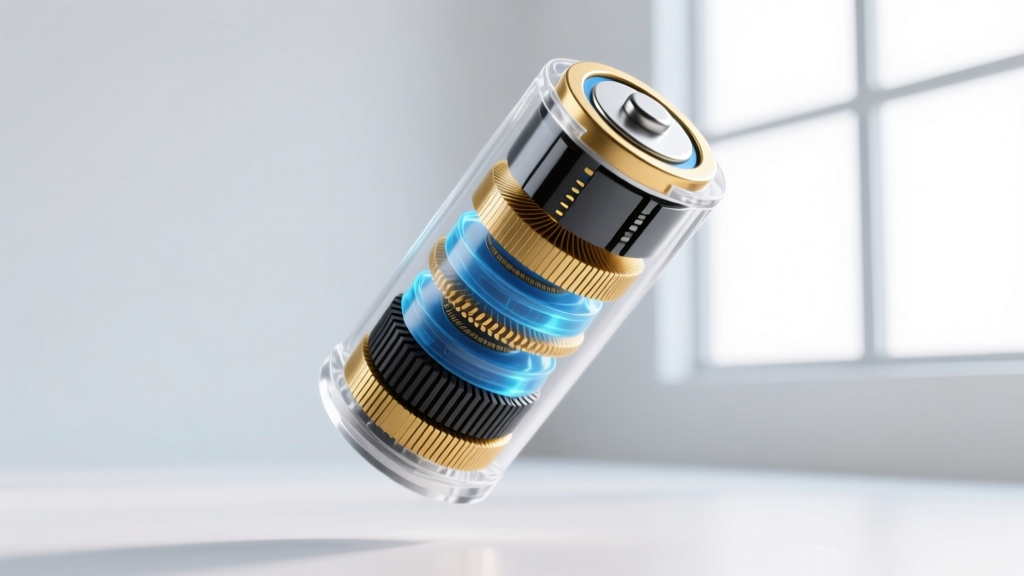
At its core, charging an EV battery is a controlled electrochemical reaction. When you plug in, the charger pushes electrons into the battery's anode (typically graphite or a graphite-silicon blend). Lithium ions migrate through the electrolyte and a porous separator to intercalate into the anode structure. During discharge — when you drive — the process reverses: ions flow back to the cathode, releasing electrons through the external circuit to power the motor.
The speed of this reaction depends on the charge rate in kilowatts (kW), while the total energy stored is measured in kilowatt-hours (kWh). A 75 kWh battery charged at 11.5 kW (a typical Level 2 home charger) takes roughly 7–8 hours from empty to full. Push 150 kW via DC fast charging, and you can recover 10–80% in 20–30 minutes, depending on the pack's chemistry and thermal management.
But not all batteries accept charge the same way. The cathode chemistry — the material that stores lithium ions on the discharge side — determines energy density, charge speed tolerance, longevity, and cost. That's where the LFP vs. NMC distinction becomes critical for buyers.
LFP vs. NMC/NCA: Which Battery Chemistry Is Right for You?
Most 2026 EVs sold in the U.S. use one of two lithium-ion cathode chemistries: LFP (lithium iron phosphate) or NMC/NCA (nickel manganese cobalt / nickel cobalt aluminum). Tesla, Ford, and several Chinese-market imports now offer LFP in standard-range trims, while NMC/NCA dominates long-range and performance models.
| Attribute | LFP (Lithium Iron Phosphate) | NMC / NCA (Nickel-based) |
|---|---|---|
| Energy Density | Lower (~160–180 Wh/kg cell-level) | Higher (~230–280 Wh/kg cell-level) |
| Typical EPA Range | 230–280 mi (standard-range packs) | 290–400+ mi (long-range packs) |
| Cycle Life | 3,000–5,000+ cycles to 80% SoH | 1,000–2,000 cycles to 80% SoH |
| Cold-Weather Performance | Moderate range loss (~30–40% at 20°F) | Better cold tolerance (~20–30% loss at 20°F) |
| Fast-Charging Tolerance | Good — tolerates frequent DCFC well | Moderate — heat accelerates degradation |
| Recommended Daily SoC | 100% (no penalty for full charge) | 80% for daily; 100% only for trips |
| Cost per kWh (pack-level) | ~$90–$110 | ~$120–$150 |
| Cobalt Content | None | Yes (supply-chain and ethical concerns) |
| Examples (2026 MY) | Tesla Model 3 RWD, Ford Mustang Mach-E Select, Hyundai Ioniq 5 SE Std Range | Tesla Model Y LR, Chevrolet Equinox EV, Rivian R1T Max Pack |
The practical takeaway: If you can charge at home nightly and your commute is under 100 miles round-trip, LFP is the durability champion — charge it to 100% daily and don't worry. If you need maximum range for road trips or live in a cold climate without a garage, NMC/NCA delivers more miles per kWh and handles winter better, but demands more careful state-of-charge management.
How Long Do EV Batteries Actually Last? Degradation Data
The short answer: far longer than most buyers fear. Data aggregated from fleet operators, Recurrent Auto, and manufacturer telemetry shows that the average 2024–2026 liquid-cooled EV battery retains 88–94% of its original capacity after 100,000 miles. That translates to roughly 5–12% degradation over 8–10 years of typical use.
Here's what the degradation curve actually looks like in practice:
Typical Degradation Progression (Liquid-Cooled NMC Pack, Moderate Use)
- Year 1 / 15,000 mi: 2–4% loss (initial formation loss, steepest part of the curve)
- Year 3 / 45,000 mi: 5–7% total loss
- Year 5 / 75,000 mi: 7–10% total loss
- Year 8 / 120,000 mi: 10–14% total loss
- Year 10 / 150,000 mi: 12–18% total loss
Source: Recurrent Auto fleet data (2024–2025), manufacturer warranty thresholds. Individual results vary with climate, charging habits, and thermal management quality.
Critically, degradation is non-linear. The biggest capacity drop occurs in the first year or two, then the curve flattens considerably. Most batteries never reach a point of sudden "cliff" failure — they simply hold progressively less energy, reducing range but remaining functional.
LFP packs tend to degrade even more slowly. Tesla's LFP-equipped Model 3 RWD fleet data suggests roughly 5–8% loss at 100,000 miles, owing to the chemistry's inherent stability. The trade-off is lower energy density, meaning less total range to begin with.
What Does the Battery Warranty Cover? Federal Mandate and Manufacturer Terms
Under U.S. federal law (EPA emissions-related component rules), EV batteries in most states must carry a minimum warranty of 8 years / 100,000 miles. In California Air Resources Board (CARB) states — which include California, New York, Massachusetts, and over a dozen others — that mandate extends to 10 years / 150,000 miles.
| Manufacturer | Warranty Term | Capacity Threshold | Notes |
|---|---|---|---|
| Tesla (Model 3/Y LFP) | 8 yr / 120,000 mi | 70% retention | LFP packs covered same as NMC |
| Tesla (Model S/X) | 8 yr / 150,000 mi | 70% retention | Longer mileage for premium models |
| Hyundai / Kia | 10 yr / 100,000 mi | 70% retention | Among the longest term in the industry |
| Ford (Mustang Mach-E, F-150 Lightning) | 8 yr / 100,000 mi | 70% retention | Standard across BEV lineup |
| Chevrolet (Equinox EV, Blazer EV) | 8 yr / 100,000 mi | 60–70% retention | Varies by model — check specific terms |
| Rivian (R1T / R1S) | 8 yr / 175,000 mi | 70% retention | Higher mileage cap reflects truck use case |
| BMW (i4, iX) | 8 yr / 100,000 mi | 70% retention | Transferable to second owner |
What triggers a warranty claim? If your battery's State of Health (SoH) drops below the stated threshold (typically 70% of original capacity) within the warranty period, the manufacturer must repair or replace the pack — usually by swapping defective modules rather than the entire battery. A 75 kWh pack at 70% SoH still holds ~52.5 kWh, which for a vehicle rated at 300 miles EPA means roughly 210 miles of range. That's reduced, but far from unusable.
Importantly, warranty coverage applies to capacity degradation beyond the threshold as well as defects. Damage from accidents, flooding, or unauthorized modifications is excluded.
How Much Does an EV Battery Cost to Replace?
This is the question that dominates EV forums, and context matters enormously. First: most EV batteries never need full replacement. The vast majority of packs outlast the vehicle's economic life. When replacement does occur, it's typically due to a manufacturing defect (covered under warranty) or damage from a collision.
For out-of-warranty scenarios — relevant mainly to high-mileage used EV buyers or second owners — here are current replacement cost ranges:
| Vehicle | Battery Size | Chemistry | Replacement Cost (Parts + Labor) |
|---|---|---|---|
| Tesla Model 3 RWD | ~57 kWh | LFP | $8,000–$12,000 |
| Tesla Model Y Long Range | ~75 kWh | NMC | $12,000–$16,000 |
| Hyundai Ioniq 5 (Std Range) | ~58 kWh | NMC | $9,000–$13,000 |
| Ford Mustang Mach-E Extended Range | ~91 kWh | NMC | $15,000–$20,000 |
| Chevrolet Silverado EV | ~200 kWh | NMC | $25,000–$35,000 |
| Rivian R1T Max Pack | ~149 kWh | NMC | $20,000–$28,000 |
Two trends are working in buyers' favor. First, pack-level battery prices have fallen below $120/kWh for NMC and under $100/kWh for LFP at the manufacturing level, and continue declining. Second, the growing EV salvage and refurbishment market means that individual module replacement (rather than a full pack swap) is increasingly available from independent EV shops for $2,000–$6,000, depending on how many modules are affected.
For comparison, a gasoline vehicle's engine or transmission replacement at 150,000+ miles routinely costs $4,000–$8,000 — and unlike a degraded battery, a blown engine leaves you with zero mobility.
Factors That Accelerate (or Preserve) Battery Health
Battery degradation is driven by heat, high state-of-charge stress, and high-current charging. Here's what actually moves the needle, ranked by impact:
Battery Care Checklist: Maximize Your Pack's Life
- Avoid sustained 100% SoC (NMC/NCA only): Store between 20–80% for daily use. Charge to 100% only when departing on a trip. LFP owners can ignore this — charge to 100% freely.
- Minimize DC fast charging in extreme heat: If ambient temps exceed 95°F, precondition the battery (most EVs do this automatically when you navigate to a charger). Avoid repeated same-day DCFC sessions.
- Don't let the pack sit at 0% or below 5%: Deep discharge stresses the cells. If storing the vehicle for weeks, leave it at ~50% SoC.
- Use Level 2 home charging as your primary method: Gentle 7–11.5 kW charging generates far less heat than 150+ kW DCFC. Your battery prefers slow, steady electrons.
- Precondition in cold weather: Cold lithium plating is a real degradation mechanism. Always precondition before DC fast charging in sub-40°F conditions. Most EVs handle this automatically via route-based preconditioning.
- Keep the thermal management system active: Don't disable battery preconditioning features. Liquid-cooled packs last dramatically longer than passively cooled ones (looking at you, early Nissan Leaf).
How much do these habits matter? Data from Recurrent Auto shows that EVs in moderate climates (Pacific Northwest, Northeast) degrade 2–4% less over 5 years than identical models in hot-climate states like Arizona and Texas, largely due to reduced thermal stress. Garage-parked vehicles show a similar advantage.
How Do I Check My EV's Battery Health (State of Health)?
State of Health (SoH) is the percentage of original capacity your battery currently holds. A brand-new pack is 100% SoH; a pack that held 75 kWh when new but now holds 67.5 kWh is at 90% SoH.
Here are the primary methods for checking SoH in 2026:
- In-vehicle battery health display: Tesla, Hyundai/Kia, BMW, and Rivian offer a battery health indicator in the service menu or app. Accuracy varies — these are estimates based on the BMS (Battery Management System) coulomb counting, not lab-grade measurements.
- OBD-II diagnostic tools: Devices like the OBDLink MX+ paired with apps such as EV-BatMon or Car Scanner can read the BMS-reported SoH directly. This is the method most independent EV shops use.
- Manufacturer service center: A dealer can run a full capacity test, which involves a controlled discharge cycle. This is the most accurate method but takes several hours and may cost $100–$200 if out of warranty.
- Third-party reports: Services like Recurrent provide battery health reports for participating owners, comparing your pack's degradation curve against the fleet average for your model.
- Manual calculation: Charge to 100% (or a known SoC), drive to a low SoC, and compare the energy consumed (shown on the trip meter in kWh) against the expected capacity for that SoC window. Less precise but free.
When to check: At purchase (especially used EVs), annually, and before the warranty expires. If your SoH is approaching the warranty threshold (e.g., 72% when the threshold is 70%), schedule a dealer evaluation while coverage is still active.
What's Next? Solid-State and Silicon-Anode Batteries on the Horizon
Two emerging technologies promise to reshape EV batteries — but neither is ready for your 2026 showroom:
Solid-state batteries replace the liquid electrolyte with a solid ceramic, polymer, or sulfide material. Benefits include higher energy density (potentially 400+ Wh/kg at the cell level), faster charging (10–80% in under 10 minutes), and improved safety (no flammable electrolyte). Toyota has announced limited solid-state production for 2027–2028, initially in low-volume models. Samsung SDI and QuantumScape are targeting similar timelines. Expect solid-state to reach mainstream U.S. EVs no earlier than 2029–2030, with initial packs likely reserved for premium trims at significant cost.
Silicon-anode batteries (sometimes called silicon-dominant anodes) replace or supplement the graphite anode with silicon, which can store roughly 10× more lithium ions per gram. Companies like Sila Nanotechnologies and Group14 Technologies are supplying silicon-anode materials to manufacturers now. The result: 10–20% more energy density in near-term implementations, with packs appearing in select 2026–2027 models (notably some performance trims). This is an incremental improvement, not a revolution — but it's real and shipping.
For buyers today, the practical advice remains: don't wait for solid-state. Current LFP and NMC packs are mature, well-warrantied, and will serve reliably for 150,000+ miles. The next-generation tech will debut at premium prices and trickle down over years.
Frequently Asked Questions
How long do EV batteries last in years and miles?
Based on fleet data through 2025, most liquid-cooled EV batteries retain 85–92% of their original capacity at 150,000 miles or 10 years. Many will outlast the vehicle itself. Catastrophic failure (sudden death) is extremely rare — degradation is gradual, meaning you lose range over time, not mobility.
How much does an EV battery cost to replace out of warranty?
Between $8,000 and $35,000 depending on pack size and chemistry, with most passenger-car packs falling in the $10,000–$18,000 range including labor. However, full pack replacement is uncommon — module-level repair is increasingly available for $2,000–$6,000. Battery costs continue declining year over year.
What does the federal battery warranty mandate require?
U.S. federal law requires a minimum of 8 years / 100,000 miles of battery coverage. In CARB states, the mandate is 10 years / 150,000 miles. Most manufacturers guarantee the battery will retain at least 70% of its original capacity during the warranty period. If it drops below that threshold, the manufacturer repairs or replaces it at no cost.
Is LFP better than NMC for daily driving?
For daily commuting with home charging, LFP is superior in longevity and convenience — you can charge to 100% every night without degradation concerns, and cycle life exceeds 3,000 cycles. NMC is better when you need maximum range, faster cold-weather performance, or tow frequently. Neither is universally "better" — it depends on your use case.
Does frequent DC fast charging damage the battery?
Exclusively relying on DC fast charging (150+ kW) accelerates degradation by roughly 1–3% over 100,000 miles compared to primarily Level 2 charging, according to Idaho National Laboratory research. It's not catastrophic, but if you have home charging access, making Level 2 your daily routine and reserving DCFC for road trips is the optimal strategy.
Can I check my battery health myself?
Yes. Most modern EVs display SoH in the app or service menu. For more precision, an OBD-II dongle ($30–$100) paired with an EV diagnostic app can read BMS-reported health data. For the most accurate assessment, a dealer capacity test costs $100–$200 and takes a few hours.