Why Amps, Battery Charge, and Chemistry Matter More Than You Think
If you've ever wondered why some EV batteries outlast their cars while others degrade noticeably within three years, the answer lies in the interplay of three factors: the amperage and charge rate you regularly subject the pack to, the battery chemistry inside the cells, and the thermal management the vehicle provides. Understanding how amps drive battery charge behavior — and how that translates to long-term State of Health (SoH) — is the single most actionable thing an EV owner or buyer can learn.
This guide covers everything from LFP versus NMC/NCA chemistry trade-offs to real-world degradation data from 2024–2026 model-year vehicles, warranty specifics, replacement costs, and the emerging solid-state and silicon-anode technologies on the horizon. Every figure cited here is grounded in manufacturer data, EPA filings, or large-scale fleet studies — no marketing claims, no speculation presented as fact.
LFP vs NMC/NCA: Which Battery Chemistry Should You Choose?
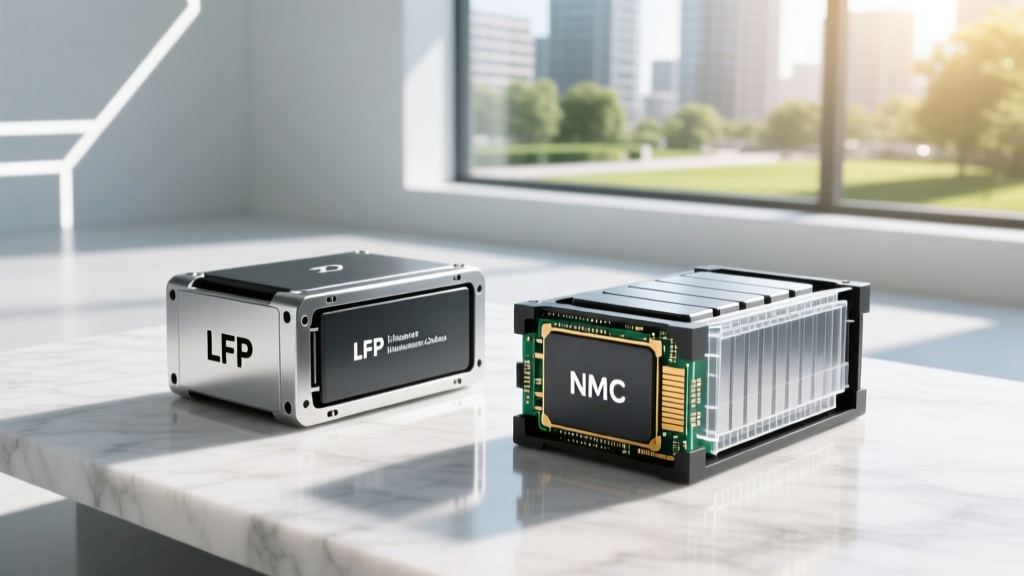
Every EV sold in the US in 2026 uses one of two dominant lithium-ion chemistries in its high-voltage traction battery: Lithium Iron Phosphate (LFP) or Nickel Manganese Cobalt / Nickel Cobalt Aluminum (NMC/NCA). The chemistry dictates energy density, cycle life, cold-weather behavior, and cost — and it's not something you can change after purchase.
| Attribute | LFP (Lithium Iron Phosphate) | NMC / NCA (Nickel-based) |
|---|---|---|
| Energy Density | ~160–180 Wh/kg (cell level) | ~220–300 Wh/kg (cell level) |
| Cycle Life | 3,000–5,000+ full cycles | 1,000–2,000 full cycles |
| Cold-Weather Performance | Greater range loss below 32°F; slower charge acceptance | Better low-temp performance; heat pumps mitigate further |
| Recommended Daily SoC | 100% daily is fine; periodic full charges aid BMS calibration | 80% daily; 100% only for trips |
| Cost (per kWh, pack level) | ~$90–$110/kWh | ~$120–$150/kWh |
| Cobalt Content | None | Varies; NCA uses minimal cobalt, NMC uses more |
| Notable 2026 Vehicles | Tesla Model 3/Y RWD, Ford Mustang Mach-E Select (LFP option), BYD models (non-US) | Tesla Model 3/Y Long Range, Hyundai Ioniq 5, Chevrolet Equinox EV, Rivian R1S/R1T |
The bottom line: If you prioritize maximum range per charge and live in a cold climate, NMC/NCA delivers higher energy density and better winter performance. If you plan to keep the vehicle 10+ years, charge at home nightly, and want minimal degradation anxiety, LFP's superior cycle life and tolerance for 100% daily charging make it the pragmatic choice — even though you sacrifice some range per kWh.
How Long Do EV Batteries Last? Real Degradation Data
The short answer: most modern EV traction batteries will outlast the vehicle they're installed in. But "outlast" doesn't mean "zero degradation." Here's what the data actually shows.
Typical Capacity Retention Over Time (Fleet & Owner Data, 2020–2026 Models):
- Year 1 / 15,000 miles: ~1–3% loss (initial formation loss; steepest part of the curve)
- Year 3 / 45,000 miles: ~4–7% total loss
- Year 5 / 75,000 miles: ~6–10% total loss
- Year 8 / 120,000 miles: ~8–14% total loss (most packs still above 86% SoH)
- Year 10+ / 150,000+ miles: ~12–20% total loss; high-mileage taxis and fleet vehicles show packs still functional at 75–80% SoH
These figures align with large-scale data from Geotab's fleet study of 10,000+ EVs, which found an average degradation rate of approximately 1.8% per year across all chemistries, with LFP packs showing measurably slower decline after year three. Tesla's own 2025 Impact Report reported that Model 3/Y vehicles retained approximately 85% of original range at 150,000 miles — a figure consistent with independent owner surveys on forums like Tesla Motors Club and InsideEVs.
Key nuance: Degradation is not linear. The steepest drop occurs in the first 12–18 months (formation-cycle loss), then the curve flattens considerably. A battery at 92% SoH after two years is not on track to hit 50% — it will likely plateau in the low-to-mid 80s for many more years.
Factors That Accelerate (or Slow) Battery Degradation
Understanding how amps and battery charge behavior affect longevity is where ownership habits make a measurable difference. Here are the primary factors, ranked by impact:
1. Sustained High-Amperage DC Fast Charging
DC fast charging pushes high amperage (often 200–500+ amps at the cell level) into the battery, generating heat and mechanical stress on electrode materials. Occasional road-trip fast charging is fine — but daily reliance on 150+ kW DC charging without preconditioning accelerates degradation. A 2024 study by the Idaho National Laboratory found that vehicles charged primarily via Level 2 (7–11 kW, ~30–48 amps at 240V) showed measurably less capacity loss than those charged predominantly on DC fast chargers over 50,000 miles.
2. Extreme State of Charge Habits
For NMC/NCA packs, routinely storing the battery at 100% SoC or letting it sit near 0% for extended periods stresses the cathode and accelerates electrolyte decomposition. The sweet spot for daily use is 20–80%. LFP packs are more tolerant of 100% SoC and actually benefit from periodic full charges for cell-balancing.
3. Temperature Extremes
High ambient temperatures (sustained 95°F+) are more damaging to long-term battery health than cold. Batteries parked in Phoenix summers without thermal management active will degrade faster than those in mild climates. Most 2026 EVs have active liquid cooling, which mitigates this significantly — but it's still a factor for vehicles regularly fast-charging in desert heat.
4. High-Discharge Loads
Repeated hard acceleration (drawing 300–600+ amps from the pack) causes similar electrode stress to fast charging. This is less impactful than charging habits for most drivers, but track-use or heavy towing at high speeds does contribute to faster wear.
Battery Longevity Checklist for EV Owners:
- ☑ Set daily charge limit to 80% (NMC/NCA) or 100% (LFP) via vehicle app
- ☑ Use Level 2 home charging (7–19 kW) as your primary charge method
- ☑ Reserve DC fast charging for road trips; precondition the battery before fast charging
- ☑ Avoid leaving the vehicle at 0% SoC for more than a few hours
- ☑ In extreme heat, park in shade or a garage when possible
- ☑ Enable scheduled departure / preconditioning to warm or cool the battery before driving
- ☑ Check SoH annually via the vehicle's built-in diagnostics or a third-party OBD-II tool
EV Battery Warranty Terms: What's Actually Covered?
Federal law mandates a minimum 8-year / 100,000-mile warranty on EV battery packs for emissions-related compliance, and most manufacturers meet or exceed this. But the details — particularly the capacity retention threshold — matter enormously.
| Manufacturer | Duration / Mileage | Capacity Retention Threshold | Notes |
|---|---|---|---|
| Tesla (Model 3/Y RWD — LFP) | 8 yr / 100,000 mi | 70% | Covers defect + degradation below 70% |
| Tesla (Model 3/Y LR/Perf — NMC) | 8 yr / 120,000 mi | 70% | Higher mileage threshold |
| Hyundai / Kia (Ioniq 5, EV6, EV9) | 10 yr / 100,000 mi | 70% | Among the longest duration in the industry |
| Chevrolet (Equinox EV, Blazer EV) | 8 yr / 100,000 mi | 70% (estimated; verify per model) | GM's Ultium platform standard |
| Ford (Mustang Mach-E, F-150 Lightning) | 8 yr / 100,000 mi | 70% | LFP packs on Select trim share same terms |
| Rivian (R1S, R1T) | 8 yr / 120,000 mi | 70% | Covers defect and abnormal degradation |
| BMW (i4, iX, i7) | 8 yr / 100,000 mi | 70% | Transferable to second owner |
What triggers a warranty claim: If your battery's State of Health drops below the stated threshold (typically 70% of original capacity) within the warranty period, the manufacturer will repair or replace the pack — or individual modules, depending on the architecture — at no cost. In practice, very few owners hit this threshold within the warranty window based on current degradation data.
What's NOT covered: Gradual capacity loss above the threshold is considered normal wear. Physical damage from collisions, flooding, or unauthorized modifications voids coverage. Always review the specific warranty booklet for your model year, as terms can change — the EPA's fueleconomy.gov site links to manufacturer warranty details for each listed vehicle.
EV Battery Replacement Cost: What to Expect and When
Battery replacement is the single biggest fear for prospective EV buyers — and the most frequently overstated cost in media coverage. Here are the actual numbers for 2026.
| Vehicle / Pack Size | Battery Chemistry | Replacement Cost (Parts + Labor) | Typical Replacement Trigger |
|---|---|---|---|
| Tesla Model 3 RWD (~60 kWh) | LFP | $7,000–$10,000 | Rarely needed; LFP cycle life exceeds 3,000 cycles |
| Tesla Model Y LR (~82 kWh) | NMC | $10,000–$14,000 | Typically only after collision damage or defect |
| Hyundai Ioniq 5 (~77.4 kWh) | NMC | $11,000–$16,000 | Module-level repair often possible ($2,000–$5,000 per module) |
| Chevrolet Equinox EV (~85 kWh) | NMC (Ultium) | $12,000–$18,000 | Ultium's modular design may allow partial replacement |
| Ford F-150 Lightning Ext. Range (~131 kWh) | NMC | $18,000–$25,000+ | Largest consumer pack; full replacement extremely rare |
| Rivian R1T Max Pack (~149 kWh) | NMC | $20,000–$28,000 | Limited service network; costs may decline as platform matures |
When is replacement actually needed? Almost never within the first 10 years or 150,000 miles for a normally used vehicle. The most common real-world triggers are:
- Collision or physical damage — covered by insurance, not a longevity issue.
- Manufacturing defect — covered under warranty.
- High-mileage fleet/taxi use — 200,000+ miles with heavy DC fast charging. Even then, packs often remain functional at 70–75% SoH.
Battery prices have fallen roughly 90% since 2010, from over $1,100/kWh to approximately $100–$130/kWh at the pack level in 2026, according to BloombergNEF data. Costs will continue declining, meaning a replacement in year 12–15 will likely cost significantly less than today's estimates. Third-party refurbishers and module-level repair services are also emerging, offering replacements at 40–60% of OEM full-pack pricing.
How to Check and Monitor Your EV's Battery Health
State of Health (SoH) is expressed as a percentage of the battery's original usable capacity. A new battery is 100% SoH; a battery that can now hold only 65 kWh of its original 77.4 kWh is at approximately 84% SoH. Here's how to monitor it:
Built-In Vehicle Tools
- Tesla: The Service menu (accessible via the touchscreen) shows a battery health test result. Tesla also provides degradation data through the mobile app after running a diagnostic.
- Hyundai/Kia: The infotainment system's EV diagnostics page displays SoH percentage. The Bluelink/UVO connected app also surfaces this data remotely.
- GM (Ultium vehicles): The myChevrolet/myCadillac app includes a battery health indicator tied to OnStar diagnostics.
- Ford: FordPass provides a battery health status, though it's less granular than Tesla's implementation.
Third-Party OBD-II Tools
For more detailed data — including individual cell voltage variance, internal resistance, and precise SoH — devices like the OBDLink SX/MX+ paired with apps such as EVNotify, LeafSpy (Nissan-specific), or Scan My Tesla provide deeper diagnostics. These tools read the Battery Management System (BMS) directly and can flag early signs of cell imbalance before they affect range.
Manual Range-Tracking Method
Charge to a consistent SoC (e.g., 100% for LFP, 90% for NMC) in similar temperature conditions and note the displayed range. Compare this to the EPA-rated range at the same SoC when the vehicle was new. A 310-mile EPA vehicle showing 275 miles at 90% SoC after two years is tracking at roughly 89% SoH — normal and healthy.
How Amps and Charge Rates Directly Affect Battery Longevity
The keyword here — amp battery charge — gets at the core physics of EV battery wear. Every time you charge, amperage (current, measured in amps) flows into the cells. Higher amps mean faster charging but also more heat and more mechanical stress on the lithium-ion intercalation process within the anode and cathode.
Here's how different charge methods translate to amps at the cell level and what that means for longevity:
- Level 1 (120V, 12–16 amps): ~1.4–1.9 kW. Negligible stress. Adds 3–5 miles of range per hour. Ideal for overnight trickle charging and long-term storage maintenance.
- Level 2 (240V, 30–48 amps): ~7.2–11.5 kW. Low-to-moderate stress. Adds 25–45 miles per hour. This is the recommended daily charging method for virtually all EV owners with home access.
- DC Fast Charging (50–350 kW): 125–500+ amps at the cell level. High stress, especially above 150 kW. Adds 100–250+ miles in 15–30 minutes. Essential for road trips; not recommended as a daily primary charge method.
The relationship between amps and degradation isn't linear — it's exponential at the high end. Charging at 48 amps (Level 2) generates far less than twice the heat of charging at 24 amps, because thermal management systems handle moderate loads efficiently. But pushing 400+ amps during a 250 kW DC fast charge creates localized hot spots within cells that accelerate solid electrolyte interphase (SEI) layer growth — the primary mechanism of lithium-ion capacity loss.
Practical takeaway: If your daily driving is under 80 miles, a Level 2 home charger running at 32 amps (7.7 kW) will replenish your battery overnight with minimal degradation impact. Save the high-amp DC fast charging for when you actually need it.
Emerging Battery Technologies: Solid-State and Silicon Anodes
Two technologies are frequently cited as the next leap in EV batteries. Here's where they actually stand as of 2026:
Solid-State Batteries
Solid-state cells replace the liquid electrolyte with a solid ceramic, polymer, or sulfide conductor, promising higher energy density (~400+ Wh/kg at the cell level), faster charging, and improved safety (no flammable electrolyte). Toyota has announced plans for a solid-state-equipped EV by 2027–2028, and Samsung SDI is targeting 2027 for mass production. However, these timelines have shifted multiple times. As of early 2026, no solid-state EV is available for consumer purchase anywhere in the world. Pilot production lines exist, but scaling to automotive volumes at competitive cost remains unsolved. Realistic availability for US-market vehicles: 2028–2030 at the earliest, likely in limited, premium models first.
Silicon Anode Technology
Replacing graphite anodes with silicon (or silicon-carbon composites) can increase energy density by 20–40%. Companies like Sila Nanotechnologies and Group14 Technologies are supplying silicon-dominant anode materials to battery manufacturers, and some 2025–2026 cells incorporate 5–15% silicon content. Pure silicon anodes suffer from volume expansion (swelling up to 300% during charge cycles), which limits cycle life — but incremental silicon blending is already shipping in production cells. This technology is available now in limited form and will become more common through 2027–2028.
Neither technology invalidates buying a current-generation EV. Today's lithium-ion packs already deliver 200,000+ mile lifespans with proper care, and replacement costs continue falling.
Frequently Asked Questions
How long do EV batteries last in years and miles?
Based on fleet data from 2020–2026 model-year vehicles, most EV batteries retain 80–90% of original capacity at 150,000 miles and 8–10 years of use. LFP packs often exceed this. Full failure is rare; gradual degradation is the norm, and most batteries will remain functional (albeit with reduced range) well beyond 200,000 miles.
How much does an EV battery cost to replace?
Full pack replacement costs range from approximately $7,000 for a Tesla Model 3 RWD (60 kWh LFP) to $25,000+ for a Ford F-150 Lightning Extended Range (131 kWh NMC). Module-level repairs — replacing individual degraded sections rather than the full pack — can cost $2,000–$5,000. These costs are expected to decline as pack-level prices drop and third-party repair options expand.
What does the EV battery warranty cover?
Most manufacturers warrant the battery against defects and abnormal degradation below 70% of original capacity for 8 years / 100,000 miles (Hyundai/Kia offers 10 years). If your SoH drops below the threshold within the warranty period, the manufacturer repairs or replaces the pack at no cost. Normal gradual loss above the threshold is not covered.
How do I check and maximize my EV battery health?
Monitor SoH through your vehicle's built-in diagnostics (Tesla Service menu, Hyundai EV diagnostics, FordPass) or a third-party OBD-II reader. Maximize longevity by using Level 2 home charging as your primary method, setting charge limits appropriately (80% for NMC, 100% for LFP), avoiding prolonged storage at 0% or 100% SoC, and preconditioning before DC fast charging.
LFP vs NMC — which battery chemistry is better?
Neither is universally "better." LFP offers longer cycle life (3,000–5,000+ cycles), tolerance for 100% daily charging, lower cost, and zero cobalt — but lower energy density and worse cold-weather performance. NMC/NCA delivers more range per kWh and better winter behavior but requires more careful SoC management and has a shorter cycle life. Choose LFP for longevity and daily commuting; choose NMC for maximum range and cold-climate driving.
Does fast charging damage my EV battery?
Occasional DC fast charging has minimal impact on long-term battery health. Daily reliance on high-amperage DC charging (150+ kW) without preconditioning does measurably accelerate degradation compared to Level 2 charging, per Idaho National Laboratory research. The practical advice: fast charge on road trips, use Level 2 at home, and always precondition the battery before a fast-charge session.
Will solid-state batteries make my current EV obsolete?
No. Solid-state EVs are not expected in the US market before 2028–2030, and initial offerings will be premium-priced with limited availability. Current lithium-ion batteries already deliver 200,000+ mile lifespans, and replacement costs are declining. Buying a 2026 EV is not a dead-end decision — it's a mature, proven technology.