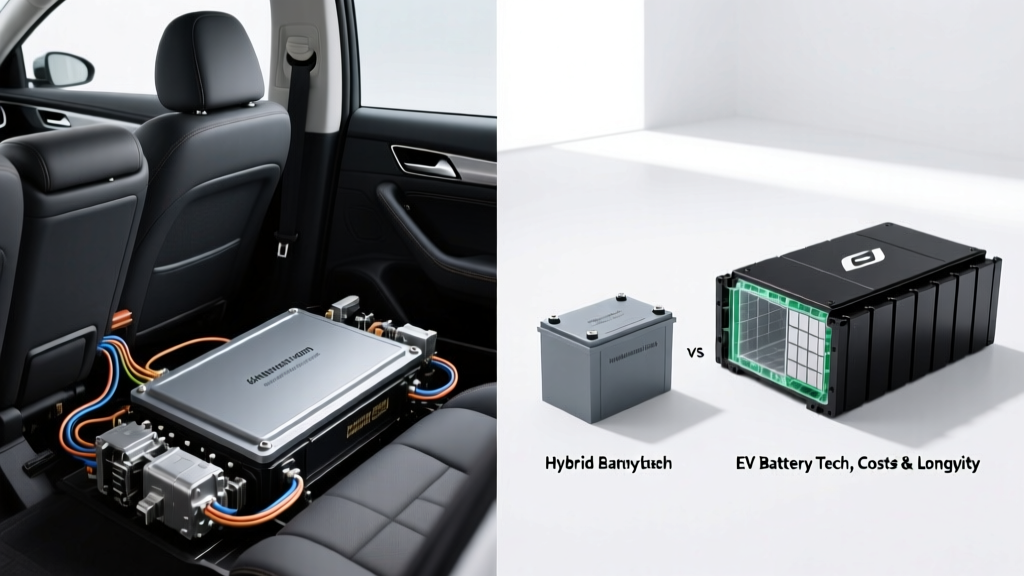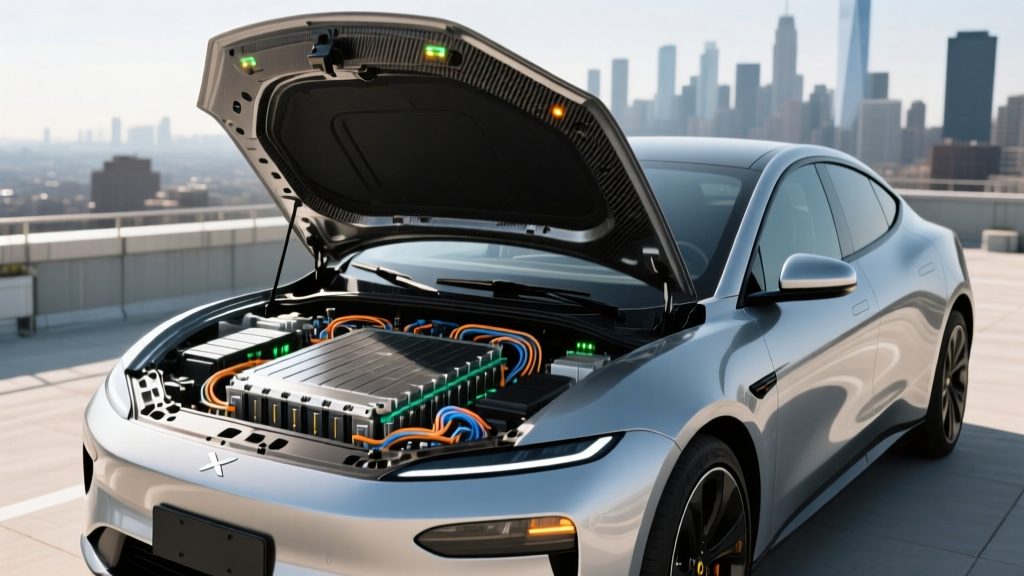
The heaviest single component in any electric vehicle is its battery pack — and that mass shapes everything from range and tire wear to suspension tuning and real-world efficiency. A 100 kWh NMC pack can weigh over 1,200 pounds, pushing vehicle curb weights past 5,000 lbs in midsize SUVs and over 6,500 lbs in full-size electric trucks. Understanding the relationship between battery car weight, chemistry, and long-term durability is essential for any buyer weighing a 2026 EV purchase.
This guide breaks down how battery mass influences vehicle dynamics, compares the two dominant chemistries on the market, and provides hard data on degradation, warranty coverage, and replacement economics.
Why EV Battery Weight Matters More Than You Think
Battery packs are dense. Lithium-ion cells, cooling plates, structural housings, and bus bars add up fast. Here's what that mass means for ownership:
- Efficiency penalty: Heavier vehicles require more energy to accelerate and climb grades. A 5,500-lb EV with a 100 kWh pack typically achieves 2.5–3.0 mi/kWh, while a 3,800-lb sedan with a 60 kWh pack can hit 3.5–4.0 mi/kWh.
- Tire and brake wear: Increased mass accelerates tire wear by 15–30% compared to equivalent ICE vehicles. Regenerative braking offsets some pad wear, but tires bear the full load.
- Suspension and handling: Automakers compensate with stiffer springs and adaptive dampers, but the physics of 5,000+ lbs through corners is unavoidable.
- Range-to-weight ratio: Simply adding more battery kWh increases range but also increases weight, yielding diminishing returns. A 20% larger pack might add only 12–15% real-world range.
LFP vs NMC/NCA: Chemistry Trade-Offs That Affect Weight and Lifespan
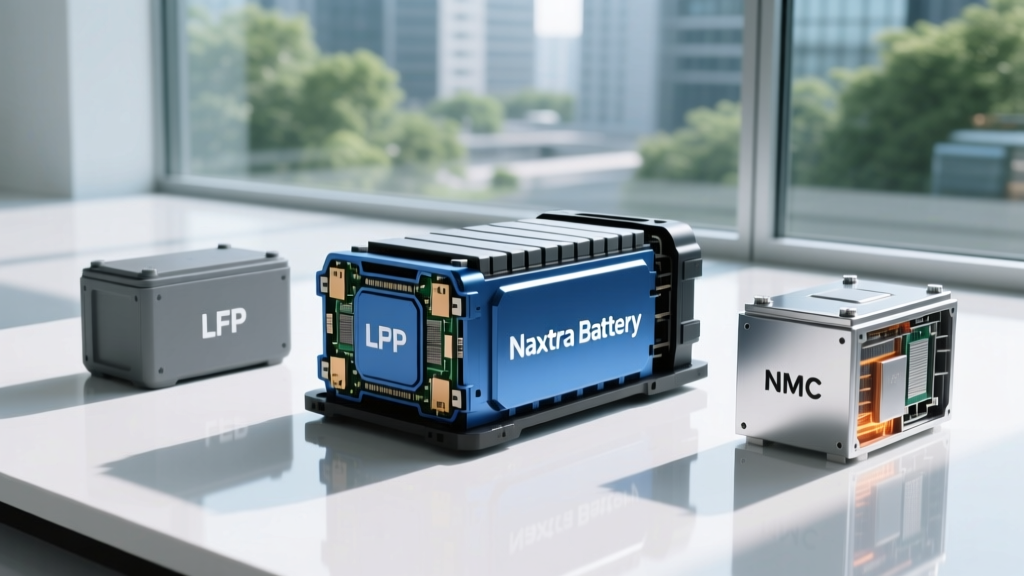
Two lithium-ion chemistries dominate the 2026 EV market. The choice between them affects not just battery car weight, but also longevity, charging behavior, and cold-weather performance.
| Attribute | LFP (Lithium Iron Phosphate) | NMC/NCA (Nickel Manganese Cobalt / Nickel Cobalt Aluminum) |
|---|---|---|
| Energy density | ~150–170 Wh/kg (cell level) | ~220–300 Wh/kg (cell level) |
| Pack weight impact | Heavier for same kWh — ~15–25% more mass | Lighter for same kWh — enables longer range in lighter vehicles |
| Cycle life | 3,000–5,000+ cycles to 80% SoH | 1,000–2,500 cycles to 80% SoH |
| Recommended daily SoC | 100% (benefits from periodic full charge for BMS calibration) | 80% daily; 100% only for trips |
| Cold-weather performance | Greater range loss below 32°F; slower charge acceptance when cold | Better cold performance; preconditioning mitigates most losses |
| Cost per kWh | ~$85–100/kWh (pack level, 2026 est.) | ~$110–140/kWh (pack level, 2026 est.) |
| Common in | Tesla Model 3/Y RWD, standard-range trims; Ford Mustang Mach-E Select; many Chinese-market EVs | Long-range and performance trims across most brands; Hyundai Ioniq 5/6, Rivian, GM Ultium vehicles |
Bottom line: LFP packs are heavier per kWh but last significantly longer and cost less. NMC/NCA packs are lighter and denser, enabling longer range in vehicles where weight distribution and performance matter. Neither is universally "better" — the right choice depends on your driving profile.
How Long Do EV Batteries Actually Last? Degradation Data
EV batteries don't suddenly fail — they slowly lose capacity over time, measured as State of Health (SoH). A battery at 90% SoH holds 90% of its original kWh. Here's what real-world fleet data shows:
- Year 1: ~2–5% loss (initial "formation" drop is normal)
- Years 2–4: ~1–2% per year (linear, gradual decline)
- Years 5–8: ~1–1.5% per year if properly maintained
- At 150,000 miles: Most packs retain 85–92% SoH
- At 200,000 miles: Expect 78–88% SoH depending on climate and charging habits
Data synthesized from Geotab fleet battery health studies and manufacturer warranty thresholds. Individual results vary based on climate, DC fast-charging frequency, and SoC habits.
LFP packs generally show slower degradation in the mid-life years (years 3–8), with many projections suggesting 90%+ SoH at 200,000 miles under moderate use. The trade-off, as noted, is the additional battery car weight required to achieve comparable range.
Battery Warranty Coverage: What's Protected and for How Long
Federal regulation mandates a minimum 8-year/100,000-mile warranty on EV battery packs. Most automakers exceed this baseline. Here's how major manufacturers structure their coverage in 2026:
| Manufacturer | Warranty Period | Capacity Retention Threshold | Notes |
|---|---|---|---|
| Tesla | 8 yr / 120,000 mi (Model 3/Y LR); 8 yr / 150,000 mi (Model S/X) | 70% SoH | Transferable to subsequent owners |
| Hyundai / Kia | 10 yr / 100,000 mi | 70% SoH | Among the longest coverage in the industry |
| GM (Chevrolet, Cadillac, GMC) | 8 yr / 100,000 mi | 70% SoH (Ultium platform) | Modular pack design allows partial module replacement |
| Ford | 8 yr / 100,000 mi | 70% SoH | LFP packs in base trims may degrade slower |
| Rivian | 8 yr / 175,000 mi | 70% SoH | Highest mileage threshold among major OEMs |
Key detail: Warranty replacement does not guarantee a brand-new battery. OEMs typically replace with a pack that meets or exceeds the 70% SoH threshold — which could be a refurbished unit. Always ask whether the replacement is new or remanufactured.
EV Battery Replacement Costs: What to Budget and When
The fear of a $20,000 battery replacement is the single largest barrier to EV adoption — but context matters enormously. Most batteries outlast the vehicle's useful economic life. When replacement is needed, it's typically at 150,000–250,000+ miles, and costs have been declining steadily.
| Vehicle Category | Pack Size (kWh) | Estimated Replacement Cost (2026) | Typical Need Timeline |
|---|---|---|---|
| Compact sedan (LFP) | 50–65 kWh | $6,500–$9,000 | Rarely needed before 200,000+ mi |
| Midsize crossover (NMC) | 75–90 kWh | $10,000–$15,000 | 180,000–250,000 mi if degraded below usability |
| Full-size truck/SUV (NMC) | 100–212 kWh | $15,000–$28,000 | Very rare; modular designs allow partial repair |
Several factors are reducing replacement costs over time:
- Module-level repair: GM's Ultium and some other platforms allow individual module replacement ($1,500–$3,500 per module) rather than a full pack swap.
- Refurbished packs: A growing secondary market offers tested, remanufactured packs at 40–60% of new-pack pricing.
- Cell cost decline: Pack-level costs have dropped from ~$200/kWh in 2020 to roughly $100–140/kWh in 2026, per BloombergNEF data.
Factors That Accelerate Battery Degradation
Not all miles are equal. How you charge, drive, and store your EV directly impacts how quickly the battery loses capacity:
- ✅ Limit DC fast charging to road trips when possible. Daily Level 2 home charging (7–11 kW) is significantly gentler on cells than repeated 150+ kW DC sessions.
- ✅ Keep SoC between 20–80% for daily use with NMC/NCA packs. LFP packs should be charged to 100% at least weekly for BMS calibration.
- ✅ Precondition the battery before fast charging in cold weather. Most EVs do this automatically when you navigate to a charger.
- ✅ Avoid prolonged storage above 90% or below 10% SoC, especially in hot climates.
- ✅ Park in shade or a garage when possible. Sustained battery temperatures above 95°F accelerate degradation.
- ❌ Don't leave at 100% SoC overnight regularly (NMC/NCA). Schedule charging to finish near departure time.
- ❌ Don't ignore thermal management warnings. If your EV limits power or charge speed due to temperature, let it cool/warm before pushing hard.
How to Monitor Your Battery's State of Health
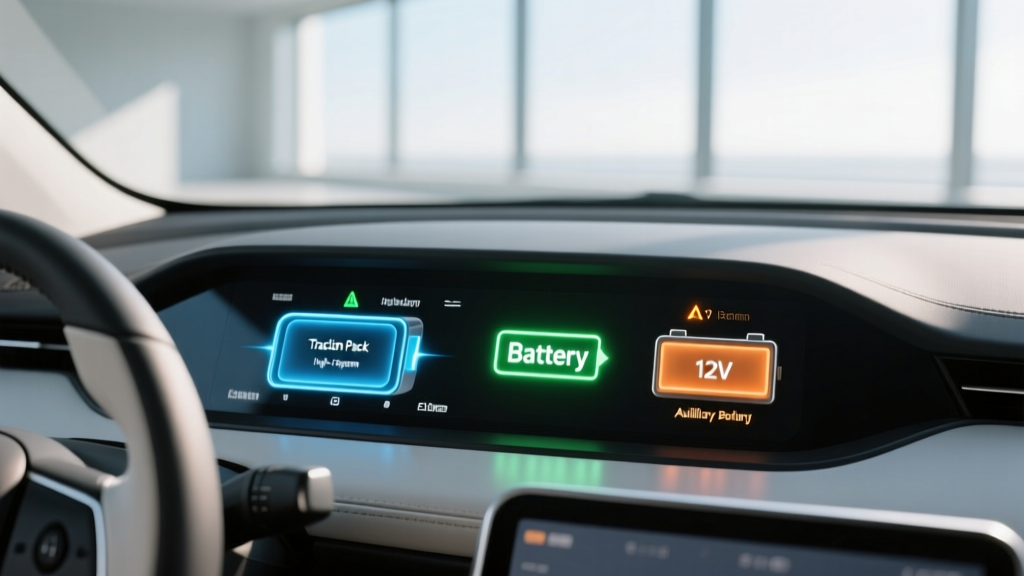
Most 2026 EVs provide SoH data through the vehicle's infotainment system or companion app, but the level of detail varies widely:
- Tesla: No native SoH percentage displayed. Owners can estimate by comparing a full 100% charge range readout to the original EPA figure, or use third-party tools like TeslaFi or Scan My Tesla with an OBD-II adapter to pull BMS data.
- Hyundai/Kia: Displays battery health percentage in the EV settings menu on most 2024+ models.
- GM (Ultium): Battery health metric available in the myChevrolet/myCadillac app.
- Ford: Battery health check available through FordPass and dealership diagnostic tools.
- OBD-II scanners: Devices like the OBDLink SX paired with apps such as EVNotify or LeafSpy (Nissan) can read detailed cell voltage, temperature, and SoH data from the BMS.
If your vehicle's estimated full-charge range has dropped more than 15–20% from its original EPA figure and it's within the warranty period, schedule a dealership battery diagnostic. That may qualify for a warranty replacement.
Emerging Battery Technologies: What's Next (and When)
Several next-generation technologies promise to reduce battery car weight while improving range and longevity. None are available in production vehicles as of 2026, but timelines are becoming clearer:
- Solid-state batteries: Replace the liquid electrolyte with a solid conductor, potentially offering 30–50% higher energy density and faster charging. Toyota has announced limited production in select models for 2027–2028, but widespread availability at mainstream price points is not expected before 2030. Prototype cells from Samsung SDI and QuantumScape show promise but face manufacturing scale-up challenges.
- Silicon-dominant anodes: Replacing graphite anodes with silicon can increase cell-level energy density by 20–40%. Companies like Sila Nanotechnologies and Group14 are supplying early-production cells, with broader automotive integration expected in 2027–2029 model-year vehicles.
- Sodium-ion batteries: Use abundant sodium instead of lithium, reducing cost and supply-chain risk. Lower energy density (~120–150 Wh/kg) limits them to urban/short-range vehicles. CATL and BYD are producing these for Chinese-market EVs; US availability is not yet confirmed.
Frequently Asked Questions
How long do EV batteries last in years and miles?
Most modern EV batteries (2022+ model years) are designed to retain 70–85% of original capacity at 150,000–200,000 miles, which typically corresponds to 10–15 years of average driving (12,000–15,000 mi/yr). LFP chemistry packs may retain 90%+ at the same mileage. Catastrophic failure is rare; gradual capacity loss is the norm.
How much does an EV battery cost to replace in 2026?
Out-of-warranty replacement costs range from approximately $6,500 for a compact LFP pack to $28,000 for a large NMC truck pack, including parts and labor. However, most batteries never require full replacement during the vehicle's ownership life. Module-level repair on platforms like GM Ultium can cost $1,500–$3,500 per module.
What does the battery warranty actually cover?
Federal law requires a minimum 8-year/100,000-mile battery warranty. Coverage triggers when SoH drops below the manufacturer's threshold (typically 70% of original capacity). The warranty covers defects and excessive degradation — not damage from accidents, flooding, or aftermarket modifications. Replacement may be with a refurbished pack meeting the threshold, not necessarily a new unit.
LFP vs NMC — which battery chemistry is better for me?
Choose LFP if: you want maximum cycle life, plan to keep the car 8+ years, mostly drive in moderate climates, and want to charge to 100% daily without worry. Choose NMC/NCA if: you need the longest possible range in a lighter vehicle, frequently drive in cold climates, or prioritize performance. LFP packs are heavier per kWh but last longer and cost less; NMC packs are lighter and denser but degrade faster if abused.
How do I check and maximize my EV battery health?
Check SoH through your vehicle's settings menu, companion app, or an OBD-II scanner with BMS access. To maximize longevity: favor Level 2 home charging over DC fast charging, keep NMC packs between 20–80% SoC for daily use, precondition before fast charging in cold weather, and avoid leaving the vehicle at extreme SoC levels in hot climates for extended periods.
Does a heavier EV battery mean shorter lifespan?
Not necessarily. A larger battery (more kWh) actually cycles less frequently for the same total miles driven, which can reduce per-cell wear. However, the additional battery car weight increases tire wear, suspension load, and overall energy consumption. The chemistry (LFP vs NMC) and your charging habits matter far more for longevity than pack size alone.
Sources: EPA fuel economy data via fueleconomy.gov; battery degradation fleet data from Geotab; manufacturer warranty documentation; IRS §30D tax credit guidelines at irs.gov. All specifications reflect 2026 model-year data available at time of publication.