Why the Cable for Battery Car Systems Matters More Than You Think
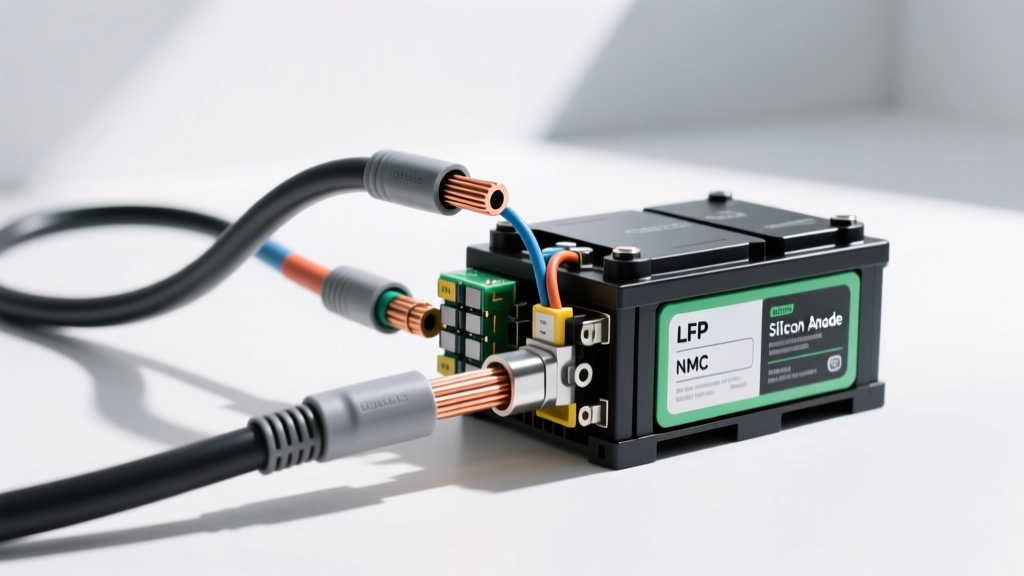
When most shoppers research an electric vehicle, they fixate on range and 0-60 times. But the high-voltage cable for battery car applications — the thick, orange-sheathed wiring that links the traction battery to the inverter, motor, and charge port — is one of the most critical and least discussed components in any EV. These cables carry up to 800 volts and hundreds of amps, and their quality directly affects charging speed, thermal management, and long-term battery health.
This guide goes beyond the cable itself to cover the entire battery ecosystem it supports: chemistry choices (LFP vs NMC/NCA), real-world degradation data, warranty protections, replacement costs, and the habits that extend or shorten pack life. Whether you're evaluating a 2026 model-year EV or optimizing the pack in your current car, the data below will ground your decisions in numbers, not marketing.
LFP vs NMC/NCA: Which Battery Chemistry Should You Choose?
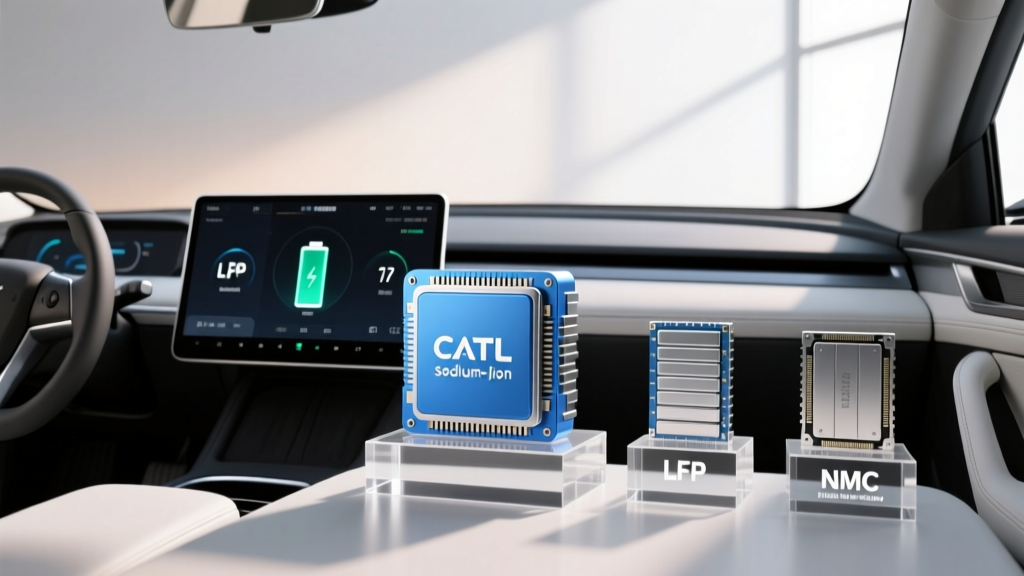
Every EV sold in the US in 2026 uses one of two dominant lithium-ion chemistries: LFP (lithium iron phosphate) or NMC/NCA (nickel manganese cobalt / nickel cobalt aluminum). The high-voltage cable for battery car systems is identical across both — but the chemistry inside the cells dictates range, longevity, cold-weather behavior, and cost.
| Factor | LFP (Lithium Iron Phosphate) | NMC / NCA (Nickel-Based) |
|---|---|---|
| Energy Density | Lower (~160 Wh/kg cell-level) | Higher (~250-300 Wh/kg cell-level) |
| Typical Cycle Life | 3,000-5,000+ cycles | 1,000-2,000 cycles |
| Cold-Weather Performance | Moderate; greater range loss below 32°F | Better low-temp conductivity |
| Recommended Daily SoC | 100% (no penalty for full charge) | 80% daily; 100% only for trips |
| Cost per kWh | Lower (~$80-100/kWh at pack level) | Higher (~$110-140/kWh at pack level) |
| Thermal Stability | Excellent; higher runaway threshold | Good; requires robust BMS |
| Common in (2026 MY) | Tesla Model 3/Y RWD, Ford Mustang Mach-E Select, BYD models | Hyundai Ioniq 5/6, Tesla Long Range, Rivian, GM Ultium vehicles |
The takeaway: LFP is the durability and value play — ideal if you charge at home daily and want a pack that can outlast the car's body. NMC/NCA delivers more range per pound, making it the choice for long-range trims, towing, and cold-climate drivers who need every mile in winter. Neither chemistry is universally "better" — the right choice depends on your driving pattern and climate.
How Long Do EV Batteries Actually Last?
The most common question from prospective buyers is battery lifespan. The short answer: most modern EV traction batteries will outlast the vehicle they're installed in. But let's look at the data.
Real-World Degradation Data Points
- Tesla fleet data (2025 Impact Report): Model 3/Y packs retain approximately 85% of original capacity after 200,000 miles — roughly 15% loss over the average vehicle lifetime.
- Geotab fleet study (2024, ~10,000 vehicles): Average EV battery degradation was 1.8% per year across all chemistries, meaning ~14% loss over 8 years.
- Recurrent Auto data (2025): LFP-equipped vehicles showed slower degradation curves than NMC equivalents, with many LFP packs retaining 92%+ capacity after 3 years and 50,000 miles.
- Nissan Leaf (early air-cooled packs, 2011-2017): A cautionary tale — some packs lost 20-30% capacity within 5 years due to inadequate thermal management. Modern liquid-cooled packs have largely eliminated this risk.
Most degradation occurs in the first 1-2 years (an initial "break-in" drop of 2-5%), after which the curve flattens significantly. A 2026 model-year EV with liquid cooling and a modern battery management system (BMS) should reasonably retain 80-90% capacity after 10 years and 150,000 miles.
What Does the EV Battery Warranty Cover?
Federal law mandates that EV batteries carry a minimum warranty of 8 years or 100,000 miles (whichever comes first). California and states adopting CARB rules extend this to 10 years or 150,000 miles. But the critical detail is the capacity retention threshold — the percentage below which the manufacturer must replace or repair the pack.
| Manufacturer (2026 MY) | Warranty Term | Capacity Threshold | Notes |
|---|---|---|---|
| Tesla (Model 3/Y RWD — LFP) | 8 yr / 100,000 mi | 70% | Long Range/Performance: 8 yr / 120,000 mi |
| Hyundai / Kia (E-GMP) | 10 yr / 100,000 mi | 70% | Stronger coverage in CARB states |
| GM (Ultium platform) | 8 yr / 100,000 mi | 70% | Covers battery and propulsion components |
| Ford (Mach-E, F-150 Lightning) | 8 yr / 100,000 mi | 70% | Electrical components included |
| Rivian (R1T / R1S) | 8 yr / 120,000 mi | 70% | Longer mileage cap than most competitors |
| Volkswagen (MEB platform) | 8 yr / 100,000 mi | 70% | Net usable capacity basis |
Key insight: The 70% threshold means the manufacturer only intervenes if your battery loses more than 30% of its original capacity. Given that real-world data shows most packs retain 80-90% after a decade, warranty claims remain rare. The warranty protects against catastrophic failure and abnormal degradation — not the gradual, minor loss that all lithium-ion batteries experience. Refer to fueleconomy.gov's EV technology overview for background on how battery warranties interact with federal efficiency standards.
How Much Does an EV Battery Replacement Cost?
This is where fear-mongering runs rampant. Let's separate the data from the anxiety. Yes, an out-of-warranty battery replacement is expensive. But the context most articles omit is that the vast majority of EV owners never need one. Packs are lasting 200,000+ miles in growing numbers, and most vehicles are retired or sold before the battery fails.
| Vehicle / Pack Size | Battery Capacity | Estimated Replacement Cost (2026) | When Typically Needed |
|---|---|---|---|
| Tesla Model 3 RWD (LFP) | ~60 kWh | $8,000 – $12,000 | Rarely before 250,000+ mi |
| Hyundai Ioniq 5 | 77.4 kWh (NMC) | $12,000 – $18,000 | Rarely before 200,000+ mi |
| Ford F-150 Lightning Ext. Range | 131 kWh (NMC) | $20,000 – $30,000 | Rarely before 200,000+ mi |
| Chevrolet Equinox EV | ~85 kWh (NMC/Ultium) | $14,000 – $20,000 | Rarely before 200,000+ mi |
| Rivian R1T (Max Pack) | 149 kWh (NMC) | $25,000 – $35,000 | Rarely before 200,000+ mi |
Costs have been declining steadily — roughly 8-12% per year at the pack level — and by the time a 2026 EV actually needs a replacement (likely 2038+), prices will be substantially lower. Some manufacturers also offer refurbished or remanufactured packs at 30-50% below new-pack pricing. Additionally, module-level repair (replacing individual bad modules rather than the entire pack) is increasingly available from independent EV shops for $3,000-$8,000 depending on the vehicle.
Factors That Affect Battery Life — and What You Can Control
The high-voltage cable for battery car systems, the BMS, and the thermal management loop all work together to protect the cells. But your habits as the driver have a measurable impact on degradation rate. Here's what the data shows:
Battery Care Checklist for Maximum Longevity
- Avoid sustained 100% SoC (NMC/NCA only): For nickel-based chemistries, daily charging to 80% and reserving 100% for road trips can add years to pack life. LFP owners can charge to 100% daily without penalty — and should, to allow the BMS to balance cells.
- Minimize DC fast charging frequency: Occasional DCFC is fine, but daily 150+ kW fast charging accelerates degradation by 1-3% over the pack's life compared to Level 2 home charging. The heat generated during high-C-rate charging stresses cells.
- Precondition before fast charging: Most 2026 EVs automatically precondition the battery when you navigate to a charger. This warms or cools the pack to the optimal temperature window (roughly 77-95°F / 25-35°C), enabling faster charging and reducing thermal stress.
- Avoid extreme SoC storage: If storing an EV for weeks, leave it at ~50% SoC. Storing at 100% or near 0% for extended periods accelerates calendar degradation.
- Use the car regularly: Lithium-ion cells prefer moderate, regular cycling to long periods of inactivity at high or low SoC.
- Trust the thermal management system: Liquid-cooled packs in 2026 vehicles are far more resilient than early air-cooled designs. In extreme heat, park in shade when possible; in extreme cold, precondition while plugged in.
How to Check Your EV's Battery Health (State of Health)
State of Health (SoH) is the percentage of original capacity your battery currently holds. A new pack is 100% SoH; a pack that held 75 kWh when new and now holds 67.5 kWh is at 90% SoH. Here's how to monitor it:
Built-In Vehicle Displays
Most 2026 EVs offer a battery health indicator in the infotainment system or mobile app. Tesla shows degradation curves in the app. Hyundai/Kia provides a battery condition readout in the EV menu. GM's Ultium vehicles display estimated remaining capacity via the myChevrolet/myCadillac app. These readings are estimates based on coulomb counting and voltage analysis — accurate to within roughly ±2%.
OBD-II Diagnostic Tools
For a more precise reading, an OBD-II dongle paired with apps like LeafSpy (Nissan), Scan My Tesla, or Car Scanner ELM OBD2 can pull raw BMS data including individual cell voltages, pack voltage, current capacity in kWh, and calculated SoH. This is especially useful when buying a used EV — you can verify the seller's claims with actual BMS data.
Dealer and Third-Party Testing
Most dealerships can run a full battery health report during service visits. Some third-party services, including Recurrent Auto, offer free or low-cost battery health reports that compare your pack's degradation to a fleet average of the same vehicle. For a pre-purchase inspection on a used EV, a dealer battery report is the gold standard.
Emerging Battery Technology: Solid-State and Silicon Anodes
If you're reading this in 2026, solid-state batteries are no longer a theoretical curiosity — but they are also not yet in mass-market vehicles. Here's where the technology stands:
Solid-State Batteries
Solid-state cells replace the liquid electrolyte with a solid material (ceramic, sulfide, or polymer), promising higher energy density (400+ Wh/kg at the cell level), faster charging, and improved safety. Toyota has announced a solid-state battery targeting 2027-2028 production, initially in limited-run vehicles. Samsung SDI and QuantumScape are also in pilot production phases. Realistically, solid-state packs will reach mainstream, affordable EVs no earlier than 2029-2031. They are not available in any 2026 model-year production vehicle.
Silicon Anode Technology
Silicon-dominant anodes (replacing graphite) can increase energy density by 20-40%. Companies like Sila Nanotechnologies and Group14 Technologies are supplying silicon anode materials to battery manufacturers, and some premium cells in 2026 already incorporate partial silicon content. This is an incremental improvement happening now, not a future revolution — expect 5-10% range gains per generation rather than step-change leaps.
Sodium-Ion Batteries
Sodium-ion chemistry is entering the market for lower-cost, shorter-range EVs, primarily in China. CATL and BYD are producing sodium-ion packs for urban EVs with 150-200 miles of range. These won't displace lithium-ion in long-range US vehicles but may appear in entry-level models or stationary storage by 2027-2028.
Frequently Asked Questions
How long do EV batteries last in years and miles?
Based on fleet data from Tesla, Geotab, and Recurrent Auto, modern liquid-cooled EV batteries retain 80-90% of their original capacity after 10 years and 150,000-200,000 miles. Many packs will function well beyond 200,000 miles with usable capacity remaining. The days of early Nissan Leaf-style rapid degradation are behind us thanks to liquid cooling, better BMS algorithms, and improved cell chemistry.
How much does it cost to replace an EV battery?
Replacement costs in 2026 range from roughly $8,000 for a smaller LFP pack (Tesla Model 3 RWD) to $25,000-$35,000 for a large pack (Rivian R1T Max Pack, Ford F-150 Lightning Extended Range). However, the vast majority of EV owners never need a replacement — the battery typically outlasts the vehicle. Module-level repairs and refurbished packs offer lower-cost alternatives. Prices continue to decline annually.
What does the EV battery warranty actually cover?
Federal law requires a minimum 8-year/100,000-mile warranty; CARB states extend to 10 years/150,000 miles. The warranty guarantees that the battery will retain at least 70% of its original capacity. If degradation exceeds 30%, the manufacturer must repair or replace the pack at no cost. The warranty also covers defects and catastrophic failures. Always check your specific manufacturer's terms, as some offer longer mileage caps (e.g., Rivian at 120,000 miles).
How do I check and maximize my EV battery's health?
Monitor State of Health through your vehicle's app, an OBD-II diagnostic tool (LeafSpy, Scan My Tesla, Car Scanner), or a dealer battery health report. To maximize longevity: charge NMC/NCA packs to 80% daily (LFP to 100%), minimize DC fast charging when Level 2 is available, precondition before fast charging, avoid storing at extreme SoC levels, and trust the vehicle's thermal management system.
LFP vs NMC — which battery chemistry is better?
Neither is universally superior. LFP offers longer cycle life (3,000-5,000+ cycles), lower cost, better thermal stability, and the convenience of daily 100% charging — but with lower energy density and worse cold-weather performance. NMC/NCA delivers more range per kilogram, better cold-weather behavior, and faster peak charging — but with shorter cycle life and a recommendation to limit daily charge to 80%. Choose LFP for daily commuting and value; choose NMC for maximum range, towing, and cold climates.
Does the cable for battery car systems need maintenance?
The high-voltage orange cables connecting the traction battery to the inverter, motor, and charge port are sealed, shielded, and designed to last the life of the vehicle. They require no routine maintenance. However, if you experience charging faults, reduced charging speeds, or intermittent power delivery, a technician should inspect the cable connections and insulation for damage — especially after underbody impacts or collision repairs. Never attempt to service high-voltage cables yourself; they carry lethal voltage levels.
Sources: Tesla Impact Report 2025, fueleconomy.gov, IRS §30D Clean Vehicle Credit guidelines, Geotab EV Battery Degradation Study 2024, Recurrent Auto Battery Health Data 2025.