EV Batteries as Base Power and Battery Backup: What Owners Need to Know
The modern electric vehicle is more than transportation — it's a rolling power plant. With bidirectional charging (V2H/V2G) now available on models like the Ford F-150 Lightning, Hyundai Ioniq 5, and Chevrolet Silverado EV, an EV's high-voltage traction battery can serve as base power battery backup for your home during outages or as a grid-balancing asset. A 77 kWh battery pack can keep an average US home running for 2–3 days, making the EV battery one of the most consequential investments in a household's energy ecosystem.
But using your EV as backup power raises critical questions: How much degradation does bidirectional discharge cause? Which chemistry — LFP or NMC — handles it better? And what does the warranty actually cover if you're cycling the pack for home backup? This guide breaks down the chemistry, lifespan data, warranty terms, and real-world costs behind EV batteries in 2026, whether you're buying for transportation alone or planning to leverage your pack for base power backup.
LFP vs NMC/NCA: Chemistry Trade-Offs for Backup and Daily Driving
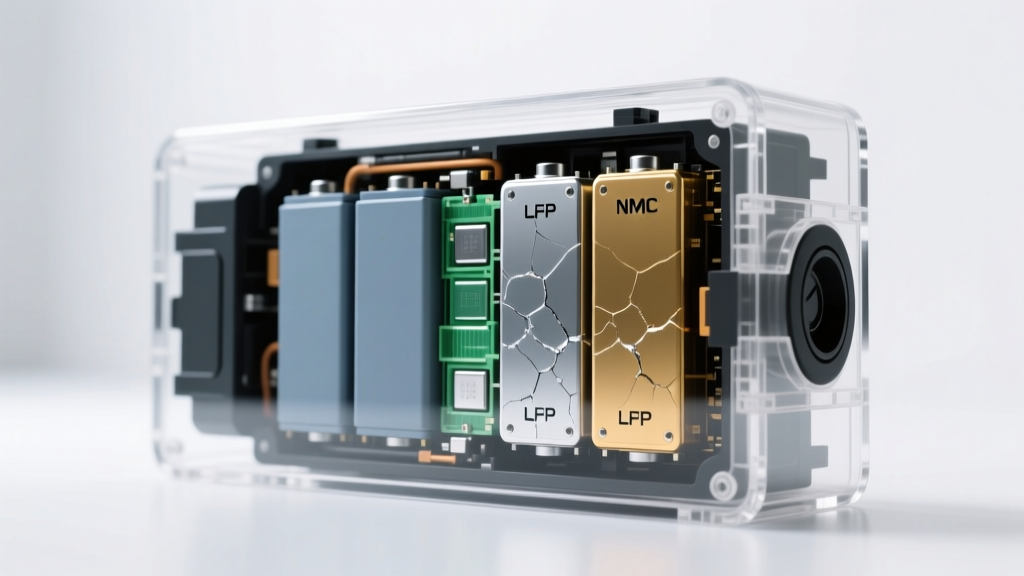
The two dominant lithium-ion chemistries in 2026 EV battery packs are LFP (lithium iron phosphate) and NMC/NCA (nickel manganese cobalt / nickel cobalt aluminum). Each has distinct strengths that affect range, longevity, cold-weather performance, and suitability for V2H base power battery backup duty cycles.
| Attribute | LFP (LiFePO₄) | NMC / NCA |
|---|---|---|
| Energy Density | ~160–180 Wh/kg (lower) | ~220–260 Wh/kg (higher) |
| Cycle Life | 3,000–5,000+ cycles | 1,000–2,000 cycles |
| Cold-Weather Performance | Moderate — greater range loss below 32°F | Better low-temp conductivity |
| Thermal Stability | Excellent — less prone to thermal runaway | Good — requires more active management |
| Cost per kWh (pack-level) | ~$95–$110 | ~$120–$145 |
| Recommended SoC for Storage | 100% OK (periodic full charge beneficial) | ~50–80% ideal for long-term |
| Typical 2026 Applications | Tesla Model 3/Y RWD, Ford Mustang Mach-E Select (LFP option), BYD models | Tesla Long Range, Hyundai Ioniq 5/6, Rivian, most AWD/Long Range trims |
| V2H/Backup Suitability | Excellent — deep cycle tolerance, 100% SoC availability | Good — but frequent 100% charges accelerate degradation |
The bottom line: If you plan to use your EV as a base power battery backup system regularly, LFP chemistry offers a meaningful advantage. Its tolerance for 100% state-of-charge storage and superior cycle life (3–5× that of NMC) means the pack can handle daily V2H discharge/recharge cycles with less long-term capacity loss. NMC remains the choice for maximum range and cold-climate drivers, but it requires more careful SoC management.
How Long Do EV Batteries Last? Degradation Data in Context
The question "how long do EV batteries last" has a reassuring answer backed by real fleet data. Modern EV batteries are engineered to outlast the vehicles they're installed in — but they do gradually lose capacity over time and charge cycles.
Typical EV Battery Degradation Curve (Fleet Data Averages)
- Year 1 / 15,000 miles: ~2–4% capacity loss (initial formation loss)
- Year 3 / 45,000 miles: ~5–8% total loss
- Year 5 / 75,000 miles: ~8–12% total loss
- Year 8 / 120,000 miles: ~10–15% total loss (varies by chemistry and usage)
- Year 10+ / 150,000+ miles: ~12–20% total loss for NMC; ~8–12% for LFP
Sources: Geotab fleet study (2024 update), Recurrent Auto battery data (2025).
A few data points stand out. Tesla's 2025 Impact Report showed its fleet averaging ~12% degradation at 200,000 miles — meaning a Model 3 Long Range originally rated at 341 miles EPA would still deliver roughly 300 miles. Hyundai/Kia's E-GMP platform vehicles (Ioniq 5, EV6, EV9) have shown similar trajectories, with most owners retaining 88–92% capacity at the 5-year mark under normal use.
For vehicles used in V2H base power battery backup applications, the additional cycling does incrementally increase degradation. However, an LFP pack rated for 4,000+ cycles can handle daily home backup discharge for over a decade before reaching 80% capacity — far beyond what most owners will need.
EV Battery Warranty Terms: What's Covered in 2026
Federal law mandates a minimum 8-year / 100,000-mile warranty on EV battery packs (10 years / 150,000 miles in CARB states like California, Oregon, and others). Most manufacturers exceed this baseline. Here's how the major warranties compare:
| Manufacturer | Warranty Period | Capacity Retention Threshold | Notes |
|---|---|---|---|
| Tesla (Model 3/Y LFP) | 8 yr / 120,000 mi | 70% | Long Range/Performance: 8 yr / 120,000 mi at 70% |
| Hyundai / Kia (E-GMP) | 10 yr / 100,000 mi | 70% | Among the longest coverage in the segment |
| Ford (F-150 Lightning, Mach-E) | 8 yr / 100,000 mi | 70% | V2H use covered under standard warranty terms |
| GM (Ultium platform) | 8 yr / 100,000 mi | 70% | Lyriq, Silverado EV, Blazer EV |
| Rivian | 8 yr / 175,000 mi | 70% | Higher mileage cap than most competitors |
| BMW (iX, i4, i7) | 8 yr / 100,000 mi | 70% | Preconditioning required for DCFC warranty claims |
Critical detail: The warranty triggers when capacity drops below the stated threshold — typically 70% of original capacity. A pack retaining 71% is not eligible for replacement. Per fueleconomy.gov, most 2026 EV batteries are lasting well beyond these thresholds, with replacement claims remaining rare in the first 8 years of ownership.
If you're using bidirectional charging for base power battery backup, confirm with your manufacturer that V2H cycling doesn't void the warranty. As of 2026, Ford explicitly covers V2H use on the F-150 Lightning, while other manufacturers are still clarifying terms for newer bidirectional features.
EV Battery Replacement Cost: What to Budget and When
Battery replacement is the single biggest fear among prospective EV buyers — and it's largely overstated for modern vehicles. Most EV batteries outlive the car's useful economic life. But if you do face an out-of-warranty replacement, here's the current cost landscape:
| Vehicle | Battery Capacity | Chemistry | Estimated Replacement Cost (Parts + Labor) |
|---|---|---|---|
| Tesla Model 3 RWD | ~60 kWh | LFP | $8,000 – $12,000 |
| Tesla Model Y Long Range | ~75 kWh | NMC | $12,000 – $16,000 |
| Hyundai Ioniq 5 | 77.4 kWh | NMC | $11,000 – $15,000 |
| Ford F-150 Lightning (Extended) | 131 kWh | NMC | $18,000 – $28,000 |
| Chevrolet Equinox EV | ~85 kWh | NMC (Ultium) | $12,000 – $16,000 |
| Rivian R1T (Large Pack) | 135 kWh | NMC | $20,000 – $28,000 |
| BMW iX xDrive50 | 105.2 kWh (usable) | NMC | $18,000 – $24,000 |
These figures include the battery module(s) and labor but exclude potential ancillary costs like coolant system service or BMS (battery management system) recalibration. LFP packs are notably cheaper to replace due to lower material costs — a significant advantage as these chemistries proliferate in affordable trims.
When is replacement actually needed? In practice, very few owners ever pay out of pocket. Data from warranty providers shows that under 2% of EVs require battery replacement within the warranty period. Beyond the warranty, a pack at 75% capacity still provides usable daily range — it simply means a 300-mile EPA vehicle now delivers ~225 miles, which covers most commutes comfortably. Full replacement is typically only pursued when individual cell groups fail catastrophically, not from gradual degradation.
Factors That Affect EV Battery Life: A Care Checklist
Whether you're driving daily or cycling your pack for base power battery backup, these factors determine how quickly your battery degrades:
Battery Longevity Checklist
- Limit DC fast charging to road trips: Frequent use of 150+ kW DCFC generates sustained high heat. For daily charging, Level 2 (7–19 kW) at home is far gentler on cells. Studies show vehicles that DC fast-charge more than 3× per week degrade ~2–3% faster over 5 years.
- Avoid prolonged 100% SoC (NMC packs): For NMC chemistry, daily charging to 80% and keeping the pack between 20–80% SoC minimizes calendar aging. LFP packs are an exception — manufacturers like Tesla recommend periodic 100% charges for accurate BMS calibration.
- Precondition before fast charging: Cold batteries charge slowly and unevenly. Use your vehicle's navigation-routed preconditioning (available on Tesla, Hyundai E-GMP, GM Ultium) to warm the pack to ~95°F before arriving at a DCFC station.
- Minimize extreme-temperature storage: Leaving an EV at 100% SoC in 100°F+ heat accelerates calendar degradation. If storing for weeks, set SoC to ~50% and park in shade or a garage.
- Use scheduled charging: Most 2026 EVs allow you to schedule charging to finish just before departure, minimizing time spent at high SoC. This is especially important for NMC packs.
- For V2H backup use: favor LFP: If you plan daily bidirectional cycling, an LFP pack's 3,000–5,000 cycle life handles the additional throughput far better than NMC's ~1,500 cycles before meaningful degradation.
Monitoring Battery Health: How to Check State of Health (SoH)
State of Health (SoH) is the metric that tells you what percentage of your battery's original capacity remains. In 2026, most EVs provide SoH data directly through the infotainment system or companion app, but the depth of information varies by brand:
- Tesla: No native SoH readout in the app. Owners use third-party tools like TeslaFi or Scan My Tesla (OBD-II dongle + app) to pull BMS data including nominal full-pack kWh vs. original capacity.
- Hyundai / Kia: The infotainment system includes an "EV Battery" diagnostic page showing SoH percentage. Dealership scans provide cell-level voltage variance data.
- GM (Ultium): The myChevrolet/myCadillac app includes a battery health indicator. OnStar diagnostics can provide detailed SoH reports.
- Ford: FordPass app shows estimated range vs. original, and dealership OBD scans reveal precise SoH. The F-150 Lightning's Pro Power Onboard system tracks bidirectional throughput separately.
- Third-party universal: Services like Recurrent Auto offer free battery health reports by connecting to your vehicle's telematics data, providing SoH tracking over time with fleet-comparison benchmarks.
A healthy SoH reading at the 3-year mark should be 92–97%. If you're seeing below 90% before 50,000 miles, it's worth scheduling a dealership diagnostic to check for defective cell modules, which can be replaced individually rather than requiring a full pack swap.
Emerging Battery Tech: Solid-State and Silicon Anodes
Two technologies are poised to reshape EV batteries — but neither is ready for prime time in 2026:
Solid-state batteries replace the liquid electrolyte with a solid ceramic, glass, or polymer layer. The promise: ~40–50% higher energy density (potentially 500+ mile packs in midsize vehicles), faster charging without degradation concerns, and near-zero fire risk. Toyota has announced a solid-state EV for 2027–2028 production, and Samsung SDI is targeting 2027 for mass production. However, manufacturing yield challenges and cost remain significant hurdles. Expect solid-state to debut in premium, low-volume applications first — not as a base power battery backup solution for mass-market vehicles.
Silicon anode technology replaces graphite anodes with silicon-dominant composites, increasing lithium-ion storage capacity by 20–40%. Companies like Sila Nanotechnologies and Group14 are supplying silicon anode materials to manufacturers including Mercedes-Benz and Panasonic. The 2026 Mercedes G-Class EV uses a silicon anode pack achieving 217 Wh/kg at the cell level. This tech is closer to mainstream adoption than solid-state and will likely appear in more 2027–2028 models across price segments.
Realistic timeline: Expect solid-state batteries in limited premium vehicles by 2028–2029, with broader market penetration not until 2030+. Silicon anodes are already here in select models and will expand steadily through the late 2020s. Neither technology changes the buy-now calculus: today's lithium-ion packs are proven, well-warrantied, and lasting 150,000–200,000+ miles with manageable degradation.
Frequently Asked Questions
Can I use any EV as a base power battery backup for my home?
No. Bidirectional V2H (vehicle-to-home) capability requires specific hardware in both the vehicle and a compatible bidirectional charger like the Ford Charge Station Pro or the Wallbox Quasar 2. As of 2026, vehicles with confirmed V2H support include the Ford F-150 Lightning, Hyundai Ioniq 5 (with V2L adapter for limited loads), Chevrolet Silverado EV, and select GM Ultium-platform vehicles. Tesla has announced V2H capability for future models but does not yet support it in production vehicles.
Does using V2H for home backup void my battery warranty?
It depends on the manufacturer. Ford has stated that V2H use through approved equipment (like the Charge Station Pro) does not void the F-150 Lightning's 8-year / 100,000-mile battery warranty. Other manufacturers are still establishing formal policies. Always confirm in writing with your dealer or manufacturer before relying on V2H as a primary backup strategy. The additional cycling from V2H is modest — a typical outage discharge of 20–30 kWh represents less than one full cycle on a 77+ kWh pack.
How much does it cost to charge an EV battery at home vs. replace it?
Home Level 2 charging costs roughly $0.04–$0.06 per mile driven (at $0.13–$0.16/kWh national average electricity rates), or about $600–$900 per year for 15,000 miles. Over 10 years, that's $6,000–$9,000 in electricity — far less than a battery replacement. The math strongly favors daily driving on grid power over worrying about replacement. Per the IRS §30D clean vehicle credit, qualifying new EVs can offset up to $7,500 of the purchase price (subject to MSRP caps, buyer income limits, and battery sourcing requirements), further improving the economics.
LFP vs NMC — which battery chemistry is better for my needs?
Choose LFP if: you want maximum cycle life, plan to use V2H backup regularly, live in a mild climate, prioritize lower replacement cost, and don't need the absolute longest range. Choose NMC/NCA if: you need maximum range per charge, frequently drive in cold climates (below 32°F), want AWD performance trims (most use NMC), or regularly road-trip and need every available mile. Both chemistries are proven and well-warrantied — neither is a risky choice in 2026.
What happens to EV batteries after they're retired from vehicles?
A pack at 70–80% SoH is ideal for stationary second-life applications — exactly the kind of base power battery backup role that gives EV batteries a useful life well beyond their automotive years. Companies like Redwood Materials and BlueOval SK are building recycling infrastructure to recover 95%+ of critical minerals (lithium, nickel, cobalt) from end-of-life packs. A second-life EV battery can serve 10–15 additional years in home energy storage before final recycling.