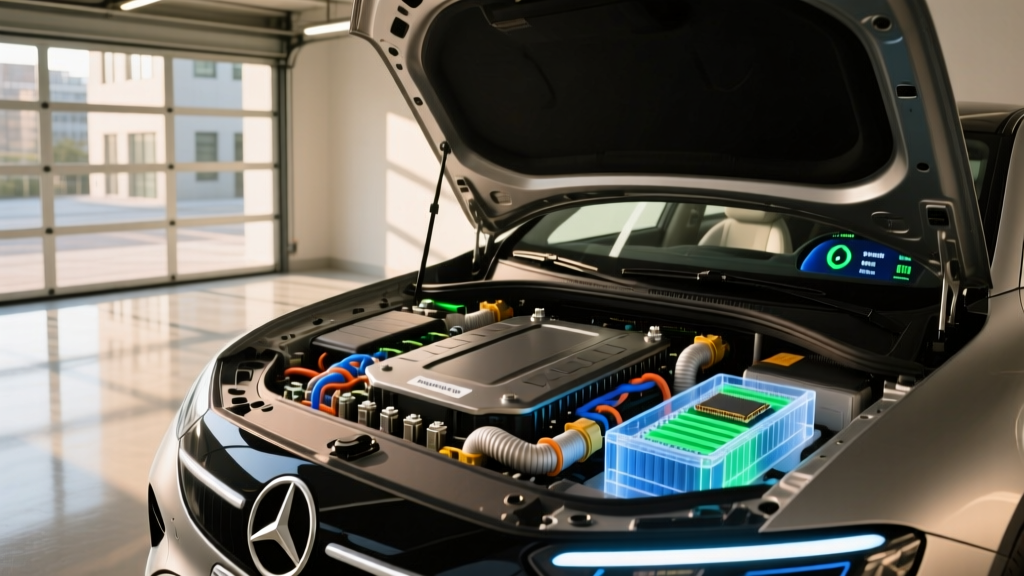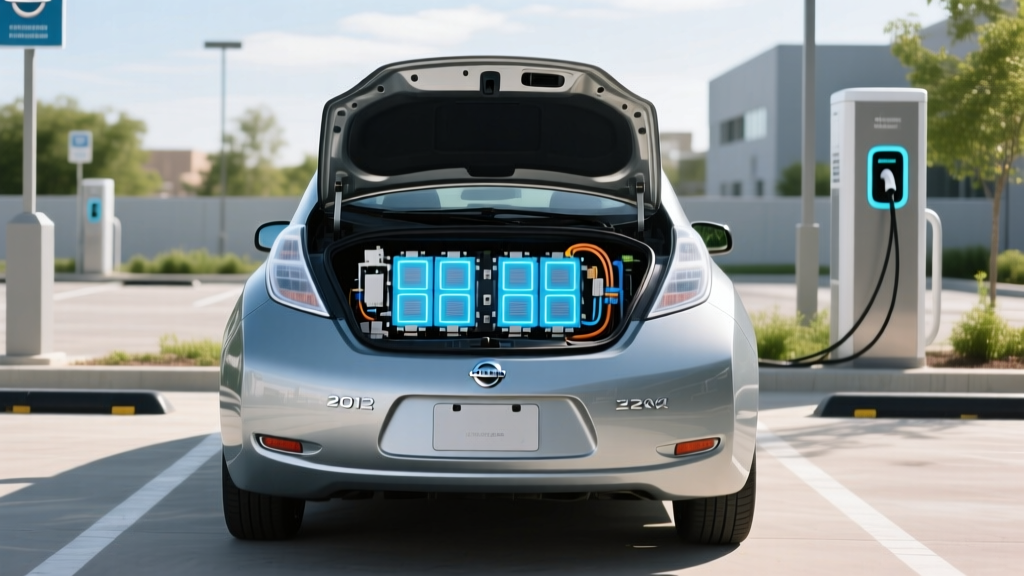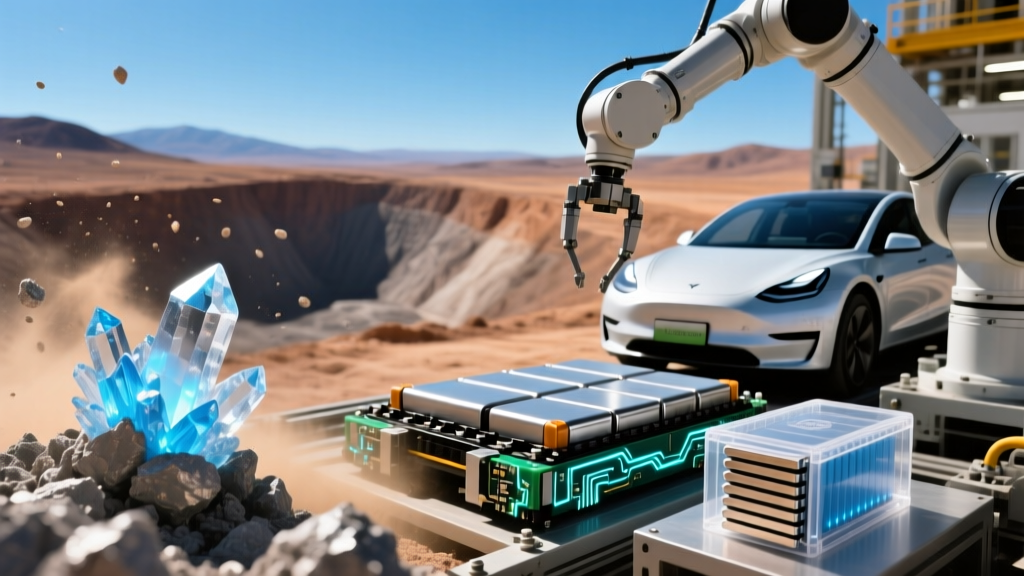
Every electric vehicle on the road owes its range, longevity, and charging speed to chemistry happening at the atomic scale. Lithium ions shuttle between a cathode and an anode thousands of times, and the specific arrangement of atoms in those electrodes determines whether your battery delivers 300 miles of range or 220, whether it lasts 15 years or 10, and whether it costs $12,000 or $18,000 to replace. Understanding EV battery atomic structure isn't academic — it's the single most consequential factor in long-term EV ownership cost.
This guide breaks down the two dominant chemistries sold in 2026 — lithium iron phosphate (LFP) and nickel manganese cobalt (NMC/NCA) — with real degradation data, warranty specifics, replacement costs, and actionable care strategies drawn from manufacturer specifications and fleet data.
The Atomic Architecture of an EV Battery Cell
At the atomic level, a lithium-ion cell stores energy by moving Li⁺ ions from the cathode (positive electrode) to the anode (negative electrode) during charging, then releasing them back during discharge. The cathode's crystal lattice structure and the elemental composition of that lattice define the cell's fundamental characteristics:
- Energy density — how many kilowatt-hours (kWh) of energy fit per kilogram of cell mass. Higher density means more range in a lighter pack.
- Cycle life — how many full charge-discharge cycles the lattice can endure before the structure degrades and capacity drops.
- Thermal stability — how resistant the atomic bonds are to runaway decomposition under heat or overcharge.
- Cost — driven by raw material prices: nickel and cobalt are expensive; iron and phosphate are cheap and abundant.
The anode in nearly all 2026 production EVs is graphite, though silicon-blend anodes are emerging in limited applications. The electrolyte — a lithium salt dissolved in organic solvents — acts as the transport medium for ions. Every degradation mechanism in an EV battery traces back to changes in these atomic structures over time and use.
LFP vs NMC/NCA: Chemistry Trade-Offs Compared
Two cathode chemistries dominate the 2026 US EV market. Here is how they stack up across the metrics that matter to owners:
| Attribute | LFP (LiFePO₄) | NMC / NCA |
|---|---|---|
| Energy density (cell-level) | ~160–180 Wh/kg | ~220–270 Wh/kg |
| Typical cycle life | 3,000–5,000+ cycles | 1,000–2,000 cycles |
| Cold-weather range retention | Moderate loss (~25–35% at 20°F) | Slightly better (~20–30% at 20°F) |
| Thermal stability | Excellent — very low thermal runaway risk | Good but lower threshold |
| Fast-charging tolerance | Handles frequent DCFC well | More sensitive to repeated high-rate charging |
| State-of-charge flexibility | Can charge to 100% daily without penalty | Best kept 20–80% for daily use |
| Cost per kWh (pack-level, 2026) | ~$95–$115 | ~$125–$155 |
| Cobalt/nickel content | None | Significant — supply-chain and ethical concerns |
| Notable 2026 US vehicles | Tesla Model 3/Y RWD, Ford Mustang Mach-E Select (LFP option), Rivian R1S/R1T Standard | Hyundai Ioniq 5/6, Chevy Equinox EV, BMW iX, most long-range trims |
The trade-off in plain terms: NMC gives you more range per pound, which is why it dominates long-range and performance trims. LFP gives you dramatically longer cycle life, better safety margins, and lower cost — at the expense of a heavier, slightly less energy-dense pack. For a commuter who charges at home nightly, LFP is often the superior long-term ownership choice. For a road-tripper who needs 320+ EPA miles, NMC delivers.
Real-World Degradation: What the Data Shows
Battery degradation is not linear. Most lithium-ion packs experience a steeper capacity drop in the first 12–18 months (typically 2–5%), then settle into a slow, nearly linear decline for the remainder of their life. Here is what aggregated fleet and manufacturer data indicate:
- Tesla Model 3/Y (NMC, 2020–2023 fleet data): ~4–6% capacity loss at 50,000 miles; ~8–12% at 100,000 miles. Most packs retain above 90% at 60,000 miles.
- Chevrolet Bolt EV/EUV (NMC): ~5–7% loss at 60,000 miles; some 2017–2019 packs affected by the recall replacement now show near-new capacity.
- LFP-equipped Tesla Model 3 RWD (2022+): Early fleet data suggests 2–3% loss at 40,000 miles — consistent with LFP's slower degradation curve.
- Hyundai Ioniq 5 (NMC, 77.4 kWh): ~3–5% loss reported at 50,000 miles in owner surveys; Hyundai's thermal management system is a contributing factor.
- Industry average across all chemistries (Geotab 2025 study): ~2.3% average annual capacity loss across 10,000+ EVs — meaning a typical pack retains roughly 88% after 5 years.
These numbers matter because they directly contradict the persistent fear that EV batteries "die" at 80,000 miles. The vast majority of packs on US roads will deliver 150,000–200,000+ miles before dropping to 70–80% of original capacity — and many will outlast the vehicle they're installed in.
What the Battery Warranty Actually Covers
Federal law mandates a minimum 8-year/100,000-mile warranty on EV battery packs for emissions-related compliance, and most manufacturers meet or exceed this. However, the details vary significantly:
| Manufacturer | Warranty Term | Capacity Threshold | Notes |
|---|---|---|---|
| Tesla (Model 3/Y NMC Long Range) | 8 years / 120,000 miles | 70% retention | Covers defects and excessive degradation below threshold |
| Tesla (Model 3/Y LFP RWD) | 8 years / 100,000 miles | 70% retention | Lower mileage cap reflects LFP's different warranty structure |
| Hyundai / Kia | 10 years / 100,000 miles | 70% retention | Among the longest calendar terms in the US market |
| General Motors (Ultium-based) | 8 years / 100,000 miles | 70% retention | Applies to Equinox EV, Blazer EV, Silverado EV |
| Ford (Mach-E, F-150 Lightning) | 8 years / 100,000 miles | 70% retention | Standard across BEV lineup |
| Rivian | 8 years / 120,000 miles | 70% retention | Covers both Standard (LFP) and Max (NMC) packs |
| BMW | 8 years / 100,000 miles | 70% retention | i4, iX, i7 covered under same terms |
Key nuance: A warranty threshold of 70% means the manufacturer only replaces or repairs the pack if capacity falls below 70% of original within the term. A pack at 72% is considered acceptable. In practice, very few packs breach this threshold under normal use — the warranty is largely a safety net for manufacturing defects and premature cell failures, not a guarantee of like-new performance.
For full warranty terms and federal requirements, refer to the U.S. Department of Energy's EV technology page on fueleconomy.gov.
EV Battery Replacement Costs: When and How Much
Replacing an EV's high-voltage traction battery is expensive — but it's also rare within the first 15 years of ownership. Most replacements occur after collision damage, manufacturing defects caught under warranty, or extreme high-mileage use (200,000+ miles). Here is what out-of-warranty replacement looks like in 2026:
| Vehicle | Battery Size | Chemistry | Estimated Replacement Cost |
|---|---|---|---|
| Tesla Model 3 RWD | ~60 kWh | LFP | $12,000 – $14,500 |
| Tesla Model Y Long Range | ~82 kWh | NMC | $14,000 – $17,000 |
| Hyundai Ioniq 5 | 77.4 kWh | NMC | $14,500 – $18,000 |
| Chevrolet Equinox EV | ~85 kWh | NMC (Ultium) | $15,000 – $19,000 |
| Ford F-150 Lightning Extended | ~131 kWh | NMC | $22,000 – $28,000 |
| Rivian R1T Max Pack | ~149 kWh | NMC | $24,000 – $30,000 |
| BMW iX xDrive50 | ~111.5 kWh | NMC | $20,000 – $26,000 |
Several important context points:
- Module-level repair is increasingly common. Many packs consist of 4–12 modules. If one module fails, a qualified EV technician can often replace just that module for $2,000–$5,000 rather than swapping the entire pack.
- Refurbished packs are an emerging market. Third-party suppliers now offer remanufactured packs at 30–50% below new OEM pricing, particularly for higher-volume models like the Tesla Model 3 and Nissan Leaf.
- Cost per kWh continues to decline. Pack-level pricing has fallen from ~$200/kWh in 2020 to roughly $110–$140/kWh in 2026, meaning replacement costs will be lower when most current EVs actually need a new pack in the 2030s.
Five Factors That Accelerate (or Slow) Battery Degradation
The atomic structures inside your battery are sensitive to how you use them. Here are the five biggest factors — ranked by impact — with actionable guidance:
- Avoid sustained high or low State of Charge (SoC). For NMC packs, daily charging to 80% and avoiding drops below 15% minimizes stress on the cathode lattice. LFP packs are an exception — manufacturers like Tesla recommend periodic 100% charges for accurate BMS calibration, and LFP tolerates high SoC far better.
- Minimize exclusive DC fast charging. Frequent use of 150+ kW DC fast chargers generates heat that accelerates electrolyte decomposition. Data from Geotab shows vehicles that DC fast charge more than 3x per week degrade ~0.5–1% faster annually than those primarily using Level 2. Occasional road-trip fast charging is fine — daily reliance is the concern.
- Precondition before fast charging. Most modern EVs automatically precondition the battery when a DCFC station is set as the navigation destination. This brings the pack to optimal temperature (~77–95°F), which speeds charging AND reduces degradation from thermal stress. Always use the nav-based preconditioning feature when available.
- Extreme temperatures — park smart. Battery degradation accelerates above 104°F (40°C) ambient and below 14°F (-10°C). In hot climates, garage parking and avoiding full charges during peak heat meaningfully help. In cold climates, the vehicle's thermal management system protects the pack during driving, but extended cold-soaking (weeks parked at sub-zero temps without plugging in) can cause minor calendar degradation.
- Drive moderately when the pack is very cold or very hot. High-current discharge (hard acceleration) on a cold pack stresses the anode. Most EVs limit regen and power when the battery is outside its thermal comfort zone — respect those limits rather than overriding them.
How to Monitor Your Battery's State of Health (SoH)
State of Health (SoH) is expressed as a percentage of your battery's current maximum capacity relative to its original factory capacity. A new pack is 100% SoH; a pack that held 75 kWh when new but now holds 69 kWh is at 92% SoH. Here is how to track it:
- In-vehicle displays: Tesla shows battery health in the service menu (software 2025.8+). Hyundai/Kia provides an SoH readout in the EV settings panel. BMW's iDrive includes a battery health indicator under the vehicle status menu.
- OBD-II diagnostic tools: Devices like the OBDLink SX paired with apps such as EVbatMon (Android) or Leaf Spy (for Nissan) can pull real-time SoH, cell voltage variance, and pack temperature data directly from the BMS. These tools cost $40–$120 and are invaluable for used-EV buyers.
- Dealer diagnostics: Any authorized service center can run a full battery health report, typically free during scheduled service. Request this specifically — it's not always part of a standard inspection.
- Third-party services: Companies like Recurrent Auto offer free battery health reports that benchmark your pack against a fleet of identical vehicles, giving you percentile context (e.g., "your Model Y is at the 62nd percentile for capacity retention at 45,000 miles").
What to watch for: Cell voltage variance is often more telling than overall SoH. If one module's cells consistently read 0.05V or more above or below the pack average, it may signal an imbalance that will accelerate localized degradation. A qualified EV technician can perform module balancing to correct this.
Emerging Battery Technologies: What's Next at the Atomic Level
Several next-generation technologies aim to reshape the atomic architecture of EV batteries. Here is a realistic assessment of their timelines and impact:
- Solid-state batteries: Replace the liquid electrolyte with a solid ceramic, polymer, or sulfide conductor. Promises include 30–50% higher energy density, faster charging, and improved safety. Toyota has announced limited production in Japan for 2027–2028, and Samsung SDI targets 2027 for mass production. Realistic US consumer availability: 2029–2031 at the earliest, initially in premium models only.
- Silicon-dominant anodes: Replacing graphite with silicon can theoretically increase anode capacity by 10x. The challenge — silicon expands ~300% during lithiation, cracking the electrode. Companies like Sila Nanotechnologies and Group14 are shipping partial-silicon anodes (5–15% silicon blend) in limited 2025–2026 applications. Full silicon anodes remain 4–6 years from mass production.
- Sodium-ion batteries: Swap lithium for abundant, cheap sodium. Energy density is lower (~120–150 Wh/kg), making them suited for budget city cars and stationary storage. CATL began production in China in 2024. US vehicle adoption unlikely before 2028, and initially limited to low-range, low-cost models.
- Lithium iron manganese phosphate (LMFP): An evolution of LFP that adds manganese for ~15–20% higher energy density while retaining LFP's cost and safety advantages. Expected in 2026–2027 model-year vehicles from Chinese manufacturers, with US availability pending supply chain development.
For current buyers, these technologies are forward-looking context — not purchasing factors. The LFP and NMC chemistries available today are mature, well-understood, and backed by extensive real-world data.
Frequently Asked Questions
How long do EV batteries actually last in years and miles?
Based on fleet data from Geotab and Recurrent Auto, the average EV battery retains 85–90% of its original capacity after 100,000 miles and 5–7 years. Most packs will deliver 150,000–200,000+ miles before reaching 70–80% capacity — the threshold at which range reduction becomes noticeably inconvenient. Many EV batteries will outlast the vehicles they're installed in, especially as build quality and thermal management improve with each model year.
How much does it cost to replace an EV battery in 2026?
Out-of-warranty replacement costs range from approximately $12,000 for a smaller LFP pack (e.g., Tesla Model 3 RWD, ~60 kWh) to $28,000+ for a large NMC pack (e.g., Ford F-150 Lightning Extended Range, ~131 kWh). However, full pack replacement is rare — module-level repairs cost $2,000–$5,000, and most packs fail due to isolated cell or module issues rather than wholesale degradation. The vast majority of EVs will never need a battery replacement under normal ownership.
What does the EV battery warranty cover?
Manufacturer battery warranties typically cover defects in materials and workmanship, plus excessive capacity degradation below a stated threshold (usually 70% of original capacity) within 8 years and 100,000–120,000 miles. They do not cover damage from collisions, flooding, or unauthorized modifications. Some warranties, like Hyundai/Kia's, extend to 10 years. Always read the specific warranty booklet for your vehicle — terms vary, and the threshold percentage is the critical number.
How do I check and maximize my EV battery health?
Monitor State of Health through your vehicle's built-in display, an OBD-II diagnostic tool, or a service like Recurrent Auto. To maximize longevity: charge NMC packs to 80% daily (100% for LFP), minimize exclusive DC fast charging, precondition before fast charging, avoid prolonged exposure to extreme heat, and don't let the pack sit at 0% or 100% SoC for extended periods. These habits collectively can add years and tens of thousands of miles to your pack's useful life.
LFP vs NMC — which chemistry is better for me?
Choose LFP if you prioritize long-term durability, lower cost, daily home charging to 100%, and don't need maximum range. It's ideal for commuters and owners who plan to keep their vehicle 8+ years. Choose NMC if you need the longest possible EPA range (320+ miles), frequently road-trip, or want a lighter vehicle for performance handling. NMC requires more careful charging habits (20–80% daily) but delivers superior energy density. Neither is universally "better" — the right choice depends on your driving patterns and ownership timeline.
For federal tax credit implications of battery chemistry and sourcing — which affect whether a vehicle qualifies for the §30D credit — consult the IRS clean vehicle credit page. Battery sourcing requirements (critical minerals and component manufacturing) are chemistry-dependent and change annually.