Do Electric Vehicles Need Jumper Cables? The Battery and Jumper Cables Question Explained
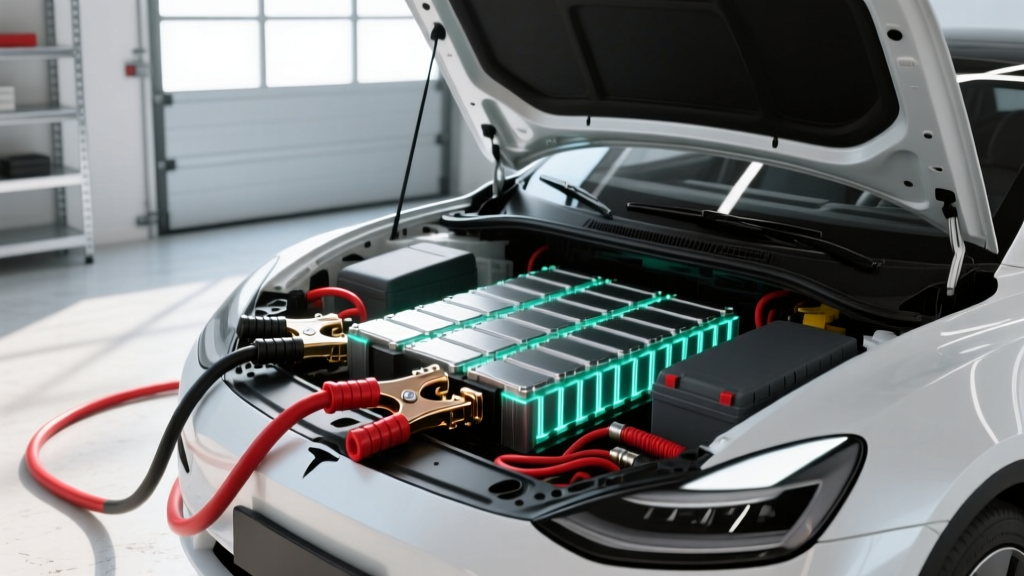
One of the most common questions from new EV shoppers is whether they need to carry jumper cables. The short answer: yes, but not for the reason you think. Every electric vehicle has two batteries — a high-voltage traction battery (the large lithium-ion pack that drives the wheels) and a standard 12V auxiliary battery that powers the vehicle's computers, lights, door locks, and infotainment system. If that 12V battery dies, the car won't start, even if the main traction pack is fully charged. That's where jumper cables or a portable lithium jump-starter come in.
What jumper cables will never do is revive a depleted high-voltage EV battery. That 400V–800V pack can only be recharged through an AC or DC charging port. Understanding this distinction is the foundation of EV battery ownership — and it sets the stage for everything else you need to know about chemistry, degradation, warranty coverage, and long-term costs.
LFP vs. NMC vs. NCA: EV Battery Chemistry Compared
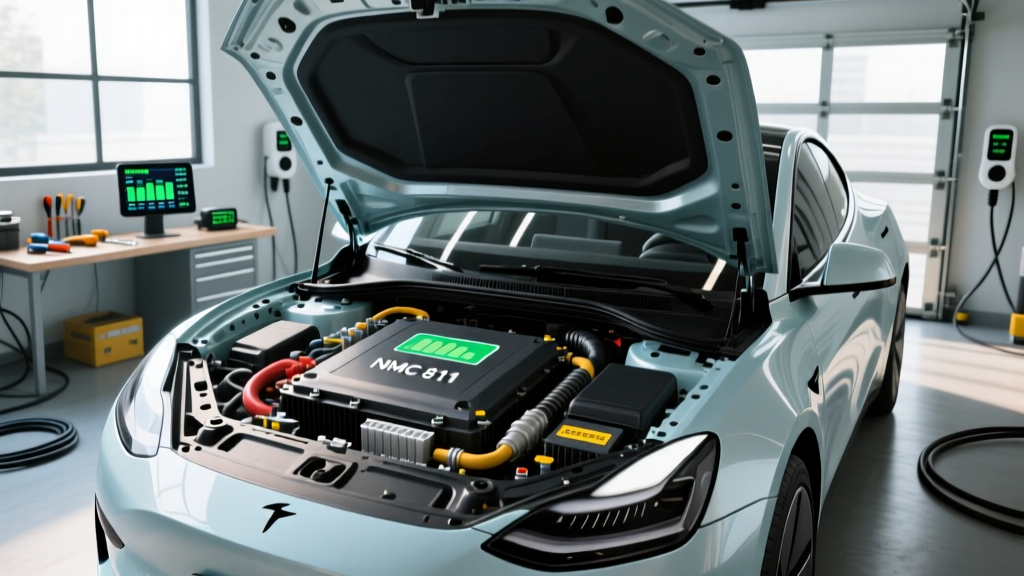
Not all EV batteries are built the same. The two dominant cathode chemistries in 2026 are LFP (lithium iron phosphate) and NMC/NCA (nickel manganese cobalt / nickel cobalt aluminum). Each has distinct trade-offs that affect range, longevity, cost, and daily charging habits.
| Attribute | LFP (Lithium Iron Phosphate) | NMC / NCA (Nickel-based) |
|---|---|---|
| Energy Density | Lower (~160–180 Wh/kg cell-level) | Higher (~220–280 Wh/kg cell-level) |
| Typical Range | Shorter for same pack weight | Longer range per kWh of pack |
| Cycle Life | 3,000–5,000+ full cycles | 1,000–2,000 full cycles |
| Cold-Weather Performance | More range loss in freezing temps (~30–40%) | Better cold performance (~20–30% loss) |
| Charging to 100% | Recommended regularly for calibration | 80% daily recommended; 100% for trips only |
| Cobalt Content | Zero cobalt | Contains cobalt (supply-chain/ethical concerns) |
| Cost | ~15–20% cheaper per kWh | Higher raw material cost |
| Common In | Tesla Model 3/Y RWD, Ford Mustang Mach-E Select, Rivian Standard | Tesla Long Range, Hyundai Ioniq 5/6, BMW iX, most premium EVs |
LFP vs. NMC — Which Is Better and Why?
Neither chemistry is universally superior. LFP is better for buyers who prioritize longevity, lower cost, and don't mind slightly less range or worse cold-weather performance. If you charge at home nightly and drive a predictable commute, LFP's ability to sit at 100% State of Charge (SoC) without accelerated degradation is a major practical advantage. Tesla's Standard Range models and Ford's base Mach-E use LFP for exactly this reason.
NMC/NCA is better for buyers who need maximum range, frequently drive in cold climates, or want the longest single-charge road-trip capability. The higher energy density means more miles from a lighter, smaller pack — critical for larger vehicles like the Rivian R1T or GMC Hummer EV. The trade-off is that daily charging to 100% accelerates degradation, so you'll want to set a daily charge limit of 80%.
How Long Do EV Batteries Last? Degradation Data by the Numbers
EV batteries don't suddenly fail — they gradually lose capacity over time, measured as a percentage of the original kWh. This is called degradation, and real-world data from fleet operators and long-term owners paints a reassuring picture.
According to data compiled by Geotab's analysis of over 10,000 EVs, the average EV battery loses approximately:
- Year 1: ~1.5–2.5% capacity loss (initial stabilization)
- Years 2–5: ~1.0–1.5% per year (steady-state degradation)
- Years 6–10: ~1.0–2.0% per year (gradual acceleration)
- Average 10-year loss: ~12–18% total capacity reduction
Put concretely: a 2026 Hyundai Ioniq 5 with an 84 kWh usable NMC battery and an EPA range of 305 miles would likely retain approximately 255–270 miles of range after 10 years and 120,000 miles of typical use. That's still comfortably viable for daily driving.
Factors That Accelerate Battery Degradation
Not all miles are equal when it comes to battery wear. The following factors have the largest measurable impact on long-term State of Health (SoH):
- DC fast-charging frequency: Exclusively using DC fast chargers (150–350 kW) can add ~1–2% additional annual degradation compared to predominantly Level 2 home charging. The heat generated during high-C-rate charging stresses cell chemistry. Occasional fast charging on road trips has negligible impact.
- Sustained high State of Charge: Leaving an NMC battery at 100% SoC for days or weeks accelerates calendar degradation. LFP batteries are more tolerant of 100% SoC.
- Extreme temperatures: Repeatedly charging or discharging in temperatures above 95°F (35°C) or below 15°F (-9°C) without preconditioning causes lithium plating and electrolyte breakdown. Modern thermal management systems mitigate this significantly.
- Deep discharge cycles: Regularly driving the battery below 10% SoC and leaving it there stresses cells. Most EVs have a low-SoC buffer that prevents true 0%.
- High-performance driving: Sustained high-current draw (track driving, aggressive acceleration) generates heat. This matters primarily for performance models driven hard regularly.
EV Battery Warranty: What's Covered and for How Long
Federal law mandates that EV battery warranties cover a minimum of 8 years / 100,000 miles (10 years / 150,000 miles in California Air Resources Board states). Most manufacturers meet or exceed this baseline. Here's how major 2026 model-year warranties compare:
| Manufacturer | Warranty Period | Capacity Retention Threshold |
|---|---|---|
| Tesla (Model 3/Y LFP) | 8 yr / 120,000 mi | 70% |
| Tesla (Model S/X) | 8 yr / 150,000 mi | 70% |
| Hyundai / Kia | 10 yr / 100,000 mi | 70% |
| Ford (Mach-E, F-150 Lightning) | 8 yr / 100,000 mi | 70% |
| BMW (i4, iX, i7) | 8 yr / 100,000 mi | 70% |
| Rivian (R1T, R1S) | 8 yr / 120,000 mi | 70% |
| GM (Ultium platform) | 8 yr / 100,000 mi | 70% (some models 60% for EREV) |
| Volkswagen (ID.4) | 8 yr / 100,000 mi | 70% |
What the Battery Warranty Actually Covers
If your battery's usable capacity drops below the stated threshold (typically 70% of original capacity) within the warranty period, the manufacturer will repair or replace the pack at no cost. This covers:
- Cell-level degradation beyond the threshold
- Manufacturing defects (bad cells, BMS failures, coolant leaks into the pack)
- Module or full-pack replacement, depending on the architecture
Warranties generally do not cover damage from collisions, flooding, improper modifications, or use of non-OEM charging equipment that causes electrical damage. Normal degradation within the 70% threshold is expected and not warrantable.
EV Battery Replacement Cost: What to Budget and When
This is the question that generates the most anxiety — and the most misinformation. Let's ground it in actual 2026 figures.
| Vehicle / Pack Size | Battery kWh | Replacement Cost (Parts + Labor) | Typical Replacement Timeline |
|---|---|---|---|
| Tesla Model 3 RWD (LFP) | ~60 kWh | $10,000 – $14,000 | 15–20+ years |
| Hyundai Ioniq 5 (NMC) | ~84 kWh | $14,000 – $18,000 | 15–20+ years |
| Ford F-150 Lightning Ext. Range | ~131 kWh | $20,000 – $28,000 | 15–20+ years |
| Chevrolet Silverado EV | ~200 kWh | $28,000 – $38,000 | 15–20+ years |
| BMW iX xDrive50 | ~111 kWh | $18,000 – $25,000 | 15–20+ years |
| Rivian R1T Max Pack | ~149 kWh | $22,000 – $30,000 | 15–20+ years |
Several critical points put these numbers in perspective:
- Most EV batteries outlive the vehicle. At current degradation rates, a pack will retain 70–85% capacity at 15 years. Many owners sell or retire the car before a replacement is needed.
- Cell prices continue to fall. Pack-level pricing dropped from ~$200/kWh in 2020 to approximately $100–$120/kWh in 2026, according to BloombergNEF. A replacement in 2035 will likely cost significantly less than today's figures.
- Module-level repair is increasingly common. Many modern packs (Hyundai E-GMP, GM Ultium, BMW Gen5) use modular designs where a single degraded module can be replaced for $2,000–$5,000 rather than swapping the entire pack.
- Warranty covers most early failures. If degradation exceeds 30% within 8 years/100,000 miles, replacement is free under warranty.
How to Check and Maximize Your EV Battery Health
Monitoring your battery's State of Health (SoH) is straightforward in 2026, and optimizing longevity requires just a few habits.
How to Check Battery State of Health
- In-vehicle display: Most 2026 EVs show battery health or estimated remaining capacity in the vehicle settings menu. Tesla displays this under Service > Battery Health. Hyundai/Kia shows it in the EV settings panel.
- OBD-II diagnostic tools: Devices like the OBDLink SX paired with apps such as LeafSpy (Nissan), Scan My Tesla, or Car Scanner can read the BMS-reported SoH percentage directly.
- Dealer diagnostic report: Any authorized service center can run a full battery health report showing individual cell voltages, module balance, and total capacity. Request this when buying a used EV.
- Third-party services: Companies like Recurrent offer battery health reports based on connected-car data, particularly useful for pre-purchase inspections.
Battery Care Checklist: Maximizing Longevity
- Set daily charge limit to 80% for NMC/NCA batteries. LFP owners can charge to 100% daily (and should, for BMS calibration).
- Use Level 2 home charging as your primary method. Reserve DC fast charging for road trips — 1–2 fast charges per month has negligible impact on degradation.
- Enable battery preconditioning before fast charging (most EVs do this automatically when a charger is set as your navigation destination). Preconditioning warms the pack to optimal temperature, reducing charge time and cell stress.
- Avoid leaving the car at very low SoC (below 10%) for extended periods. If storing the vehicle for weeks, aim for 50% SoC.
- Park in shade or a garage during extreme heat. Cabin and battery thermal management systems work harder — and consume energy — in sustained 95°F+ temperatures.
- Don't obsess over it. Modern BMS and thermal management systems are sophisticated. The difference between "perfect" and "good" charging habits is typically 2–4% additional capacity over 10 years.
What's Next: Solid-State Batteries and Beyond
Next-generation battery technologies are in active development but are not yet available in production vehicles as of 2026. Here's a realistic timeline based on current manufacturer announcements:
- Solid-state batteries: Toyota has announced limited production of solid-state-equipped EVs for 2027–2028, with energy density potentially 2x current NMC cells and 10-minute fast charging. Samsung SDI and QuantumScape are also in pilot production. Widespread, affordable solid-state EVs are not expected before 2030–2032.
- Silicon-dominant anodes: Companies like Sila Nanotechnologies and Group14 are shipping silicon-anode cells that boost energy density by 20–40%. These are beginning to appear in premium applications (e.g., Mercedes-Benz's announced next-gen EQ platform) but remain cost-prohibitive for mass-market EVs.
- Sodium-ion batteries: CATL and BYD have begun producing sodium-ion cells for low-cost, short-range EVs in China. Energy density is ~30% lower than LFP, but cost is significantly less. US-market availability is uncertain and likely limited to fleet/commercial applications initially.
Frequently Asked Questions
Can I use jumper cables on an electric vehicle?
You can use jumper cables or a portable jump-starter on the 12V auxiliary battery, just like a gas car. If your EV won't "start" (power on) but the main battery has charge, the 12V battery is likely dead. Consult your owner's manual for the 12V battery location and jump-start procedure. Never connect jumper cables to high-voltage (orange) cables or the traction battery.
How long do EV batteries last in years and miles?
Based on fleet data, most EV batteries retain 70–85% of original capacity after 10 years and 120,000–150,000 miles. Many packs continue functioning well beyond 200,000 miles with usable range. Tesla's own data shows Model S/X packs retaining ~88% at 150,000 miles. Full pack failure is rare — well under 2% of vehicles according to Recurrent Auto's analysis.
How much does it cost to replace an EV battery?
Replacement costs range from approximately $10,000 for smaller packs (Tesla Model 3 RWD, ~60 kWh) to $28,000–$38,000 for large packs (F-150 Lightning Extended Range, Silverado EV). However, most batteries never need replacement during the vehicle's useful life. Module-level repairs cost $2,000–$5,000, and pack prices continue declining ~8–12% annually.
What does the EV battery warranty cover?
Federal law requires a minimum 8-year/100,000-mile warranty (10/150,000 in CARB states). Coverage applies if capacity drops below 70% of original. This includes cell degradation, manufacturing defects, and BMS failures. It does not cover accident damage, flooding, or aftermarket modifications.
Is LFP or NMC better for my EV?
Choose LFP if you want maximum cycle life, lower cost, and the convenience of charging to 100% daily — ideal for commuters and home-charging users. Choose NMC/NCA if you need maximum range, drive in cold climates, or take frequent road trips. Both chemistries will comfortably last 15+ years with normal use.
Does fast charging damage my EV battery?
DC fast charging generates more heat than Level 2, which slightly accelerates degradation — but the effect is modest. Studies show exclusive DC fast charging adds approximately 1–2% additional capacity loss over 5 years compared to Level 2 only. Modern thermal management systems precondition the battery to minimize this. Fast charging on road trips is perfectly fine; just don't rely on it as your only charging method.