EVs as Backup Batteries for Power Outages: The V2H and V2L Advantage
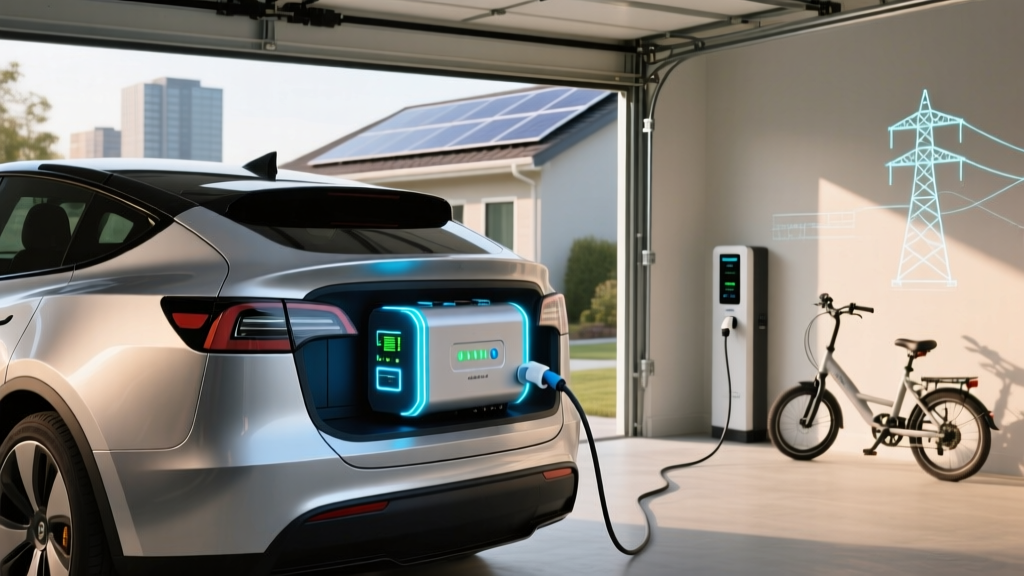
When the grid goes down, a modern electric vehicle is essentially a 60–100 kWh rolling power station. Through Vehicle-to-Home (V2H) and Vehicle-to-Load (V2L) technology, select EVs can keep your refrigerator running, lights on, and devices charged for days — turning your car into one of the most capable backup batteries for power outages available today.
But how much power can an EV actually supply, for how long, and what does it cost the battery? This guide covers V2H/V2L capabilities alongside a deep dive into the high-voltage traction battery itself: chemistry, degradation, warranties, replacement costs, and how to maximize longevity whether you're using your EV for daily commuting or emergency home backup.
How V2H and V2L Turn Your EV Into a Home Backup Battery
Not every EV can power your home. Here's the difference between the two main technologies:
- V2L (Vehicle-to-Load): Provides AC power through a standard outlet adapter — typically 1.9 kW to 3.6 kW. You can plug in individual appliances (fridge, space heater, laptop chargers) directly. Available on the Hyundai Ioniq 5, Kia EV6/EV9, Ford F-150 Lightning (Pro Power Onboard), and Rivian R1T/R1S.
- V2H (Vehicle-to-Home): Connects to your home's electrical panel through a bidirectional charger, powering entire circuits. The Ford F-150 Lightning with the 80A Charge Station Pro and Home Integration System can supply up to 9.6 kW — enough to run most of a 2,000 sq ft home. The GM Silverado EV and Hyundai Ioniq 5 (with proper equipment) also support V2H.
Runtime reality check: A Ford F-150 Lightning with the Extended Range 131 kWh battery supplying an average home load of 2–3 kW could sustain power for roughly 40–65 hours before depleting to a 10% reserve. A Hyundai Ioniq 5 with its 84 kWh pack at the same draw yields roughly 25–40 hours. That's significantly longer than most portable gas generators running on a single tank, and without the carbon monoxide risk.
Battery Chemistry: LFP vs NMC/NCA Explained
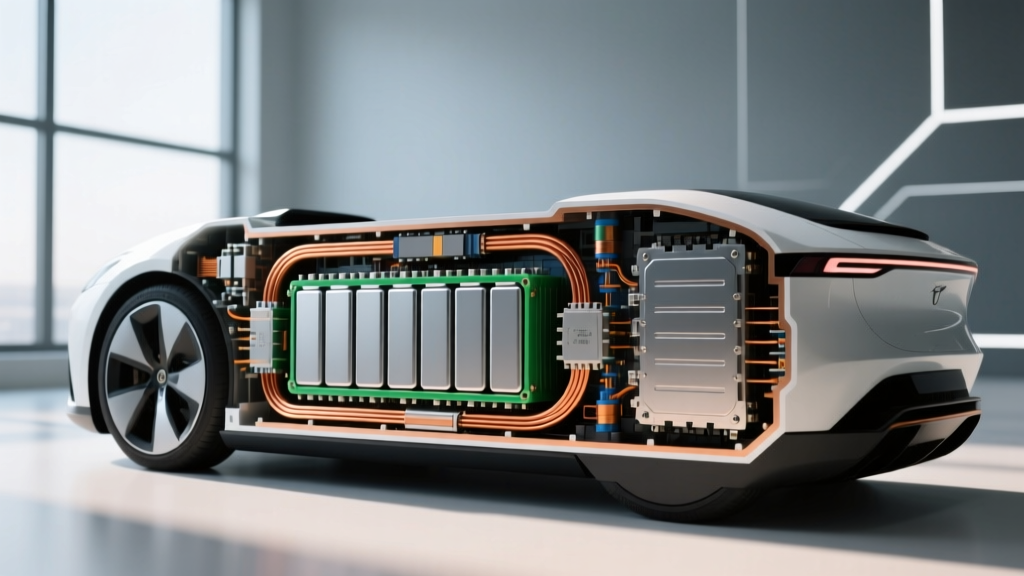
The type of cells inside your EV's battery pack directly affects energy density, longevity, cold-weather performance, and — critically for backup power use — how comfortably you can store the pack at various states of charge.
| Attribute | LFP (Lithium Iron Phosphate) | NMC/NCA (Nickel Manganese Cobalt / Nickel Cobalt Aluminum) |
|---|---|---|
| Energy density | ~160–180 Wh/kg (lower — heavier pack for same kWh) | ~220–260 Wh/kg (higher — lighter, more range per kg) |
| Cycle life | 3,000–5,000+ cycles to 80% capacity | 1,000–2,000 cycles to 80% capacity |
| Cold performance | Weaker below 32°F — more range loss, slower charging without preconditioning | Better low-temp performance, though all EVs lose 15–30% range below freezing |
| Optimal storage SoC | Can be stored at 100% without significant degradation — ideal for backup duty | Best stored at 50–80%; sitting at 100% accelerates degradation |
| Cost | ~20–30% cheaper per kWh; no cobalt or nickel | Higher cost; commodity-sensitive (nickel, cobalt pricing) |
| Common 2026 models | Tesla Model 3/Y RWD, Ford Mustang Mach-E Select (LFP option), base Rivian R2 | Tesla Long Range, Hyundai Ioniq 5/6, Kia EV6/EV9, Chevy Equinox EV, most luxury EVs |
Which is better for backup power? LFP has a meaningful edge here. Because LFP chemistry tolerates 100% state of charge without accelerated wear, you can keep an LFP-equipped EV fully charged and ready for outage duty without guilt. NMC owners should charge to 80–90% for daily use and only top to 100% when a storm is forecasted.
How Long Do EV Batteries Last? Degradation Data
The headline question for any EV owner — and especially for those planning to use their vehicle as a backup battery — is longevity. The data is reassuring: most modern EV batteries will outlast the vehicle they're installed in.
- Tesla Model 3/Y (NMC, 2019–2023): Average ~10–12% capacity loss at 100,000 miles based on fleet telemetry aggregated by Tesla's Impact Reports. Degradation curve flattens significantly after the initial 5–8% drop in the first 20,000 miles.
- Hyundai Ioniq 5 (NMC, 2022–2025): Owner-reported data on EV tracking forums shows ~6–9% loss at 60,000 miles, with thermal management playing a key role in preservation.
- Chevrolet Bolt EV/EUV (NMC, 2017–2023): Early models (2017–2019) saw some packs degrade 10–15% over 80,000 miles, but the robust liquid cooling in later models improved retention. GM's 8-year/100,000-mile warranty covered replacements for packs falling below ~60% capacity.
- Tesla Model S/X (2013–2018): Higher-mileage fleet data showed ~15–20% loss at 150,000+ miles — more degradation due to older cell chemistry and less sophisticated thermal management.
- LFP-equipped vehicles (Tesla Model 3 RWD, 2021+): Early data suggests <8% degradation at 100,000 miles, consistent with LFP's superior cycle life.
Translation: A typical 2026 EV with an 84 kWh NMC pack rated at 300 miles EPA will likely still deliver ~265–275 miles of range at 100,000 miles and ~250 miles at 150,000 miles. For backup power purposes, even a degraded 84 kWh pack at 75% State of Health still holds ~63 kWh — enough to run a home at 2.5 kW average for over 25 hours.
What Does the EV Battery Warranty Cover?
Federal law mandates that EV batteries carry a minimum warranty of 8 years / 100,000 miles (10 years / 150,000 miles in California and states adopting CARB standards). But the details matter — particularly the capacity retention threshold.
| Manufacturer | Duration | Mileage | Capacity Threshold | Notes |
|---|---|---|---|---|
| Tesla | 8 years | 100,000–120,000 mi (varies by model) | 70% | Model 3/Y RWD (LFP): 100k mi; Long Range/Performance: 120k mi |
| Hyundai / Kia | 10 years | 100,000 mi | 70% | Among the longest duration in the industry |
| Ford | 8 years | 100,000 mi | 70% | Covers F-150 Lightning, Mustang Mach-E battery packs |
| GM (Chevy/Cadillac) | 8 years | 100,000 mi | 60–70% (varies) | Ultium platform; check specific model terms |
| Rivian | 8 years | 175,000 mi | 70% | Highest mileage threshold among mainstream OEMs |
What's covered: Defects in materials/workmanship and capacity loss below the stated threshold under normal use. What's not: Damage from accidents, flooding, unauthorized modifications, or using the battery outside manufacturer guidelines. Notably, most warranties do not explicitly exclude V2L use (since it's a factory feature), but V2H setups should use OEM-approved bidirectional chargers to maintain warranty coverage. Always confirm with your dealer before relying on V2H for extended outage backup.
EV Battery Replacement Cost: What to Expect
Here's the reality that often gets sensationalized: battery replacement is expensive, but it's rarely needed during the vehicle's useful life. According to data tracked by the National Renewable Energy Laboratory, modern EV batteries are designed for 15–20 years of service under typical conditions.
| Vehicle | Pack Size | Chemistry | Estimated Replacement Cost |
|---|---|---|---|
| Tesla Model 3 RWD | 60 kWh | LFP | $8,000–$12,000 |
| Tesla Model Y Long Range | 82 kWh | NMC | $12,000–$16,000 |
| Hyundai Ioniq 5 | 84 kWh | NMC | $11,000–$15,000 |
| Ford F-150 Lightning Ext. Range | 131 kWh | NMC | $18,000–$25,000 |
| Chevrolet Equinox EV | 85 kWh | NMC (Ultium) | $12,000–$16,000 |
| Rivian R1T (Max Pack) | 149 kWh | NMC | $22,000–$30,000 |
When is replacement actually needed? In practice, most EV batteries are replaced due to manufacturing defects (covered under warranty) or physical damage (collision, flood) rather than end-of-life degradation. Out-of-warranty replacements due to degradation alone are rare for vehicles under 150,000 miles. Costs are also trending downward: BloombergNEF reports pack-level battery prices have fallen from ~$1,200/kWh in 2010 to approximately $115–$130/kWh in 2025, with continued declines expected.
Factors That Affect Battery Longevity
Your battery's lifespan isn't just about age — it's about how it's used. Here are the primary factors, ranked by impact:
- Avoid chronic 100% SoC (NMC/NCA): Daily charging to 80% significantly reduces calendar degradation. Charge to 100% only for road trips or anticipated outages.
- Minimize DC fast charging frequency: Occasional DCFC is fine, but daily 150+ kW sessions add heat stress. If you have home Level 2, use it as your primary charging method. Studies suggest vehicles that primarily use Level 2 show ~2–4% less degradation at 100,000 miles vs. frequent DCFC users.
- Don't let SoC sit at 0% or near-0%: Deep discharge stresses cells. If storing the vehicle, aim for 50% SoC (NMC) or any SoC (LFP).
- Use preconditioning: Most modern EVs precondition the battery before fast charging and in extreme cold. Enable scheduled departure times so the thermal management system warms or cools the pack before you drive or charge.
- Park in shade or a garage in extreme heat: Sustained battery temperatures above 95°F accelerate calendar aging. A garage can reduce pack temperature by 10–15°F in summer.
- Don't worry about V2L/V2H use: Occasional backup power discharge (even full discharge during an outage) is well within normal operating parameters. The wear from a single outage event is negligible compared to daily driving cycles.
Monitoring Battery Health: How to Check State of Health (SoH)
State of Health (SoH) is the percentage of original capacity your battery retains. A new battery is 100% SoH; at 70% SoH, an 84 kWh pack holds roughly 58.8 kWh of usable energy.
How to check SoH:
- In-vehicle displays: Tesla offers a battery health estimate in the service menu (Software > Battery Health on newer versions). Hyundai/Kia provides SoH readouts via the infotainment system or the Bluelink/Kia Connect app on select models.
- OBD-II diagnostic tools: Devices like the OBDLink SX paired with apps such as EV Health or LeafSpy (for Nissan Leaf) can pull SoH data directly from the BMS (Battery Management System).
- Dealer diagnostics: Any authorized service center can run a full battery health report. Request one before purchasing a used EV or before warranty expiration.
- Manual estimation: Charge to 100%, note the displayed range, and compare to the original EPA rating adjusted for the pack's usable kWh. This is approximate but directionally useful.
Emerging Battery Tech: Solid-State and Silicon Anodes
Next-generation battery technologies promise step-change improvements, but timelines matter. Here's a grounded look at what's coming:
- Solid-state batteries: Replace the liquid electrolyte with a solid material, potentially offering 2x energy density, faster charging (10–80% in under 10 minutes), and improved safety. Toyota has announced limited solid-state production for 2027–2028, but initial deployment will be in small volumes and likely premium models only. Broad market availability is not expected before 2030.
- Silicon anode cells: Companies like Sila Nanotechnologies and Group14 are replacing graphite anodes with silicon-dominant materials, boosting energy density by 20–40%. These are already appearing in limited applications (consumer electronics, Mercedes-Benz EQG testing) and should reach mainstream EV production by 2027–2029.
- Sodium-ion batteries: CATL and others are commercializing sodium-ion packs for lower-cost, shorter-range EVs. These trade energy density for reduced material cost and better cold performance. Expect them in budget city cars and fleet vehicles first, likely 2027+ in the US market.
None of these technologies are available in production vehicles you can buy today. If you need an EV — or a backup power solution — now, current lithium-ion chemistries (LFP and NMC) are mature, reliable, and well-warrantied.
Frequently Asked Questions
How long do EV batteries last in years and miles?
Most 2026 EV batteries are engineered for 15–20 years and 200,000+ miles before reaching 70% State of Health. Real-world fleet data shows typical degradation of 10–15% over 100,000–150,000 miles for NMC packs, and 8–10% for LFP packs at the same mileage. The battery will likely outlast other major vehicle components.
How much does it cost to replace an EV battery?
Out-of-warranty replacement costs range from roughly $8,000 for a smaller LFP pack (e.g., Tesla Model 3 RWD, 60 kWh) to $25,000–$30,000 for a large NMC pack (e.g., Ford F-150 Lightning Extended Range, 131 kWh). However, the vast majority of replacements occur under warranty due to manufacturing defects, not degradation. Battery pack pricing continues to decline year over year.
What does the EV battery warranty actually cover?
Manufacturer warranties cover defects and capacity loss below a defined threshold (typically 70% of original capacity) for 8 years/100,000 miles minimum, with some brands offering 10 years. They do not cover physical damage from accidents, floods, or unauthorized modifications. Check your specific owner's manual for V2H/V2L warranty implications.
How do I maximize my EV battery's health over time?
For NMC/NCA batteries: charge to 80% daily, avoid leaving the car at 100% SoC for extended periods, use Level 2 home charging as your primary method, and enable preconditioning. For LFP batteries: you can charge to 100% regularly without concern, and Tesla actually recommends periodic 100% charges for accurate SoC calibration. Both chemistries benefit from avoiding extreme heat exposure and deep discharges.
LFP vs NMC — which chemistry should I choose?
Choose LFP if: you want maximum cycle life, plan to use your EV as backup power (100% storage is fine), prefer lower cost, and don't need the absolute longest range. Choose NMC/NCA if: you need maximum range from a lighter pack, live in a very cold climate (better cold performance), or want the highest performance. For backup battery duty specifically, LFP is the more resilient choice.
Can using my EV for backup power during outages damage the battery?
No. Occasional V2L or V2H discharge during a power outage is well within the battery's design parameters. A single full discharge from 100% to 20% is equivalent to one normal driving cycle. The battery management system protects against over-discharge automatically. Just avoid repeatedly cycling the battery from 100% to 0% multiple times per week, which isn't realistic for outage scenarios anyway.