How Long Do EV Batteries Actually Last?
The phrase "automobile battery life expectancy" means something very different for an electric vehicle than it did for a gas car. An EV's high-voltage traction battery isn't a consumable you swap every three to five years like a 12V lead-acid starter battery — it's the single most expensive component in the vehicle, engineered to outlast the car's useful economic life in the majority of cases.
Based on aggregated fleet data from Tesla, real-world owner tracking via platforms like Recurrent, and manufacturer warranty commitments, the typical modern EV battery pack (model years 2022–2026) will retain 80–90% of its original capacity after 150,000 miles and 10+ years of service. Many packs reach 200,000 miles before hitting the 70% capacity threshold that triggers a warranty claim. Some early Tesla Model S packs have exceeded 300,000 miles with 75%+ retention.
That said, "life expectancy" isn't a cliff — it's a gradual curve. A battery doesn't stop working at 70% State of Health (SoH); you simply lose range proportionally. A 300-mile EPA vehicle at 80% SoH still delivers ~240 miles of range, which remains practical for most drivers.
LFP vs. NMC vs. NCA: Chemistry Determines Longevity
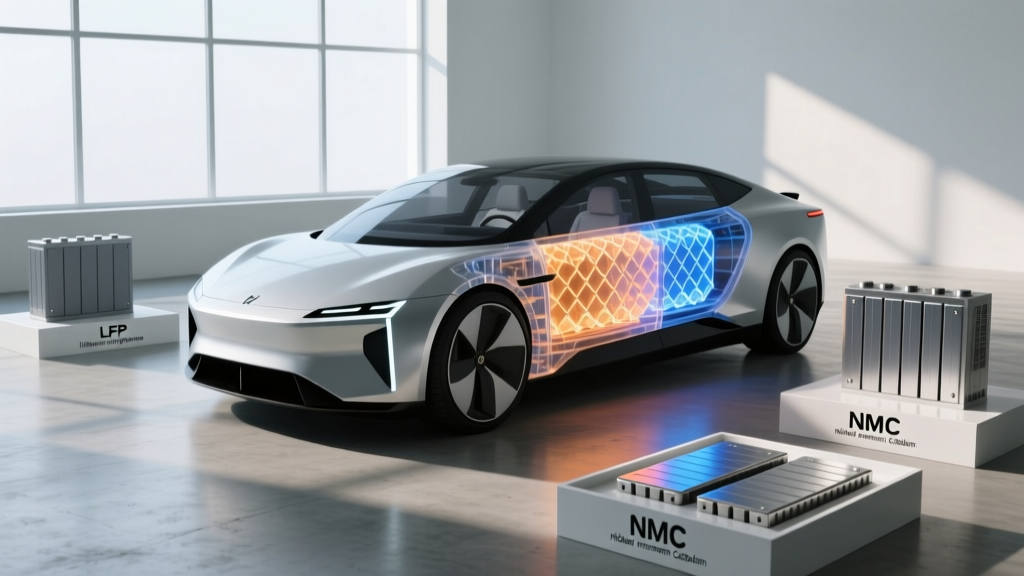
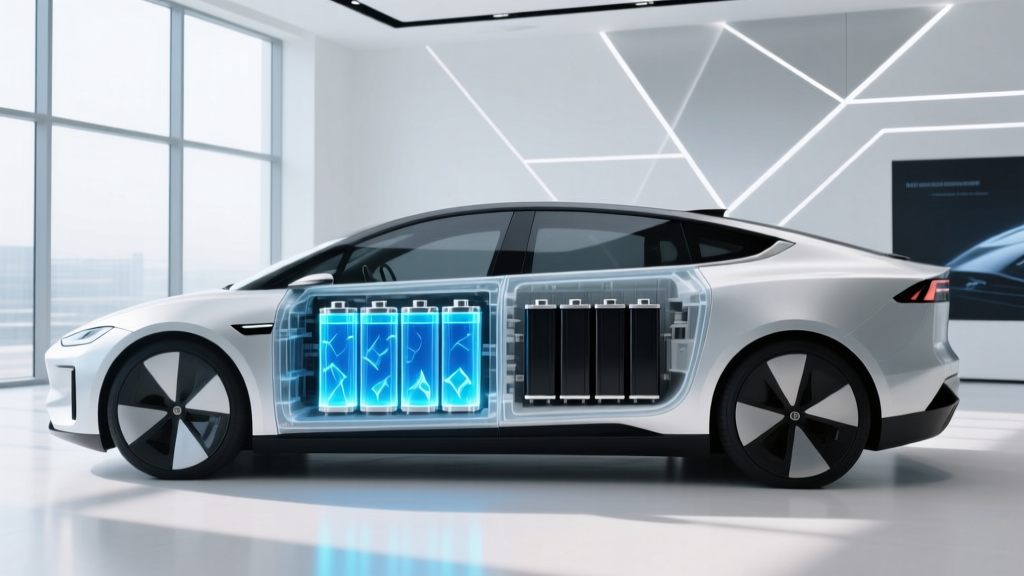
Not all EV batteries are built from the same materials. The two dominant cathode chemistries in 2026 passenger EVs — LFP (lithium iron phosphate) and NMC/NCA (nickel manganese cobalt / nickel cobalt aluminum) — have meaningfully different aging profiles, and choosing between them is one of the biggest battery-life decisions a buyer makes.
| Attribute | LFP (LiFePO₄) | NMC / NCA |
|---|---|---|
| Cycle Life | 3,000–5,000+ cycles | 1,000–2,500 cycles |
| Energy Density | Lower (~160 Wh/kg cell-level) | Higher (~250–300 Wh/kg cell-level) |
| Calendar Aging | Slower degradation at high SoC | Faster degradation above 80% SoC |
| Cold-Weather Performance | Weaker — greater range loss below 32°F | Better low-temp conductivity |
| Cost per kWh | Lower — no cobalt or nickel | Higher — commodity-priced metals |
| Typical Use Cases | Standard-range sedans/SUVs, fleet, daily commuters | Long-range, performance, towing-heavy models |
| Notable 2026 Vehicles | Tesla Model 3 RWD, BYD Seal, Ford Mustang Mach-E Select (LFP option) | Hyundai Ioniq 5 Long Range, Tesla Model S, Rivian R1T, BMW iX |
Which is better? It depends on ownership pattern. If you plan to keep a vehicle 10+ years and charge daily to 100%, LFP is the clear longevity winner — manufacturers like Tesla and BYD explicitly recommend 100% charging for LFP packs to maintain cell-balancing accuracy. If you need maximum range per charge, tow frequently, or live in a cold climate where every mile counts, NMC/NCA delivers the energy density you need, with the trade-off of more careful SoC management (ideally 20–80% daily).
EV Battery Degradation: What the Data Actually Shows
Degradation follows a non-linear curve: the steepest loss occurs in the first 1–2 years (roughly 2–5%), after which the rate flattens significantly. This initial drop is partly electrochemical formation and partly the buffer management strategy of the battery management system (BMS).
Here's what aggregated real-world data reveals across popular 2020–2026 model-year EVs:
| Mileage | Avg. Capacity Retained (NMC) | Avg. Capacity Retained (LFP) | Practical Impact |
|---|---|---|---|
| 0–25,000 mi | 95–97% | 97–99% | Imperceptible range loss |
| 50,000 mi | 92–95% | 95–98% | ~10–15 mi less on a full charge |
| 100,000 mi | 88–93% | 92–96% | Noticeable but manageable |
| 150,000 mi | 83–90% | 88–94% | ~30–45 mi range reduction |
| 200,000 mi | 78–87% | 85–92% | Approaching warranty threshold for NMC |
Sources: Recurrent Auto fleet studies, Tesla Impact Reports, and Geotab's analysis of over 10,000 EVs. Note that these figures represent averages — individual results vary based on climate, charging habits, and thermal management system quality.
The vehicles with the most robust thermal management (liquid-cooled packs with active heating, like Hyundai's E-GMP platform and Tesla's octovalve system) consistently show lower degradation than passively cooled packs.
Battery Warranty Terms: What's Actually Covered?
Federal law mandates a minimum 8-year / 100,000-mile warranty on EV battery packs for emissions-related compliance, and most automakers have adopted this as their baseline standard. California and states adopting CARB standards (17+ states as of 2026) require 10 years / 150,000 miles.
| Manufacturer | Duration | Mileage | Capacity Threshold | Notes |
|---|---|---|---|---|
| Tesla (Model 3/Y RWD, LFP) | 8 years | 100,000 mi | 70% | Transferable to second owner |
| Tesla (Model S/X, Long Range) | 8 years | 150,000 mi | 70% | Higher mileage for premium packs |
| Hyundai / Kia (E-GMP) | 10 years | 100,000 mi | 70% | 10-year coverage nationwide |
| Ford (Mach-E, F-150 Lightning) | 8 years | 100,000 mi | 70% | Covers cell, module, and BMS |
| GM (Ultium platform) | 8 years | 100,000 mi | 70% | Includes Bolt EUV, Blazer EV, Silverado EV |
| BMW (iX, i4, i7) | 8 years | 100,000 mi | 70% | Some markets offer extension options |
| Rivian (R1T, R1S) | 8 years | 175,000 mi | 70% | Higher mileage reflecting adventure-use profile |
What the warranty covers: Capacity loss below the stated threshold (typically 70% of original usable capacity), manufacturing defects, and BMS failures. It does not cover damage from accidents, flooding, unauthorized modifications, or — in some policies — degradation from exclusive DC fast charging above a stated frequency (though this is rarely enforced).
How claims work: The dealer or service center runs a diagnostic read of the pack's SoH via the BMS. If capacity has fallen below the threshold within the warranty window, the manufacturer will replace or refurbish the pack at no cost. In practice, warranty claims remain uncommon — the vast majority of packs retain well above 70% within the warranty period.
EV Battery Replacement Cost: When and How Much?
Out-of-warranty battery replacement is the cost that generates the most anxiety among prospective EV buyers. Let's put real numbers to it.
| Vehicle | Battery Size (kWh) | Chemistry | Replacement Cost (Parts + Labor) |
|---|---|---|---|
| Tesla Model 3 RWD | ~60 kWh | LFP | $8,000–$12,000 |
| Tesla Model Y Long Range | ~75 kWh | NMC | $12,000–$16,000 |
| Hyundai Ioniq 5 Long Range | 77.4 kWh | NMC | $11,000–$15,000 |
| Ford F-150 Lightning Extended | 131 kWh | NMC | $18,000–$25,000 |
| Chevrolet Silverado EV | ~200 kWh | NMC (Ultium) | $22,000–$30,000 |
| BMW iX xDrive50 | 111.5 kWh | NMC | $18,000–$24,000 |
| Nissan Leaf (40 kWh) | 40 kWh | NMC | $6,500–$9,000 |
When is replacement actually needed? For most owners, it isn't — at least not during their ownership. Battery replacement typically becomes a consideration only after 200,000+ miles or 15+ years, and even then, many packs remain functional (just with reduced range). The more common scenario is individual module or cell replacement, which runs $1,500–$4,000 and restores most of the pack's capacity without a full swap.
Worth noting: third-party refurbishers and recyclers like Redwood Materials and Li-Cycle are driving down the cost of replacement packs. By 2026, remanufactured packs are available for some models at 30–50% below OEM new-pack pricing, offering a practical alternative for high-mileage vehicles.
Factors That Accelerate (or Preserve) Battery Life
Battery degradation isn't purely a function of time — your habits measurably influence the rate. Here are the factors that matter most, ranked by impact:
Battery Care Essentials — Maximize Your Pack's Lifespan
- Avoid sustained 100% SoC (NMC/NCA): Store and commute at 80% or below. Set your charge limit in the vehicle's app. LFP owners can and should charge to 100% regularly for cell balancing.
- Minimize DC fast charging when possible: Occasional DCFC is fine; daily reliance on 150+ kW charging generates cumulative thermal stress. Level 2 home charging at 7–11 kW is ideal for daily use.
- Don't let the pack sit at 0% or below 10%: Deep discharge stresses lithium-ion cells. If storing the vehicle, aim for 50% SoC.
- Precondition before fast charging: Use the vehicle's navigation-to-charger feature (Tesla, Hyundai, Ford, BMW all offer this). A warm battery accepts charge faster and with less stress — preconditioning can cut 10–80% charge time by 3–5 minutes and reduce lithium plating risk.
- Extreme heat is worse than extreme cold for longevity: Prolonged exposure to ambient temps above 95°F at high SoC accelerates calendar aging. Garage parking helps. Cold weather reduces range temporarily but causes less permanent degradation.
- Use scheduled charging: Set your charger to finish just before you leave rather than completing hours early and sitting at high SoC overnight.
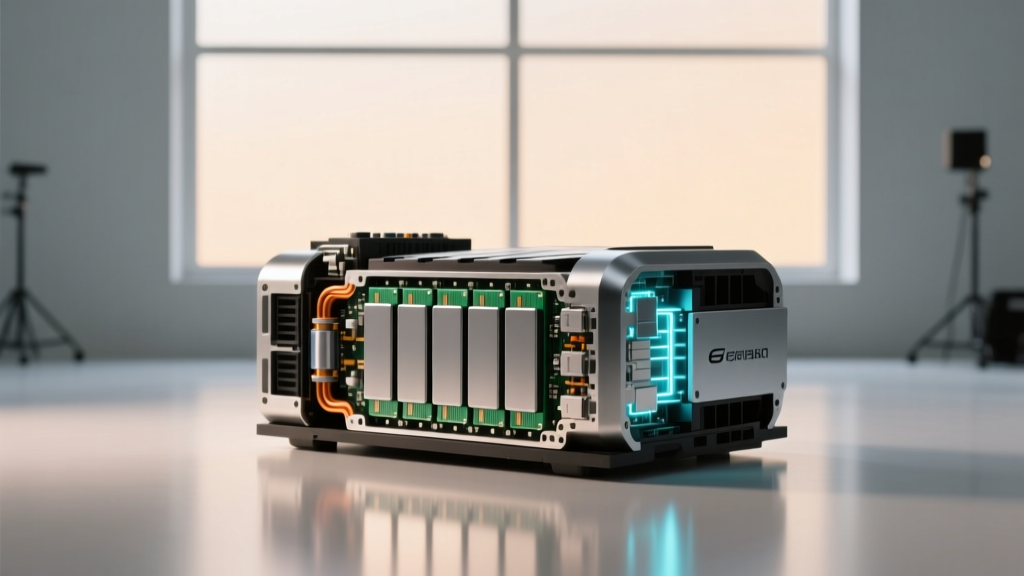
Modern BMS systems are remarkably sophisticated — they manage cell balancing, thermal regulation, and buffer zones (the "hidden" capacity above and below the displayed 0–100%) to protect the pack. But the BMS can't overcome physics: high SoC + high temperature + time = accelerated degradation.
How to Check Your EV Battery's State of Health (SoH)
State of Health (SoH) is the percentage of original usable capacity your battery currently retains. A new pack is 100% SoH; a pack with 85% SoH holds 85% of its original kWh. Here's how to monitor it:
Built-In Vehicle Methods
- Tesla: The service menu (accessible via the software screen) displays current battery health percentage. The mobile app also shows degradation data under the "Battery Health" section on newer software versions.
- Hyundai/Kia: The EV menu in the infotainment system shows battery condition. Dealers can run a full SoH diagnostic report on request.
- BMW: The iDrive system and My BMW app display battery health status. A full capacity test is available at service centers.
- Ford: The FordPass app and SYNC system provide battery health indicators. Certified EV dealers run detailed SoH reports.
Third-Party and DIY Methods
- OBD-II + App: Devices like the OBDLink MX+ paired with apps such as EVNotify or LeafSpy (Nissan) can read BMS data directly, including individual cell voltages, pack temperature, and precise SoH percentage.
- Manual calculation: Charge to 100%, note the displayed range, and compare to the original EPA rating adjusted for the battery's usable kWh. This gives a rough SoH estimate.
- Recurrent and Geotab: Some fleet-management and insurance platforms track SoH over time and provide trend reports.
When to get concerned: If your SoH drops more than 3–4% in a single year after the initial break-in period, or if you notice sudden range drops (which may indicate a failing cell module rather than normal degradation), schedule a dealer diagnostic.
Emerging Battery Technology: Solid-State and Beyond
Next-generation battery chemistries promise step-changes in energy density and longevity, but timelines matter. Here's the realistic outlook from a 2026 vantage point:
- Solid-state batteries: Toyota has announced limited production in select 2027–2028 models, targeting 750+ km WLTP range and 10-minute fast charging. Samsung SDI and QuantumScape are in pilot production. These use a solid electrolyte instead of liquid, enabling lithium-metal anodes with 2–3x the energy density of current NMC. Expect premium pricing and limited availability through 2030.
- Silicon-dominant anodes: Companies like Sila Nanotechnologies and Group14 are shipping silicon-carbon composite anodes that increase energy density 20–40% over graphite. These are entering production in 2026–2027 model-year vehicles from select OEMs. Cycle life remains the engineering challenge — early generations target 800–1,200 cycles.
- Sodium-ion batteries: CATL and BYD have begun deploying Na-ion packs in Chinese-market vehicles. Lower energy density but dramatically lower cost and excellent cycle life (4,000+ cycles). Likely to appear in US-market budget EVs by 2028–2029.
- LMFP (lithium manganese iron phosphate): A hybrid of LFP longevity with manganese boosting energy density ~15–20%. Tesla and other OEMs are evaluating for next-generation standard-range packs.
None of these technologies are available in 2026 production vehicles sold in the US market today. If you're buying now, current LFP and NMC chemistries are mature, well-understood, and backed by extensive real-world longevity data.
Frequently Asked Questions
How long do EV batteries last in years and miles?
Most modern EV batteries (2022–2026 model years) are engineered for 150,000–200,000 miles and 15–20 years before reaching 70% capacity. LFP chemistry packs often exceed 200,000 miles with 80%+ retention. The battery typically outlasts the vehicle's economic life.
How much does it cost to replace an EV battery?
Out-of-warranty replacement costs range from approximately $6,500 for a small pack (Nissan Leaf 40 kWh) to $25,000–$30,000 for large packs (Ford F-150 Lightning Extended Range, Chevrolet Silverado EV). Most mid-size EVs (Tesla Model 3/Y, Hyundai Ioniq 5) fall in the $10,000–$16,000 range including labor. Remanufactured packs can reduce costs by 30–50%.
What does the EV battery warranty actually cover?
Standard warranties cover capacity loss below 70% of original capacity within 8 years/100,000 miles (10 years/150,000 miles in CARB states), plus manufacturing defects and BMS failures. They do not cover accident damage, environmental damage (flooding), or unauthorized modifications. See the warranty table above for manufacturer-specific terms.
How do I check my EV battery's health?
Most EVs display battery health through the infotainment system or companion mobile app. For precise data, an OBD-II adapter (such as OBDLink MX+) paired with apps like EVNotify or LeafSpy reads the BMS directly, showing SoH percentage, individual cell voltages, and pack temperature. Dealers can run comprehensive diagnostic reports during service visits.
LFP vs. NMC — which battery chemistry is better for longevity?
LFP (lithium iron phosphate) wins on cycle life (3,000–5,000+ cycles vs. 1,000–2,500 for NMC) and tolerates daily 100% charging better, making it ideal for high-mileage commuters and long-term owners. NMC/NCA offers higher energy density, better cold-weather performance, and more range per kWh — better for long-range, performance, and towing applications. Choose LFP if longevity is your priority; choose NMC if range and performance are.
Does frequent DC fast charging damage my EV battery?
Occasional DC fast charging has minimal impact. Daily reliance on high-power DCFC (150+ kW) does accelerate degradation slightly due to thermal stress, but modern thermal management systems mitigate this significantly. The practical difference between exclusive Level 2 charging and frequent DCFC is roughly 2–5% additional capacity loss over 100,000 miles. Use DCFC for road trips; rely on Level 2 home charging for daily needs.
Should I worry about my EV battery dying in cold weather?
Cold weather causes temporary range loss (15–30% at 20°F) due to increased internal resistance and cabin heating demands, but this is not permanent degradation. Once the battery warms, full capacity returns. Preconditioning the battery while plugged in mitigates cold-weather range loss. Long-term, cold climates are actually gentler on battery longevity than hot climates.