How Long Do EV Batteries Actually Last?
The short answer, backed by a decade of fleet data and owner reports: the high-voltage traction battery in a modern electric vehicle typically outlasts the car itself. Most EV batteries retain between 85% and 93% of their original capacity after 100,000 miles, and manufacturers are now engineering packs to endure 300,000 to 500,000 miles before reaching end-of-life thresholds. The real question for buyers isn't whether the battery will die — it's how much range you'll lose over a decade of ownership, what the warranty actually covers, and whether you're choosing the right chemistry for your driving pattern.
This guide breaks down automobile battery life with hard numbers: degradation curves from real-world fleets, chemistry trade-offs between LFP and NMC/NCA, federal warranty mandates, replacement cost ranges by model, and the daily habits that meaningfully extend or shorten pack longevity.
LFP vs NMC/NCA: Choosing the Right Battery Chemistry
Every EV sold in the US in 2026 uses one of two dominant lithium-ion chemistries for its traction battery. The choice between them affects range, longevity, charging behavior, cold-weather performance, and price.
NMC (Nickel Manganese Cobalt) and NCA (Nickel Cobalt Aluminum) chemistries prioritize energy density. They pack more kWh into a smaller, lighter enclosure, which translates to longer EPA range ratings per pound of battery. Tesla's Model 3 Long Range, Hyundai Ioniq 5, Ford Mustang Mach-E Extended Range, and most premium EVs use NMC or NCA packs. The trade-off: these chemistries degrade slightly faster per charge cycle, are more sensitive to sustained high states of charge, and carry higher raw-material costs due to cobalt and nickel content.
LFP (Lithium Iron Phosphate) batteries sacrifice some energy density for dramatically longer cycle life and lower cost. Tesla's Model 3 and Model Y Standard Range variants, the base Chevrolet Bolt (when it was in production), and several Chinese-market EVs use LFP. An LFP pack can endure 3,000 to 5,000+ full charge cycles before significant degradation, compared to roughly 1,000 to 2,000 cycles for NMC. LFP also tolerates regular charging to 100% — Tesla actually recommends periodic full charges for its LFP vehicles to keep the battery management system calibrated. The downsides: LFP packs are heavier for the same kWh, perform noticeably worse in sub-freezing temperatures (expect 30-40% range loss in extreme cold vs. 20-30% for NMC), and charge more slowly at DC fast chargers when cold due to less aggressive preconditioning profiles.
| Attribute | LFP (Lithium Iron Phosphate) | NMC / NCA (Nickel-based) |
|---|---|---|
| Energy Density | Lower (~160-180 Wh/kg cell-level) | Higher (~220-280 Wh/kg cell-level) |
| Cycle Life | 3,000–5,000+ cycles | 1,000–2,000 cycles |
| Calendar Life | Excellent (15-20+ years) | Good (12-15+ years) |
| Cold-Weather Range Loss | Higher (30-40% below 20°F) | Moderate (20-30% below 20°F) |
| Charging to 100% Tolerance | High — recommended periodically | Low — best kept 80-90% daily |
| DC Fast Charge Speed | Moderate (peak ~170-200 kW typical) | Fast (peak 200-350 kW on 800V packs) |
| Cost per kWh (pack-level) | Lower (~$90-110/kWh in 2026) | Higher (~$120-150/kWh in 2026) |
| Common In | Tesla Model 3/Y RWD, BYD models, base trims | Long Range/Premium trims, most non-Tesla EVs |
Which is better? Neither is universally superior. If you drive a long-range commute, road-trip frequently, or live in a cold climate, NMC/NCA's higher energy density and better cold performance make it the practical choice. If you primarily drive locally, can charge at home, live in a temperate climate, and want maximum longevity with minimal babysitting, LFP is the more durable, lower-cost option.
EV Battery Degradation: What the Data Shows
Battery degradation in EVs follows a predictable curve: a steeper initial drop in the first 1-2 years (typically 2-5% loss as the solid electrolyte interphase layer stabilizes), followed by a long, slow linear decline. This pattern holds across chemistries, though the slope differs.
Real-world data from multiple sources paints a consistent picture:
Typical Degradation Trajectory by Mileage (NMC/NCA packs, moderate climate):
- 25,000 miles / 2 years: ~3-5% capacity loss (EPA range drops from 300 mi to ~285-290 mi)
- 50,000 miles / 4 years: ~5-8% capacity loss (range ~276-285 mi)
- 100,000 miles / 7-8 years: ~8-13% capacity loss (range ~261-276 mi)
- 150,000 miles / 10-12 years: ~12-18% capacity loss (range ~246-264 mi)
- 200,000+ miles: ~15-22% loss (range ~234-255 mi)
Sources: Recurrent Auto fleet data (2025 report), Tesla Impact Reports, Geotab longitudinal study of 10,000+ EVs.
LFP packs show even flatter curves. Tesla's LFP Model 3 vehicles have demonstrated less than 5% degradation at 100,000 miles in fleet data, though these packs are newer and long-term (15+ year) field data is still accumulating.
According to fueleconomy.gov, modern EV battery management systems actively protect the pack through thermal conditioning, charge-rate limiting at high and low states of charge, and buffer zones (typically 2-5% at the top and bottom of the pack that the driver can't access). This means the usable kWh you see on the sticker is already less than the gross cell capacity — the BMS is constantly working to slow degradation.
What Does the EV Battery Warranty Actually Cover?
Federal law in the United States mandates a minimum battery warranty of 8 years or 100,000 miles (whichever comes first) for all EVs. In California and states that follow CARB (California Air Resources Board) emissions standards, the mandate extends to 10 years or 150,000 miles. Most manufacturers meet or exceed these minimums.
The warranty typically guarantees that the battery will retain a minimum percentage of its original capacity — usually 70% — over the warranty period. If your battery degrades below that threshold, the manufacturer will repair or replace it at no cost. Some brands offer more generous terms.
| Manufacturer | Warranty Period | Capacity Retention Threshold | Notes |
|---|---|---|---|
| Tesla (Model 3/Y) | 8 yr / 120,000 mi (LFP: 8 yr / 100,000 mi) | 70% | Long Range/AWD: 120k mi; RWD LFP: 100k mi |
| Hyundai / Kia | 10 yr / 100,000 mi | 70% | Among the longest time-period coverage |
| Ford (Mach-E, F-150 Lightning) | 8 yr / 100,000 mi | 70% | Standard federal minimum + extra time |
| Chevrolet (Blazer EV, Equinox EV) | 8 yr / 100,000 mi | 70% | Includes battery components and BMS |
| BMW (i4, iX) | 8 yr / 100,000 mi | 70% | Transferable to second owner |
| Rivian (R1T, R1S) | 8 yr / 175,000 mi | 70% | Higher mileage cap than most competitors |
| Mercedes-Benz (EQE, EQS) | 10 yr / 155,000 mi | 70% | Extended coverage period and mileage |
What's covered: Capacity degradation below the threshold, defective cells or modules, battery management system failures, and thermal management system defects that affect the pack.
What's typically NOT covered: Damage from accidents, flooding, or improper modifications; cosmetic corrosion that doesn't affect function; range loss from accessories or tire changes; and gradual degradation that stays above the threshold.
EV Battery Replacement Cost: What to Budget For
Here's the reality most EV skeptics overstate: the vast majority of EV batteries never need replacement during the vehicle's useful life. Data from warranty claims across major manufacturers shows battery replacement rates under 2% during the warranty period. When replacements do occur, they're usually due to manufacturing defects (covered by warranty) or physical damage from collisions.
That said, if you're buying a used EV outside warranty or planning to keep a vehicle for 15+ years, here's what out-of-pocket replacement looks like in 2026:
| Vehicle | Battery Size (kWh) | Chemistry | Replacement Cost (parts + labor) |
|---|---|---|---|
| Tesla Model 3 RWD | ~60 kWh | LFP | $8,000 – $12,000 |
| Tesla Model Y Long Range | ~82 kWh | NMC | $12,000 – $16,000 |
| Hyundai Ioniq 5 (Long Range) | 77.4 kWh | NMC | $12,000 – $18,000 |
| Ford Mustang Mach-E Extended Range | 91 kWh (usable) | NMC | $15,000 – $22,000 |
| Chevrolet Equinox EV | ~85 kWh | NMC | $13,000 – $18,000 |
| Ford F-150 Lightning Extended Range | ~131 kWh | NMC | $20,000 – $30,000 |
| Rivian R1T (Large Pack) | ~135 kWh | NMC | $22,000 – $32,000 |
Several factors are pushing these costs down over time. Pack-level prices have fallen from over $500/kWh in 2012 to roughly $100-150/kWh in 2026, according to BloombergNEF tracking. Module-level repairs (replacing individual defective modules rather than the entire pack) are increasingly common and cost $2,000-$6,000. Third-party EV repair shops are also emerging, offering refurbished packs at 30-50% below OEM pricing.
When is replacement typically needed? Most EV batteries that do require replacement outside warranty do so after 200,000+ miles or 12-15+ years — at which point the vehicle's residual value is often less than the replacement cost, and owners typically retire the vehicle rather than invest in a new pack.
Factors That Affect EV Battery Life (and What You Can Control)
Not all miles are created equal when it comes to battery wear. The following factors have measurable, documented impacts on long-term capacity retention:
Maximize your EV battery life with these practices:
- Daily charging limit: Set to 80% for NMC/NCA packs; 100% is fine for LFP. Sustained high SoC accelerates electrolyte decomposition in nickel-based chemistries.
- Avoid deep discharges: Try not to regularly drop below 10-15% SoC. The BMS buffer protects against true zero, but repeated deep cycles still stress cells.
- Minimize DC fast charging when possible: Occasional road-trip fast charging is fine, but daily use of 150+ kW DC chargers generates sustained heat that accelerates degradation. Level 2 home charging (7-11 kW) is the gentler, battery-friendly default.
- Precondition in extreme cold: Use your EV's scheduled departure or preconditioning feature to warm the battery before driving and charging. Cold lithium plating during charging is one of the most damaging conditions for any chemistry.
- Park in shade or garages in extreme heat: Sustained battery temperatures above 95°F (35°C) accelerate calendar degradation. A hot, fully charged battery sitting in a Phoenix parking lot for weeks is a worst-case scenario.
- Drive moderately: Aggressive acceleration and sustained high-speed driving generate more heat in the cells. The thermal management system handles this, but cumulative thermal stress adds up.
- Keep software updated: Manufacturers regularly refine BMS algorithms via OTA updates to improve thermal management and charging profiles, which can extend pack life.
The single biggest controllable factor is charge habit. An NMC battery that lives between 20-80% SoC, charges primarily on Level 2, and avoids extreme temperatures will degrade roughly half as fast as one that's regularly charged to 100%, DC fast-charged daily, and left in high heat. Over 100,000 miles, that's the difference between 5% and 10-12% capacity loss.
Monitoring Your Battery's State of Health (SoH)
State of Health (SoH) is the percentage of original capacity your battery currently retains. A new EV starts at 100% SoH; a battery at 85% SoH that originally held 80 kWh now holds roughly 68 kWh of usable energy.
How to check SoH in 2026:
- In-vehicle displays: Tesla, Hyundai/Kia, BMW, and Mercedes-Benz now include battery health indicators in the vehicle settings menu. These show estimated current capacity as a percentage or bar graph.
- OBD-II diagnostic apps: Tools like OBDeleven, LeafSpy (for Nissan Leaf), and manufacturer-specific apps can read the BMS-reported SoH directly via the OBD-II port. This is the most accurate consumer-accessible method.
- Third-party services: Companies like Recurrent and Altelium offer battery health reports that compare your pack's degradation to a fleet baseline. Some used-EV marketplaces (Carvana, CarMax) now include SoH reports in listings.
- Dealer diagnostics: During service visits, dealerships can pull a full BMS log showing cell-level voltage balance, internal resistance trends, and precise SoH — useful before a warranty claim.
If your SoH drops below the warranty threshold (typically 70%) within the warranty period, contact the manufacturer or dealer immediately. Document your mileage, charging history, and any range observations to support the claim.
Emerging Battery Technologies: What's Next (and When)
Several next-generation battery technologies are in development, each promising improvements in energy density, charging speed, or safety. It's critical to separate what's shipping from what's still in the lab.
Silicon-dominant anodes: Replacing graphite anodes with silicon can increase energy density by 20-40%. Sila Nanotechnologies and Group14 Technologies are supplying silicon-carbon anode materials to manufacturers now. Expect to see meaningful silicon-anode adoption in 2027-2029 production vehicles. Some 2026 models use partial silicon blends (5-10% silicon content) in existing NMC cells.
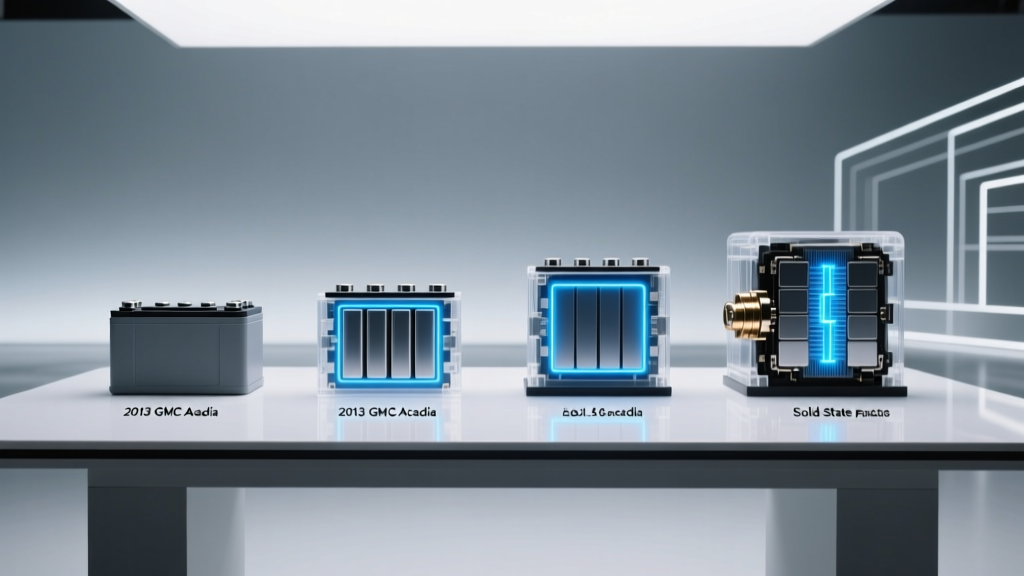
Solid-state batteries: These replace the liquid electrolyte with a solid material, promising higher energy density (~400-500 Wh/kg at cell level), faster charging, and reduced fire risk. Toyota has announced a solid-state battery targeting 2027-2028 production in limited volumes. Samsung SDI and QuantumScape are also advancing prototypes. However, manufacturing scalability, cost, and cycle-life durability remain unsolved at mass-production scale. Realistic timeline for widespread solid-state EV availability: 2029-2032.
Sodium-ion batteries: CATL and BYD are producing sodium-ion cells for lower-cost, shorter-range EVs in China. These offer lower energy density than LFP but use abundant, cheap raw materials. US-market availability is likely 2028+ and will target budget segments and stationary storage first.
None of these technologies are available in 2026 production EVs sold in the US. If a dealer or article suggests otherwise, treat it with skepticism. Current LFP and NMC chemistries, paired with modern BMS and thermal management, already deliver 200,000+ mile lifespans with acceptable degradation — which is why waiting for solid-state is rarely a sound purchase strategy for someone who needs a vehicle now.
Frequently Asked Questions
How long do EV batteries last in years and miles?
Based on fleet data from Recurrent Auto and manufacturer reports, modern EV batteries typically retain 85-93% of original capacity at 100,000 miles and 80-88% at 150,000 miles. In calendar years, expect 15-20+ years of usable service before a pack drops below 70% capacity. Many EVs will be retired for other reasons (body damage, electronics failure, owner upgrade) before the battery reaches end of life.
How much does an EV battery cost to replace in 2026?
Out-of-warranty replacement costs range from roughly $8,000 for a smaller LFP pack (Tesla Model 3 RWD, ~60 kWh) to $30,000+ for large NMC packs (F-150 Lightning Extended Range, Rivian R1T). However, replacement rates during a vehicle's life are under 2%, and most replacements that do occur are covered under the 8-year/100,000-mile minimum federal warranty. Module-level repairs cost $2,000-$6,000 and are increasingly common.
What does the EV battery warranty cover?
Federal law requires at least 8 years / 100,000 miles of battery warranty coverage (10 years / 150,000 miles in CARB states). The warranty guarantees the battery will retain at least 70% of its original capacity. It covers defective cells, BMS failures, and thermal management defects. It does not cover accident damage, flooding, or modifications. Check your specific manufacturer's warranty documentation for exact terms, as some (like Rivian at 8 yr / 175,000 mi and Mercedes at 10 yr / 155,000 mi) exceed the minimums.
How do I check and maximize my EV battery health?
Check SoH through your vehicle's built-in battery health display, an OBD-II diagnostic app, or a dealer service visit. To maximize longevity: limit daily charges to 80% (NMC/NCA) or charge freely to 100% (LFP), avoid repeated deep discharges below 10%, use Level 2 home charging as your primary method, precondition the battery in cold weather, avoid leaving the car fully charged in extreme heat for extended periods, and keep your vehicle's software updated for the latest BMS optimizations.
LFP vs NMC — which battery chemistry is better for me?
Choose LFP if you: drive mostly local/commute miles, live in a temperate climate, want maximum cycle life (3,000-5,000+ cycles), prefer not to micromanage charge limits, and value lower cost. Choose NMC/NCA if you: need maximum range per charge, road-trip frequently, live in a cold climate (better cold-weather performance), want the fastest DC charging speeds, and don't mind setting an 80% daily charge limit. Neither chemistry is universally superior — the right choice depends on your driving pattern and climate.
Does frequent DC fast charging damage the battery?
Occasional DC fast charging (road trips, a few times per month) has minimal impact on modern batteries thanks to sophisticated thermal management. However, daily DC fast charging at 150+ kW does measurably accelerate degradation — studies show roughly 1-3% additional capacity loss over 100,000 miles compared to exclusive Level 2 charging. The heat generated during high-power charging is the primary stressor. If DC fast charging is your only option (no home charging access), try to limit sessions to 80% SoC and use lower-power chargers (50 kW) when time permits.
Will my EV battery need to be replaced before I sell the car?
Statistically, no. Battery replacement rates across major manufacturers are under 2% during the warranty period, and most EVs are sold or retired before reaching the mileage where significant degradation would necessitate replacement. A 2026 EV with an EPA range of 300 miles will likely still deliver 255-275 miles of range at 150,000 miles — well within the usable range for most owners and attractive on the used market.
For authoritative information on EV battery standards and efficiency ratings, visit fueleconomy.gov. For warranty and consumer protection details, the National Highway Traffic Safety Administration provides regulatory context on battery safety requirements.