Why Europe's Battery Struggles Matter to Your EV
If you have followed EV supply chains over the last few years, you have likely noticed a recurring headline: gigafactory delays, scaled-back capacity targets, and automaker pivots away from European cell manufacturing. Northvolt's well-documented financial restructuring, Stellantis and Umicore's joint-venture pauses, and the broader pullback from aggressive EU localization targets have reshaped how automakers source battery cells for vehicles sold on both sides of the Atlantic.
For US-based EV buyers and owners, Europe battery production challenges are not a distant curiosity. They directly influence which battery chemistries end up in your vehicle, how fast replacement packs become available, and the long-term pricing trajectory of high-voltage traction batteries. When European cell output falls short, automakers lean harder on Asian suppliers (CATL, LG Energy Solution, SK On, BYD) and accelerate the shift toward lower-cost chemistries like LFP — changes that show up in the spec sheets of 2025 and 2026 model-year vehicles.
This guide unpacks the technical side of what is inside your EV's battery pack, how Europe's production stumbles are steering chemistry decisions, and what you need to know about degradation, warranties, replacement costs, and maximizing battery health over a decade or more of ownership.
EV Battery Chemistry Explained: LFP vs. NMC vs. NCA
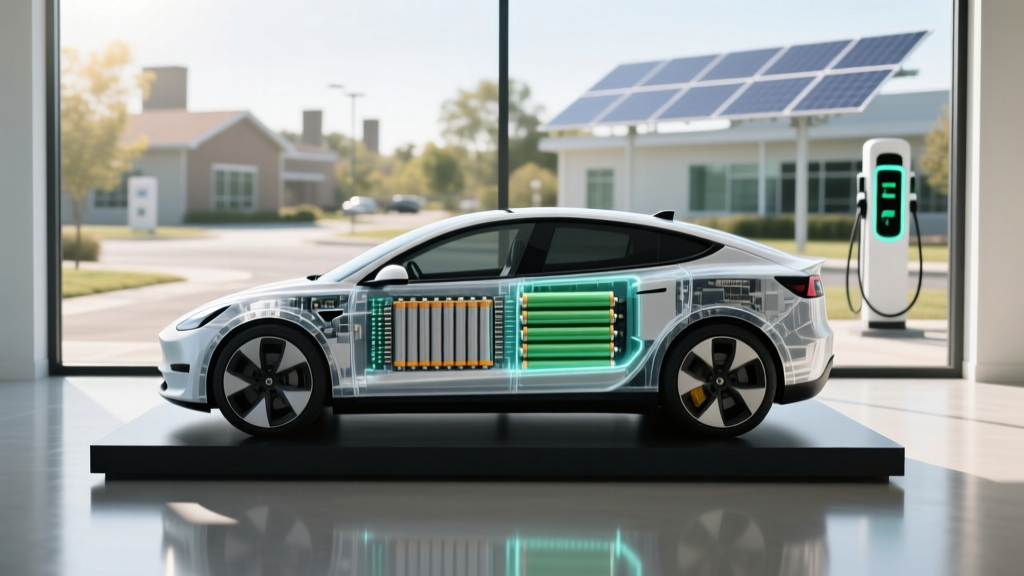
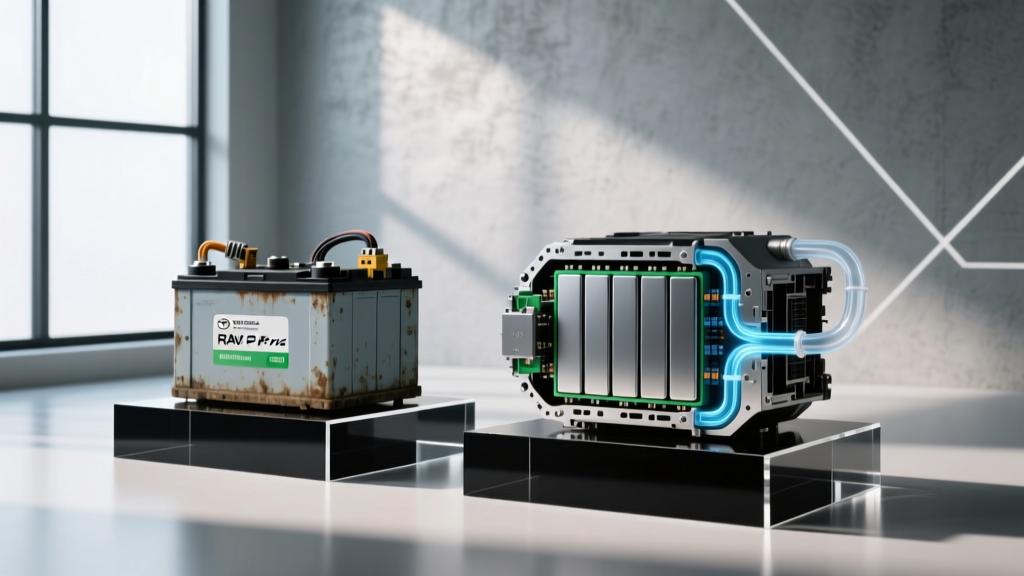
Every modern EV uses a lithium-ion traction battery, but the cathode chemistry varies significantly. The two dominant families in 2026 are LFP (lithium iron phosphate, LiFePO4) and NMC/NCA (nickel manganese cobalt / nickel cobalt aluminum). The chemistry determines energy density, cycle life, thermal stability, cold-weather behavior, and raw-material cost — and Europe's production challenges are accelerating the industry's pivot between them.
NMC cells, which rely on nickel and cobalt, have historically dominated European gigafactory plans because they offer higher energy density (more range per kilogram). When those factories stall, automakers turn to CATL and BYD for LFP cells, which avoid nickel and cobalt entirely and are cheaper to produce. Tesla's standard-range Model 3 and Model Y, the base Ford Mustang Mach-E Select, and several BYD models already use LFP. Expect that list to grow.
| Attribute | LFP (LiFePO4) | NMC 811 / NCA |
|---|---|---|
| Energy Density (cell-level) | ~160–180 Wh/kg | ~230–270 Wh/kg |
| Typical Pack Size | 50–75 kWh | 75–120 kWh |
| Cycle Life (to 80% SoH) | 3,000–5,000+ cycles | 1,500–2,500 cycles |
| Cost per kWh (cell) | ~$75–95 | ~$100–130 |
| Cold-Weather Performance | Moderate; 15–25% range loss at 20°F | Better; 10–18% range loss at 20°F |
| Thermal Stability | Excellent (higher runaway threshold) | Good (requires robust BMS) |
| Recommended Daily SoC | 100% OK | 80% preferred for daily use |
| Key Raw Materials | Iron, phosphate (abundant) | Nickel, cobalt, manganese (geopolitically sensitive) |
Which is better? There is no universal winner. NMC/NCA delivers more range in a lighter, more compact pack — essential for long-range sedans, heavy SUVs, and trucks. LFP offers superior cycle life, lower cost, and the ability to charge to 100% daily without accelerated degradation, making it ideal for standard-range commuters and fleet vehicles. If you prioritize maximum range and cold-weather driving, NMC still has the edge. If you want a pack that will likely outlast the vehicle at lower upfront cost, LFP is the pragmatic choice.
How Long Do EV Batteries Actually Last?
The short answer: far longer than most buyers expect. Data aggregated from fleet operators, telematics studies, and owner reports consistently show that modern liquid-cooled EV batteries lose roughly 5–10% of usable capacity over the first 100,000 miles, with degradation slowing significantly after the initial break-in period (typically the first 20,000–30,000 miles).
Typical Degradation Curve (NMC, liquid-cooled, average US climate):
- Year 1 / 15,000 mi: ~2–4% capacity loss (initial formation drop)
- Year 3 / 45,000 mi: ~5–7% total loss
- Year 5 / 75,000 mi: ~7–9% total loss
- Year 8 / 120,000 mi: ~9–12% total loss
- Year 10 / 150,000 mi: ~10–15% total loss (most packs still above 85% SoH)
Sources: Geotab fleet telemetry data, Recurrent Auto battery health reports.
LFP packs tend to degrade even more slowly in terms of cycle life, though they may show slightly more variance in state-of-charge estimation due to their flatter voltage curve. Tesla's LFP-equipped Model 3 Standard Range vehicles, for example, have demonstrated strong retention in high-mileage fleet use, with many units above 90% State of Health (SoH) after 80,000 miles.
The critical insight: most EV batteries will outlast the vehicle's economic life. Catastrophic failure (sudden brick) is exceedingly rare in liquid-cooled packs. The real-world concern is gradual range reduction — a 310-mile EPA-rated vehicle with 12% degradation still delivers roughly 270 miles, which remains practical for the vast majority of drivers.
What Does the EV Battery Warranty Cover?
Federal law mandates a minimum 8-year / 100,000-mile warranty on EV battery packs for emissions-related components, and every major automaker meets or exceeds this baseline for the high-voltage traction battery. California Air Resources Board (CARB) states require 10 years / 150,000 miles, and several manufacturers apply that standard nationwide.
| Manufacturer | Warranty Term | Capacity Retention Threshold | Notes |
|---|---|---|---|
| Tesla (Model 3/Y NMC) | 8 yr / 120,000 mi | 70% SoH | Long Range & Performance trims |
| Tesla (Model 3/Y LFP) | 8 yr / 100,000 mi | 70% SoH | RWD Standard Range |
| Hyundai / Kia | 10 yr / 100,000 mi | 70% SoH | Ioniq 5, Ioniq 6, EV6, EV9 |
| Ford | 8 yr / 100,000 mi | 70% SoH | Mustang Mach-E, F-150 Lightning |
| GM (Ultium) | 8 yr / 100,000 mi | 70% SoH | Equinox EV, Blazer EV, Silverado EV |
| Volkswagen | 8 yr / 100,000 mi | 70% SoH | ID.4, ID.7 |
| BMW | 8 yr / 100,000 mi | 70% SoH | i4, i5, i7, iX |
| Rivian | 8 yr / 175,000 mi | 70% SoH | R1T, R1S (best-in-class mileage) |
The 70% capacity retention threshold is the industry standard trigger: if your pack drops below 70% of its original usable capacity within the warranty period, the manufacturer will repair or replace it (often with a refurbished unit of equivalent capacity). In practice, warranty claims remain rare. According to data from Recurrent Auto, fewer than 1.5% of EVs in their studied fleet required a battery replacement under warranty.
EV Battery Replacement Costs: What You Will Actually Pay
Outside of warranty coverage, battery replacement is the single biggest cost fear among prospective EV buyers. Here is the reality: full pack replacement costs depend on pack size, chemistry, and whether you receive a new or remanufactured unit. Prices have declined steadily as cell costs fall, but a full replacement is still a significant expense — one that most owners will never face.
| Vehicle Category | Pack Size | Chemistry | Replacement Cost Range |
|---|---|---|---|
| Compact EV (e.g., Chevy Bolt, Nissan Leaf) | 40–65 kWh | NMC / LFP | $5,000–$9,000 |
| Midsize Sedan/Crossover (e.g., Model 3, Ioniq 5) | 60–82 kWh | LFP / NMC | $8,000–$14,000 |
| Large SUV / Truck (e.g., F-150 Lightning, Rivian R1T) | 98–135 kWh | NMC | $12,000–$22,000 |
| Luxury EV (e.g., BMW iX, Mercedes EQS) | 90–120 kWh | NMC | $15,000–$25,000 |
Two important context points. First, module-level repair is increasingly common: many packs consist of 8–16 modules, and a single degraded or faulty module can be replaced for $1,500–$4,000 rather than swapping the entire pack. Second, the independent EV repair ecosystem is growing. Third-party shops and refurbished pack suppliers now offer alternatives to dealer-only replacements, particularly for high-volume models like the Tesla Model 3 and Nissan Leaf.
When is replacement typically needed? For most vehicles, it is not. Packs that fall below the 70% warranty threshold within 8 years are statistical outliers. The vehicles most likely to need attention are early-generation EVs with passive (air-cooled) battery systems — like the first-generation Nissan Leaf — or high-mileage fleet vehicles subjected to extreme fast-charging schedules.
Factors That Affect Battery Life — and How to Maximize It
Battery degradation is driven by three primary stressors: heat, high state of charge, and high charge/discharge rates. Understanding these lets you meaningfully extend your pack's useful life.
Battery Longevity Best Practices
- Daily charging limit: Set to 80% for NMC/NCA packs; 100% is fine for LFP. Use your vehicle's scheduled charging or charge-limit feature.
- Avoid prolonged 100% SoC: Charging to 100% occasionally for road trips is fine — just don't let the car sit at 100% for days in hot weather.
- DC fast charging: Occasional use is not harmful. Daily DCFC (especially at 250+ kW without preconditioning) accelerates degradation modestly. Precondition the battery before fast charging — most EVs do this automatically when you navigate to a charger.
- Extreme heat: Parking in shade or a garage during sustained 95°F+ weather reduces calendar aging. Liquid-cooled packs handle this far better than older air-cooled designs.
- Extreme cold: Cold does not permanently damage the battery, but charging at high rates when the pack is below freezing causes lithium plating. Always precondition before winter charging.
- Storage: If storing the vehicle for weeks, leave SoC between 40–60%. Avoid both full and near-empty storage.
- Regenerative braking: Standard regen settings do not harm the battery. The BMS manages charge acceptance automatically.
Europe's Production Challenges and Your Charging Habits
The connection between European supply constraints and daily ownership is indirect but real. As automakers diversify cell sourcing — pulling more LFP from CATL's Chinese and (increasingly) Hungarian plants, and more NMC from LG and SK facilities in Poland and the US — the specific cells in your pack may vary even within the same model year. This does not affect safety or warranty coverage, but it can influence charging curves and cold-weather behavior slightly. Always follow the manufacturer's specific guidance for your vehicle's battery type, which is documented in the owner's manual and the vehicle's infotainment settings.
How to Check and Monitor Battery Health (SoH)
State of Health (SoH) is a percentage representing your battery's current maximum capacity relative to its original factory capacity. A pack at 92% SoH holds 92% of the kWh it did when new. Here is how to monitor it:
- In-vehicle displays: Tesla provides a battery health estimate in the service menu (available since 2023 software updates). Hyundai/Kia shows SoH via the dealer diagnostic tool, accessible during service visits. BMW's iDrive includes a battery health indicator in the My BMW app for newer models.
- OBD-II dongles and apps: Third-party tools like OBD2 scanners paired with apps such as EV Health, Scan My Tesla, or LeafSpy (for Nissan) can read the BMS-reported SoH directly. This is the most reliable DIY method.
- Manual calculation: Charge to 100% (or a known SoC), note the displayed range, and compare to the original EPA range adjusted for the current SoC percentage the BMS reports. This is less precise but free.
- Dealer diagnostic reports: Request a battery health report during any service visit. Most dealers will provide this at no charge, and it is useful documentation for resale or warranty claims.
For used-EV buyers, obtaining a SoH reading before purchase is essential. Services like Recurrent and some third-party pre-purchase inspection providers now include battery health certification in their reports.
Europe Battery Production Challenges: The Supply Chain Picture
Understanding the macro picture helps explain why your next EV might have a different cell chemistry than expected. Europe set aggressive targets under the EU Battery Regulation to localize cell production, reduce dependence on Asian imports, and establish closed-loop recycling. The reality has been messier:
- Northvolt, once Europe's flagship cell maker, entered restructuring in late 2024 after production yield issues at its Skellefteå, Sweden gigafactory and delayed deliveries to BMW and Volvo. By 2026, its output remains below original targets, and several automaker contracts have been renegotiated or redirected to Asian suppliers.
- ACC (Automotive Cells Company), the Stellantis-Mercedes-TotalEnergies JV, paused two of three planned gigafactories in 2024–2025, citing slower-than-expected EV demand in Europe. Its Douvrin, France plant is operational but below capacity.
- PowerCo (Volkswagen Group) has proceeded with its Salzgitter plant but scaled back near-term capacity targets, and its planned Spanish gigafactory timeline has shifted.
- CATL and BYD have filled the gap. CATL's Erfurt, Germany plant is operational, and its planned Hungary facility (one of Europe's largest) is under construction as of 2026. BYD's Szeged, Hungary EV factory includes cell production. Both primarily produce LFP cells.
The net effect for US buyers: more vehicles with CATL- or BYD-sourced LFP cells, fewer with European-manufactured NMC. This is not a quality concern — CATL is the world's largest battery maker with extensive OEM supply relationships — but it does shift the chemistry mix toward LFP in standard-range trims and entry-level EVs.
For the federal §30D tax credit, battery sourcing matters. Current rules require that a percentage of critical minerals and battery components be sourced from the US or free-trade-agreement partners, with thresholds increasing annually. Chinese-sourced cells (including CATL cells manufactured in Europe) may affect credit eligibility depending on the specific supply chain. Always verify your vehicle's credit status at the point of sale using the IRS's current eligibility list, and consult a tax professional for your specific situation.
Emerging Battery Technology: What Is Coming Next
While today's lithium-ion cells will dominate through at least 2030, several next-generation technologies are in advanced development:
- Solid-state batteries: Toyota, Samsung SDI, and QuantumScape have demonstrated prototype cells with 400+ Wh/kg energy density and faster charging. Toyota has announced a 2027–2028 production timeline for limited deployment, likely in luxury Lexus models first. Realistic mass-market availability remains 2029–2032. These are not currently available in any production vehicle.
- Silicon-dominant anodes: Companies like Sila Nanotechnologies and Group14 are replacing graphite anodes with silicon composites, boosting energy density by 20–40%. Early commercial deployment is underway in premium segments (e.g., Mercedes-Benz EQG). Expect broader adoption by 2027–2028.
- Sodium-ion batteries: CATL and BYD have begun limited production of sodium-ion cells for low-cost, short-range urban EVs. Energy density (~120–150 Wh/kg) limits them to city cars and micro-EVs, but they eliminate lithium entirely. Not expected in US-market vehicles before 2028 at the earliest.
- LMFP (lithium manganese iron phosphate): An evolution of LFP that adds manganese for a ~15–20% energy density boost while retaining LFP's cost and safety advantages. CATL and Gotion are targeting 2026–2027 production. This could become the dominant standard-range chemistry by 2028.
None of these technologies change today's buying decision. Current LFP and NMC cells, properly maintained, will serve well for 150,000+ miles. But they do signal that replacement packs in 10–12 years will likely be cheaper, denser, and longer-lasting than what ships in today's vehicles.
Frequently Asked Questions
How long do EV batteries last in years and miles?
Most modern liquid-cooled EV batteries retain 85–90% of their original capacity after 150,000 miles and 10+ years of typical use. LFP chemistries often exceed this. Catastrophic failure is rare; gradual range loss is the norm. The battery will almost certainly outlast the vehicle's resale value.
How much does an EV battery cost to replace out of warranty?
Full pack replacement ranges from approximately $5,000 for a small pack (40–65 kWh) to $22,000+ for a large truck or luxury SUV pack (100–135 kWh). Module-level repairs are often possible for $1,500–$4,000. Most owners never need either. Prices are trending downward as cell costs fall and the refurbished-pack market grows.
What does the EV battery warranty actually cover?
Every major automaker covers the high-voltage traction battery for at least 8 years / 100,000 miles (10 yr / 150,000 mi in CARB states). The warranty triggers if the pack drops below 70% of original usable capacity. It covers defects, premature degradation, and module failures. It does not cover damage from accidents, flooding, or unauthorized modifications. The 12V auxiliary battery is covered separately under the standard vehicle warranty (typically 3 yr / 36,000 mi).
How do I check my EV's battery health?
Use your vehicle's built-in battery health display (Tesla, newer BMWs), an OBD-II scanner with an EV-compatible app (Scan My Tesla, LeafSpy, Car Scanner), or request a diagnostic report from your dealer. Check SoH at least annually, and always before buying a used EV.
LFP vs. NMC — which should I choose?
Choose LFP if you want lower cost, longer cycle life, the ability to charge to 100% daily, and you do not need maximum range. Choose NMC/NCA if you need 300+ miles of EPA range, regularly drive in extreme cold, or tow heavy loads. Both chemistries are proven and well-supported by warranties.
Does fast charging damage my EV battery?
Occasional DC fast charging has minimal impact on battery health. Daily DCFC at ultra-high rates (350 kW) without battery preconditioning can accelerate degradation by roughly 1–2% over the pack's life compared to Level 2 home charging. Modern battery management systems mitigate this substantially. For daily use, Level 2 home charging (7–11 kW) remains the gold standard for longevity.
Will Europe's battery production problems affect my EV's resale value?
Not directly. Resale value is driven by vehicle condition, mileage, battery SoH, and market demand — not where the cells were manufactured. However, a robust European supply chain would eventually lower replacement-pack costs and improve parts availability long-term. The current reliance on Asian cell makers has not created any documented quality or reliability issues in US-market vehicles.