Escalade EV Battery Size and the Ultium Platform
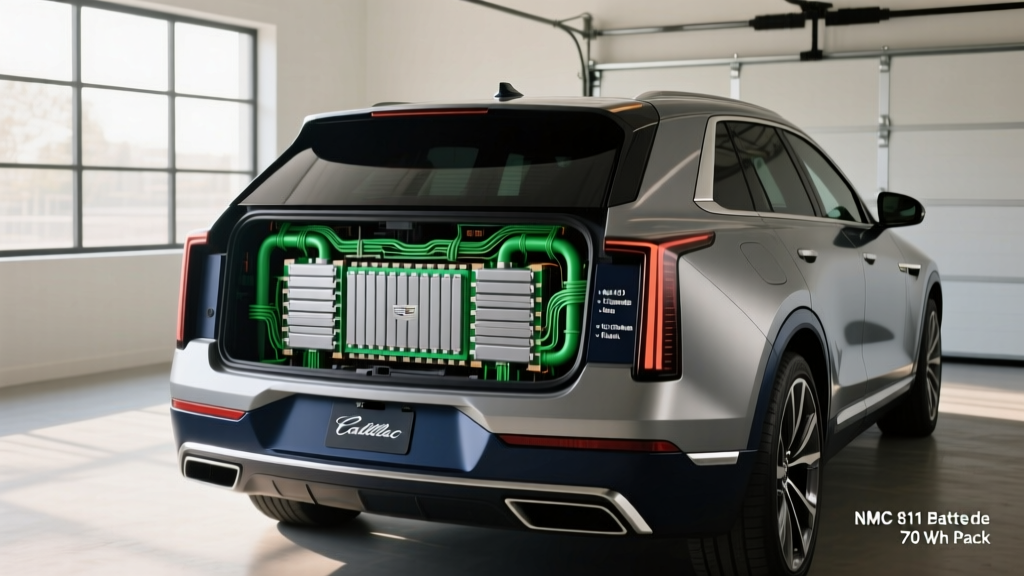
The Cadillac Escalade IQ (the production name for the Escalade EV) rides on GM's BT1 electric truck platform and packs one of the largest battery packs ever fitted to a production passenger vehicle. The headline number is a 200 kWh usable battery (gross capacity slightly higher), built on GM's Ultium architecture. That massive energy store translates to an EPA-estimated range of roughly 450 miles for the Luxury trim and slightly less for the heavier Sport trim — figures that position the Escalade IQ at the top of the full-size electric SUV segment.
But battery size alone doesn't tell the full story. The chemistry inside the pack, how it degrades over time, what the warranty actually covers, and what a replacement would cost are all critical factors for anyone spending north of $130,000 on an electric luxury SUV. This guide breaks down every battery-related detail a current or prospective Escalade IQ owner needs to know.
| Specification | Value |
|---|---|
| Battery Capacity (Usable) | ~200 kWh |
| Battery Chemistry | NCMA (Nickel-Cobalt-Manganese-Aluminum) — Ultium Gen 2 |
| EPA Range (Luxury Trim, Est.) | ~450 miles |
| Peak DC Fast Charge Rate | ~200 kW (800V architecture) |
| 10–80% DC Charge Time (Est.) | ~30–35 minutes (at 350 kW station) |
| Level 2 AC Charge Rate | 11.5 kW (standard) / 19.2 kW (available) |
| System Horsepower | 750 hp (AWD dual motor) |
| 0–60 mph | ~3.5 seconds (Velocity Max mode) |
| Battery/Powertrain Warranty | 8 years / 100,000 miles |
| Base MSRP (Luxury 1) | ~$129,990 |
For context on how the Escalade IQ compares to the broader EV landscape, fueleconomy.gov maintains a full database of EPA range and efficiency figures for every certified EV sold in the U.S.
Understanding the Chemistry: NMC/NCA vs. LFP
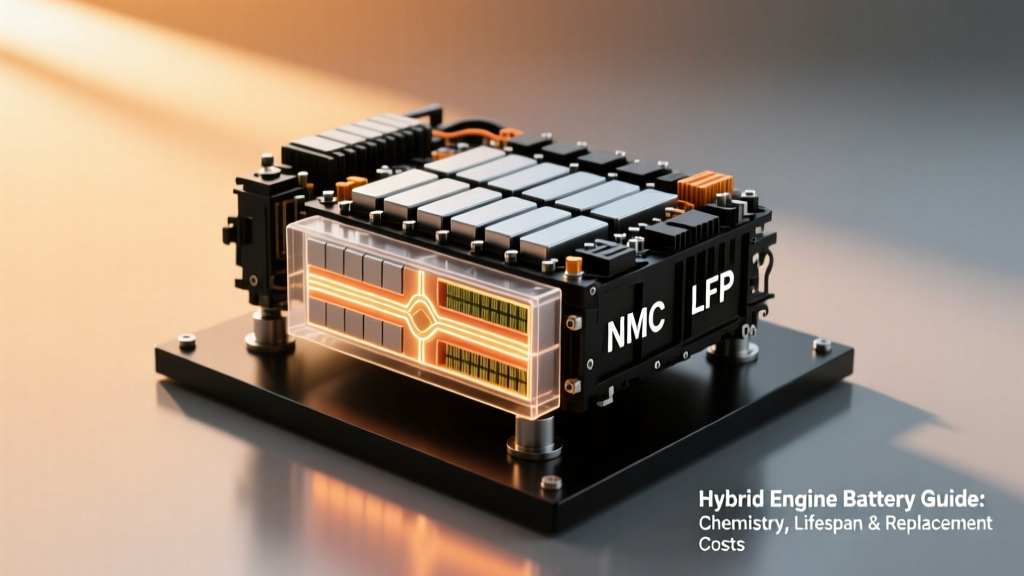
The Escalade IQ uses GM's Ultium pouch-cell format with an NCMA cathode — a variant of the broader NMC (nickel-manganese-cobalt) family that adds aluminum for improved thermal stability and cycle life. This is not an LFP (lithium iron phosphate) pack, and there's a good engineering reason for that choice.
| Attribute | LFP (Lithium Iron Phosphate) | NMC / NCMA (Nickel-based) |
|---|---|---|
| Energy Density | Lower (~160–180 Wh/kg cell-level) | Higher (~230–290 Wh/kg cell-level) |
| Cycle Life | Excellent (3,000–5,000+ cycles to 80% SoH) | Good (1,000–2,000 cycles to 80% SoH) |
| Cold-Weather Performance | Poor — significant range loss below freezing | Better — retains more capacity in cold |
| Cost per kWh | Lower (no cobalt or nickel) | Higher (commodity-priced metals) |
| Thermal Stability | Excellent — very resistant to thermal runaway | Good — requires more active thermal management |
| Typical Use Case | Standard-range sedans, fleet, commercial | Long-range SUVs, trucks, performance vehicles |
| State-of-Charge Recommendation | Can charge to 100% daily without major penalty | Best kept between 20–80% for daily use |
For a 7,000+ pound luxury SUV that needs to deliver 450 miles of range and 750 horsepower, NMC/NCMA is the pragmatic choice. The higher energy density lets GM fit 200 kWh without the pack becoming unmanageably heavy or large. LFP's lower energy density would require an even bigger, heavier pack to hit the same range target — a non-starter in a vehicle already pushing the limits of curb weight.
The trade-off is that NCMA cells degrade somewhat faster than LFP and are more sensitive to sustained high states of charge. This makes daily charging habits more impactful on the Escalade IQ than they would be on an LFP-equipped vehicle like the Tesla Model 3 Standard Range.
How Long Do EV Batteries Actually Last?
The short answer: far longer than most buyers fear. Real-world fleet data from multiple sources shows that modern liquid-cooled EV batteries like the Ultium pack in the Escalade IQ typically lose 5–10% of original capacity over the first 100,000 miles, with the degradation curve flattening significantly after the initial break-in period.
Typical EV Battery Degradation Curve (Liquid-Cooled NMC/NCMA):
- Year 1 / 15,000 miles: ~2–4% capacity loss (initial formation loss)
- Year 3 / 45,000 miles: ~5–7% cumulative loss
- Year 5 / 75,000 miles: ~7–9% cumulative loss
- Year 8 / 120,000 miles: ~10–13% cumulative loss
- Year 10 / 150,000 miles: ~12–17% cumulative loss (varies heavily with usage)
Sources: Recurrent Auto fleet data, Geotab longitudinal studies, and GM's own Ultium validation testing. Individual results vary based on climate, charging habits, and DC fast-charge frequency.
For the Escalade IQ's 200 kWh pack, a 10% loss at 100,000 miles means you'd still have roughly 180 kWh usable — enough for around 405 miles of range. Even at a pessimistic 15% loss at 150,000 miles, you're looking at ~170 kWh and approximately 380 miles. The battery will almost certainly outlast the vehicle's useful economic life.
GM validated the Ultium cells through extensive durability testing, including thousands of equivalent full charge-discharge cycles at various temperatures. The liquid thermal management system in the Escalade IQ actively heats and cools the pack to keep cells in their optimal temperature window (roughly 68–95°F / 20–35°C), which is the single biggest factor in longevity.
What the Battery Warranty Covers — and What It Doesn't
GM backs the Escalade IQ's battery pack with its standard EV powertrain warranty: 8 years or 100,000 miles, whichever comes first. This is consistent with the federal minimum mandated by the EPA and matches most competitors in the luxury EV space.
| Component | Coverage Period | Details |
|---|---|---|
| High-Voltage Battery Pack | 8 years / 100,000 miles | Capacity retention guaranteed above 70% of original |
| Battery Management System (BMS) | 8 years / 100,000 miles | Electronics and cell-balancing covered |
| Electric Drive Motors | 8 years / 100,000 miles | Front and rear motors included |
| Power Electronics (Inverter) | 8 years / 100,000 miles | DC-DC converter, onboard charger included |
| Thermal Management System | 5 years / 60,000 miles | Coolant pumps, heaters — under bumper-to-bumper |
| 12V Auxiliary Battery | 3 years / 36,000 miles | Standard lead-acid or lithium 12V — separate from HV pack |
The critical threshold is 70% capacity retention. If your Escalade IQ's battery drops below 70% of its original 200 kWh capacity (i.e., below ~140 kWh usable) within the warranty period, GM is obligated to repair or replace the pack at no cost. In practice, hitting that threshold within 8 years or 100,000 miles would be extraordinarily unusual based on current degradation data.
Important caveats: the warranty does not cover damage from accidents, flooding, unauthorized modifications, or use of non-approved charging equipment. It also doesn't cover gradual capacity loss above the 70% threshold — that's considered normal wear. For full warranty documentation, refer to your vehicle's warranty booklet or Cadillac's official warranty page.
EV Battery Replacement Cost: What Escalade IQ Owners Should Know
Battery replacement is the number-one fear among EV shoppers, so let's put real numbers to it. For a pack as large as the Escalade IQ's 200 kWh Ultium unit, an out-of-warranty replacement would be one of the most expensive in the industry.
| Vehicle Class / Battery Size | Estimated Replacement Cost | Typical Replacement Timeline |
|---|---|---|
| Compact EV (50–65 kWh) | $8,000–$14,000 | Rarely needed before 200,000+ miles |
| Midsize EV / Crossover (75–100 kWh) | $14,000–$22,000 | Rarely needed before 180,000+ miles |
| Large SUV / Truck (100–150 kWh) | $18,000–$30,000 | Extremely rare; most packs outlive vehicle |
| Escalade IQ Class (200 kWh) | $30,000–$45,000+ | Extremely rare; projected 200,000+ mi lifespan |
Yes, $30,000–$45,000 is a serious number. But context matters enormously:
- Most batteries never need full replacement. Fleet data consistently shows that fewer than 1–2% of modern liquid-cooled EV batteries require replacement due to failure. Degradation is gradual, not catastrophic.
- Module-level repair is increasingly viable. The Ultium pack is designed with modular pouch-cell trays. A technician can replace individual degraded or faulty modules rather than the entire pack, potentially reducing costs to $5,000–$12,000 for a partial repair.
- The battery will likely outlast the car. The average vehicle lifespan in the U.S. is roughly 12 years and 150,000 miles. Based on degradation projections, the Escalade IQ's pack should retain 83–88% of its capacity at that point — well above the 70% warranty threshold.
- Costs are declining. Battery pack prices have fallen roughly 90% over the past decade (from ~$1,200/kWh in 2010 to under $140/kWh in 2025, per BloombergNEF). By the time an Escalade IQ might need a replacement in the 2030s, costs will likely be substantially lower.
Factors That Accelerate (or Preserve) Battery Health
The Escalade IQ's liquid thermal management system does a lot of heavy lifting, but owner habits still meaningfully influence long-term battery health. Here's what the data shows matters most:
Battery Care Best Practices for the Escalade IQ
- Daily charging limit: Set to 80%. NCMA chemistry ages faster when held at 100% for extended periods. Use the vehicle's charge-limit setting to cap daily charging at 80%, reserving 100% for road trips. (This is different from LFP packs, which tolerate daily 100% charges.)
- Avoid frequent DC fast charging when Level 2 is available. Occasional DC fast charging is fine, but daily use of 150–200 kW chargers generates sustained heat that accelerates cell degradation. Home Level 2 charging at 11.5 kW or 19.2 kW is gentler on the pack.
- Don't let the battery sit at very low SoC. Storing the vehicle for weeks with the battery below 10% can cause copper dissolution in the anode. If storing, leave it at ~50% SoC and plug in to a Level 2 charger with a maintenance mode.
- Use preconditioning before fast charging. The Escalade IQ's navigation system will automatically precondition the battery when a DC fast charger is set as your destination. This brings cells to optimal temperature for charging, reducing stress and improving charge speed.
- Minimize extreme-temperature exposure when parked. While the thermal system protects the pack during operation, parking in a garage during extreme heat (110°F+) or extreme cold (-20°F) reduces the energy the BMS spends on thermal maintenance.
- Keep software updated. GM periodically releases BMS calibration updates that can improve cell balancing and thermal strategies. These OTA updates are free and delivered automatically when connected to Wi-Fi.
The single most impactful habit is the 80% daily charge limit. Research from Geotab's fleet study of over 10,000 EVs showed that vehicles routinely charged to 100% degraded roughly 1.5–2x faster than those kept between 20–80% SoC. For a 200 kWh pack, that difference could mean 5% vs. 10% loss over 8 years — the difference between 380 and 405 miles of range.
How to Monitor Battery Health (State of Health)
The Escalade IQ provides battery health information through the myCadillac mobile app and the in-vehicle infotainment system. Here's what you can check:
- Estimated Range at Full Charge: The simplest proxy. If your full-charge range has dropped from 450 miles to 420 miles over 30,000 miles, that's roughly a 6.7% degradation — normal and expected.
- Energy Usage History: The infotainment system tracks kWh consumed per trip and per 100 miles. Rising kWh/100mi over time at consistent driving conditions can indicate capacity loss.
- Dealer Diagnostic Scan: Cadillac service centers can perform a full battery health check that reads individual module voltages, internal resistance, and a precise State of Health (SoH) percentage. Request this during routine service visits.
- Third-Party OBD-II Tools: Devices like the OBDLink SX paired with apps such as EV Battery Health or Car Scanner can pull BMS data including SoH, cell voltage spread, and battery temperature. Note that GM's CAN bus protocol may limit the data available compared to some other brands.
If you notice a sudden range drop of more than 5–10% that doesn't correlate with cold weather or a change in driving habits, schedule a diagnostic visit. Sudden drops can indicate a faulty module or BMS calibration issue — both of which are warranty-covered if within the 8-year/100,000-mile window.
Looking Ahead: Solid-State and Next-Gen Battery Tech
The battery landscape is evolving rapidly, though it's critical to separate laboratory milestones from production reality:
- Solid-state batteries (replacing the liquid electrolyte with a solid ceramic or polymer) promise higher energy density and improved safety. Toyota, Samsung SDI, and QuantumScape are targeting limited production vehicles by 2027–2029, but widespread availability in large-format packs like the Escalade IQ's is realistically a 2030+ proposition.
- Silicon-dominant anodes (replacing graphite with silicon to boost energy density by 20–40%) are entering production in smaller cells now (e.g., GM's partnership with SES AI) but face cycle-life and swelling challenges at scale. Expect integration into Ultium-derived packs in the 2028–2030 timeframe.
- Sodium-ion batteries offer a lower-cost alternative for standard-range applications but have significantly lower energy density. These are unlikely to appear in a luxury long-range SUV but could serve future entry-level EVs.
For a current Escalade IQ buyer, these developments are informational rather than actionable. The NCMA Ultium pack in today's vehicle is a mature, well-validated technology that will serve reliably for the vehicle's lifespan. Waiting for solid-state means waiting at least 4–5 years for production availability in this vehicle class, with no guarantee of pricing or availability.
Frequently Asked Questions
How long do EV batteries last in years and miles?
Modern liquid-cooled EV batteries like the Escalade IQ's Ultium pack are designed to last 150,000–200,000+ miles while retaining 70–85% of original capacity. In years, that typically translates to 12–15 years of normal use. Fleet data consistently shows that fewer than 2% of modern EV batteries require replacement due to failure. The battery will almost certainly outlast the vehicle's economic life.
How much does an Escalade IQ battery cost to replace?
An out-of-warranty full replacement of the 200 kWh Ultium pack is estimated at $30,000–$45,000+ based on current cell pricing and labor. However, module-level repairs (replacing individual cell trays rather than the entire pack) can cost $5,000–$12,000. More importantly, full replacements are extremely rare — the vast majority of packs retain well above 70% capacity at 150,000+ miles. Battery costs are also declining steadily and will be lower by the 2030s when a replacement might theoretically be needed.
What does the Escalade IQ battery warranty cover?
GM covers the high-voltage battery pack, battery management system, electric drive motors, and power electronics for 8 years or 100,000 miles. The warranty guarantees that the battery will retain at least 70% of its original capacity during that period. If it drops below that threshold, GM will repair or replace the pack at no cost. The warranty does not cover damage from accidents, misuse, or unauthorized modifications. The separate 12V auxiliary battery is covered under the standard 3-year/36,000-mile bumper-to-bumper warranty.
How do I check and maximize my Escalade IQ battery health?
Monitor your estimated range at full charge through the myCadillac app or infotainment system. For precise SoH data, request a battery diagnostic at your Cadillac service center. To maximize longevity: set your daily charge limit to 80%, favor Level 2 home charging over daily DC fast charging, use preconditioning when navigating to fast chargers, avoid leaving the battery at very low SoC for extended periods, and keep your vehicle's software updated for the latest BMS calibrations.
LFP vs. NMC — which battery chemistry is better and why?
Neither is universally better; they serve different priorities. LFP (lithium iron phosphate) offers longer cycle life, lower cost, better thermal safety, and tolerance for daily 100% charging — but at the cost of lower energy density and worse cold-weather performance. NMC/NCMA (nickel-based, used in the Escalade IQ) delivers higher energy density, better cold-weather range retention, and more power — but requires more careful state-of-charge management (20–80% daily) and has a somewhat shorter cycle life. For a heavy luxury SUV needing 450 miles of range, NMC/NCMA is the practical engineering choice. For a commuter sedan where range demands are lower, LFP makes strong economic sense.
Does frequent DC fast charging damage the Escalade IQ battery?
Occasional DC fast charging (a few times per week on road trips) causes negligible additional degradation thanks to the Escalade IQ's active liquid thermal management. However, daily DC fast charging — especially at high ambient temperatures — does accelerate wear. Studies show that vehicles relying primarily on DC fast charging degrade roughly 1.5x faster than those using Level 2. For daily use, a home Level 2 charger (11.5 kW or 19.2 kW) is the optimal choice for both battery health and cost.
Is the Escalade IQ eligible for the federal EV tax credit?
Tax credit eligibility under IRS §30D depends on multiple factors including the vehicle's MSRP (SUVs must be under $80,000 — the Escalade IQ exceeds this), the buyer's adjusted gross income, and battery component/critical mineral sourcing requirements. As of the 2025–2026 tax year, the Escalade IQ's MSRP above $80,000 likely disqualifies it from the new-vehicle credit. Always verify current eligibility on IRS.gov and consult a tax professional before making a purchase decision based on credit availability.
Sources: fueleconomy.gov, Cadillac Warranty Information, IRS Clean Vehicle Credits. All specifications reflect 2025–2026 model year data as published by General Motors. Real-world range and degradation figures are estimates based on fleet data and may vary.