If you're researching the Chevy Equinox EV, one question almost always surfaces before signing the purchase agreement: what happens if the high-voltage traction battery fails, and how much will it cost to replace? It's a fair concern. The battery pack is the single most expensive component in any electric vehicle, and the Equinox EV's Ultium-based system is no exception. But the reality of modern EV battery ownership is far less alarming than internet forums suggest.
This guide breaks down the Equinox EV's 85 kWh (usable) Ultium battery pack — its chemistry, real-world degradation expectations, GM's warranty coverage, and the actual replacement cost if you ever need one. We'll also cover how to monitor and maximize your battery's State of Health (SoH) over a decade or more of driving.
Equinox EV Battery Specs: Chemistry, Capacity, and Architecture
The 2024–2026 Chevrolet Equinox EV uses a single high-voltage battery pack across all trims (2LT, 3LT, RS, SS). Here are the core specifications:
| Specification | Detail |
|---|---|
| Battery Chemistry | NMC (Nickel Manganese Cobalt) — Ultium platform |
| Total / Usable Capacity | ~102 kWh total / ~85 kWh usable |
| EPA Range (FWD) | 319 miles (3LT); ~315 miles (2LT) |
| EPA Range (AWD RS/SS) | 285–307 miles depending on trim and wheels |
| Max DC Fast Charge Rate | 150 kW peak |
| 10–80% DC Fast Charge Time | ~30 minutes (at rated peak) |
| Level 2 AC Charge Rate | 11.5 kW (19.2 kW on higher trims with optional module) |
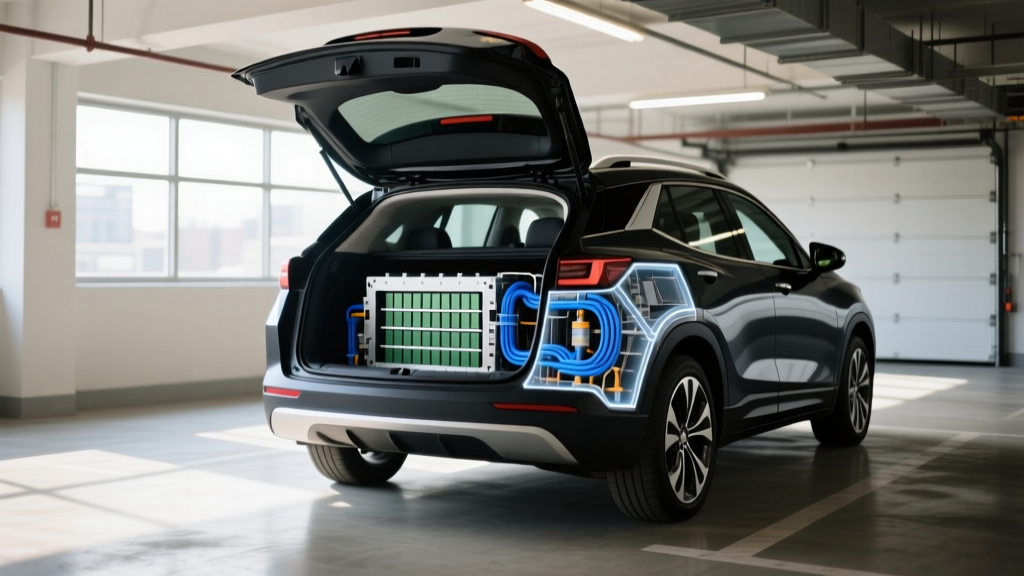
| Thermal Management | Active liquid cooling and heating |
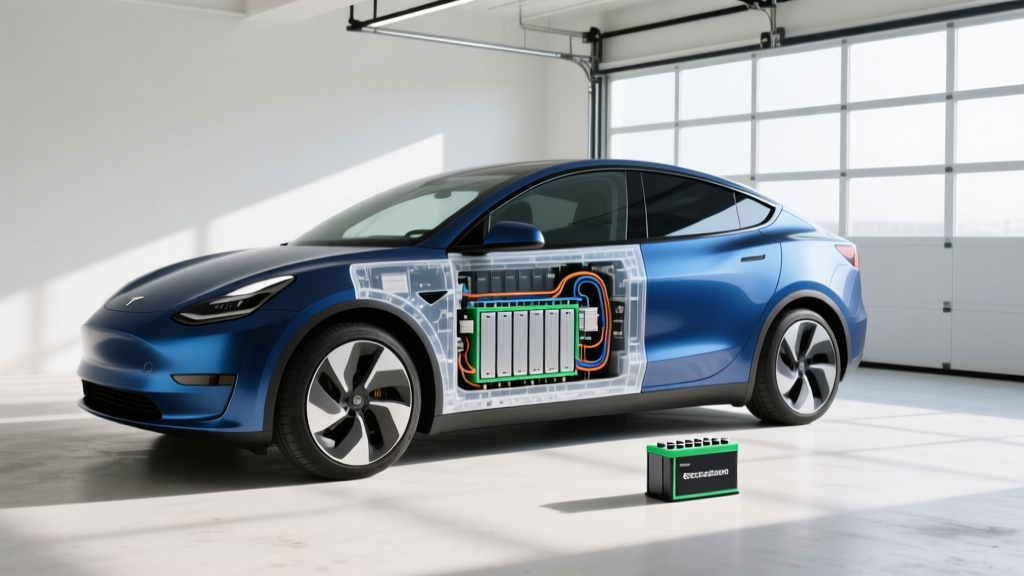
The Ultium platform uses large-format pouch cells arranged in modules. GM's modular architecture means that in certain failure scenarios, individual modules can be replaced rather than the entire pack — a significant cost advantage over older EV designs that required full-pack swaps.
LFP vs NMC: Understanding the Equinox EV's Battery Chemistry
The Equinox EV uses NMC (nickel manganese cobalt) chemistry, which is the standard across GM's Ultium platform. But with LFP (lithium iron phosphate) batteries gaining market share — notably in the Tesla Model 3 RWD and standard-range Ford Mustang Mach-E — it's worth understanding the trade-offs.
| Attribute | NMC (Equinox EV) | LFP |
|---|---|---|
| Energy Density | Higher (~250–300 Wh/kg cell-level) | Lower (~160–200 Wh/kg cell-level) |
| Range per Pack Size | More miles from same physical volume | Fewer miles; requires larger/heavier pack |
| Cycle Life | ~1,000–1,500 full cycles to 80% SoH | ~2,500–4,000+ full cycles to 80% SoH |
| Cold-Weather Performance | Better low-temp discharge and charge acceptance | More sluggish below freezing; requires more preconditioning |
| Cost (per kWh) | Higher (cobalt and nickel are expensive) | Lower (iron and phosphate are abundant) |
| Optimal Daily Charging | 80% SoC recommended for daily use | Can charge to 100% daily without significant degradation |
| Thermal Runaway Risk | Higher (though mitigated by BMS and cooling) | Lower inherent risk |
For the Equinox EV, GM chose NMC to maximize range within the vehicle's floor packaging. The 319-mile EPA rating on the FWD model would be difficult to achieve with LFP at a comparable price point and weight. However, LFP's superior cycle life means those packs often outlast NMC in sheer charge-discharge endurance — a trade-off buyers weighing long-term ownership should consider when comparing across brands.
How Long Do EV Batteries Last? Degradation Data
The question "how long do EV batteries last" deserves a data-driven answer, not a guess. Based on fleet data from GM's Ultium vehicles, industry-wide studies, and third-party analyses, here's what the numbers show:
- Year 1–2 (0–30,000 miles): Expect roughly 2–4% capacity loss. Most degradation occurs in the first year as the battery's chemistry stabilizes.
- Year 3–5 (30,000–75,000 miles): Degradation slows significantly. Cumulative loss typically reaches 6–9% by year five.
- Year 6–8 (75,000–120,000 miles): Total loss generally plateaus between 8–14%. Most packs retain 86–92% of original capacity.
- Year 10+ (120,000–200,000+ miles): Well-maintained NMC packs often retain 80–85% capacity. Some Ultium and comparable packs exceed this.
According to data aggregated by Recurrent Auto from over 15,000 EVs, the median battery at 100,000 miles retains approximately 90% of its original range. Catastrophic battery failures (sudden, complete loss of function) are rare — affecting well under 1% of modern EVs — and are almost always covered under warranty.
For the Equinox EV specifically, a 10% degradation would reduce the FWD 3LT's range from 319 miles to approximately 287 miles — still very livable for daily driving and road trips.
GM's Battery Warranty: What's Covered and for How Long
GM provides a robust high-voltage battery warranty on the Equinox EV, consistent across the Ultium lineup:
| Coverage | Terms |
|---|---|
| Duration | 8 years / 100,000 miles (whichever comes first) |
| Capacity Retention Threshold | 70% of original usable capacity |
| What Triggers a Claim | Battery SoH drops below 70%, or a defect causes module/pack failure |
| Remedy | GM will repair or replace modules/pack to bring capacity above 70% |
| Transferable? | Yes — warranty transfers to subsequent owners |
| Exclusions | Damage from accidents, flooding, improper modifications, or unauthorized repairs |
The 70% threshold is the industry standard, matching what Tesla, Ford, Hyundai, and most other manufacturers offer. In practical terms, a battery would need to lose more than 30% of its capacity — dropping the Equinox EV's range from 319 to below 223 miles — before a warranty claim would be honored. Based on current degradation curves, reaching that threshold within 8 years/100,000 miles would be highly unusual without an underlying defect.
The powertrain warranty (which covers the electric motors, onboard charger, and related components) also runs 8 years/100,000 miles. The bumper-to-bumper limited warranty is 3 years/36,000 miles.
Equinox EV High Voltage Battery Replacement Cost
This is the figure that drives the most anxiety, so let's put it in context with actual numbers.
| Scenario | Estimated Cost | Notes |
|---|---|---|
| Full pack replacement (out of warranty) | $14,000–$18,000+ | Parts + labor at a GM dealer; price varies by market and year |
| Single module replacement | $1,500–$3,500 per module | Ultium's modular design allows targeted repair; pack contains multiple modules |
| Under warranty | $0 to owner | GM covers parts and labor if SoH < 70% within 8yr/100k mi |
| Third-party refurbishment | $8,000–$12,000 | Emerging market; availability limited for newer Ultium packs as of 2026 |
A full-pack replacement at $14,000–$18,000+ is a significant expense, but several factors reduce the real-world risk:
- Most batteries outlive the car. The average vehicle lifespan in the US is approximately 12 years and 150,000+ miles. Data shows most EV batteries retain 80%+ capacity at that point, meaning a full replacement is statistically unlikely.
- Modular repair is possible. GM's Ultium architecture allows dealers to diagnose and replace individual modules rather than the entire pack. A single module failure — the most common out-of-warranty scenario — costs a fraction of a full swap.
- Battery prices continue falling. Pack-level pricing has dropped from over $1,000/kWh in 2010 to approximately $130–$140/kWh by 2025–2026, per BloombergNEF. A replacement pack in 2034 will almost certainly cost less than today's estimates.
- The 8-year/100,000-mile warranty covers the highest-risk period. Manufacturing defects and early-life failures are caught during this window.
For comparison, a gas vehicle's engine or transmission replacement can cost $4,000–$8,000+, and those repairs are far more common at high mileage than an EV battery failure.
Factors That Affect Equinox EV Battery Life
Not all miles are created equal when it comes to battery wear. These factors have the most measurable impact on long-term State of Health:
Battery Care Best Practices for the Equinox EV
- Limit routine DC fast charging. Occasional road-trip fast charging is fine, but daily use of 150 kW DCFC accelerates degradation. Aim for Level 2 (11.5–19.2 kW) as your primary charging method.
- Set a daily charge limit of 80%. The Equinox EV's infotainment system allows you to set a target SoC. Charging to 100% regularly stresses NMC chemistry. Reserve 100% for road trips.
- Avoid prolonged storage at extreme SoC. If the vehicle will sit unused for weeks, aim for 40–60% SoC. Don't leave it at 100% or below 10% in a hot garage.
- Use preconditioning. The Equinox EV can precondition its battery before fast charging or departure. This brings the pack to optimal temperature, reducing stress during charging and improving charge speed.
- Park in shade or a garage when possible. Sustained high ambient temperatures (above 95°F) accelerate calendar degradation. The liquid thermal management system helps, but reducing heat soak is always beneficial.
- Don't obsess over regen braking settings. While aggressive regen increases charge-discharge micro-cycles, the effect on long-term degradation is negligible compared to SoC and temperature habits.
The single biggest factor under your control is state of charge. An NMC battery held at 80% average SoC will degrade measurably slower than one routinely charged to 100% and left sitting. The Equinox EV's charge-limit setting exists for exactly this reason — use it.
How to Check Your Equinox EV Battery Health (SoH)
Monitoring your battery's State of Health doesn't require special equipment. Here are the methods available to Equinox EV owners:
1. myChevrolet App and OnStar Diagnostics
The myChevrolet app provides vehicle health reports that include battery status. OnStar can run remote diagnostics on the high-voltage system. While these don't display a precise SoH percentage, they flag anomalies and confirm the system is operating within normal parameters.
2. OBD-II Dongle with EV-Capable Apps
Third-party OBD-II readers paired with apps like Car Scanner or EVNotify can pull detailed battery data from the vehicle's CAN bus, including estimated SoH percentage, cell voltage variance, and pack temperature. This is the most granular data available to owners without dealer tools.
3. Dealer Diagnostic Scan
A GM dealer can run a full battery health report showing individual module voltages, capacity estimates, and an official SoH percentage. Request this during routine service visits, especially as you approach the 8-year/100,000-mile warranty boundary.
4. Range Tracking Over Time
The simplest method: track your real-world range at a consistent SoC (e.g., 80%) over months and years. If your 80% charge consistently yields 240 miles in year one but only 210 miles by year five, that's a useful degradation indicator. The Equinox EV's energy usage display (kWh/100 mi) in the driver information center helps you calculate efficiency changes.
Emerging Battery Tech: What's Next After Ultium
GM and the broader industry are investing heavily in next-generation battery technology. Here's what's on the horizon — with realistic timelines:
Silicon-dominant anode batteries: Companies like Sila Nanotechnologies and Group14 are developing silicon-based anode materials that increase energy density by 20–40% compared to graphite. GM has announced partnerships in this space. Expect initial production applications in the 2027–2029 timeframe, likely in premium models first.
Solid-state batteries: These replace the liquid electrolyte with a solid material, offering higher energy density, faster charging, and improved safety. Toyota, Samsung SDI, and QuantumScape are leading development. However, mass production at automotive scale remains challenging. Realistic timelines for widespread availability are 2028–2032+, and initial applications will likely be in high-end vehicles before reaching mainstream models like the Equinox EV segment.
Sodium-ion batteries: CATL and other manufacturers are commercializing sodium-ion packs that eliminate lithium, cobalt, and nickel entirely. These are lower-cost and lower-energy-density, making them better suited for smaller or budget EVs. They may appear in entry-level models by 2027–2028.
None of these technologies are currently available in production vehicles as of 2026. The Equinox EV's NMC Ultium pack represents current-generation technology that is mature, well-understood, and backed by extensive warranty coverage.
Equinox EV Battery FAQ
How long will the Chevy Equinox EV battery last?
Based on degradation data from comparable Ultium and NMC packs, expect the Equinox EV battery to retain 85–92% of its original capacity at 100,000 miles and 80–85% at 150,000 miles with normal use. Most packs will outlast the vehicle itself. GM's warranty guarantees at least 70% capacity for 8 years or 100,000 miles.
How much does an Equinox EV battery replacement cost out of warranty?
A full high-voltage pack replacement is estimated at $14,000–$18,000+ including parts and labor at a GM dealership. However, the Ultium platform's modular design allows individual module replacement for $1,500–$3,500 per module, which covers the most likely failure scenario. Battery pricing is also trending downward year over year.
Does the Equinox EV battery warranty transfer to a second owner?
Yes. GM's 8-year/100,000-mile battery warranty is fully transferable to subsequent owners. This supports resale value and provides protection for used-EV buyers. The warranty is tied to the vehicle's VIN, not the original purchaser.
Is it okay to DC fast charge the Equinox EV regularly?
Occasional DC fast charging (1–2 times per week or on road trips) has minimal impact on battery health. Daily DCFC use, however, accelerates degradation due to sustained high temperatures and high C-rates. For daily charging, a Level 2 home charger at 11.5 kW or 19.2 kW is the best practice for long-term SoH.
Should I charge my Equinox EV to 100% every night?
No. For NMC chemistry, routinely charging to 100% and holding at full state of charge accelerates calendar degradation. Set your daily charge limit to 80% using the vehicle's built-in setting. Charge to 100% only when you need maximum range for a long trip, and try to depart shortly after reaching full charge rather than letting it sit at 100%.
Does cold weather damage the Equinox EV battery?
Cold temperatures reduce range temporarily (expect 20–30% loss below freezing) due to increased resistance and cabin heating demand, but they do not cause permanent damage. The Equinox EV's active liquid thermal management system warms the battery during operation and charging. Preconditioning before departure or charging helps restore performance. Extreme heat is more damaging to long-term battery health than cold.
What happens if a single battery module fails?
GM's Ultium platform is designed for modular service. A dealer can identify the specific failing module, replace it individually, and rebalance the pack. This targeted repair costs far less than a full pack replacement — typically $1,500–$3,500 per module — and restores the pack to normal function.