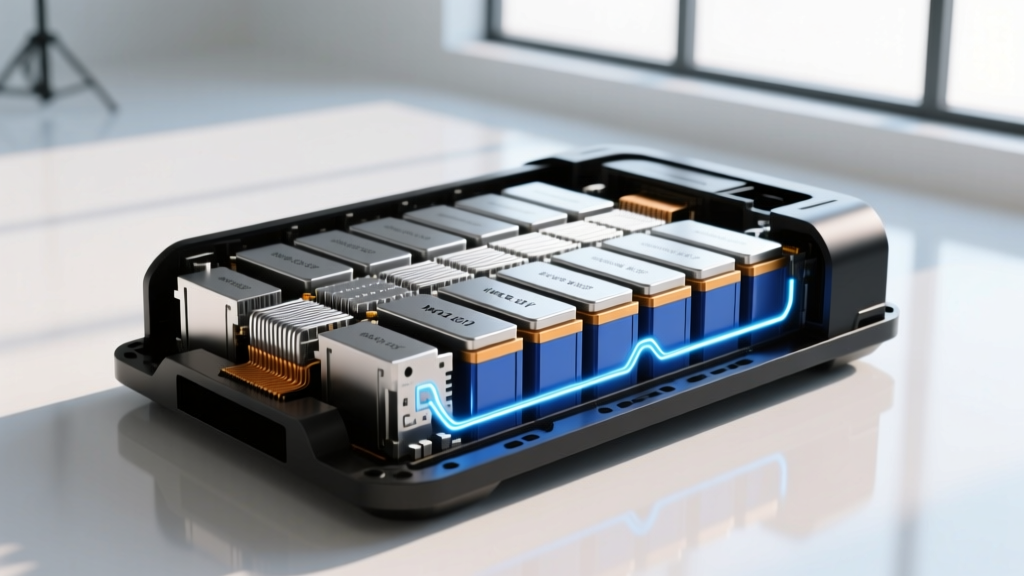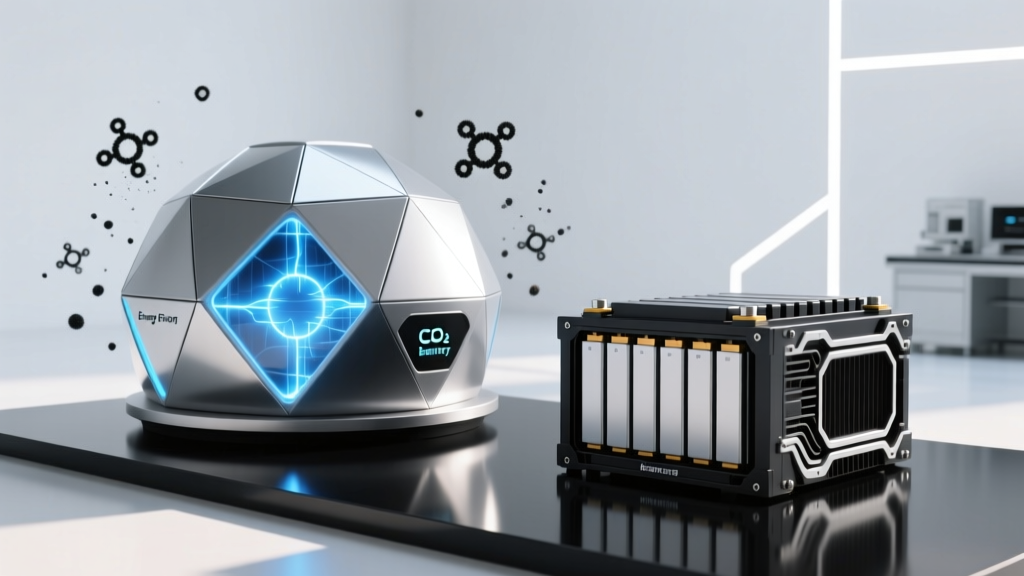
If you've been following energy-storage news, you may have encountered the term Energy Dome CO2 battery — a grid-scale storage system that uses compressed carbon dioxide to store and dispatch electricity. It's a fascinating technology for utility-scale applications, but it raises a natural question for electric-vehicle shoppers: how does this compare to the lithium-ion battery powering your EV? The short answer is that CO2-based thermodynamic storage and EV traction batteries solve fundamentally different problems. One stores megawatt-hours for the grid; the other packs hundreds of kilowatt-hours into a 4,500-pound vehicle. Understanding that distinction — and the real science behind your EV's battery — is what actually matters when you're deciding what to buy and how to care for it.
This guide covers the chemistry, degradation realities, warranty protections, replacement economics, and emerging technologies that define EV battery ownership in 2026.
What Is an Energy Dome CO2 Battery (And Why It Isn't in Your EV)?
Energy Dome, an Italian energy company, developed a system that compresses CO₂ into a liquid state, stores it in insulated tanks, and then expands it back through a turbine to generate electricity on demand. The round-trip efficiency hovers around 75%, and the system is designed for long-duration grid storage — think 10+ hours of dispatchable power at the multi-megawatt scale.
For EV buyers, the relevance is indirect but real: grid-scale storage like Energy Dome's helps stabilize the electricity that ultimately charges your car. More renewables plus more long-duration storage means cleaner, potentially cheaper electrons flowing into your Level 2 home charger. But the battery in your Tesla Model Y, Ford Mustang Mach-E, or Hyundai Ioniq 5 relies on lithium-ion chemistry — specifically either NMC (nickel manganese cobalt) or LFP (lithium iron phosphate) — because those chemistries offer the energy density and charge/discharge rates that vehicles demand.
LFP vs NMC/NCA: The Chemistry That Actually Powers Your EV
Every mainstream EV sold in the U.S. in 2026 uses one of two lithium-ion cathode chemistries. The choice between them affects range, longevity, cold-weather behavior, and price.
| Attribute | LFP (Lithium Iron Phosphate) | NMC / NCA (Nickel-based) |
|---|---|---|
| Energy Density | ~160–180 Wh/kg (lower) | ~220–260 Wh/kg (higher) |
| Cycle Life | 3,000–5,000+ cycles to 80% SoH | 1,500–2,500 cycles to 80% SoH |
| Cold-Weather Performance | Moderate range loss; slower charging in cold | Better low-temp conductivity |
| Cost per kWh | ~$90–$110 (lower) | ~$120–$150 (higher) |
| Thermal Stability | Excellent — less prone to thermal runaway | Good, but requires more active cooling |
| Recommended Daily SoC | Can charge to 100% regularly | Best kept at 80% daily; 100% for trips |
| Common Vehicles (2026) | Tesla Model 3/Y RWD, Ford Mustang Mach-E Select, BYD models | Tesla Model 3/Y Long Range, Hyundai Ioniq 5, Rivian R1T, BMW iX |
| Cobalt Content | Zero | Varies; trending lower |
The practical takeaway: If you prioritize maximum range per charge and don't mind managing state of charge, NMC/NCA delivers. If you want a battery you can charge to 100% every night without anxiety and plan to keep the car for 150,000+ miles, LFP's cycle-life advantage is significant. According to fueleconomy.gov, the 2026 Tesla Model 3 RWD (LFP, ~60 kWh usable) achieves an EPA-estimated 272 miles, while the Long Range AWD (NMC, ~79 kWh usable) reaches 363 miles — illustrating the energy-density gap in real vehicles.
How Long Do EV Batteries Actually Last?
The fear that EV batteries need replacement every few years is not supported by fleet data. Most modern lithium-ion packs are engineered to outlast the vehicle's economic life.
Typical Degradation Trajectory (Fleet & Owner Data):
- Year 1: 2–5% capacity loss (initial formation stabilization)
- Years 2–4: ~1–2% loss per year (linear phase)
- Years 5–8: ~1% loss per year (plateau phase)
- 10-year / 150,000-mile expectation: 80–88% original capacity retained
A 2024 study by Geotab analyzing over 10,000 EVs found an average annual degradation rate of 1.8%, with most vehicles retaining over 80% capacity after 10 years. Tesla's own 2024 Impact Report showed Model S/X fleets retaining approximately 85% range at 150,000 miles.
To be direct: a battery replacement at 60,000 miles is extraordinarily rare. The vast majority of EV batteries will deliver 150,000–200,000+ miles before capacity drops below the 70–80% threshold where you'd notice a meaningful range reduction on a daily basis. Many will outlast the car's body and suspension.
What the Battery Warranty Actually Covers
Federal law mandates a minimum 8-year / 100,000-mile warranty on EV battery packs for emissions-related components, and most manufacturers exceed this baseline. Here's what current warranties look like across major brands:
| Manufacturer | Warranty Period | Mileage Cap | Capacity Retention Threshold |
|---|---|---|---|
| Tesla (Model 3/Y) | 8 years | 100,000–120,000 mi | 70% |
| Hyundai / Kia | 10 years | 100,000 mi | 70% |
| Ford (Mach-E, F-150 Lightning) | 8 years | 100,000 mi | 70% |
| General Motors (Ultium) | 8 years | 100,000 mi | 70% |
| BMW | 8 years | 100,000 mi | 70% |
| Rivian | 8 years | 120,000 mi | 70% |
The critical detail is the capacity retention threshold. If your battery's State of Health (SoH) drops below 70% within the warranty period, the manufacturer will repair or replace it — typically by swapping in a refurbished pack that meets the threshold, not necessarily a brand-new unit. Keep your charging receipts and service records; some manufacturers require proof of proper maintenance.
EV Battery Replacement Cost: The Real Numbers
Out-of-warranty battery replacement is the scenario that generates headlines, but context matters enormously. Here's what replacements actually cost in 2026:
| Vehicle / Battery Size | Battery Capacity | Estimated Replacement Cost | Typical Replacement Timeline |
|---|---|---|---|
| Tesla Model 3 RWD (LFP) | ~60 kWh | $10,000–$13,000 | Rarely before 200,000 mi |
| Tesla Model Y Long Range (NMC) | ~79 kWh | $13,000–$16,000 | Rarely before 180,000 mi |
| Hyundai Ioniq 5 (NMC) | ~77.4 kWh | $12,000–$15,000 | Rarely before 180,000 mi |
| Ford F-150 Lightning Ext. Range | ~131 kWh | $18,000–$25,000 | Rarely before 150,000 mi |
| Chevrolet Equinox EV | ~85 kWh | $12,000–$14,000 | Rarely before 180,000 mi |
These figures include the pack and labor but can vary by region and dealer. The important framing: most EV batteries never need replacement during typical ownership. If you lease for 3 years or sell at 100,000 miles, battery replacement cost is a theoretical concern, not a practical one. If you plan to drive 250,000 miles, budget for it the same way you'd budget for a transmission rebuild on a gas car — possible, but not probable early.
Five Factors That Actually Determine Battery Longevity
1. State of Charge Habits (Biggest Impact)
- NMC/NCA: Keep daily SoC between 20–80%. Reserve 100% charges for road trips. Sustained storage at 100% accelerates calendar degradation.
- LFP: Charge to 100% at least once a week — the BMS needs full-charge calibration, and LFP chemistry tolerates high SoC without significant penalty.
2. DC Fast Charging Frequency
- Occasional DC fast charging (1–2 times per week) has minimal impact on modern packs with active thermal management.
- Exclusive reliance on DC fast charging — especially at 250+ kW — can add ~1–2% additional annual degradation versus Level 2 home charging, per Geotab fleet data.
- The charge curve matters: peak kW is sustained only up to ~50–60% SoC, then tapers significantly. Charging from 80–100% on DC is painfully slow and thermally stressful.
3. Temperature Exposure
- Extreme heat is worse than extreme cold for long-term degradation. Parking in shade or a garage in Phoenix summers matters more than winter parking in Minneapolis.
- Cold weather reduces range temporarily (15–30% loss at 20°F) but doesn't permanently damage the battery if you precondition before driving and charging.
- Vehicles with heat pumps (standard on most 2026 EVs) manage cabin and battery temperature more efficiently, reducing thermal cycling stress.
4. Depth of Discharge
- Shallow cycles (e.g., 60% → 30% → recharge) are gentler than deep cycles (95% → 5% → recharge).
- For daily commuting of 30–50 miles, you're naturally doing shallow cycles — this is ideal.
5. Storage Conditions
- If storing an EV for 2+ weeks, set SoC to ~50% and plug into Level 1 or Level 2 with a scheduled-departure or maintenance mode. Never store at 100% or below 10%.
How to Check and Monitor Your Battery's State of Health
State of Health (SoH) is the percentage of original capacity your battery can still hold. A new EV starts at 100% SoH; a battery at 85% SoH holds 85% of its original kWh.
In-vehicle tools:
- Tesla: Service menu → Battery Health test (takes ~24 hours, measures actual capacity)
- Hyundai/Kia: EV-specific battery diagnostic via the infotainment system (varies by model year)
- Most brands: The vehicle's estimated range display, compared to original EPA range at a full charge, provides a rough SoH proxy
Third-party options:
- OBD-II apps like LeafSpy (Nissan), TeslaFi, or Scan My Tesla can read pack voltage, cell imbalance, and estimated capacity.
- Dealer diagnostics: Request a battery health report during routine service — most manufacturers can pull a detailed SoH measurement.
- Geotab / Fleet analytics: For fleet operators, continuous SoH monitoring platforms provide degradation curves over time.
If your SoH drops below 70% within the warranty period, document it immediately and contact the manufacturer. Outside warranty, a battery at 70% SoH still has meaningful life — a 300-mile EPA vehicle would offer ~210 miles of range, which remains practical for most commutes.
Emerging Battery Tech: Solid-State, Silicon Anode, and Beyond
The battery landscape is evolving, but timeline honesty matters. Here's where next-generation technologies actually stand in 2026:
Solid-State Batteries: Toyota, Samsung SDI, and QuantumScape have demonstrated prototype cells with 400+ Wh/kg energy density and faster charging. However, manufacturing yield, cost, and scale remain unsolved for mass production. Toyota has announced limited solid-state deployment in select models for 2027–2028, but widespread availability across mainstream EVs is realistically a 2030+ proposition. These are announced and in development — not currently available in any production vehicle you can buy today.
Silicon Anode Technology: Companies like Sila Nanotechnologies and Group14 are integrating silicon-dominant anodes into cells, boosting energy density by 20–40% over graphite anodes. Early commercial deployments are appearing in premium vehicles (the Mercedes G-Class electric SUV uses silicon-anode cells from Group14). Expect broader adoption by 2027–2028 as costs decline.
Sodium-Ion Batteries: CATL and BYD have begun producing sodium-ion cells for lower-cost, shorter-range EVs in China. Energy density (~140 Wh/kg) limits these to urban runabouts, but the cost advantage (no lithium, no cobalt) is compelling. U.S. availability remains limited and uncertain.
None of these technologies invalidate current lithium-ion purchases. Today's NMC and LFP packs are mature, well-understood, and warrantied for a decade. Waiting for solid-state is a valid strategy only if your purchase timeline extends beyond 2029.
Frequently Asked Questions
How long do EV batteries last in years and miles?
Based on fleet data from Geotab and manufacturer reports, most modern EV batteries retain 80–88% of original capacity at 10 years or 150,000 miles. Many will exceed 200,000 miles before dropping below 70% capacity. The battery is designed to last the life of the vehicle in the majority of ownership scenarios.
How much does it cost to replace an EV battery?
Out-of-warranty replacement costs range from approximately $10,000 for a ~60 kWh LFP pack (Tesla Model 3 RWD) to $25,000 for a ~131 kWh pack (Ford F-150 Lightning Extended Range). However, most batteries never require replacement during typical ownership. Under warranty, replacement is free if SoH drops below 70% within 8 years / 100,000 miles.
What does the EV battery warranty actually cover?
Manufacturer warranties cover battery capacity loss below a defined threshold — typically 70% of original capacity — within 8 years and 100,000 miles (Hyundai/Kia offer 10 years). The warranty covers defects and excessive degradation, not damage from accidents, flooding, or improper modifications. Check your specific warranty document for exclusions.
LFP vs NMC — which battery chemistry is better for me?
Choose LFP if you want maximum cycle life, can charge at home nightly (including to 100%), don't need the absolute longest single-charge range, and value cobalt-free sourcing. Choose NMC/NCA if you need maximum range per charge (road trips, long commutes), live in a very cold climate where NMC's low-temperature performance helps, and are comfortable managing daily SoC to 80%. Neither is universally "better" — the right choice depends on your driving pattern.
How do I check my EV battery's State of Health?
Use your vehicle's built-in battery health test (available on Tesla, Hyundai, and others), compare your current full-charge range to the original EPA estimate, or use an OBD-II diagnostic app like LeafSpy or TeslaFi for granular cell-level data. Dealers can also pull a formal SoH report during service visits.
Does frequent DC fast charging damage my battery?
Modern EVs with active thermal management handle DC fast charging well. Exclusive reliance on DC fast charging may add ~1–2% additional annual degradation compared to predominantly Level 2 home charging. The bigger concern is charging above 80% SoC on DC fast chargers, where the charge curve tapers and heat generation increases. For daily use, Level 2 home charging remains the gold standard for battery longevity.
Is an Energy Dome CO2 battery relevant to my EV purchase?
Not directly. Energy Dome's CO₂ battery system is a grid-scale, long-duration energy storage technology designed for utility applications — it stores compressed CO₂ and dispatches electricity via turbine expansion. It does not replace or compete with the lithium-ion battery in your vehicle. However, grid-scale storage systems like this support renewable energy integration, which can make the electricity powering your EV cleaner and more affordable over time.
For current federal tax credit eligibility on EV purchases — including battery sourcing requirements under IRS §30D — consult irs.gov or a qualified tax professional, as rules around critical minerals, MSRP caps, and buyer income limits apply.