The single most persistent concern among EV shoppers isn't range or charging speed—it's what happens when the battery degrades. Specifically, what does "end of life" for an EV battery actually mean, how long until you get there, and what does it cost? The short answer: most modern EV traction batteries will outlast the vehicle they're installed in, but the details matter enormously depending on chemistry, usage patterns, and climate.
This guide breaks down the real data on EV battery degradation, replacement economics, warranty coverage, and the second-life pathways that are reshaping what "end of life" even means in 2026.
What "End of Life" Actually Means for an EV Battery
In the EV industry, a battery reaches its automotive "end of life" when it can no longer hold enough charge to serve the vehicle practically—not when it stops functioning entirely. The standard threshold is 70–80% of original capacity. A battery that started with 80 kWh of usable energy and degrades to 56 kWh (70%) still functions; it just delivers significantly less range.
For a vehicle originally rated at 300 miles of EPA range, 70% capacity retention means roughly 210 miles. That's still usable for many drivers, but it crosses the threshold where manufacturers consider the battery degraded enough to trigger warranty coverage.
Critically, this is different from a battery "failing" catastrophically. Most EV batteries don't die suddenly—they lose capacity gradually over years and miles, following a curve that's steepest in the first 1–2 years and then flattens considerably. This is well-documented in long-term fleet data from manufacturers and independent trackers like Geotab's battery health study, which analyzed over 10,000 EVs across multiple model years.
How Long Do EV Batteries Actually Last?
Based on real-world fleet data and manufacturer testing, most modern liquid-cooled EV batteries retain 85–92% of original capacity after 100,000 miles and approximately 8 years of typical use. Reaching the 70% threshold that defines automotive end of life typically requires 150,000–300,000 miles depending on chemistry, thermal management, and usage patterns.
Here's what the degradation data looks like across major chemistry types:
Typical Degradation Curves by Chemistry
| Milestone | NMC/NCA (Average) | LFP (Average) | Notes |
|---|---|---|---|
| Year 1 / 15k mi | ~3–5% loss | ~2–4% loss | Initial calendar aging; steepest early drop |
| Year 3 / 45k mi | ~6–9% loss | ~4–7% loss | Curve flattens significantly |
| Year 5 / 75k mi | ~8–12% loss | ~5–9% loss | Noticeable range reduction on NMC |
| Year 8 / 120k mi | ~10–15% loss | ~7–11% loss | Warranty period ending; most still above 80% |
| Year 12 / 180k mi | ~15–22% loss | ~10–15% loss | Approaching 70% threshold on some NMC packs |
| Year 15+ / 250k+ mi | ~25–35% loss | ~15–22% loss | LFP packs often still viable for daily driving |
Sources: Geotab fleet data, Recurrent Auto battery reports, manufacturer warranty claims data. Actual results vary by climate, charging habits, and thermal management system quality.
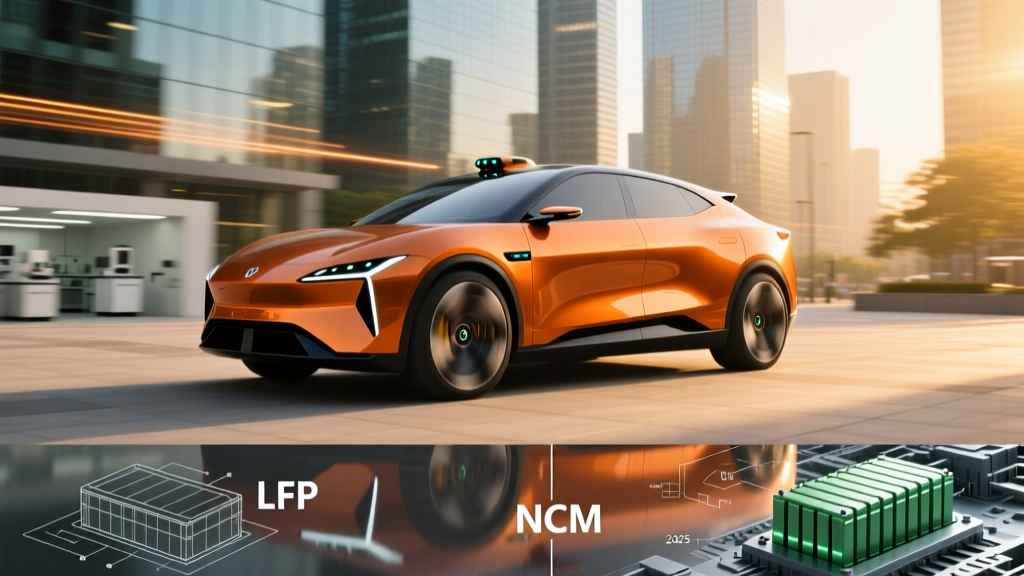
The key takeaway: LFP (lithium iron phosphate) batteries degrade more slowly than NMC/NCA (nickel manganese cobalt / nickel cobalt aluminum) packs, particularly in the mid-life years. But NMC packs offer higher energy density, meaning more range in the same physical package—which is why the choice involves real trade-offs.
LFP vs NMC/NCA: Which Chemistry Lasts Longer?
The chemistry inside your battery pack is the single biggest determinant of how it ages. Here's a detailed comparison of the two dominant chemistries in 2026 EVs:
| Attribute | LFP (Lithium Iron Phosphate) | NMC/NCA (Nickel-Based) |
|---|---|---|
| Energy density | Lower (~160–180 Wh/kg cell-level) | Higher (~220–280 Wh/kg cell-level) |
| Cycle life | 3,000–6,000+ cycles to 80% SoH | 1,000–2,500 cycles to 80% SoH |
| Calendar aging | Slower; less sensitive to high SoC storage | Faster; degrades more when stored above 80% SoC |
| Cold-weather performance | Weaker below freezing; more range loss in winter | Better low-temp discharge; less winter range penalty |
| Fast-charging tolerance | Excellent; handles frequent DC fast charging well | Good but more stress from repeated high-rate charging |
| Cost per kWh | Lower (~$80–100/kWh at cell level in 2026) | Higher (~$110–140/kWh at cell level) |
| Thermal runaway risk | Very low; inherently stable chemistry | Low but higher than LFP; requires robust BMS |
| Common in | Tesla Model 3/Y RWD, Ford Mustang Mach-E Select (2025+), BYD, Rivian Standard | Tesla Long Range, Hyundai Ioniq 5/6, BMW iX, most luxury/long-range trims |
| Best for | Daily commuters, fleet/high-mileage, warm climates | Maximum range, cold climates, performance driving |
The bottom line: If longevity is your top priority and you don't need maximum range per charge, LFP is the superior choice. If you live in a cold climate or need 300+ miles of range, NMC/NCA is still the practical pick—and modern thermal management systems have narrowed the degradation gap considerably.
EV Battery Warranty: What's Actually Covered?
Federal law mandates that EV battery warranties cover a minimum of 8 years / 100,000 miles (10 years / 150,000 miles in California and states adopting CARB standards). Most manufacturers exceed this floor. Here's how major brands structure coverage in 2026:
| Manufacturer | Warranty Term | Capacity Threshold | Notes |
|---|---|---|---|
| Tesla (Model 3/Y) | 8 yr / 120,000 mi (LR) or 100,000 mi (RWD) | 70% retention | LFP RWD packs covered to 100k mi |
| Hyundai / Kia | 10 yr / 100,000 mi | 70% retention | Among the longest calendar terms |
| Ford (Mach-E, F-150 Lightning) | 8 yr / 100,000 mi | 70% retention | Component coverage includes BMS, cooling |
| GM (Ultium-based) | 8 yr / 100,000 mi | 70% retention | Covers battery, powertrain, and related systems |
| Rivian | 8 yr / 175,000 mi (Commercial) or 120,000 mi (consumer) | 70% retention | Commercial fleet mileage is notably generous |
| BMW | 8 yr / 100,000 mi | 70% retention | Includes high-voltage battery and associated electronics |
What triggers a warranty claim? If your battery's State of Health (SoH) drops below the threshold—typically 70%—within the warranty period, the manufacturer must repair or replace the battery at no cost. In practice, most replacements involve swapping defective modules rather than the entire pack, which is faster and cheaper for the manufacturer.
Important: warranties cover defects and abnormal degradation, not damage from accidents, flooding, or improper modifications. And they specifically do not cover the 12V auxiliary battery—that's a separate, conventional component with its own warranty (typically 3 years / 36,000 miles).
EV Battery Replacement Cost: What You'll Actually Pay
If your battery degrades beyond warranty coverage, or if it suffers physical damage, replacement costs remain substantial—but they've dropped significantly since 2020. Here's the current landscape:
| Battery Size / Vehicle Class | Typical Pack Cost (2026) | Labor & Programming | Total Installed Range | Example Vehicles |
|---|---|---|---|---|
| 40–60 kWh (compact/standard range) | $4,500–$7,500 | $1,500–$2,500 | $6,000–$10,000 | Nissan Leaf, Chevy Bolt EV, base Tesla Model 3 RWD |
| 70–90 kWh (mid-size/long range) | $8,000–$14,000 | $2,000–$3,500 | $10,000–$17,500 | Tesla Model Y LR, Hyundai Ioniq 5, Ford Mach-E |
| 100–135 kWh (large/truck/SUV) | $12,000–$20,000 | $2,500–$4,000 | $14,500–$24,000 | Ford F-150 Lightning, Rivian R1T, GMC Hummer EV |
When is replacement typically needed? For most owners, it isn't. Data from Recurrent Auto shows that fewer than 5% of EVs in their study cohort required battery replacement within the first 10 years—and the vast majority of those replacements were covered under warranty due to manufacturing defects, not normal degradation.
The fear of a $20,000 out-of-pocket battery swap is largely based on early-generation EVs (2011–2017 Nissan Leafs with passive air cooling, early Chevy Bolts before the recall fix). Modern liquid-cooled packs with sophisticated battery management systems degrade far more slowly and predictably.
That said, if you plan to keep an EV past 200,000 miles and outside the warranty window, budgeting for a potential replacement—or more likely, a module-level repair—is prudent. Many dealerships and independent EV shops now offer module-level service, replacing only the degraded cells rather than the entire pack, which can cut costs by 40–60%.
Factors That Accelerate (or Preserve) Battery Health
Not all miles are created equal when it comes to battery wear. The following factors have the most measurable impact on long-term degradation:
Battery Care Checklist: Maximize Your Pack's Lifespan
- Avoid sustained 100% State of Charge: For NMC/NCA batteries, daily charging to 80% is ideal. Reserve 100% for road trips. LFP batteries tolerate 100% better and manufacturers often recommend periodic full charges for BMS calibration.
- Minimize DC fast charging when possible: Occasional fast charging is fine, but daily reliance on 150+ kW DC charging adds thermal stress. Home Level 2 charging at 7–11 kW is gentler on the pack. Tesla's own data showed vehicles that primarily used Supercharging had slightly higher degradation than those primarily charging at home.
- Precondition before fast charging: Most modern EVs automatically precondition the battery when you navigate to a DC fast charger. This brings the pack to optimal temperature (~30–35°C), reducing stress and improving charge speed. If your EV has a manual precondition option, use it.
- Avoid extreme storage states: Don't leave an NMC vehicle sitting at 100% SoC in summer heat for weeks. If storing for extended periods, aim for 40–60% SoC in a moderate-temperature environment.
- Use scheduled charging: Most EVs allow you to set charging windows. Charge during off-peak hours and set the car to finish charging shortly before you leave—this avoids the battery sitting at high SoC for hours.
- Don't obsess about cold-weather range loss: Cold temperatures temporarily reduce available capacity and increase resistance, but this is reversible. It does not cause permanent degradation the way sustained high-temperature exposure can.
The single most impactful habit? Charging to 80% daily on NMC and using Level 2 home charging as your primary method. Owners who follow this pattern consistently see degradation rates at the lower end of the ranges cited above.
How to Check Your Battery's State of Health (SoH)
State of Health (SoH) is expressed as a percentage of the battery's current maximum capacity relative to its original capacity when new. A SoH of 92% means your battery can store 92% of the energy it could when it left the factory.
How to check it:
- In-vehicle displays: Many 2026 EVs now include battery health metrics in the infotainment system. Tesla displays estimated range relative to original; Hyundai/Kia shows SoH percentage in the EV menu on recent models.
- Manufacturer apps: Tesla, Ford, BMW, and Rivian apps provide estimated range and, in some cases, direct SoH figures.
- OBD-II diagnostic tools: Devices like the OBDLink MX+ paired with apps such as EVNotify, LeafSpy (Nissan), or Scan My Tesla can read the battery management system directly for precise SoH, cell voltage variance, and pack temperature data.
- Dealer diagnostics: Any authorized service center can pull a full battery health report. Request this during routine service visits, especially as you approach warranty expiration.
- Third-party services: Companies like Recurrent Auto offer free battery health reports that compare your pack's degradation to a cohort of identical vehicles.
Check your SoH at least twice a year and always before a warranty expiration date. If you see a sudden drop (more than 2–3% in a short period), schedule a diagnostic—this can indicate a failing module rather than normal degradation.
Beyond the Car: Second-Life and Recycling Pathways
When an EV battery reaches 70% capacity and is retired from automotive service, it still holds enormous value. This is where "end of life" becomes a misnomer.
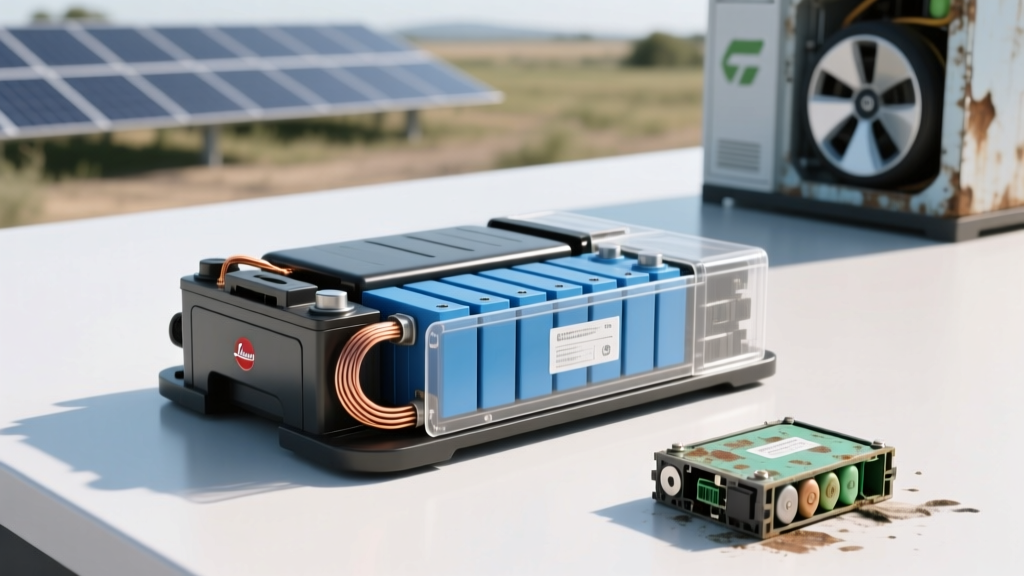
Second-life applications are the fastest-growing segment of the EV battery aftermarket. A pack that can no longer deliver 300 miles of range is perfectly suited for stationary energy storage—where weight and energy density don't matter and the duty cycle is far less demanding. Companies like Redwood Materials, Betteries, and B2U Storage Solutions are repurposing retired EV packs for:
- Residential solar energy storage (competing with new Tesla Powerwalls at lower cost)
- Commercial peak-shaving and demand-response systems
- Grid-scale frequency regulation and backup power
- Telecom tower backup batteries in developing markets
Recycling captures the remaining value when a pack is too degraded even for second-life use. Modern hydrometallurgical processes recover 95%+ of lithium, cobalt, nickel, and manganese. Redwood Materials, operating at scale in Nevada, supplies recycled cathode material directly back to battery manufacturers—creating a genuinely circular supply chain.
This secondary market is one reason battery replacement costs continue to decline: manufacturers increasingly source recycled materials, and retired packs have resale value that offsets replacement expense.
What's Next: Solid-State and Silicon Anode Batteries
Looking ahead, two technologies promise to reshape the degradation conversation entirely:
Solid-state batteries replace the liquid electrolyte with a solid ceramic, glass, or polymer material. This eliminates the primary mechanism of degradation (electrolyte decomposition) and drastically reduces fire risk. Toyota, Samsung SDI, and QuantumScape have all announced pilot production lines, with limited commercial deployment expected in 2027–2029 in select premium vehicles. Projected cycle life exceeds 5,000+ cycles with minimal degradation. However, manufacturing cost and scale remain significant hurdles—solid-state packs will not reach price parity with current lithium-ion until approximately 2030–2032.
Silicon anode technology (used by companies like Sila Nanotechnologies and Group14) replaces graphite anodes with silicon-dominant composites, increasing energy density by 20–40%. This doesn't directly improve cycle life, but it means a smaller, lighter pack can deliver the same range—reducing cost and material use. Silicon anodes are already appearing in limited production vehicles as of 2025–2026, including the Mercedes-Benz G-Class EV.
Both technologies are real and progressing, but neither is widely available in production EVs today. Current NMC and LFP packs with liquid electrolyte remain the standard for the foreseeable future—and they're already good enough to last 200,000+ miles with proper care.
Frequently Asked Questions
How long do EV batteries last in years and miles?
Most modern liquid-cooled EV batteries retain 85–92% capacity at 100,000 miles and 8 years. Reaching the 70% "end of life" threshold typically takes 150,000–300,000 miles depending on chemistry (LFP lasts longer), climate, and charging habits. Many EVs are still on their original battery at 200,000+ miles.
How much does it cost to replace an EV battery in 2026?
Full pack replacement ranges from approximately $6,000–$10,000 for compact/standard-range batteries (40–60 kWh) to $14,500–$24,000 for large truck/SUV packs (100–135 kWh), including labor. Module-level repairs can reduce this by 40–60%. Most replacements within the first 8 years / 100,000 miles are covered under warranty at no cost to the owner.
What does the EV battery warranty actually cover?
Federal law requires a minimum of 8 years / 100,000 miles (10/150k in CARB states). Coverage applies when battery capacity drops below a stated threshold—typically 70% of original—within the warranty period. It covers defects and abnormal degradation but not accident damage, flooding, or modifications. The 12V auxiliary battery is covered separately under the standard vehicle warranty.
How do I check and maximize my EV battery health?
Monitor State of Health through your vehicle's infotainment display, manufacturer app, or an OBD-II diagnostic tool. To maximize lifespan: charge to 80% daily on NMC packs (100% is fine for LFP), use Level 2 home charging over DC fast charging when possible, precondition before fast charging, avoid prolonged storage at extreme SoC levels, and keep the battery within moderate temperature ranges when parked.
LFP vs NMC — which battery chemistry is better for longevity?
LFP (lithium iron phosphate) is superior for cycle life and calendar aging—typically lasting 3,000–6,000+ cycles versus 1,000–2,500 for NMC. LFP also tolerates frequent fast charging and 100% SoC storage better. However, NMC/NCA offers higher energy density (more range per kWh) and better cold-weather performance. For a daily commuter in a warm climate, LFP is the longevity winner. For maximum range or cold-climate driving, NMC is more practical.
Do EV batteries have value after they're removed from the car?
Yes. Retired EV batteries with 70% capacity are widely repurposed for stationary energy storage—solar integration, grid backup, and commercial peak-shaving. When they're no longer viable for second-life use, recycling recovers 95%+ of critical minerals (lithium, cobalt, nickel). This residual value is one factor keeping replacement costs on a downward trend.