The Real Cost of EV Batteries: Context Behind the Ember Analysis
When the climate research organization Ember published its analysis of battery cost trends heading into 2025, it confirmed what the EV industry has been tracking for years: lithium-ion battery pack prices have fallen dramatically, but the story is more nuanced than a single headline number. The Ember analysis battery costs 2025 data points to average pack prices dipping below $100/kWh at the cell level for the first time in some chemistries — a threshold long considered the tipping point for EV price parity with internal combustion vehicles.
But for current and prospective EV owners, the more practical questions are: What does a replacement battery actually cost in 2025-2026? How long will the pack last? And how do different chemistries affect both longevity and your wallet? This guide breaks down the data with exact figures, real-world degradation tracking, and actionable ownership advice.
LFP vs NMC/NCA: The Chemistry Decision That Affects Your Wallet
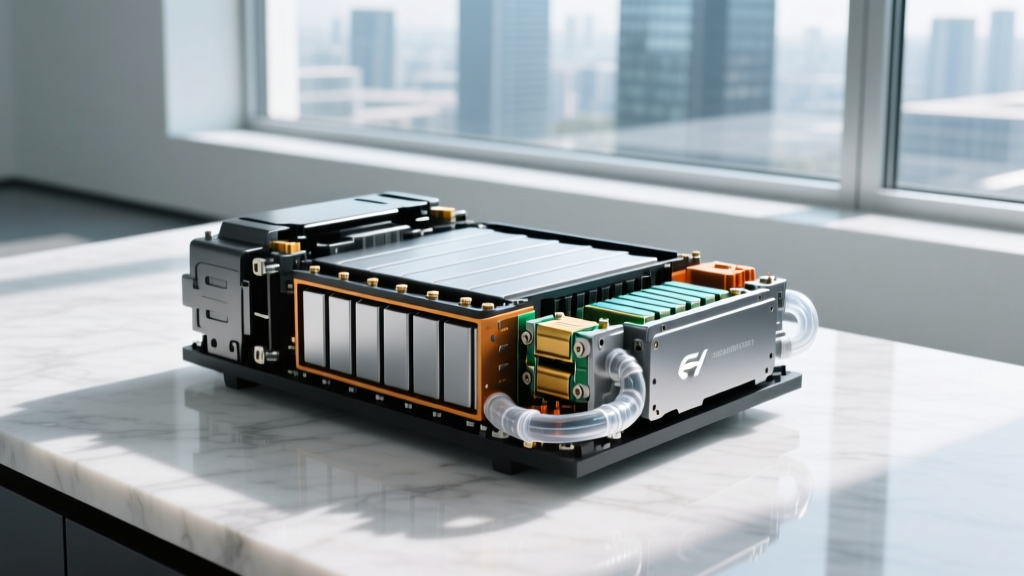
Not all EV batteries are created equal. The two dominant chemistries in 2025-2026 model-year EVs are lithium iron phosphate (LFP) and nickel manganese cobalt (NMC) — with nickel cobalt aluminum (NCA) appearing in some Tesla and Panasonic applications. Each has distinct trade-offs that directly affect range, longevity, cost, and how you should charge.
| Attribute | LFP (Lithium Iron Phosphate) | NMC/NCA (Nickel-based) |
|---|---|---|
| Energy Density | Lower (~160-180 Wh/kg cell-level) | Higher (~220-300 Wh/kg cell-level) |
| Cycle Life | 3,000-5,000+ full cycles | 1,000-2,000 full cycles |
| Cost per kWh (2025) | ~$70-85/kWh (cell) | ~$95-120/kWh (cell) |
| Cold-Weather Performance | More range loss in freezing temps (~30-40% reduction) | Better cold retention (~20-30% reduction) |
| State of Charge Recommendation | Can be charged to 100% daily | Best kept 20-80% for daily use |
| Thermal Stability | Excellent — lower runaway risk | Good — requires more active thermal management |
| Typical Applications (2025-2026) | Tesla Model 3/Y RWD, Ford Mustang Mach-E Select (LFP option), BYD models, Rivian Standard | Hyundai Ioniq 5/6, Kia EV6/EV9, Chevy Equinox EV, BMW iX, most long-range/AWD trims |
Which is better? It depends on your use case. If you drive mostly in moderate climates, charge at home daily, and want maximum cycle life with lower replacement cost risk, LFP is the pragmatic choice. If you need maximum range per kWh of battery weight, regularly drive in cold weather, or need the longest single-charge road-trip range, NMC/NCA delivers. Neither is universally superior — the right chemistry matches your driving pattern.
How Long Do EV Batteries Actually Last? Degradation Data
The fear of a dead battery at 80,000 miles persists, but real-world data tells a different story. Most modern EV battery packs are engineered to outlast the vehicle's economic life. Here's what the numbers show:
Typical Degradation Curve (Based on Fleet and Owner Data):
- Year 1 / 15,000 miles: 2-5% capacity loss (initial calibration drop)
- Year 3 / 45,000 miles: 5-8% total loss
- Year 5 / 75,000 miles: 8-12% total loss
- Year 8 / 120,000 miles: 10-17% total loss
- Year 10 / 150,000 miles: 12-22% total loss (varies heavily by chemistry and usage)
LFP packs consistently show lower degradation rates — Tesla's own impact report notes that Model 3/Y LFP packs retain approximately 92% capacity at 100,000 miles. NMC packs in vehicles like the Hyundai Ioniq 5 and Kia EV6 typically retain 88-93% at similar mileage, per owner-reported data aggregated by Recurrent Auto.
The key insight: degradation is not linear. Most capacity loss occurs in the first 20,000-30,000 miles, after which the curve flattens significantly. A pack that retains 90% at 50,000 miles is very likely to retain 82-85% at 150,000 miles — still well above the threshold where most drivers would consider replacement.
Battery Warranty Terms: What's Actually Covered
Federal regulation mandates a minimum 8-year/100,000-mile warranty on EV battery packs for emissions-related compliance, but most manufacturers exceed this baseline. Here's how major 2025-2026 model-year warranties compare:
| Manufacturer | Warranty Period | Mileage Cap | Capacity Retention Threshold |
|---|---|---|---|
| Tesla (Model 3/Y LFP) | 8 years | 120,000 miles | 70% minimum |
| Tesla (Model S/X, LR/AWD) | 8 years | 150,000 miles | 70% minimum |
| Hyundai / Kia | 10 years | 100,000 miles | 70% minimum |
| Ford (Mach-E, F-150 Lightning) | 8 years | 100,000 miles | 70% minimum |
| GM (Ultium platform) | 8 years | 100,000 miles | 70% minimum (60% for Bolt EV/EUV legacy) |
| Rivian | 8 years | 175,000 miles (Max pack) | 70% minimum |
| BMW | 8 years | 100,000 miles | 70% minimum |
What triggers a warranty claim? If your battery's State of Health (SoH) drops below the stated threshold (typically 70% of original capacity) within the warranty period, the manufacturer will repair or replace modules or the full pack at no cost. This does not cover physical damage from accidents, flooding, or unauthorized modifications. Importantly, the warranty covers capacity degradation — not just total failure. A pack that can only hold 65% of its original kWh qualifies.
EV Battery Replacement Costs: 2025-2026 Pricing Reality
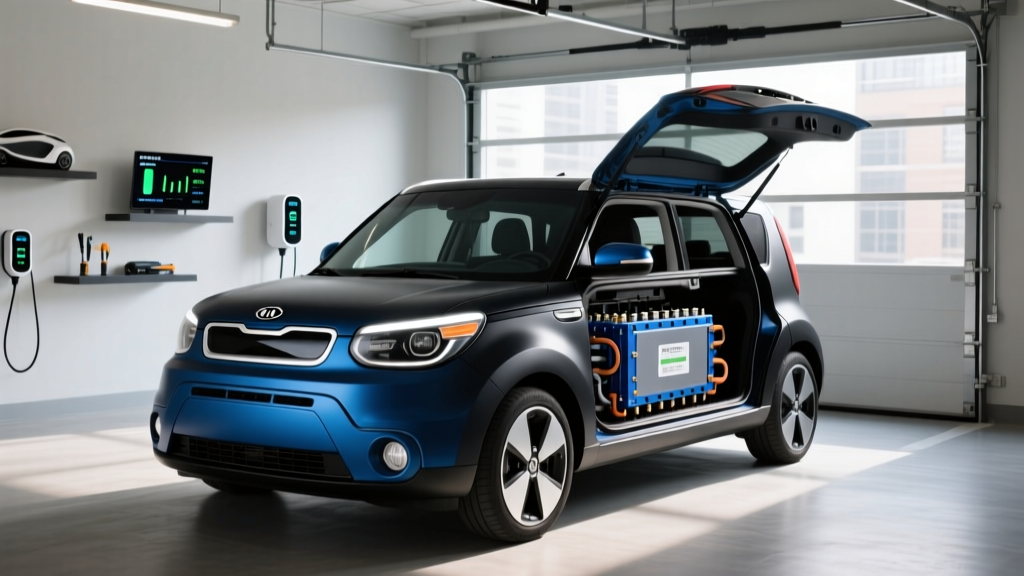
This is where the Ember analysis battery costs data becomes directly relevant to owners. While cell-level prices have dropped, the installed cost of a replacement pack — including modules, BMS (battery management system), labor, coolant, and dealer markup — remains substantial. However, full pack replacements are rare in the first 10-15 years of ownership.
| Vehicle / Pack Size | Estimated Replacement Cost (2025-2026) | Notes |
|---|---|---|
| Tesla Model 3 RWD (~57 kWh LFP) | $8,000 - $12,000 | LFP cells cheaper; module-level repair often possible |
| Tesla Model Y LR (~75 kWh NMC) | $12,000 - $16,000 | Structural pack complicates labor |
| Hyundai Ioniq 5 (~77.4 kWh NMC) | $11,000 - $15,000 | Module replacement available (~$2,500-$4,000 per module) |
| Ford F-150 Lightning Extended (~131 kWh NMC) | $18,000 - $28,000 | Largest consumer pack; high material cost |
| Chevy Equinox EV (~85 kWh Ultium NMC) | $12,000 - $17,000 | Ultium modular design may allow partial replacement |
| Rivian R1T Max Pack (~149 kWh NMC) | $22,000 - $30,000+ | Largest pack on market; limited third-party options |
| BMW iX xDrive50 (~111.5 kWh NMC) | $18,000 - $25,000 | Dealer-only service; premium labor rates |
Critical context: These figures represent worst-case full-pack replacement, which is statistically uncommon. Most out-of-warranty battery issues are resolved through module-level repair — replacing individual defective modules rather than the entire pack. A single module replacement typically costs $2,000-$5,000 depending on the vehicle. According to data from fueleconomy.gov and warranty claim records, fewer than 2-3% of EV battery packs require full replacement within the first 10 years of service.
Factors That Accelerate (or Preserve) Battery Health
Battery degradation is driven by chemistry, temperature, and charging behavior. Understanding these factors gives you direct control over your pack's lifespan.
Charging Habits
- NMC/NCA packs: Set daily charge limit to 80%. Reserve 100% charges for road trips. Avoid letting SoC drop below 10% regularly.
- LFP packs: Charge to 100% at least once per week — this chemistry requires full-charge calibration for accurate SoC estimation. Daily 100% charging does not accelerate degradation meaningfully.
- DC fast charging: Occasional use (1-2 times per week) has minimal impact. Daily DCFC does increase degradation rate by approximately 2-4% over 100,000 miles compared to Level 2-only charging, per Recurrent Auto data. Precondition the battery before fast charging when possible.
Temperature Management
- Extreme heat: Sustained exposure above 95°F accelerates electrolyte decomposition. Park in shade or garages when possible. Vehicles with active liquid cooling (Tesla, Hyundai E-GMP, GM Ultium) handle heat far better than passively cooled packs.
- Extreme cold: Charging a frozen battery without preconditioning causes lithium plating — permanent capacity loss. Always use your vehicle's preconditioning feature before charging in sub-32°F conditions.
- Storage: If storing the vehicle for weeks, leave SoC at 50-60% and keep it plugged in if possible so the thermal management system can maintain battery temperature.
Driving Patterns
- Frequent hard acceleration and high-speed driving generate excess heat in the cells. Moderate driving extends pack life.
- Regenerative braking set to moderate or high reduces mechanical brake wear and generates less heat than aggressive friction braking.
How to Monitor Your Battery's State of Health (SoH)
Most 2025-2026 EVs provide some form of battery health visibility, but the depth varies by manufacturer:
- Tesla: No native SoH percentage in the app. Owners can estimate by charging to 100% and comparing displayed range to original EPA rating. Third-party tools like TeslaFi or OBD-II dongles with apps like Scan My Tesla can pull BMS-reported SoH data.
- Hyundai/Kia: The infotainment system's EV menu displays a battery health indicator. The Hyundai/Kia app also shows estimated range at full charge, which can be cross-referenced against original specs.
- GM (Ultium): The myChevrolet/myCadillac app includes a battery health section showing estimated capacity retention.
- Ford: The FordPass app provides a battery health indicator under the vehicle status tab.
- BMW: iDrive includes a battery health diagnostic accessible through the service menu; dealers can provide a detailed SoH report.
Pro tip: Track your 100%-charge range quarterly. If your vehicle originally displayed 310 miles at 100% and now shows 275 miles at the same SoC after 40,000 miles, that's roughly 11% degradation — normal and expected. A sudden drop of 5%+ in a single month warrants a dealer diagnostic check.
What's Next: Solid-State and Silicon Anode Batteries
The battery technology landscape is evolving, but timelines matter. Here's the realistic outlook as of 2025-2026:
- Solid-state batteries: Toyota has announced limited production of solid-state-equipped EVs for 2027-2028, targeting 750+ km (WLTP) range and 10-minute 10-80% charging. Samsung SDI and QuantumScape are also in pilot production. However, solid-state packs remain significantly more expensive than current lithium-ion at scale, and widespread consumer availability is not expected before 2029-2030. These should be considered announced/preliminary — not available for purchase today.
- Silicon anode technology: Companies like Sila Nanotechnologies and Group14 are supplying silicon-dominant anode materials to manufacturers including Mercedes-Benz (for the upcoming G-Class EV) and Panasonic. Silicon anodes increase energy density by 15-25% over conventional graphite anodes. This technology is entering production vehicles in 2025-2026 in limited applications.
- Sodium-ion batteries: CATL and BYD have begun producing sodium-ion packs for lower-cost, shorter-range EVs in China. Energy density is significantly lower (~120-150 Wh/kg), making them unsuitable for long-range vehicles, but they offer cost and cold-weather advantages for urban commuter EVs. US-market availability remains uncertain.
For buyers today: current LFP and NMC chemistries are mature, well-understood, and backed by extensive warranty coverage. Waiting for solid-state is not a practical strategy unless your purchase timeline extends to 2029 or beyond.
Frequently Asked Questions
How long do EV batteries last in years and miles?
Most modern EV battery packs retain 80-90% of original capacity at 150,000 miles and 10 years of service. LFP chemistries tend toward the higher end of that range. Full pack failure before 200,000 miles is statistically rare — fewer than 2-3% of packs require replacement in the first decade. Many packs will outlast the vehicle's economic life.
How much does an EV battery cost to replace in 2025-2026?
Full pack replacement costs range from approximately $8,000 for a Tesla Model 3 RWD LFP pack to $28,000+ for a Ford F-150 Lightning Extended Range pack. However, most out-of-warranty repairs involve module-level replacement at $2,000-$5,000 per module. The Ember analysis battery costs data confirms that cell-level prices continue declining, which will gradually reduce replacement costs over the coming years.
What does the EV battery warranty actually cover?
Manufacturer warranties typically cover capacity degradation below 70% of original capacity for 8 years/100,000 miles (minimum), with some manufacturers offering 10 years or up to 175,000 miles. The warranty covers defects and abnormal degradation — not physical damage from accidents, flooding, or unauthorized modifications. If your SoH drops below the threshold within the warranty period, the manufacturer repairs or replaces the pack at no cost.
How do I check and maximize my EV battery health?
Monitor your 100%-charge range quarterly, use your vehicle's native health indicators or OBD-II tools for SoH data, and follow chemistry-appropriate charging habits: 80% daily limit for NMC/NCA, regular 100% charges for LFP. Minimize daily DC fast charging, always precondition before charging in cold weather, and avoid leaving the vehicle at very high or very low SoC for extended periods in extreme temperatures.
LFP vs NMC — which battery chemistry is better for me?
Choose LFP if you prioritize longevity (3,000-5,000+ cycles), lower replacement cost, and daily home charging convenience (100% charging is fine). Choose NMC/NCA if you need maximum range per kWh, better cold-weather performance, or are buying a long-range/AWD trim that requires higher energy density. Neither is universally better — the right choice matches your climate, driving pattern, and ownership timeline.