Every lithium-ion cell in an electric vehicle relies on an electrolyte — the liquid or gel medium that shuttles ions between the cathode and anode during charge and discharge cycles. The specific chemistry of that cell, including the electrolyte composition and cathode material, determines how much energy the battery stores, how quickly it degrades, and how it performs in freezing or scorching weather. For EV buyers and owners, understanding these electrolyte battery fundamentals isn't academic — it directly affects real-world range, long-term ownership cost, and daily charging habits.
This guide breaks down the two dominant EV battery chemistries on the market in 2026 — lithium iron phosphate (LFP) and nickel manganese cobalt (NMC/NCA) — with hard data on degradation curves, warranty terms, replacement costs, and the care practices that actually extend battery life.
LFP vs NMC/NCA: Electrolyte Battery Chemistry Trade-Offs
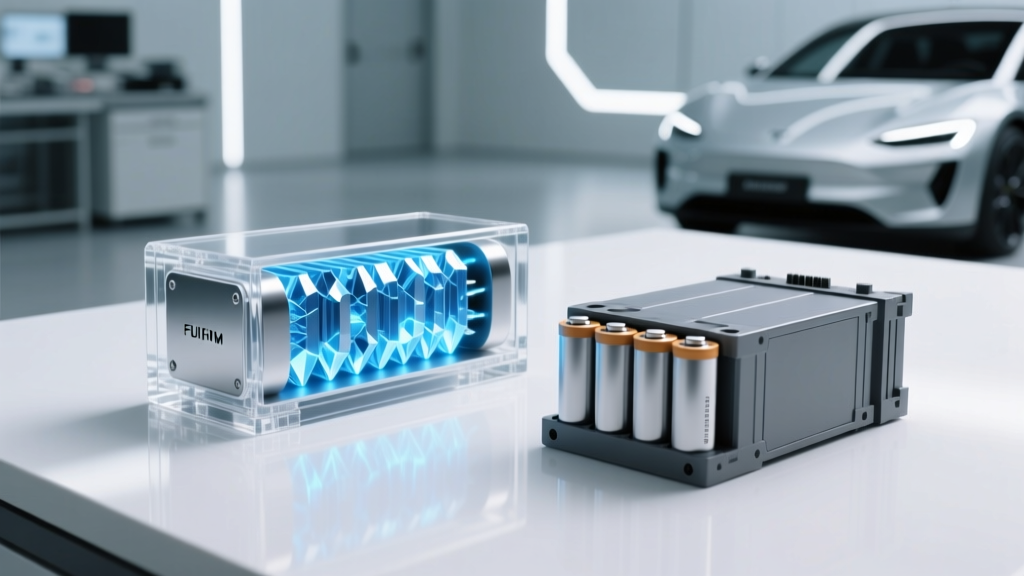
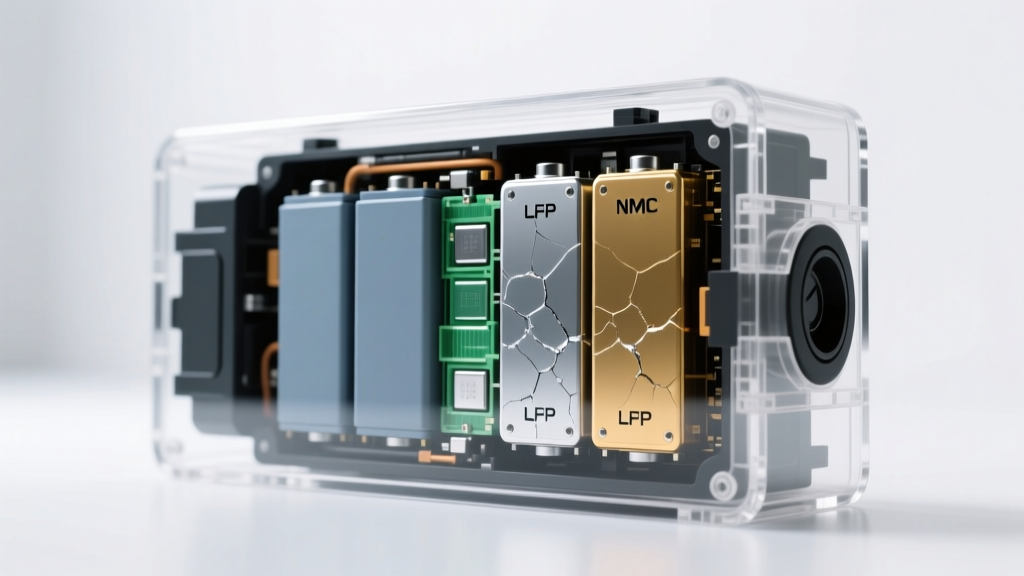
The cathode material defines the battery's personality. Both LFP and NMC cells use a lithium-salt electrolyte, but the cathode chemistry drives differences in energy density, thermal stability, cycle life, and cost. Here's how they compare in production EVs available today:
| Attribute | LFP (Lithium Iron Phosphate) | NMC / NCA (Nickel-based) |
|---|---|---|
| Energy Density | ~160–180 Wh/kg (cell-level) | ~220–260 Wh/kg (cell-level) |
| Cycle Life | 3,000–5,000+ cycles to 80% SoH | 1,500–2,500 cycles to 80% SoH |
| Cold-Weather Performance | Greater range loss below 32°F; slower charge acceptance | Better low-temp conductivity; ~15–20% less range loss vs LFP in cold |
| Thermal Stability | Excellent — less prone to thermal runaway | Good but requires more active thermal management |
| Cost (per kWh) | ~$90–$110/kWh at pack level (2026) | ~$120–$145/kWh at pack level (2026) |
| Typical Use Cases | Tesla Model 3 RWD, Ford Mustang Mach-E Select, standard-range models | Long-range AWD trims, Hyundai Ioniq 5, Rivian R1T, performance models |
| Cobalt Content | Zero cobalt | Contains cobalt and/or nickel (supply-chain and cost implications) |
The practical takeaway: If you prioritize maximum range per charge and don't mind a higher upfront cost, NMC delivers. If you plan to keep the vehicle 10+ years, charge daily to 100%, or want lower cost, LFP's superior cycle life and stability are compelling — as long as you can accept somewhat reduced cold-weather range.
How Long Do EV Electrolyte Batteries Actually Last?
The short answer: most EV batteries outlast the vehicles they're installed in. But "last" needs definition — batteries don't suddenly die. They gradually lose capacity, measured as State of Health (SoH). A battery at 80% SoH still functions; it simply delivers 80% of its original range.
Real-world degradation data from fleet studies and owner reports paints a consistent picture:
| Milestone | Typical Capacity Retained (SoH) | Source / Context |
|---|---|---|
| Year 1 / 15,000 miles | ~95–97% | Initial formation loss; steepest part of the curve |
| Year 3 / 45,000 miles | ~92–95% | Geotab fleet data (2025 update) across 10,000+ EVs |
| Year 5 / 75,000 miles | ~88–92% | Average across NMC and LFP packs; LFP tends toward higher end |
| Year 8 / 120,000 miles | ~82–90% | Within most manufacturers' warranty thresholds |
| Year 10 / 150,000 miles | ~78–87% | Tesla fleet data suggests ~88% avg at 200k miles for NMC packs |
According to Geotab's longitudinal battery health study, the average EV loses approximately 1.8% of capacity per year under typical use — though the curve is nonlinear. Most loss occurs in the first year, after which degradation slows considerably. LFP-equipped vehicles often show flatter degradation curves, retaining 90%+ capacity well past year five.
Real-world context: A 2026 Tesla Model 3 Long Range with an 82 kWh (usable) NMC pack and an EPA-estimated 342 miles of range would likely deliver ~280–300 miles at year eight. That's still ample for most daily driving — and a far cry from the catastrophic-failure fear that circulates online.
What the Battery Warranty Actually Covers
Federal law mandates that EV manufacturers warranty the high-voltage traction battery for at least 8 years or 100,000 miles (10 years/150,000 miles in CARB states like California, New York, and others). Most manufacturers meet or exceed this floor. Here's what the fine print actually means:
| Manufacturer | Warranty Period | Capacity Retention Threshold | Notes |
|---|---|---|---|
| Tesla (Model 3/Y LFP) | 8 yr / 100,000 mi | 70% | Covers defects and capacity below threshold |
| Tesla (Model 3/Y NMC LR) | 8 yr / 120,000 mi | 70% | Longer mileage for Long Range trims |
| Hyundai / Kia | 10 yr / 100,000 mi | 70% | Among the longest coverage in the industry |
| Ford (Mach-E, F-150 Lightning) | 8 yr / 100,000 mi | 70% | Applies to both LFP and NMC packs |
| GM (Ultium platform) | 8 yr / 100,000 mi | 70% (some trims 60%) | Verify specific model threshold |
| Rivian | 8 yr / 175,000 mi | 70% | Higher mileage cap; competitive for truck buyers |
| BMW | 8 yr / 100,000 mi | 70% | Includes diagnostic support and module-level repair |
Critical distinction: The warranty covers capacity loss below the stated threshold — not all degradation. If your battery drops from 100% to 75% SoH over eight years, that's normal wear and not a warranty claim. The warranty kicks in only if SoH falls below 70% (or 60% for select models) within the coverage window. Always read the specific terms for your vehicle.
EV Battery Replacement Cost: When and How Much
Battery replacement is the specter that haunts EV purchase decisions. The reality in 2026 is more nuanced — and more encouraging — than the headlines suggest.
| Vehicle / Pack Size | Battery Chemistry | Replacement Cost Range | Typical Replacement Trigger |
|---|---|---|---|
| Tesla Model 3 RWD (~60 kWh) | LFP | $8,000–$12,000 | Rare before 200k+ miles |
| Tesla Model 3 LR (~82 kWh) | NMC | $12,000–$16,000 | Typically 150k–200k+ miles |
| Hyundai Ioniq 5 (~77.4 kWh) | NMC | $11,000–$15,000 | Uncommon within warranty period |
| Ford F-150 Lightning Ext. (~131 kWh) | NMC | $18,000–$28,000 | Larger packs cost proportionally more |
| Chevrolet Equinox EV (~85 kWh) | NMC (Ultium) | $10,000–$14,000 | Module-level repair often possible at lower cost |
Several factors mitigate the sticker shock. First, most batteries never need full replacement — Recurrent Auto's data shows fewer than 2% of EVs have needed battery replacement outside of recalls or manufacturing defects. Second, module-level repairs are increasingly common: a technician can replace individual cell modules rather than the entire pack, often for $2,000–$5,000. Third, pack costs continue declining — BloombergNEF's 2025 battery price survey pegged average pack prices at ~$115/kWh, down from $140/kWh in 2023.
When replacement is typically needed: Most EV batteries reach 70–75% SoH between 150,000 and 200,000+ miles. Many owners sell or trade in before reaching that point. Those who keep their EVs past 200,000 miles may see meaningful range reduction but rarely a total pack failure.
Factors That Accelerate (or Slow) Electrolyte Battery Degradation
Not all miles are equal when it comes to battery wear. The electrolyte and electrode materials degrade faster under certain conditions. Here are the factors that matter most, ranked by impact:
Battery Care Best Practices
- Avoid sustained high State of Charge (SoC): For NMC batteries, daily charging to 80% rather than 100% significantly slows degradation. LFP batteries tolerate 100% SoC better — in fact, Tesla recommends periodic 100% charges for LFP packs to recalibrate the battery management system (BMS).
- Minimize DC fast charging frequency: Occasional fast charging (1–2 times per week) has negligible impact. Daily DCFC sessions at 150+ kW generate sustained heat that accelerates electrolyte decomposition. For daily use, Level 2 home charging at 7–11 kW is ideal.
- Precondition in extreme temperatures: Use your EV's preconditioning feature (available on virtually all 2026 models) before fast charging in cold weather. A cold battery charged at high power suffers lithium plating — a permanent degradation mechanism. Preconditioning warms the pack to optimal temperature (~70–90°F).
- Avoid prolonged storage at 0% or 100% SoC: If leaving your EV unused for weeks, set the charge limit to ~50% and leave it plugged in so the BMS can manage vampire loads.
- Moderate cabin preheating on battery power: Using a heat pump (standard on most 2026 EVs including the Ioniq 5, Model Y, and Equinox EV) reduces the energy drawn from the pack for cabin climate, indirectly reducing charge cycles.
The single biggest mistake EV owners make is treating their battery like a smartphone — draining to near-zero and charging to 100% daily. Lithium-ion cells are happiest between 20% and 80% SoC. The U.S. Department of Energy's EV technology guide confirms that shallow cycling extends cycle life substantially.
How to Check and Monitor Your EV Battery Health
State of Health (SoH) isn't always displayed prominently, but there are several reliable ways to monitor it:
In-vehicle displays: Some manufacturers, including Hyundai/Kia and BMW, surface a battery health indicator in the infotainment system. Tesla does not display SoH directly but provides range estimates that reflect degradation.
OBD-II diagnostic tools: Devices like the OBDLink SX paired with apps such as EV Bat Health or Car Scanner can read the BMS-reported SoH value. This is the most accessible method for hands-on owners.
Dealer diagnostics: A service center can pull a full battery health report, including individual module voltage deltas and internal resistance measurements. Request this during routine service visits, especially before a warranty expires.
Third-party services: Companies like Recurrent Auto offer free battery health reports that benchmark your pack against a fleet of identical vehicles — useful for spotting abnormal degradation early.
The manual method: Track your vehicle's displayed range at a consistent SoC (e.g., 100%) over time. If your 342-mile EPA-rated Model 3 shows 310 miles at full charge after two years, that's roughly 91% SoH — well within normal expectations.
Beyond Liquid Electrolyte: Solid-State and Silicon Anode Batteries
The next evolution in battery technology involves replacing the liquid electrolyte with a solid-state conductor — a change that promises higher energy density, faster charging, and improved safety. Here's where the technology stands as of 2026:
Solid-state batteries are in limited production. Toyota has announced a solid-state-equipped EV for late 2027–2028 with a targeted 466-mile range and 10-minute 10–80% charge capability, but these vehicles are not yet available for purchase. Samsung SDI and QuantumScape are supplying prototype cells to automakers, but mass production at automotive scale remains 2–4 years away for mainstream models. Expect solid-state packs to debut in premium vehicles ($80,000+) before reaching affordable segments.
Silicon anode technology is closer to market. Companies like Sila Nanotechnologies and Group14 are supplying silicon-dominant anode materials that boost energy density by 15–25% compared to graphite anodes. The Mercedes-Benz G-Class 580e (PHEV) already uses a silicon anode pack. Expect broader adoption in BEVs by 2027–2028.
Semi-solid-state cells — a bridge technology using a gel-like electrolyte — are already in production vehicles from NIO (in China) and are being evaluated by U.S. automakers. These offer incremental improvements over conventional liquid-electrolyte cells without the manufacturing challenges of full solid-state.
For buyers in 2026, today's LFP and NMC electrolyte batteries are mature, well-understood, and backed by extensive warranties. Waiting for solid-state means waiting years and likely paying a premium at launch.
EV Electrolyte Battery FAQ
How long do EV batteries last in years and miles?
Most modern EV batteries retain 80–90% of original capacity at 8 years / 100,000–150,000 miles. With proper care, reaching 200,000+ miles with 75%+ SoH is common. LFP batteries typically last longer in terms of charge cycles, while NMC batteries offer more range per cycle.
How much does an EV battery cost to replace in 2026?
Full pack replacement ranges from ~$8,000 for a smaller LFP pack (Tesla Model 3 RWD) to $28,000 for a large NMC pack (F-150 Lightning Extended Range). However, fewer than 2% of EVs have needed out-of-warranty replacement. Module-level repairs often cost $2,000–$5,000.
What does the EV battery warranty cover?
Federal law requires a minimum 8-year/100,000-mile warranty (10/150k in CARB states) covering defects and capacity loss below a stated threshold — typically 70% of original capacity. The warranty does not cover normal gradual degradation above that threshold. Always verify the specific threshold for your make and model.
How do I check my EV battery's State of Health?
Use an OBD-II scanner with an EV-compatible app (Car Scanner, EV Bat Health), request a health report at your dealer, or use a service like Recurrent Auto. Some vehicles display SoH directly in the infotainment system. You can also track displayed range at a fixed SoC over time as a rough proxy.
LFP vs NMC — which battery chemistry is better for me?
Choose LFP if you want maximum cycle life, lower cost, zero cobalt, and plan to charge to 100% daily — ideal for commuters and high-mileage drivers. Choose NMC if you need maximum range per charge, better cold-weather performance, or are buying a long-range AWD model. Neither is universally "better" — the right choice depends on your driving pattern and climate.
Does fast charging damage my EV battery?
Occasional DC fast charging has minimal impact on battery health. Daily high-power DCFC (150+ kW) generates sustained heat that accelerates electrolyte degradation over time. For daily charging, a Level 2 home charger at 7–11 kW is optimal. Use fast charging for road trips, not as your primary charging method.
Can I upgrade my EV battery to a newer chemistry later?
In most cases, no. Battery packs are engineered for specific vehicle platforms, and retrofitting a different chemistry or higher-capacity pack requires BMS reprogramming, thermal management changes, and structural compatibility. Some manufacturers (notably NIO with its battery-swap stations) offer this capability, but it's not widely available in the U.S. market.