LFP vs NMC: Which Battery Chemistry Is Right for You?
The single most consequential decision you make when buying an EV isn't the color or the wheel size — it's the battery chemistry hiding under the floor. In 2026, virtually every EV on the U.S. market uses one of two lithium-ion chemistries: lithium iron phosphate (LFP) or nickel manganese cobalt (NMC) (sometimes nickel cobalt aluminum, NCA, in Tesla and Toyota applications). Both are proven, but they solve different problems.
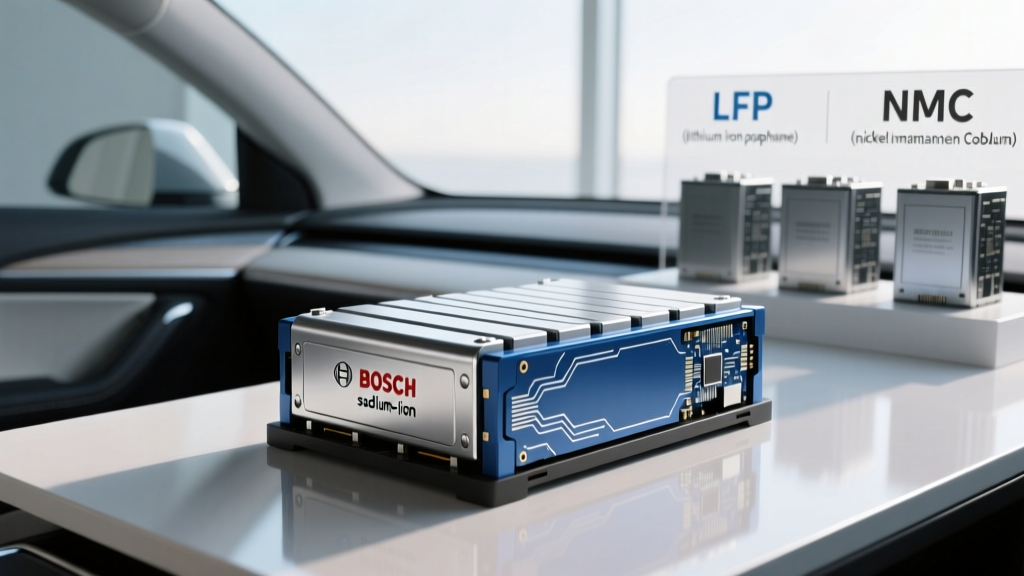
LFP cells trade some energy density for longer cycle life, lower cost, and superior thermal stability. NMC cells pack more energy into a smaller, lighter package — which is why they dominate long-range and performance trims. Here's how they stack up across the metrics that matter to owners:
| Factor | LFP (Lithium Iron Phosphate) | NMC / NCA |
|---|---|---|
| Energy density | ~160–180 Wh/kg (cell level) | ~220–260 Wh/kg (cell level) |
| Typical cycle life | 3,000–5,000+ cycles to 80% SoH | 1,500–2,500 cycles to 80% SoH |
| Cold-weather performance | Weaker; more range loss below 32°F | Better low-temp discharge and charge acceptance |
| Cost per kWh (2026 pack level) | ~$90–$110 | ~$120–$145 |
| Thermal runaway risk | Very low | Low (but higher than LFP) |
| Recommended daily charge | 100% SoC is fine | 80% SoC for daily use; 100% for trips |
| Common applications (2026) | Tesla Model 3/Y RWD, Ford Mustang Mach-E Select (LFP option), BYD models, base trims | Tesla Long Range/Performance, Hyundai Ioniq 5/6, Rivian, most AWD/long-range trims |
The practical takeaway: If you want a commuter car you can charge to 100% every night and keep for 15 years, LFP is the longevity play. If you need 320+ miles of EPA range, tow a trailer, or live in Minnesota, NMC's energy density and cold-weather behavior justify the trade-offs. Neither chemistry is universally "better" — they're optimized for different ownership patterns.
How Long Do Electric Vehicle Batteries Actually Last?
The fear that an EV battery will need replacement at 100,000 miles is a relic of early-2010s Nissan Leaf ownership. Modern liquid-cooled packs with sophisticated battery management systems (BMS) are lasting far longer than most buyers expect. But "lasting" doesn't mean zero degradation — it means gradual capacity loss that's manageable over the vehicle's life.
Real-world degradation data points (compiled from fleet studies and owner reports):
- Geotab 2025 fleet study (10,000+ EVs): Average capacity loss of ~1.8% per year across all chemistries, with a median of 88.3% State of Health (SoH) at 6 years. LFP packs averaged 91.2% SoH at 6 years; NMC averaged 87.1%.
- Tesla 2025 Impact Report: Model 3/Y packs retained ~88% capacity at 200,000 miles. Model S/X (NCA) retained ~85% at 200,000 miles.
- Recurrent Auto data (2025): Chevrolet Bolt EV (NMC, 60 kWh) showed ~92% SoH at 5 years / 60,000 miles on average. Hyundai Ioniq 5 (NMC, 77.4 kWh) showed ~94% SoH at 3 years / 40,000 miles.
- Peter Nixon / Recurrent fleet analysis: Vehicles with DC fast-charging frequency above 3 sessions/week showed ~2–4% additional degradation over 5 years vs. primarily Level 2 charging.
The pattern is clear: most modern EV batteries lose roughly 1.5–2.5% of capacity per year under normal use. At that rate, a 300-mile EPA-range vehicle will still offer ~255–270 miles after 10 years — still eminently usable for most drivers. Catastrophic failure (a pack that suddenly stops working) is rare and typically covered under warranty.
What the Battery Warranty Actually Covers
Federal law mandates that EV batteries carry a minimum warranty of 8 years or 100,000 miles (whichever comes first) in most states, and 10 years / 150,000 miles in California Air Resources Board (CARB) states including California, New York, Massachusetts, and others. But the details matter enormously.
| Manufacturer (2026 MY) | Warranty Term | Capacity Retention Threshold | Notes |
|---|---|---|---|
| Tesla (Model 3/Y RWD — LFP) | 8 yr / 100,000 mi | 70% | Standard range; LFP chemistry |
| Tesla (Model 3/Y Long Range — NMC) | 8 yr / 120,000 mi | 70% | Higher mileage threshold |
| Hyundai / Kia (Ioniq 5/6, EV6/EV9) | 10 yr / 100,000 mi | 70% | Among the longest terms in the U.S. |
| Ford (Mustang Mach-E, F-150 Lightning) | 8 yr / 100,000 mi | 70% | Applies to both LFP and NMC trims |
| GM (Chevrolet Equinox EV, Blazer EV) | 8 yr / 100,000 mi | 70% | Ultium platform |
| Rivian (R1T, R1S) | 8 yr / 175,000 mi | 70% | High mileage cap for truck use |
| Volkswagen (ID.4) | 8 yr / 100,000 mi | 70% | MEB platform |
Key nuance: The warranty threshold is typically 70% of original capacity. That means if your 77.4 kWh Ioniq 5 pack degrades to 54.2 kWh (70%), you'd qualify for a warranty replacement or repair. But you'd have to lose 30% of your range before the warranty kicks in — and based on current degradation data, very few owners will hit that threshold within the warranty period. The warranty is a safety net, not a prediction.
Also note: warranties cover defects and abnormal degradation. They do not cover damage from accidents, flooding, or improper modifications. Always check the specific terms in your owner's manual or the manufacturer's warranty guide.
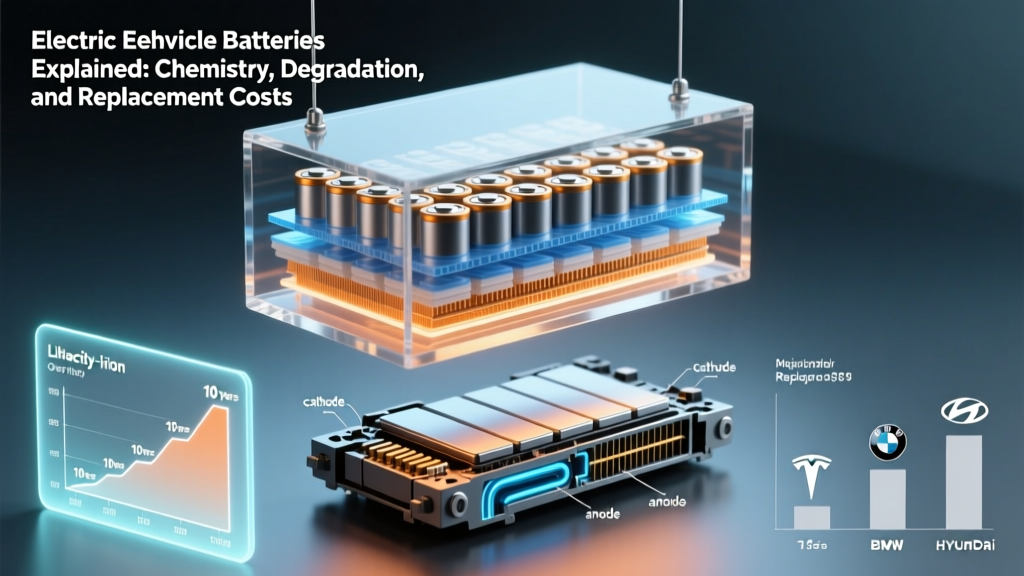
EV Battery Replacement Cost: What You'd Actually Pay
This is the question that keeps potential EV buyers up at night — and it's the one most in need of context. Yes, a full battery pack replacement is expensive. But the vast majority of EV owners will never need one.
According to data compiled by IIHS and industry sources, fewer than 2% of modern EVs (2018 and newer) have required a full pack replacement outside of warranty coverage. When replacements do happen, they're typically due to manufacturing defects (covered by warranty), physical damage from collisions or ground strikes, or — rarely — degradation beyond the threshold in high-mileage fleet vehicles.
| Vehicle (2026) | Battery Size (usable kWh) | Chemistry | Estimated Out-of-Warranty Replacement Cost |
|---|---|---|---|
| Tesla Model 3 RWD | 57.5 kWh | LFP | $12,000 – $14,000 |
| Tesla Model Y Long Range | 75 kWh | NMC | $14,000 – $17,000 |
| Hyundai Ioniq 5 | 77.4 kWh | NMC | $15,000 – $18,000 |
| Ford Mustang Mach-E Extended Range | 91 kWh | NMC | $17,000 – $21,000 |
| Ford F-150 Lightning Extended Range | 131 kWh | NMC | $22,000 – $28,000 |
| Chevrolet Equinox EV | 85 kWh | NMC (Ultium) | $15,000 – $19,000 |
| Rivian R1T Dual-Motor (Large Pack) | 123 kWh | NMC | $20,000 – $26,000 |
These figures include the pack itself plus labor at a dealership or authorized service center. Independent EV shops are emerging that can perform replacements at 15–25% lower cost, and refurbished or remanufactured packs are becoming available for older models at significant savings. Battery pack prices have declined roughly 8–12% per year since 2020, and that trend is expected to continue through the late 2020s.
For comparison: a transmission replacement on a conventional vehicle runs $4,000–$8,000 and is far more likely to be needed within 150,000 miles than an EV battery replacement.
Five Factors That Accelerate Battery Degradation
Not all miles are created equal when it comes to battery wear. Based on fleet data and electrochemistry principles, these five factors have the most measurable impact on long-term State of Health:
- DC fast-charging frequency: Occasional fast charging is fine. But daily use of 150+ kW DC chargers generates sustained heat and high C-rates that stress cells. Fleet data shows 2–4% additional degradation over 5 years for vehicles fast-charging 3+ times per week vs. primarily Level 2 charging. Use DC fast charging for road trips; rely on Level 2 at home for daily needs.
- Extreme temperatures (hot and cold): Sustained exposure to ambient temperatures above 95°F accelerates calendar degradation. Battery packs in Phoenix and Houston show slightly faster capacity loss than those in Seattle or Portland. Extreme cold doesn't permanently degrade the battery as much, but charging a cold pack without preconditioning can cause lithium plating — a permanent capacity loss mechanism. Always use your vehicle's battery preconditioning feature before fast charging in cold weather.
- State of Charge habits: For NMC/NCA packs, sitting at 100% SoC for extended periods (days or weeks) accelerates degradation. The sweet spot for daily use is 20–80% SoC. LFP packs are more tolerant of 100% SoC and manufacturers like Tesla actually recommend periodic 100% charges for LFP to allow the BMS to recalibrate cell balancing.
- Deep discharge cycles: Regularly driving the battery below 10% SoC (or letting it sit at 0% for extended periods) stresses cells and can trigger protective shutdowns that may require dealer service. Plug in when you hit 15–20%.
- High-power acceleration habits: Frequent hard launches and sustained high-speed driving generate internal cell heat. While modern thermal management mitigates most of this, aggressive driving patterns do correlate with slightly faster degradation in fleet studies.
How to Monitor Your Battery's State of Health
Most EV owners don't actively monitor their battery's State of Health (SoH) — but you should, especially if you're buying used or planning to keep your vehicle beyond 100,000 miles.
Manufacturer apps and in-car displays: Tesla shows estimated range at 100% charge, which you can compare to the original EPA figure to estimate SoH. Hyundai/Kia's infotainment includes a battery health screen on newer models. Ford's Pass app shows estimated range but not a direct SoH percentage. GM's myChevrolet/myCadillac apps provide range estimates.
Third-party tools: Services like Recurrent Auto (free for owners) track your battery's capacity over time using telematics data and compare it against a fleet baseline. OBD-II dongles paired with apps like LeafSpy (Nissan), Scan My Tesla, or ABRP's OBD integration can read real-time cell voltage, pack voltage, and estimated capacity. For a one-time check, many dealerships can pull a detailed battery health report during a service visit.
What to look for: A healthy pack should show less than 3–5% degradation in the first 2 years, settling into a roughly linear 1.5–2% annual loss after that. If you see a sudden drop (e.g., 5% in a single month), that could indicate a cell imbalance or module failure — contact your dealer immediately, as this may be a warranty-covered issue.
What's Next: Solid-State and Silicon Anode Batteries
If you follow EV news, you've seen the headlines about solid-state batteries promising 600-mile range and 10-minute charging. Here's the reality check, from a 2026 vantage point:
Solid-state batteries replace the liquid electrolyte in current lithium-ion cells with a solid material (ceramic, sulfide, or polymer). The theoretical advantages are significant: higher energy density (potentially 400+ Wh/kg at the cell level), faster charging without lithium plating risk, and improved safety. Toyota has announced a solid-state battery targeting 2027–2028 production in limited models, initially in Japan. Samsung SDI and QuantumScape have prototype cells undergoing validation. However, manufacturing scale-up remains the critical bottleneck. Industry consensus places meaningful solid-state availability in U.S.-market vehicles at 2029–2031 at the earliest, and likely in premium segments first.
Silicon anode technology is closer to market. Companies like Sila Nanotechnologies and Group14 are supplying silicon-dominant anode materials that boost energy density by 15–25% over graphite anodes. These are appearing in limited production applications (including some Mercedes-Benz EQ models and the Porsche Taycan's updated pack) as of 2025–2026. Silicon anodes are an incremental improvement, not a revolution, but they meaningfully extend range without changing the fundamental cell format.
Sodium-ion batteries are entering the conversation for lower-cost, lower-range applications. CATL has begun shipping sodium-ion packs for Chinese-market vehicles, and the technology could reach budget EVs globally by 2028. Sodium-ion offers lower energy density (~120–150 Wh/kg) but dramatically lower material costs and better cold-weather performance.
The practical advice: don't delay an EV purchase waiting for solid-state. Current lithium-ion technology is mature, well-warrantied, and proven to last the life of the vehicle. Next-generation chemistries will arrive in premium models first and trickle down over years.
Frequently Asked Questions
How long do electric vehicle batteries last in years and miles?
Based on fleet data from Geotab, Recurrent Auto, and manufacturer reports, modern liquid-cooled EV batteries retain 85–92% of their original capacity at 10 years or 150,000 miles under normal use. Most will outlast the vehicle's useful economic life. Catastrophic failure is rare — well under 2% of packs in vehicles from 2018 onward have required replacement outside of warranty.
How much does it cost to replace an EV battery?
Out-of-warranty replacement costs range from roughly $12,000 for a Tesla Model 3 RWD (57.5 kWh LFP) to $28,000 for a Ford F-150 Lightning Extended Range (131 kWh NMC), including labor. However, the overwhelming majority of owners will never pay this — degradation severe enough to warrant replacement within the warranty period (typically 8 years/100,000 miles at 70% capacity threshold) is uncommon. Pack prices continue to decline 8–12% annually.
What does the EV battery warranty actually cover?
Federal law requires a minimum of 8 years/100,000 miles (10 years/150,000 miles in CARB states). Coverage applies to defects and degradation below a specified threshold — usually 70% of original capacity. It does not cover physical damage from accidents, improper modifications, or environmental damage. Check your specific manufacturer's warranty document for exact terms.
Should I charge my EV to 100% every day?
It depends on your chemistry. If your EV has an NMC or NCA battery (most Long Range and Performance trims), daily charging to 80% is recommended for longevity — save 100% for road trips. If you have an LFP battery (Tesla Model 3/Y RWD, some base trims), manufacturers recommend charging to 100% regularly, as LFP cells tolerate full charge well and need it for accurate BMS cell balancing. Check your owner's manual for your specific vehicle's recommendation.
Does DC fast charging damage the battery?
Occasional DC fast charging (a few times per month on road trips) has negligible impact on battery health. However, fleet data from Recurrent Auto shows that vehicles using 150+ kW DC fast charging 3 or more times per week experience roughly 2–4% additional capacity loss over 5 years compared to vehicles primarily using Level 2 home charging. The heat and high current of sustained fast charging stress cells over time. For daily charging, a Level 2 home charger (7–11 kW) is the optimal balance of speed and battery care.
Is LFP better than NMC, or vice versa?
Neither is universally superior. LFP offers longer cycle life (3,000–5,000+ cycles vs. 1,500–2,500), lower cost, and better thermal safety, but with lower energy density and weaker cold-weather performance. NMC packs more energy into a lighter package, enabling 320+ mile ranges and better cold-weather charging, but degrades slightly faster and costs more. Choose LFP for a commuter vehicle you'll keep 15+ years; choose NMC if you need maximum range, tow frequently, or live in a cold climate.
Can I check my EV battery health myself?
Yes. Most EVs display estimated range at full charge, which you can compare to the original EPA rating as a rough SoH indicator. Third-party services like Recurrent Auto offer free battery health tracking via telematics. OBD-II tools (Scan My Tesla, LeafSpy, etc.) provide more granular data including individual cell voltages and pack capacity estimates. Your dealership can also generate a detailed battery health report during any service visit.
For official EPA range and efficiency data on specific models, visit fueleconomy.gov. For current federal tax credit eligibility rules that may affect your EV purchase decision, consult the IRS Clean Vehicle Credits page.