For most EV shoppers, the traction battery is the single biggest source of purchase anxiety. It's the most expensive component in the vehicle, it's chemically complex, and its health directly determines how far you can drive. But the narrative that electric car batteries are fragile, short-lived liabilities doesn't match what fleet data, warranty claims, and long-term ownership records actually show in 2026.
This guide breaks down the chemistry inside modern EV battery packs, what degradation looks like in real-world miles, what your warranty actually covers, what a replacement costs if you ever need one, and the daily habits that meaningfully extend pack life. We'll also cover how to monitor State of Health (SoH) and where emerging technologies like solid-state cells actually stand.
LFP vs NMC vs NCA: The Chemistry Decision
Not all electric car batteries use the same chemistry. The two dominant lithium-ion families in 2026 passenger EVs are LFP (lithium iron phosphate) and NMC/NCA (nickel manganese cobalt / nickel cobalt aluminum). The chemistry your car uses affects range, longevity, cold-weather behavior, and price.
NMC and NCA chemistries offer higher energy density — more kWh packed into a smaller, lighter pack. That's why long-range vehicles like the Tesla Model 3 Long Range (82 kWh usable, NMC), Hyundai Ioniq 5 (84 kWh, NMC), and Ford F-150 Lightning Extended Range (131 kWh, NMC) rely on them. The trade-off: these chemistries are more sensitive to sustained high states of charge and elevated temperatures, which accelerates degradation over time.
LFP chemistry trades energy density for exceptional cycle life and thermal stability. LFP cells tolerate daily charging to 100% without significant degradation penalty, contain no cobalt or nickel (lowering cost and supply-chain risk), and are inherently more resistant to thermal runaway. The trade-off: lower energy density means heavier packs for the same range, and LFP cells lose more usable capacity in freezing temperatures due to higher internal resistance.
| Attribute | LFP (Lithium Iron Phosphate) | NMC / NCA (Nickel-based) |
|---|---|---|
| Energy Density | ~160–180 Wh/kg (cell level) | ~220–260 Wh/kg (cell level) |
| Typical Cycle Life | 3,000–5,000+ cycles to 80% SoH | 1,000–2,000 cycles to 80% SoH |
| Daily 100% Charging | Recommended by most OEMs | Not recommended; 80% daily target |
| Cold-Weather Performance | Greater range loss below 32°F; slower regen | Better low-temp conductivity |
| Thermal Stability | Excellent; lower runaway risk | Good; requires active thermal management |
| Cost per kWh (2026) | ~$85–$100 | ~$110–$135 |
| Example 2026 Vehicles | Tesla Model 3 RWD, Model Y RWD, Ford Mustang Mach-E Select (LFP option) | Tesla Model 3 LR, Ioniq 5, Rivian R1T, Cadillac Lyriq |
Which is better? There's no universal winner. If you commute daily, charge at home, and want a pack that will outlast 300,000 miles with minimal degradation, LFP is the durability champion. If you need maximum range per charge for road trips or live in a cold climate where every mile counts, NMC/NCA's energy density is the practical choice. Many 2026 buyers will own NMC packs for range and simply follow the 80% daily charge recommendation to preserve longevity.
How Long Do Electric Car Batteries Actually Last?
The short answer from fleet data: most modern EV battery packs will outlast the vehicle they're installed in. But "last" needs a precise definition — batteries don't fail catastrophically like an engine throwing a rod. They degrade, gradually losing capacity over time and charge cycles.
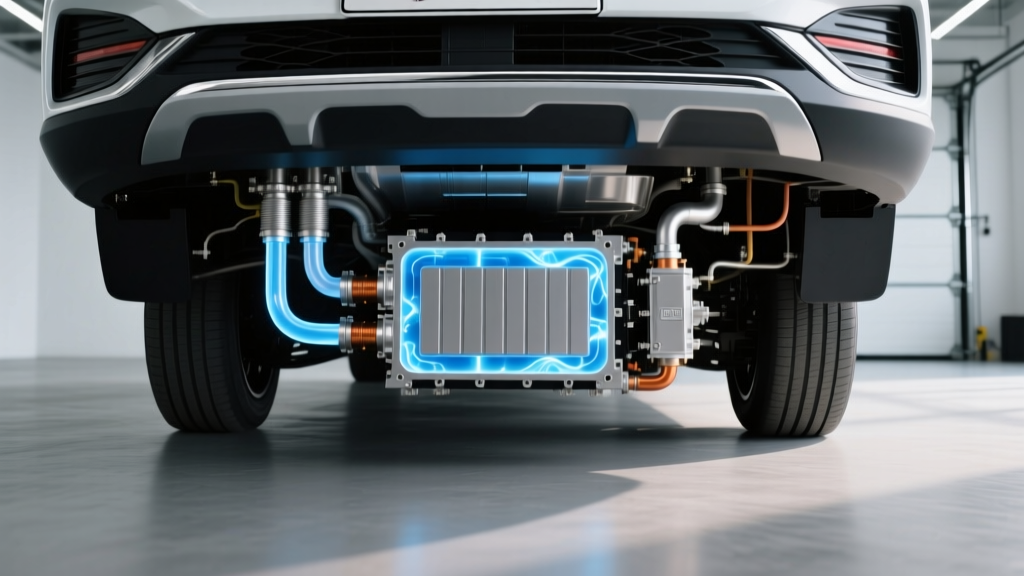
Here's what real-world data shows for degradation in water-cooled battery packs from major 2026 manufacturers:
| Time / Mileage | Average Capacity Retained | Notes |
|---|---|---|
| Year 1 / ~12,000 mi | 95–98% | Initial formation loss; steepest part of curve |
| Year 3 / ~36,000 mi | 91–95% | Curve flattens significantly |
| Year 5 / ~60,000 mi | 88–93% | Most packs still well above warranty threshold |
| Year 8 / ~100,000 mi | 83–90% | Warranty period end; most exceed 70% minimum |
| Year 10+ / 150,000+ mi | 78–87% | Based on Tesla fleet data and Recurrent Analytics |
According to Recurrent Analytics, which tracks over 15,000 EVs in real-world conditions, the median battery degradation at 100,000 miles across 2020–2025 model-year vehicles is approximately 12–15% capacity loss. Tesla's own 2024 Impact Report showed its Model 3 and Model Y fleets retaining approximately 85% of original capacity at 200,000 miles — a figure enabled by sophisticated thermal management and charge-control software.
The degradation curve is non-linear. You'll see the largest drop in the first year (typically 2–5%) as the battery undergoes initial formation cycling. After that, degradation slows dramatically and proceeds nearly linearly for years. A pack that retains 92% at year three is statistically likely to retain 85%+ at year eight under normal use.
What Does the Battery Warranty Actually Cover?
Federal law in the United States mandates that EV battery packs carry a minimum warranty of 8 years or 100,000 miles (whichever comes first). California Air Resources Board (CARB) states extend that to 10 years or 150,000 miles. But the details matter enormously.
| Manufacturer | Warranty Period | Capacity Threshold | Notes |
|---|---|---|---|
| Tesla (Model 3/Y RWD — LFP) | 8 yr / 100,000 mi | 70% retention | Standard range; LFP pack |
| Tesla (Model 3/Y LR/AWD) | 8 yr / 120,000 mi | 70% retention | Long-range NMC pack |
| Hyundai / Kia (Ioniq 5, EV6, EV9) | 10 yr / 100,000 mi | 70% retention | Industry-leading duration |
| Ford (Mach-E, F-150 Lightning) | 8 yr / 100,000 mi | 70% retention | Covers battery components + capacity |
| GM (Lyriq, Blazer EV, Equinox EV) | 8 yr / 100,000 mi | 70% retention (60% for Bolt-era) | Ultium platform; 8 yr standard |
| Rivian (R1T, R1S) | 8 yr / 175,000 mi | 70% retention | Highest mileage threshold in segment |
| BMW (i4, iX, i7) | 8 yr / 100,000 mi | 70% retention | Transferable to second owner |
What's covered: If your battery's usable capacity drops below the stated threshold (typically 70% of original) within the warranty period due to normal use, the manufacturer will repair or replace the pack — usually by swapping defective modules rather than the entire battery. Defects in materials and workmanship are covered regardless of capacity.
What's NOT covered: Damage from accidents, flooding, improper modifications, or using non-OEM charging equipment that causes electrical damage. Importantly, gradual degradation that stays above the threshold is considered normal wear, not a warranty claim. A pack at 72% capacity at year seven is functioning "within spec" even though you've lost nearly a third of your original range.
How Much Does an EV Battery Replacement Cost?
This is the question that dominates EV forums, and the honest answer is: most owners will never need a full battery replacement. Battery packs in 2026 EVs are engineered to outlast the typical ownership cycle, and most vehicles are scrapped or retired for reasons unrelated to battery failure. But if you plan to keep an EV for 15+ years or buy a high-mileage used EV, replacement cost matters.
| Vehicle / Pack Size | Battery Cost (Parts) | Labor | Total Estimate | Context |
|---|---|---|---|---|
| Tesla Model 3 RWD (~60 kWh LFP) | $5,500–$7,500 | $1,500–$2,500 | $7,000–$10,000 | Module-level repair often possible |
| Hyundai Ioniq 5 (~84 kWh NMC) | $9,000–$13,000 | $2,000–$3,000 | $11,000–$16,000 | Hyundai offers module replacement |
| Ford F-150 Lightning Ext. (~131 kWh) | $15,000–$22,000 | $3,000–$5,000 | $18,000–$27,000 | Largest consumer pack on market |
| Chevrolet Equinox EV (~85 kWh) | $8,000–$12,000 | $2,000–$3,000 | $10,000–$15,000 | Ultium modular architecture |
| Rivian R1T (~106–149 kWh) | $12,000–$20,000 | $3,000–$5,000 | $15,000–$25,000 | Module-serviceable design |
Several factors are working in buyers' favor. Cell-level pricing has dropped from over $1,000/kWh in 2010 to roughly $90–$135/kWh in 2026, according to BloombergNEF tracking. Most modern packs use modular architectures — if one module degrades prematurely, a technician can replace that module for $1,500–$4,000 rather than the entire pack. And a growing aftermarket refurbishment sector is emerging, offering reconditioned packs at 40–60% of OEM pricing for out-of-warranty vehicles.
For context: the average age of a scrapped vehicle in the US is approximately 15 years. At typical US driving rates of 13,500 miles per year (FHWA data), that's roughly 200,000 miles — a distance that most 2026 EV battery packs are engineered to reach while retaining 75–85% of original capacity.
Factors That Accelerate (or Preserve) Battery Life
Battery degradation is driven by three primary stressors: temperature extremes, high state of charge, and high charge/discharge rates. Managing these is the single most impactful thing an owner can do for long-term pack health.
Battery Care Best Practices for 2026 EV Owners
- Set a daily charge limit of 80% for NMC/NCA packs. Use 100% only when you need full range for a trip. LFP owners can charge to 100% daily — Tesla and Ford explicitly recommend this for LFP packs to maintain cell-balancing accuracy.
- Minimize DC fast charging frequency. Occasional road-trip fast charging is fine, but daily reliance on 150+ kW DC charging accelerates degradation. Research from the Idaho National Laboratory showed packs fast-charged exclusively lost approximately 5–8% more capacity over 50,000 miles versus Level 2-only charging.
- Precondition before fast charging. Most 2026 EVs automatically precondition the battery when you navigate to a DC fast charger. This brings the pack to optimal temperature (typically 85–95°F / 30–35°C), enabling faster charging and reducing lithium plating risk. If your car doesn't auto-precondition, allow 15–20 minutes of driving before plugging into a high-power charger in cold weather.
- Avoid prolonged storage at extreme SoC. If leaving an EV unused for weeks, target 50–60% SoC and plug into Level 1 or Level 2 to let the battery management system (BMS) maintain it. Never store at 100% in hot weather or below 10% in cold weather.
- Use your car's scheduled charging feature. Most 2026 EVs let you schedule charging to complete just before departure. This minimizes time spent at high SoC and ensures the pack is at a moderate temperature when you start driving.
- Park in shade or a garage when possible. Sustained pack temperatures above 95°F (35°C) accelerate calendar aging. In hot climates, a garage or shaded parking spot meaningfully reduces thermal stress over years.
- Don't obsess over regenerative braking settings. While max regen creates higher discharge rates, the difference in degradation impact is negligible compared to temperature and SoC management. Use whatever regen setting you prefer for driving comfort.
How to Monitor Your Battery's State of Health
State of Health (SoH) is a percentage representing your battery's current maximum capacity relative to its original capacity when new. A pack at 90% SoH that originally held 80 kWh now holds approximately 72 kWh usable.
Built-in vehicle tools: Most 2026 EVs display SoH or estimated range at full charge through the infotainment system or companion app. Tesla shows rated range at 100%, which you can compare to the original EPA figure. Hyundai/Kia's Bluelink app provides battery health status. GM's myChevrolet/myCadillac apps include battery condition monitoring.
OBD-II diagnostic tools: For precise SoH readings, third-party tools like OBDLink MX+ paired with apps such as EVbatmon or Car Scanner can read the BMS-reported SoH directly. These tools connect to the OBD-II port and pull the same data the dealership diagnostic equipment uses, typically for $50–$120 in hardware.
Dealership health checks: If you're evaluating a used EV or want a certified reading, most dealerships can run a battery health report during a service visit. Some manufacturers (Hyundai, BMW) include periodic battery health checks in scheduled maintenance.
Manual tracking method: Charge to 100% (or your known maximum) and record the displayed range. Compare it to the EPA-rated range when new, adjusting for temperature. If your 310-mile EPA-rated Model 3 shows 280 miles at 100% on a 70°F day, your SoH is roughly 90%. Track this quarterly to identify trends rather than reacting to single readings.
What's Next: Solid-State and Silicon Anode Batteries
Emerging battery technologies promise step-change improvements, but it's critical to separate laboratory milestones from production timelines.
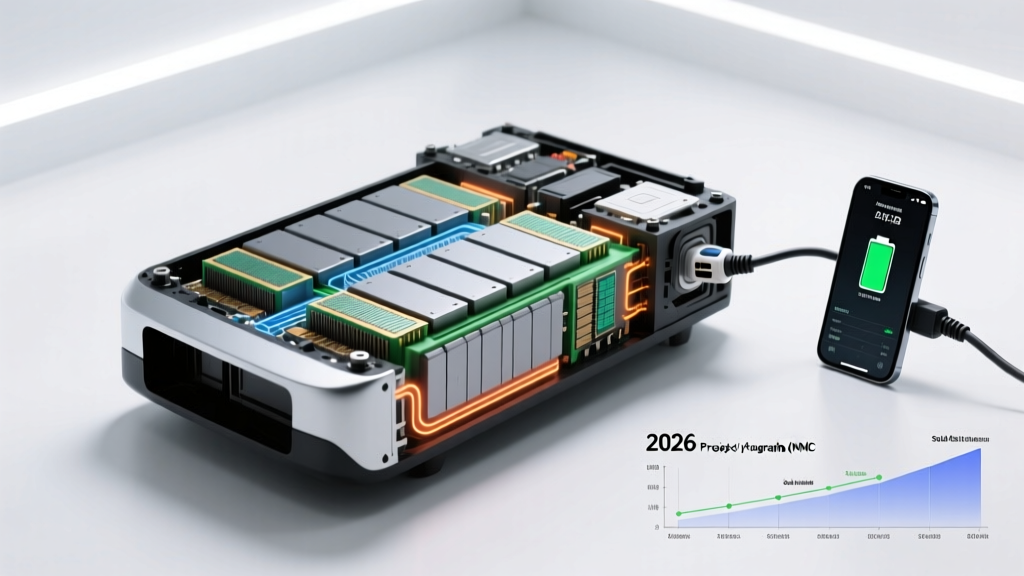
Solid-state batteries replace the liquid electrolyte in current lithium-ion cells with a solid material (ceramic, polymer, or sulfide-based). The potential benefits are significant: 30–50% higher energy density, faster charging (potentially 10–80% in under 10 minutes), improved safety (no flammable electrolyte), and longer cycle life. Toyota, Nissan, Samsung SDI, and QuantumScape have all announced solid-state development programs.
Realistic timeline: As of early 2026, no mass-market EV is sold with a full solid-state battery pack. Toyota has announced a solid-state-equipped EV for limited production in 2027–2028, initially in low volumes and at premium pricing. Industry analysts at BloombergNEF project meaningful solid-state production volumes (100,000+ vehicles annually) no earlier than 2029–2030. Early solid-state packs are expected to carry a significant cost premium, likely limiting them to luxury and performance segments initially.
Silicon anode technology is closer to market. Companies like Sila Nanotechnologies and Group14 are producing silicon-dominant anode materials that increase energy density by 15–25% over conventional graphite anodes. These are being integrated incrementally — Porsche's upcoming electric 718 is expected to use silicon-anode cells, and several 2026–2027 models will incorporate partial silicon anode blends. This is an evolution, not a revolution, but it delivers meaningful range gains within existing form factors.
Bottom line on future tech: If you need an EV now, current lithium-ion packs — particularly with modern thermal management — are mature, reliable, and well-warrantied. Waiting for solid-state means waiting at minimum 3–4 years for limited availability, with premium pricing for years after that.
Electric Car Battery FAQ
Do electric car batteries need to be replaced regularly?
No. Unlike consumable components (brake pads, tires, cabin filters), EV traction batteries are designed to last the life of the vehicle. Real-world fleet data shows most 2026-era packs retaining 80–90% capacity at 100,000+ miles. Full pack replacement is rare and typically only needed after physical damage or extreme outlier degradation well outside warranty thresholds.
Does fast charging damage my EV battery?
DC fast charging generates more heat and stress than Level 2 charging, which accelerates degradation incrementally. However, modern battery management systems actively limit charge rates when the pack is too hot or too cold, and preconditioning further mitigates risk. Occasional fast charging (road trips, a few times per month) has a minimal impact on long-term health. The concern is primarily for vehicles that rely on DC fast charging as their daily charging method with no Level 2 access.
What happens if my EV battery degrades to 70% capacity?
Your car still drives normally — you simply have less range. A vehicle originally rated for 300 EPA miles would offer approximately 210 miles at 70% SoH. For many owners with short commutes and home charging, this is still perfectly functional. If degradation drops below the warranty threshold (typically 70%) within the warranty period, the manufacturer repairs or replaces the pack at no cost.
Can I upgrade to a larger battery in my existing EV?
Generally, no. Battery packs are physically and electronically integrated into the vehicle's structure, cooling system, and software. Unlike swapping a laptop battery, EV pack upgrades require complete re-engineering of mounting points, high-voltage wiring, thermal management, and BMS calibration. Some manufacturers (notably Nio in China with its battery-swap stations) offer this capability, but it is not available in the US market for 2026 consumer vehicles.
Does cold weather permanently damage EV batteries?
No. Cold temperatures temporarily reduce usable capacity and slow charging speeds, but this is fully reversible when the pack warms. The risk of permanent damage from cold occurs only if you attempt to fast-charge a freezing-cold pack without preconditioning, which can cause lithium plating on the anode. Every 2026 EV with DC fast charging capability includes cold-weather charge protection in its BMS — the car will limit charge speed until the pack reaches a safe temperature.
How does the EV battery affect the federal tax credit?
Under the current IRS §30D Clean Vehicle Credit rules, battery sourcing is a key eligibility factor. To qualify for the full $7,500 credit, a vehicle's battery must meet critical-mineral sourcing and battery-component manufacturing requirements that tighten annually. For 2026, a significant percentage of battery components must be manufactured or assembled in North America, and critical minerals must be sourced from the US or free-trade-agreement partners. Eligibility also depends on MSRP caps ($55,000 for sedans, $80,000 for SUVs/trucks/vans) and buyer income limits ($150,000 single / $300,000 joint). Always verify a specific vehicle's eligibility on fueleconomy.gov and consult a tax professional — rules change annually.
Should I buy an extended battery warranty?
For most buyers of new 2026 EVs, the included 8-year/100,000-mile battery warranty is sufficient given real-world degradation data. Extended warranties may make sense for used EVs approaching the end of their factory warranty, or for owners in extreme climates (consistently above 100°F or below 0°F) who plan to keep the vehicle beyond 10 years. Evaluate the cost of the extended warranty against the statistical likelihood of a claim — for a three-year-old EV with 40,000 miles showing 94% SoH, the math rarely favors the extended coverage.