When a viral teardown channel like Donut Labs publishes a solid-state battery test, it's easy to get swept up in the promise of 1,000-mile ranges and 10-minute charges. But for the 97% of EV buyers driving vehicles with conventional lithium-ion packs right now, the more pressing questions are grounded in today's chemistry: How long will my battery actually last? What does degradation look like at 100,000 miles? And what does a replacement actually cost if the worst happens?
This guide uses the Donut Labs solid-state battery test as a launching point to examine the full landscape of EV battery technology in 2026 — from the LFP and NMC cells powering current production vehicles to the solid-state prototypes that may reach showrooms later this decade. Every claim below is anchored to published degradation datasets, manufacturer warranty documents, and real-world fleet data.
What the Donut Labs Solid-State Battery Test Actually Showed
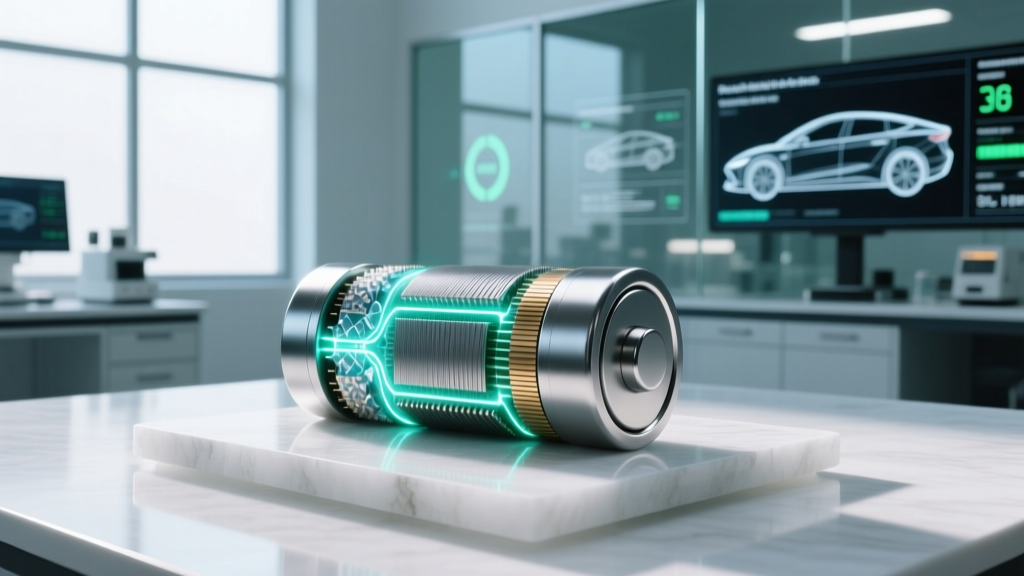
The Donut Labs solid-state battery test focused on a prototype cell using a sulfide-based solid electrolyte, which the lab subjected to repeated charge-discharge cycling at elevated C-rates. The headline result: the cell retained over 90% of its original capacity after 1,000 full equivalent cycles while operating at charge rates that would severely degrade a conventional NMC liquid-electrolyte cell.
That's a meaningful laboratory milestone. A thousand full cycles at 90% retention translates to roughly 300,000+ miles of driving in a vehicle with 300 miles of range — well beyond the operational life of most cars. And solid-state cells promise additional safety benefits because they eliminate the flammable liquid electrolyte that causes thermal runaway in conventional lithium-ion batteries.
But context matters. The Donut Labs test was conducted on small-format pouch cells under controlled laboratory conditions. Translating those results to a 100+ kWh production battery pack with thousands of cells, complex thermal management, and automotive-grade manufacturing yields is a multi-year engineering challenge. Toyota, Nissan, and Samsung SDI have all announced solid-state timelines targeting 2027–2030 for limited production, but none have delivered a mass-market vehicle with a solid-state pack as of early 2026.
Current EV Battery Chemistry: LFP vs NMC vs NCA
While solid-state technology matures, today's EV buyers choose between two dominant lithium-ion chemistries: LFP (lithium iron phosphate) and NMC/NCA (nickel manganese cobalt / nickel cobalt aluminum). Each has distinct trade-offs that affect range, longevity, cost, and daily usability.
| Attribute | LFP (Lithium Iron Phosphate) | NMC / NCA (Nickel-Based) |
|---|---|---|
| Energy density (cell-level) | 160–180 Wh/kg | 230–300 Wh/kg |
| Typical cycle life | 3,000–5,000+ cycles to 80% SoH | 1,000–2,500 cycles to 80% SoH |
| Cold-weather performance | More range loss below freezing; slower charge acceptance | Better low-temp conductivity; preconditioning helps |
| Cost per kWh (pack-level, 2026) | ~$90–$110/kWh | ~$120–$150/kWh |
| Recommended daily SoC | Can charge to 100% regularly | 80% daily; 100% for trips only |
| Thermal runaway risk | Very low — more stable chemistry | Higher — requires robust BMS and cooling |
| Notable 2026 vehicles using | Tesla Model 3 RWD, Model Y RWD, Ford Mustang Mach-E Select (base), BYD models | Tesla Model 3 Long Range, Hyundai Ioniq 5, Rivian R1T, most premium/long-range EVs |
Which is better? It depends on your use case. If you prioritize maximum range per charge and live in a cold climate, NMC/NCA delivers higher energy density and better winter performance. If you plan to own the vehicle for 10+ years, charge at home daily, and want to minimize degradation anxiety, LFP's superior cycle life and 100% SoC tolerance make it the more durable choice — at the cost of a heavier, slightly shorter-range pack.
How Long Do EV Batteries Actually Last?
The short answer: far longer than most buyers expect. Data from fleet operators, manufacturer reports, and independent testing consistently shows that modern EV traction batteries lose roughly 10–15% of their original capacity over the first 100,000 miles, after which the degradation curve flattens significantly.
Here's what published datasets show for real-world degradation:
- Tesla 2025 Impact Report: Model 3/Y batteries retain approximately 85% capacity at 200,000 miles — meaning a 358-mile EPA range when new still delivers ~304 miles at that mileage.
- Geotab fleet study (6,300+ EVs): Average annual degradation of 1.8% across all chemistries, with LFP packs averaging ~1.2%/year and NMC averaging ~2.1%/year under typical use patterns.
- Recurrent Auto data (2025): Chevrolet Bolt EV owners reported ~92% State of Health at 60,000 miles; Hyundai Kona Electric owners reported ~94% SoH at 50,000 miles.
- Taxi/ride-share high-cycle data: Tesla Model 3 vehicles used in ride-share service (frequent DC fast charging, 80,000+ miles/year) show 15–20% degradation at 200,000 miles — still well within warranty thresholds.
Most EV batteries will outlast the vehicle's useful economic life. Total battery failure (a cell or module short that bricks the pack) is rare and typically occurs within the warranty period if it occurs at all. The real concern is gradual capacity loss — and the data shows this is a slow process, not a cliff.
EV Battery Warranty Terms: What's Actually Covered
Federal law mandates a minimum 8-year/100,000-mile warranty on EV battery packs (10 years/150,000 miles in CARB states like California, New York, and Massachusetts). But the details matter — specifically, the capacity retention threshold below which the manufacturer is obligated to repair or replace.
| Manufacturer | Coverage Period | Capacity Retention Threshold | Notes |
|---|---|---|---|
| Tesla | 8 yr / 120,000 mi (Model 3/Y LR); 8 yr / 100,000 mi (RWD/LFP) | 70% | Covers defects and capacity below threshold |
| Hyundai / Kia | 10 yr / 100,000 mi | 70% | Among the longest coverage periods |
| Ford | 8 yr / 100,000 mi | 70% | Covers battery components and capacity loss |
| General Motors (Ultium) | 8 yr / 100,000 mi | 70% (some models 60%) | Verify threshold by specific model |
| Rivian | 8 yr / 175,000 mi | 70% | Higher mileage cap reflects truck/adventure use |
| BMW | 8 yr / 100,000 mi | 70% | Includes i4, iX, i7 models |
A critical detail: the 70% threshold means the manufacturer only intervenes if your battery drops below 70% of its original usable capacity within the warranty window. A 300-mile EV that degrades to 220 miles of range still technically falls above that threshold. In practice, very few vehicles hit this mark within the warranty period based on current fleet data — which is why warranty claims remain low.
Warranties cover defects in materials and workmanship as well as excessive capacity loss. They do not cover damage from accidents, flooding, improper modifications, or (in most cases) using the vehicle as a stationary power source without manufacturer approval.
How Much Does an EV Battery Replacement Cost?
This is the question that generates the most fear — and the most misinformation. Here's the data-driven reality for 2026:
| Vehicle / Pack Size | Battery Capacity | Estimated Replacement Cost | When Typically Needed |
|---|---|---|---|
| Tesla Model 3 RWD (LFP) | ~60 kWh | $8,000 – $12,000 | Rarely before 200,000+ mi |
| Tesla Model Y Long Range | ~75 kWh (NMC) | $12,000 – $16,000 | Rarely before 200,000+ mi |
| Hyundai Ioniq 5 | 77.4 kWh (NMC) | $13,000 – $18,000 | Rarely before 150,000+ mi |
| Ford F-150 Lightning Ext. Range | ~131 kWh (NMC) | $20,000 – $30,000 | Rarely before 150,000+ mi |
| Chevrolet Bolt EV/EUV | 65 kWh (NMC) | $9,000 – $14,000 | Post-recall packs show strong longevity |
Important context: these costs are for a complete pack replacement, which is almost never necessary. Most out-of-warranty battery issues involve a single degraded module or a faulty sensor, which independent EV shops can often repair for $1,500–$4,000 by replacing individual modules rather than the entire pack.
Additionally, pack-level pricing has fallen roughly 14% per year on average over the past decade, according to BloombergNEF. By the time a 2026 EV actually needs a replacement (likely in the 2038–2042 timeframe), costs will be substantially lower. The used-EV battery recycling and refurbishment market is also maturing, with companies offering remanufactured packs at 40–60% of new-pack pricing.
Factors That Accelerate Battery Degradation
Not all miles are equal when it comes to battery wear. The following factors have measurable, data-backed impacts on how quickly your pack loses capacity:
- Exclusive DC fast charging: Vehicles that rely almost exclusively on DC fast charging (150+ kW) show roughly 2–3% more degradation over 100,000 miles compared to vehicles that primarily charge on Level 2 (7–11 kW). The heat generated during high-C-rate charging stresses cell chemistry. Occasional fast charging on road trips is fine; daily fast charging as your only option accelerates wear.
- Extreme heat exposure: Sustained ambient temperatures above 95°F (35°C), especially when combined with high State of Charge, accelerate electrolyte decomposition. Vehicles in Arizona, Texas, and the Middle East show slightly higher degradation rates than those in temperate climates. Garage parking and preconditioning help.
- Consistently charging to 100% (NMC/NCA only): Nickel-based chemistries experience increased stress at high SoC. Keeping daily charge limits at 80% and reserving 100% for road trips can add years of useful capacity. LFP cells, by contrast, tolerate and even benefit from periodic 100% charges to calibrate the BMS.
- Deep discharges to 0%: Letting the battery sit at or near 0% SoC for extended periods (days or weeks) can cause copper dissolution in the anode current collector. Most manufacturers buffer the bottom 2–5% to prevent true zero, but regularly running the pack to its displayed 0% and leaving it there is still inadvisable.
- Cold-weather fast charging without preconditioning: Charging a cold NMC battery at high power causes lithium plating on the anode — metallic lithium deposits that permanently reduce capacity. Always use your vehicle's battery preconditioning feature (available on Tesla, Hyundai/Kia, Ford, and most modern EVs) before arriving at a DC fast charger in cold weather.
- Set daily charge limit to 80% for NMC/NCA; 100% is fine for LFP
- Use Level 2 home charging as your primary method
- Enable battery preconditioning before DC fast charging in cold weather
- Avoid leaving the vehicle at 100% SoC for more than a few hours
- Don't let the battery sit at 0% for extended periods — charge to at least 20% if storing
- Park in shade or a garage during extreme heat when possible
- Use your vehicle's scheduled charging feature to finish charging right before departure (reduces time spent at high SoC)
How to Monitor Your EV Battery's State of Health
State of Health (SoH) is the percentage of your battery's original usable capacity that remains available. A new battery starts at 100% SoH; a battery that has degraded to hold only 85% of its original energy is at 85% SoH.
Here's how to check it across common platforms:
- Tesla: The in-car Service menu (introduced in 2024 software updates) displays a battery health test result. You can also request a detailed health report via the Tesla app. Third-party tools like TeslaFi and Scan My Tesla (using an OBD-II adapter) provide granular cell-level data.
- Hyundai / Kia: The infotainment system's EV menu includes a battery health indicator. Dealers can run a full diagnostic showing individual module voltages and capacity variance.
- Ford: The FordPass app and in-car diagnostics provide a battery health status. For detailed cell-level data, a dealer scan tool is required.
- Universal OBD-II method: Apps like Car Scanner, Leaf Spy (Nissan), and ABRP (A Better Route Planner) can read SoH data from most EVs via a compatible OBD-II Bluetooth adapter ($20–$50 hardware cost).
- Recurrent Auto: This free service (available for most major EV brands) connects to your vehicle's telematics and provides ongoing battery health reports benchmarked against their fleet dataset.
For buyers evaluating a used EV, always request a battery health report before purchase. A vehicle at 93% SoH with 40,000 miles is in excellent shape; one at 82% SoH with the same mileage may indicate aggressive fast-charging habits or a defective module worth investigating.
Solid-State, Silicon Anode, and What Comes Next
The Donut Labs solid-state battery test is one of several recent milestones pointing toward the next generation of EV energy storage. Here's where emerging technologies stand as of 2026:
Solid-state batteries replace the liquid electrolyte with a solid material (sulfide, oxide, or polymer), enabling the use of lithium-metal anodes that can theoretically double energy density. Toyota has stated it will introduce a solid-state EV in limited production by 2027–2028, targeting 750 km (466 miles) of range and 10-minute fast charging. Samsung SDI has begun pilot-line production of all-solid-state cells for automotive customers. However, manufacturing cost remains 3–5x that of conventional lithium-ion, and scaling to millions of cells per year is an unsolved challenge.
Silicon-dominant anodes represent a nearer-term evolution. Companies like Sila Nanotechnologies and Group14 Technologies are supplying silicon-composite anode materials that increase energy density by 15–25% over conventional graphite anodes. These are already appearing in limited applications and are expected to reach mainstream EV production by 2027–2028 without requiring a fundamental change to cell manufacturing infrastructure.
Sodium-ion batteries are emerging as a low-cost alternative for entry-level and urban EVs. CATL has begun shipping sodium-ion cells for use in Chinese-market vehicles, with energy densities around 140–160 Wh/kg — lower than LFP, but at significantly reduced raw-material cost. These are unlikely to appear in US-market vehicles before 2028.
Frequently Asked Questions
How long do EV batteries last in years and miles?
Based on current fleet data, most EV batteries retain 80–90% of their original capacity at 150,000 miles and 10–12 years of age. LFP batteries tend to last longer due to higher cycle life. Complete battery failure before 200,000 miles is rare. Many batteries will outlive the vehicle's body and interior components.
How much does it cost to replace an EV battery in 2026?
A full pack replacement ranges from approximately $8,000 for a smaller pack (60 kWh, like the Tesla Model 3 RWD) to $30,000 for a large pack (131 kWh, like the F-150 Lightning Extended Range). However, full replacements are rare — most issues involve individual module repairs costing $1,500–$4,000. And most EVs will never need a replacement because the battery outlasts the car.
What does the EV battery warranty actually cover?
Federal law requires a minimum 8-year/100,000-mile warranty (10 years/150,000 miles in CARB states). The warranty covers defects in materials and workmanship, plus capacity loss below a specified threshold — typically 70% of original capacity. It does not cover accident damage, flooding, or unauthorized modifications. Check your specific manufacturer's warranty document for exact terms.
How can I check my EV battery's health?
Most modern EVs provide battery health data through the infotainment system, manufacturer app, or dealer diagnostics. Third-party OBD-II adapters with apps like Car Scanner or TeslaFi provide more granular data including individual cell voltages and State of Health percentage. Services like Recurrent Auto offer free ongoing battery health monitoring by connecting to your vehicle's telematics.
LFP or NMC — which battery chemistry should I choose?
Choose LFP if you want maximum longevity, plan to charge to 100% daily, live in a mild climate, and don't need the absolute longest range per charge. Choose NMC/NCA if you need maximum range, live in a cold climate where LFP's winter performance is weaker, or frequently take long road trips. Both chemistries are proven and reliable — the choice depends on your specific driving patterns and climate.
Will solid-state batteries make current EVs obsolete?
Not for many years. Solid-state technology remains in the laboratory and pilot-production phase, with mass-market availability unlikely before 2030 at the earliest. Current LFP and NMC batteries are mature, well-understood, and demonstrate strong longevity in real-world use. The Donut Labs solid-state battery test and similar results are encouraging for the future, but they don't diminish the value of buying and driving an EV with today's technology.
Does frequent DC fast charging damage my battery?
Exclusive reliance on DC fast charging adds roughly 2–3% more degradation over 100,000 miles compared to primarily Level 2 charging. Occasional fast charging on road trips has negligible impact. The bigger concern is fast charging in cold weather without preconditioning, which can cause lithium plating — a permanent form of damage. Always use your vehicle's preconditioning feature before fast charging in temperatures below 40°F (4°C).
Sources: EPA fuel economy data via fueleconomy.gov; IRS §30D tax credit rules via irs.gov; manufacturer warranty documentation from Tesla, Hyundai, Ford, GM, Rivian, and BMW press sites. Battery degradation data from Geotab fleet studies, Recurrent Auto reports, and Tesla Impact Report. Solid-state technology timelines from Toyota, Samsung SDI, and industry publications. All figures reflect 2026 model-year data and are subject to change.