Why the Donut Lab Solid-State Battery Test Has the EV World Talking
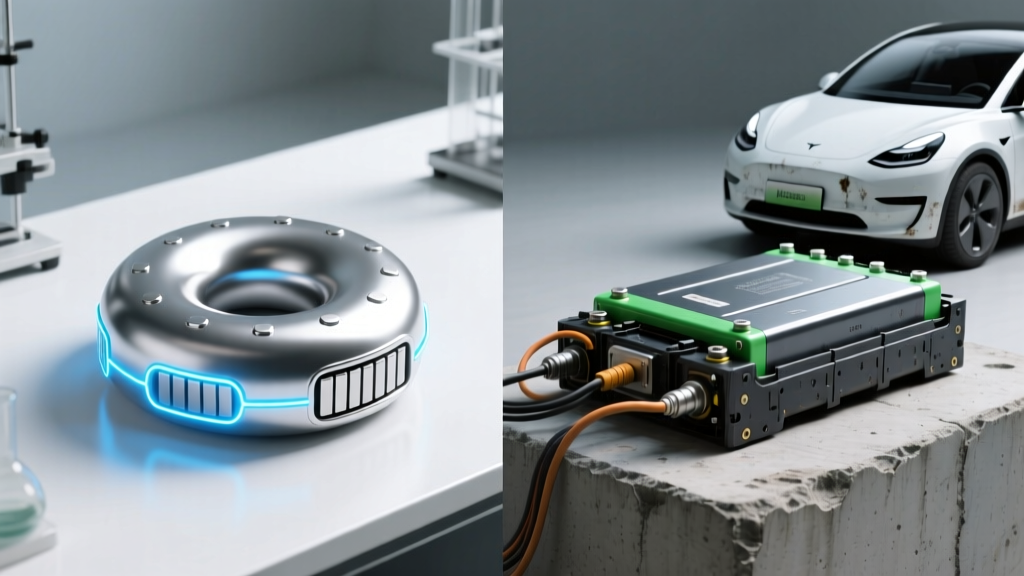
When Donut Lab published its solid-state battery test results — claiming exceptional cycle life, high energy density, and improved safety over conventional lithium-ion cells — it reignited a familiar debate among EV buyers: should I wait for next-generation batteries, or is today's technology good enough? The short answer, based on everything we know in 2026, is that current-generation lithium-ion packs are remarkably durable, and solid-state cells remain a forward-looking technology not yet available in any production vehicle sold in the United States.
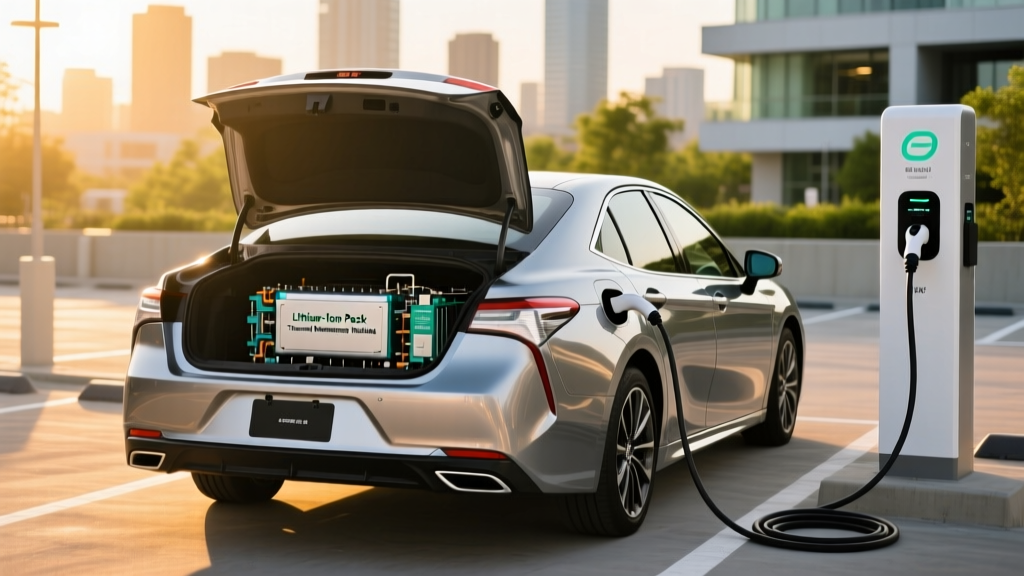
This guide uses the Donut Lab solid-state battery test as a springboard to walk through what actually matters for EV ownership right now: the chemistry inside your pack, how fast it degrades, what the warranty covers, what a replacement really costs, and how to maximize the life of the battery you already have or are about to buy.
Current EV Battery Chemistry: LFP vs NMC vs NCA Explained
Every battery-electric vehicle sold in the US in 2026 uses one of three dominant cathode chemistries: lithium iron phosphate (LFP), nickel manganese cobalt (NMC), or nickel cobalt aluminum (NCA). Each trades off energy density, cycle life, cost, and cold-weather performance differently.
LFP (Lithium Iron Phosphate) cells use iron and phosphate in the cathode, avoiding expensive nickel and cobalt entirely. They offer superior cycle life (3,000–5,000+ full cycles before significant degradation), excellent thermal stability, and lower raw-material cost. The trade-off is lower energy density — roughly 160–180 Wh/kg at the cell level versus 220–260 Wh/kg for NMC — which means a heavier, larger pack for the same range. LFP also suffers more capacity loss in sub-freezing temperatures, though modern thermal management systems mitigate this substantially.
NMC (Nickel Manganese Cobalt) and NCA (Nickel Cobalt Aluminum) chemistries prioritize energy density, enabling longer range in a lighter, more compact pack. Tesla uses NCA in many of its Long Range models; Hyundai, Kia, Ford, and GM predominantly use NMC variants. Cycle life is typically 1,000–2,000 full equivalent cycles — still enough for 200,000+ miles in most ownership scenarios — but these cells are more sensitive to sustained high states of charge and elevated temperatures.
| Attribute | LFP | NMC | NCA |
|---|---|---|---|
| Cell energy density | 160–180 Wh/kg | 220–260 Wh/kg | 240–270 Wh/kg |
| Cycle life (to 80% capacity) | 3,000–5,000+ | 1,000–2,000 | 1,000–1,500 |
| Cold-weather range loss (20°F) | ~30–35% | ~25–30% | ~25–30% |
| Thermal runaway risk | Very low | Moderate | Moderate |
| Recommended daily SoC | 100% (periodic top-off helps BMS calibration) | 80% for daily; 100% before trips | 80% for daily; 100% before trips |
| Relative cell cost | $80–100/kWh | $110–140/kWh | $120–150/kWh |
| Notable 2026 applications | Tesla Model 3/Y RWD, Ford Mustang Mach-E Select (LFP trims), BYD imports | Hyundai Ioniq 5/6, Kia EV6/EV9, Chevy Equinox EV, Ford Mach-E GT | Tesla Model 3/Y Long Range, Rivian R1T/R1S |
The Donut Lab solid-state battery test pointed to energy densities exceeding 350 Wh/kg with improved safety — figures that would represent a generational leap. But as of 2026, no solid-state pack has been validated for mass automotive production at automotive price points. Toyota, Samsung SDI, and QuantumScape have all announced pilot programs, with the earliest limited-production vehicles expected around 2028–2030.
How Long Do EV Batteries Actually Last? Degradation Data
The single most common question we hear: "How long until I need a new battery?" The data is reassuring. A comprehensive analysis by Geotab, tracking over 10,000 EVs in real-world fleet use, found an average annual degradation rate of approximately 1.8% per year across all chemistries and models. That translates to roughly 82–85% of original capacity remaining after 10 years of average use (12,000–15,000 miles/year).
Here is what degradation looks like across representative models based on aggregated owner data and manufacturer testing:
| Vehicle / Chemistry | Year 1 | Year 3 | Year 5 | Year 8 | Year 10 |
|---|---|---|---|---|---|
| Tesla Model 3 RWD (LFP, 60 kWh) | ~98% | ~95% | ~92% | ~88% | ~85% |
| Hyundai Ioniq 5 (NMC, 77.4 kWh) | ~97% | ~93% | ~89% | ~84% | ~80% |
| Tesla Model Y LR (NCA, 82 kWh) | ~97% | ~94% | ~90% | ~85% | ~82% |
| Chevy Bolt EV (NMC, 65 kWh, liquid-cooled) | ~98% | ~94% | ~91% | ~86% | ~83% |
Several patterns emerge from this data. First, the steepest degradation occurs in the first 12–18 months (roughly 2–4% loss), after which the curve flattens considerably. Second, LFP packs tend to degrade more slowly in calendar terms but may show slightly higher initial variance due to the flat voltage curve making precise SoC estimation more difficult. Third, liquid-cooled packs (nearly all modern EVs) degrade significantly slower than the passively air-cooled packs found in early-generation vehicles like the first Nissan Leaf.
For context, a 310-mile EPA-rated EV retaining 82% capacity after 10 years still delivers approximately 254 miles of range — more than adequate for the vast majority of daily driving and even most road trips with a single DC fast-charge stop.
What Does the Battery Warranty Actually Cover?
Federal law mandates that EV battery packs carry a minimum warranty of 8 years / 100,000 miles. Most manufacturers exceed this baseline. The critical detail is the capacity retention threshold — the minimum State of Health (SoH) percentage below which the manufacturer must repair or replace the pack.
| Manufacturer | Warranty Period | Mileage Limit | Capacity Retention Threshold |
|---|---|---|---|
| Tesla (Model 3/Y) | 8 years | 100,000–120,000 mi (varies by trim) | 70% |
| Hyundai / Kia | 10 years | 100,000 mi | 70% |
| General Motors (Ultium) | 8 years | 100,000 mi | 70% (some models 65%) |
| Ford | 8 years | 100,000 mi | 70% |
| Rivian | 8 years | 175,000 mi | 70% |
| Volkswagen (ID.4) | 8 years | 100,000 mi | 70% |
A few critical nuances. The warranty covers defects and abnormal degradation below the threshold — it does not cover gradual, normal capacity loss above 70%. If your 82 kWh pack drops to 56 kWh (roughly 68% SoH) at year 7 and 95,000 miles, you are covered. If it sits at 72% at year 9 and 105,000 miles, you are likely out of warranty on both time and mileage. Also note that some manufacturers require proof of adherence to recommended charging practices (e.g., not routinely charging NMC packs to 100% and leaving them parked at full SoC in extreme heat), though enforcement of such clauses is rare in practice.
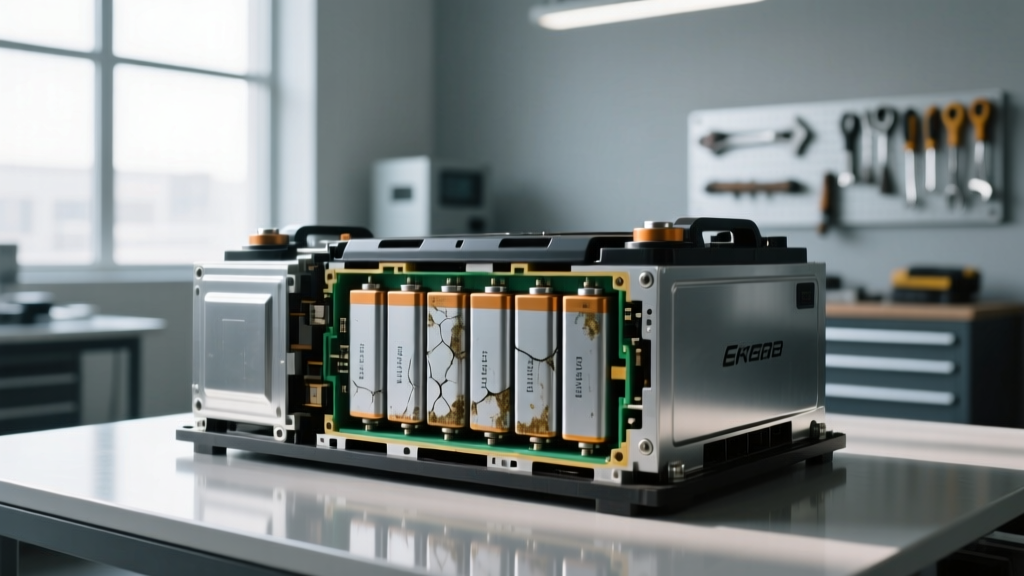
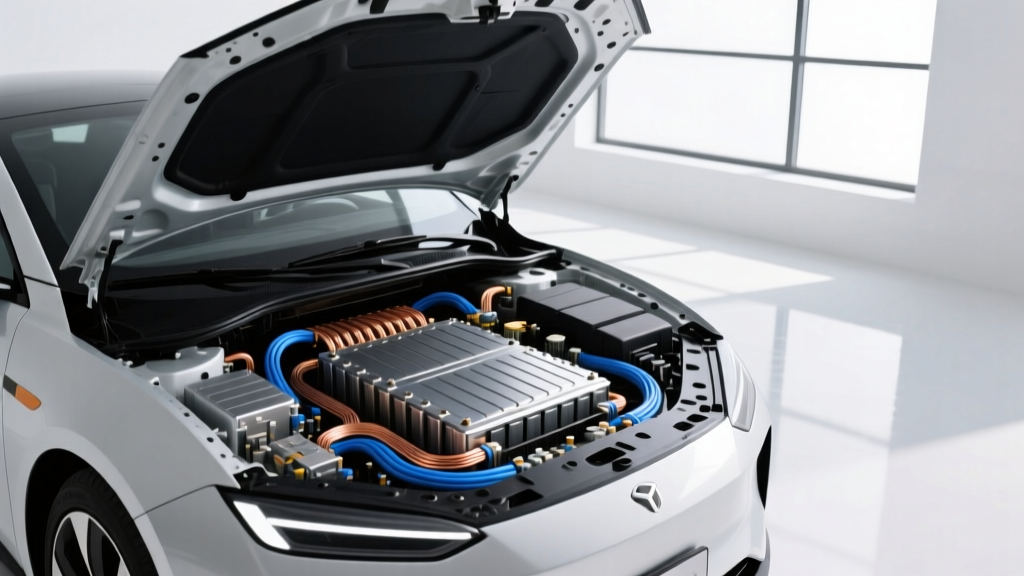
Importantly, the warranty typically covers module-level replacement rather than a full pack swap. Modern packs are built from 10–20+ individual modules, and a technician can replace only the degraded or defective module(s) at a fraction of the full-pack cost.
EV Battery Replacement Cost: What to Expect (and When)
Full battery pack replacement is the specter that haunts many prospective EV buyers. Here is the reality: the vast majority of EV batteries outlast the vehicle itself. Geotab's fleet data shows that fewer than 2% of EV battery packs required replacement due to failure within the first 10 years, and most of those were covered under warranty.
That said, if you are buying a used EV out of warranty or planning to keep a vehicle for 15+ years, replacement costs matter:
| Vehicle | Pack Size | Chemistry | Estimated Pack Cost (Parts) | Labor + Total Estimate |
|---|---|---|---|---|
| Tesla Model 3 RWD | 60 kWh | LFP | $6,000–$8,000 | $8,000–$11,000 |
| Hyundai Ioniq 5 | 77.4 kWh | NMC | $9,000–$12,000 | $12,000–$16,000 |
| Tesla Model Y Long Range | 82 kWh | NCA | $10,000–$14,000 | $13,000–$18,000 |
| Ford F-150 Lightning Ext. Range | 131 kWh | NMC | $16,000–$22,000 | $20,000–$28,000 |
| GMC Hummer EV | ~212 kWh (dual-layer) | NMC | $28,000–$38,000 | $35,000–$48,000 |
Cell-level pricing has continued its long decline, falling from over $300/kWh in 2015 to roughly $90–130/kWh in 2026 depending on chemistry and format, per BloombergNEF tracking. The installed cost (parts + labor + diagnostic + coolant flush + recalibration) typically runs 30–50% above raw pack pricing.
Module-level repair is the more realistic scenario for out-of-warranty owners: replacing 1–3 degraded modules typically costs $1,500–$4,000 including labor, restoring the pack to within a few percentage points of its pre-failure capacity.
Factors That Accelerate (or Preserve) Battery Life
Battery degradation is not purely a function of time. Your charging habits, climate, and driving patterns all influence how quickly your pack loses capacity. Here are the factors ranked by impact, based on fleet data and manufacturer engineering guidance:
Battery Care Checklist: Maximize Pack Longevity
- State of charge habits (highest impact): For NMC/NCA packs, avoid parking at 100% SoC for extended periods, especially in hot weather. Set your daily charge limit to 80% and charge to 100% only when you need the full range for a trip. LFP packs are more tolerant of 100% SoC and Tesla/BYD actually recommend periodic full charges to keep the BMS calibrated.
- DC fast-charging frequency: Occasional DCFC use (1–2 sessions per week) has minimal impact on modern liquid-cooled packs. However, daily reliance on 150+ kW fast charging — particularly in hot climates without adequate preconditioning — can accelerate degradation by 1–2% per year versus Level 2 charging. The Tesla fleet data shows that vehicles that primarily Supercharge show roughly 2–3% more degradation at 100,000 miles versus those that primarily charge at home on Level 2.
- Extreme temperature exposure: Parking in 100°F+ heat at high SoC is the single worst thing you can do to an NMC/NCA pack. Use preconditioning and garage parking when possible. Sub-freezing temperatures temporarily reduce range but cause less permanent degradation than sustained heat exposure.
- Depth of discharge: Shallow cycling (e.g., charging from 30% to 80%) is gentler than deep cycling (5% to 95%). You do not need to obsess over this — modern BMS systems manage it well — but consistently draining to near-zero before charging adds stress.
- Storage conditions: If storing an EV for weeks or months, set SoC to approximately 50% and keep the vehicle in a temperature-stable environment. Most EVs will slowly self-discharge; check periodically.
How to Check and Monitor Your Battery's State of Health
State of Health (SoH) is expressed as a percentage of the pack's current maximum capacity relative to its original rated capacity. A brand-new pack is at 100% SoH; a pack that has degraded to hold only 65 kWh out of an original 77.4 kWh sits at approximately 84% SoH.
Here are the primary ways to monitor SoH in 2026:
In-vehicle displays: Tesla provides a battery health readout in the service menu (accessed via the touchscreen). Hyundai and Kia's connected-car apps show estimated SoH. GM's Ultium-based vehicles display battery health through the myChevrolet/myCadillac apps. These readings use the BMS's internal coulomb-counting and voltage-analysis algorithms and are generally accurate within ±2%.
OBD-II diagnostic tools: Third-party apps like LeafSpy (for Nissan), Scan My Tesla, and ABRP's OBD integrations can pull detailed cell-level voltage data, internal resistance readings, and SoH estimates. These are particularly useful for used-EV buyers who want an independent health check before purchase.
Dealer diagnostic reports: Any authorized service center can run a full pack diagnostic that generates a detailed SoH report with per-module voltage variance. This is the gold standard for pre-purchase inspections on used EVs and is typically available for $50–$150 if not covered under a certified pre-owned program.
Charging-based estimation: If you consistently charge on the same Level 2 circuit and track kWh delivered versus miles gained, you can estimate SoH over time. A noticeable decline in miles-per-kWh delivered (not driving efficiency, but charging efficiency) can indicate degradation. Apps like Recurrent and TezLab automate this analysis.
Solid-State and Silicon-Anode Batteries: Where Things Stand in 2026
The Donut Lab solid-state battery test generated attention because it addressed the two biggest promises of solid-state technology: higher energy density (potentially 350–500 Wh/kg at the cell level) and improved safety (no liquid electrolyte to ignite). These are real advantages, and the underlying science is sound. However, the gap between laboratory validation and automotive-grade mass production remains substantial.
Here is where the major solid-state efforts stand as of 2026:
- Toyota: Has announced a solid-state battery pilot in a limited-production vehicle targeted for 2027–2028, with claims of 750 km (466 mi) range and 10-minute 10–80% DC fast charging. This remains unverified in independent testing and is limited to a small production run in Japan.
- QuantumScape: Continues to ship prototype cells to automotive partners (including Volkswagen's PowerCo division). Their cells use a ceramic solid separator and lithium-metal anode. Production timeline has slipped from initial 2025 targets to a likely 2028–2029 earliest availability in limited models.
- Samsung SDI: Has demonstrated all-solid-state prototype cells with 900+ Wh/L volumetric energy density and targets 2027 for sample delivery to automakers. Mass production is not expected before 2029.
- Silicon-anode cells (semi-solid/hybrid): Companies like Sila Nanotechnologies and Group14 are producing silicon-dominant anode materials that boost energy density by 15–25% in conventional liquid-electrolyte cells. These are already appearing in select 2025–2026 models (Mercedes-Benz G-Class EV uses a Sila anode variant) and represent the most immediate near-term improvement available today.
The practical takeaway: if you need an EV in the next 1–3 years, buy based on today's excellent lithium-ion technology. Solid-state cells will likely debut in premium, low-volume models first, with mainstream adoption not expected until 2030 or later. The Donut Lab test results and similar announcements are encouraging signposts, but they do not change the calculus for a purchase decision today.
Frequently Asked Questions
How long do EV batteries last in years and miles?
Based on fleet data from Geotab and manufacturer reports, modern liquid-cooled EV batteries retain approximately 80–88% of original capacity after 10 years or 150,000 miles of typical use. Most packs will outlast the vehicle's useful life. Full failure requiring replacement is rare — under 2% in the first decade — and almost always covered under the 8-year/100,000-mile federal minimum warranty.
How much does an EV battery cost to replace?
Full pack replacement ranges from approximately $8,000–$11,000 for a Tesla Model 3 RWD (60 kWh LFP) to $20,000–$28,000 for a Ford F-150 Lightning Extended Range (131 kWh NMC). However, module-level repair — replacing only the degraded sections — typically costs $1,500–$4,000. The vast majority of EVs never need a replacement during their first ownership cycle.
What does the battery warranty cover?
Federal law requires a minimum 8-year/100,000-mile warranty on EV battery packs. Most manufacturers guarantee that the pack will retain at least 70% of its original capacity during that period. If capacity drops below the threshold due to defect or abnormal degradation, the manufacturer must repair or replace the affected modules or full pack at no cost. Hyundai and Kia extend this to 10 years/100,000 miles. The warranty does not cover normal, gradual degradation above the threshold, damage from accidents, or modifications.
How do I check and maximize my battery's health?
Check SoH through your vehicle's built-in battery health display, the manufacturer's connected app, or an OBD-II diagnostic tool. To maximize longevity: set daily charge limits to 80% for NMC/NCA packs (100% is fine for LFP), avoid parking at full SoC in extreme heat, use DC fast charging in moderation (prioritize Level 2 home charging), precondition the battery before fast charging in cold weather, and avoid consistently draining below 10% SoC.
LFP vs NMC — which battery chemistry is better?
Neither is universally better; the right choice depends on your priorities. Choose LFP if you want maximum cycle life, lower cost, better thermal safety, and don't mind slightly lower range per pound — it is ideal for daily commuting and high-mileage drivers. Choose NMC/NCA if you need maximum range in a lighter, more compact pack — it is the better choice for long-range trims, towing applications, and buyers in cold climates where the slightly better cold-weather performance matters. Both chemistries will comfortably last 150,000+ miles with proper care.
Should I wait for solid-state batteries before buying an EV?
No — not unless your purchase timeline extends to 2029 or later. Solid-state batteries, including those tested by Donut Lab and other research groups, remain in the prototype and pilot-production stage. The earliest consumer vehicles with solid-state cells are expected in limited, premium models around 2028–2030, with mainstream availability likely after 2030. Today's lithium-ion packs (both LFP and NMC) offer excellent durability, proven safety, and rapidly declining costs. The U.S. Department of Energy continues to fund solid-state research, but the technology is not yet a reason to delay a purchase.