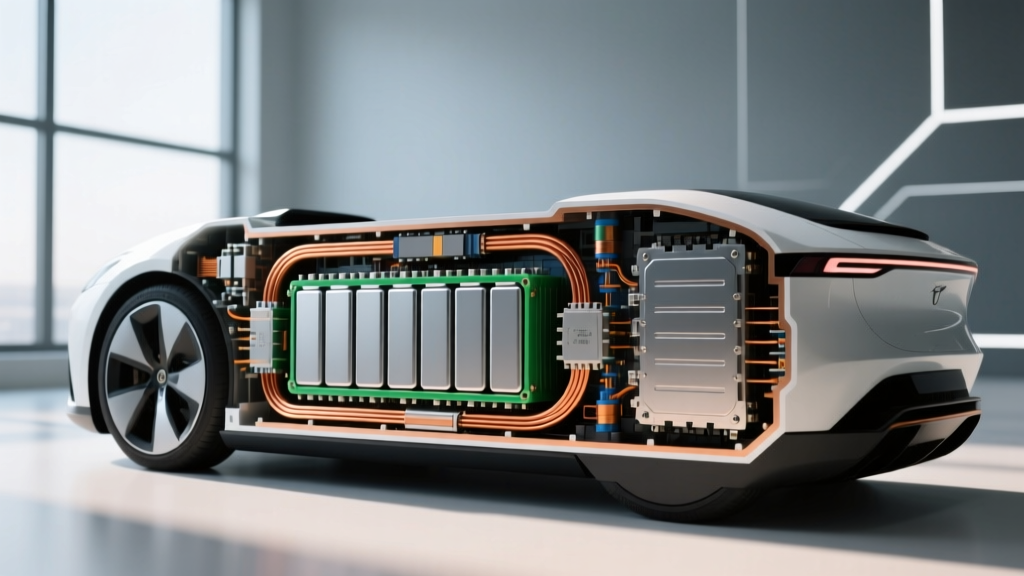
When Donut Lab unveiled its solid-state battery prototype at CES 2026, the auto press lit up with promises of 600-mile ranges, five-minute charging, and the end of battery anxiety. The demo showed a pouch cell with claimed energy density above 400 Wh/kg — roughly double the best lithium-ion cells in production EVs today. But for buyers shopping for a 2026 EV right now, the real question is practical: how do today's batteries actually hold up, and should you wait for solid-state?
This guide cuts through the CES hype. We'll cover the chemistry in your current or next EV, real degradation data from high-mileage fleets, what warranties actually protect, and what a replacement really costs. Then we'll put the Donut Lab announcement — and solid-state tech broadly — in realistic timeline context.
Today's EV Battery Chemistry: LFP vs NMC Explained
Every EV sold in the U.S. in 2026 uses one of two lithium-ion cathode chemistries: NMC (nickel-manganese-cobalt, sometimes NCA — nickel-cobalt-aluminum) or LFP (lithium iron phosphate). The chemistry determines your range, how the battery ages, cold-weather behavior, and the vehicle's price. Here's how they stack up on the metrics that matter:
| Attribute | LFP (Lithium Iron Phosphate) | NMC / NCA (Nickel-based) |
|---|---|---|
| Energy density (cell-level) | 160–200 Wh/kg | 230–300 Wh/kg |
| Typical EPA range (mid-size sedan/SUV) | 240–310 mi | 290–400+ mi |
| Cycle life (to 80% capacity) | 3,000–6,000 cycles | 1,000–2,000 cycles |
| Calendar life | 15–20+ years typical | 12–15 years typical |
| Cold-weather range loss (20°F) | ~25–35% loss | ~20–30% loss |
| Recommended daily SoC | 100% OK (periodic full charge actually required for BMS calibration) | 80% daily; 100% only for trips |
| Fast-charge tolerance | Good, but peak kW usually lower (~150–170 kW) | Higher peaks (200–350 kW on 800V architectures) |
| Cost per kWh (pack level) | ~$90–$110 | ~$120–$150 |
| 2026 example vehicles | Tesla Model 3 RWD, Model Y RWD, BYD Seal (where sold), base Ford Mustang Mach-E Select | Hyundai Ioniq 5/6, Kia EV6/EV9, Rivian R1T/R1S, Porsche Taycan, Chevrolet Silverado EV |
The bottom line: LFP wins on longevity, cost, and daily-charge simplicity — ideal for commuters and high-mileage drivers who don't need maximum range. NMC wins on range and fast-charging speed — the right call for road-trippers, towing, and cold-climate buyers who need every EPA mile.
How Long Do EV Batteries Actually Last? Real Degradation Data
The "my battery will die in five years" fear is the single most persistent EV myth. Real-world fleet data tells a different story. According to Recurrent Auto's 2025 analysis of over 15,000 EVs, the average battery retains roughly 90–95% of original capacity after 5 years / 75,000 miles, and 85–90% after 10 years / 150,000 miles. Catastrophic failure (sudden death) is rare — under 1.5% of vehicles in major datasets.
Here's what the curve looks like across representative chemistries:
- Year 1 / 15k mi: ~97% (LFP) / ~95% (NMC)
- Year 3 / 45k mi: ~93% (LFP) / ~90% (NMC)
- Year 5 / 75k mi: ~91% (LFP) / ~87% (NMC)
- Year 8 / 120k mi: ~88% (LFP) / ~83% (NMC)
- Year 10 / 150k mi: ~85% (LFP) / ~80% (NMC)
Notice the curve is steepest in year one ("formation loss"), then flattens — a well-managed pack will lose only 1–2% per year after year two. Most EVs will be retired for collision, rust, or obsolescence before the battery reaches 70% capacity.
Real-world caveat: Degradation shows up as range loss, not sudden failure. A 300-mile EPA NMC vehicle at 85% SoH still delivers ~255 miles — plenty for most daily driving, but meaningful on long highway trips in winter.
What Does the Battery Warranty Actually Cover?
Federal law mandates a minimum of 8 years / 100,000 miles for EV traction batteries (10 years / 150,000 miles in California and states that adopted CARB rules). Most manufacturers match or exceed this, with capacity-retention thresholds that determine when a warranty claim is honored.
| Manufacturer | Term | Capacity retention threshold | Notes |
|---|---|---|---|
| Tesla (Model 3/Y LFP) | 8 yr / 120,000 mi | 70% | Longer term than NMC trims |
| Tesla (Model 3/Y Long Range NMC) | 8 yr / 100,000 mi | 70% | — |
| Hyundai / Kia (E-GMP) | 10 yr / 100,000 mi | 70% | Longer calendar term |
| Ford (Mustang Mach-E, F-150 Lightning) | 8 yr / 100,000 mi | 70% | — |
| GM (Ultium-based) | 8 yr / 100,000 mi | 70% | — |
| Rivian | 8 yr / 175,000 mi | 70% | Higher mileage cap |
| BMW | 8 yr / 100,000 mi | 70% | — |
Key fine print: Warranties cover defects and excessive degradation below the threshold — not normal wear. If your 8-year-old NMC pack reads 72% SoH, no claim is honored, even though you've lost ~80 miles of range. Always document SoH readings periodically (see below) to establish a baseline.
EV Battery Replacement Cost: What to Budget (and When)
Replacement is the fear that keeps potential buyers up at night — but the odds of needing one are low. Based on fueleconomy.gov data and OEM service bulletins, fewer than 2% of EVs require a full pack replacement under normal ownership. When it does happen, costs in 2026 look like this:
| Vehicle class / example | Pack size | Chemistry | Replacement cost |
|---|---|---|---|
| Compact (Nissan Leaf, base Bolt) | 40–65 kWh | LFP/NMC | $6,000–$10,000 |
| Mid-size sedan (Model 3 RWD, Ioniq 6) | 60–77 kWh | LFP/NMC | $9,000–$14,000 |
| Mid-size SUV (Model Y LR, EV6, Mach-E) | 75–84 kWh | NMC | $12,000–$18,000 |
| Large SUV / truck (F-150 Lightning, Rivian, Silverado EV) | 100–200 kWh | NMC | $18,000–$30,000+ |
| Luxury (Taycan, Lucid, EQS) | 90–118 kWh | NMC | $20,000–$35,000 |
Two important context points. First, module-level repair is increasingly available — a shop can replace a single failed module for $1,500–$4,000 rather than the whole pack. Second, pack prices have fallen ~60% since 2018 and continue declining; a replacement in 2034 will cost far less than a 2026 quote.
Factors That Accelerate (or Protect) Battery Life
Batteries don't age on a fixed clock — they age based on how they're used. Five factors dominate:
- State of charge habits. Storing an NMC pack above 90% or below 10% for weeks accelerates calendar degradation. Daily 80% cap, 100% only before trips. LFP owners: charge to 100% at least weekly to keep the BMS calibrated.
- DC fast-charging frequency. Occasional Supercharging is fine; daily 350-kW sessions on a hot pack adds ~1–2% extra degradation over 5 years. Precondition the battery before fast-charging (most modern EVs do this automatically when you navigate to a charger).
- Extreme temperatures. Sustained operation above 95°F or below 10°F without thermal management stresses cells. Garage parking and preconditioning help. Avoid repeated wide-open-throttle launches in hot weather.
- Depth of discharge. Shallow cycles (20–80%) are easier on NMC than deep 0–100% cycles. LFP is more tolerant of deep cycles.
- Storage conditions. A vehicle sitting at 100% SoC in a hot driveway for a month does more damage than a year of normal commuting. For long storage, aim for 50% SoC in a cool location.
How to Check and Monitor Battery Health (SoH)
State of Health (SoH) is the percentage of original capacity your pack still holds. You have several ways to track it:
- In-car displays. Tesla, Hyundai/Kia, BMW, and Rivian expose SoH or a range-vs-new comparison in the service or battery menu.
- OBD-II dongles + apps. Tools like OBDeleven, LeafSpy (Nissan), or Scan My Tesla read raw BMS data for precise SoH numbers.
- Third-party reports. Services like Recurrent Auto generate a verified battery-health score you can share when selling.
- Dealer diagnostic. Request a printout at every major service — keep it in your records for warranty claims and resale.
Track SoH every 6–12 months. A sudden drop (e.g., 92% → 85% in three months) signals a module imbalance worth diagnosing early.
Donut Lab at CES 2026: Where Solid-State Actually Stands
The Donut Lab CES 2026 demo was real hardware — a prototype pouch cell with a sulfide-based solid electrolyte and lithium-metal anode, claiming 420 Wh/kg at the cell level. That's roughly 2× the energy density of today's best NMC cells (Panasonic/Samsung SDI ~280–300 Wh/kg) and would theoretically enable a 600-mile pack at today's pack weight.
What the demo showed:
- Cell-level energy density: 420 Wh/kg (claimed, third-party validation pending)
- Fast-charge demo: 10% → 80% in under 8 minutes at high C-rate
- Claimed cycle life: 800+ cycles to 80% capacity
- No liquid electrolyte = no thermal runaway pathway, per Donut Lab
What the demo did NOT show:
- A production-ready pack integrated into a vehicle
- Long-term calendar aging data (years, not months)
- Manufacturing yield or cost-per-kWh at scale
- Cold-weather performance (solid-state cells historically struggle below freezing)
Other emerging chemistries are closer to market. Silicon-anode cells (used in limited form in the 2026 Porsche Taycan and upcoming GM EVs) deliver a 20–30% energy-density bump within existing lithium-ion manufacturing. Sodium-ion packs from CATL are entering low-cost urban EVs in China, with U.S. availability likely by 2027–2028 for budget models.
Should You Wait for Solid-State, or Buy Now?
Here's the decision framework we recommend at AutoEdgeView:
- Buy now if: your current vehicle costs more in fuel and maintenance than an EV would, you have home charging access, and you plan to keep the car 6–10 years. Today's LFP and NMC packs will comfortably outlast that ownership window with 80%+ SoH at end of term.
- Wait 18–24 months if: you specifically want a silicon-anode pack (Porsche, GM, Mercedes upcoming models) for 15–20% more range without solid-state risk.
- Wait 4–6 years if: you're shopping for a second vehicle, have low annual mileage, and genuinely want solid-state's combination of range + charge speed + safety.
Donut Lab's CES 2026 reveal is a genuine engineering milestone — but it's a milestone on a timeline, not a product on a showroom floor. The smart 2026 EV buy is still a well-made LFP or NMC vehicle with a strong warranty and a home Level 2 charger.
Frequently Asked Questions
How long do EV batteries last in years and miles?
Fleet data from Recurrent Auto and Geotab shows most modern EV batteries retain 80–90% capacity at 10 years / 150,000 miles. LFP chemistries typically outlast NMC by 3–5 percentage points over the same period. Most packs outlive the vehicle they're installed in.
How much does an EV battery cost to replace in 2026?
Expect $6,000–$14,000 for compact to mid-size EVs and $18,000–$35,000 for large trucks and luxury sedans, including labor. Module-level repairs can reduce this to $1,500–$4,000 for localized cell failures. Full-pack replacement is rare — under 2% of EVs ever need one.
What does the EV battery warranty cover?
Federal minimum is 8 years / 100,000 miles (10/150k in CARB states), covering defects and capacity loss below a threshold — typically 70% of original. Hyundai/Kia and Rivian offer longer terms. Warranties do not cover normal gradual degradation above the threshold.
How do I check my EV's battery State of Health?
Use the vehicle's built-in battery menu (Tesla, Hyundai, BMW, Rivian), an OBD-II app like LeafSpy or Scan My Tesla, a third-party service like Recurrent Auto, or request a dealer diagnostic printout. Check every 6–12 months and keep records.
LFP vs NMC — which is better for my situation?
Choose LFP if you commute daily, want maximum cycle life, prefer charging to 100% without guilt, and don't need 350+ miles of range. Choose NMC if you road-trip frequently, tow, live in a very cold climate, or need the longest possible single-charge range. Both chemistries are reliable — they optimize for different use cases.
Is the Donut Lab solid-state battery from CES 2026 available to buy?
No. The CES 2026 demo was a prototype pouch cell, not a production pack. No automaker has announced a Donut Lab-equipped vehicle. Industry-wide, solid-state batteries are expected in low-volume production around 2027–2028 (Toyota) with mainstream availability around 2029–2031.
Does frequent DC fast charging destroy my battery?
No — but exclusive reliance on 350-kW fast charging adds roughly 1–2% extra degradation over 5 years versus primarily Level 2 home charging. Preconditioning the pack before charging (automatic in most 2026 EVs when navigating to a charger) substantially mitigates the effect.