What Is the Donut Battery Company and Why Are EV Owners Searching for It?
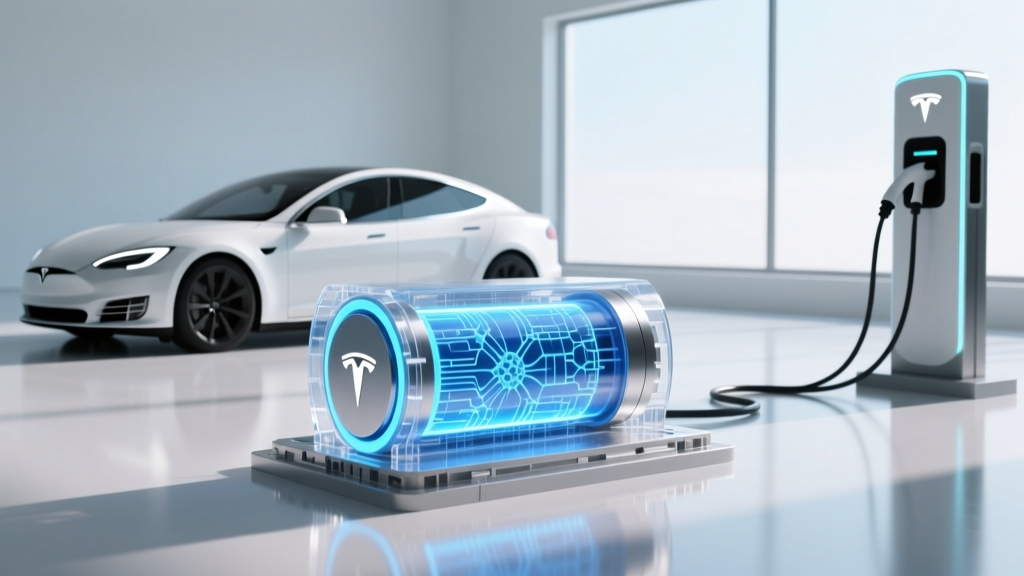
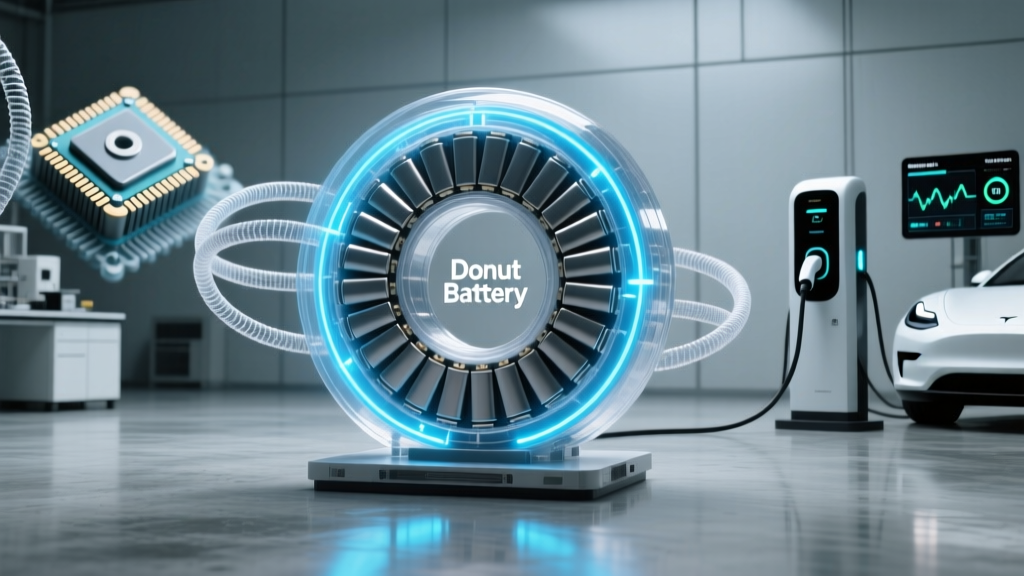
The phrase "donut battery company" has been gaining traction in EV forums and search trends, typically referring to startups or concepts exploring toroidal (ring-shaped) battery cell geometries or unconventional pack layouts that promise higher energy density and better thermal management. While no major automaker has yet shipped a production vehicle with a literal donut-shaped cell, the search interest reflects a real buyer hunger: when will the next battery breakthrough actually arrive in a car I can buy?
This guide uses that curiosity as a launching point to cover the battery technologies that are in today's EVs — LFP and NMC chemistries, real degradation data, warranty terms, replacement costs, and the emerging solid-state and silicon-anode tech that's closer to production than any toroidal cell concept.
Chemistry 101: LFP vs NMC/NCA — What's Actually in Your EV
Every EV sold in the US in 2026 uses one of two dominant lithium-ion cathode chemistries. Understanding which one your vehicle uses is the single most important factor in predicting range, longevity, and charging behavior.
| Attribute | LFP (Lithium Iron Phosphate) | NMC/NCA (Nickel Manganese Cobalt / Nickel Cobalt Aluminum) |
|---|---|---|
| Energy Density | ~160–180 Wh/kg (cell level) | ~220–260 Wh/kg (cell level) |
| Typical EPA Range | 240–330 mi (mid-size sedan/SUV) | 280–400+ mi (mid-size to large SUV) |
| Cycle Life | 3,000–5,000+ cycles to 80% SoH | 1,000–2,000 cycles to 80% SoH |
| Cold-Weather Performance | More range loss below 32°F (~30–40% reduction) | Better cold performance (~20–30% reduction) |
| Fast-Charging Tolerance | Excellent — handles frequent DCFC well | Moderate — frequent DCFC accelerates degradation |
| Recommended Daily SoC | 100% (regular full charges are fine) | 80% daily; 100% only for trips |
| Cost (per kWh) | ~$90–$110 | ~$120–$150 |
| Cobalt Content | None | Yes (ethical/supply-chain concern) |
| Notable 2026 Models | Tesla Model 3 RWD, Ford Mustang Mach-E Select (LFP variant), Rivian R1S Standard | Hyundai Ioniq 5 Long Range, Chevy Equinox EV, Tesla Model Y Long Range |
LFP vs NMC — Which Is Better and Why?
There is no universal winner. If you charge mostly at home, drive under 250 miles daily, and plan to keep the vehicle 10+ years, LFP's superior cycle life and tolerance for 100% SoC make it the more durable choice. If you need maximum range for road trips, live in a cold climate, or want the fastest 0–60 performance, NMC's higher energy density justifies its faster degradation curve and more careful SoC management.
How Long Do EV Batteries Last? Real-World Degradation Data
Contrary to early-EV fear-mongering, modern EV batteries routinely outlast the vehicles they're installed in. The key metric is State of Health (SoH) — the percentage of original capacity remaining.
Typical Degradation Curve (NMC, liquid-cooled pack, average US driver ~12,000 mi/yr):
- Year 1 / 12k mi: ~3–5% loss (initial formation loss)
- Year 3 / 36k mi: ~7–9% total loss
- Year 5 / 60k mi: ~10–12% total loss
- Year 8 / 96k mi: ~14–18% total loss
- Year 10 / 120k mi: ~18–22% total loss
Sources: Recurrent Auto battery data reports (2025), recurrentauto.com; Tesla Impact Report 2024 fleet data showing ~12% degradation at 150,000 miles.
LFP packs degrade more slowly but with a less linear curve — they hold capacity well for 3,000+ cycles, then drop more steeply. A 2026 Tesla Model 3 RWD with its ~60 kWh LFP pack can reasonably expect 85%+ SoH at 150,000 miles under normal use.
Real-world example: A 2024 Hyundai Ioniq 5 Long Range (77.4 kWh NMC, EPA 305 mi) driven 14,000 miles/year with a mix of Level 2 home charging and weekly DC fast charging will likely retain ~265–275 EPA-equivalent miles of range at the 100,000-mile mark. That's still usable daily — but noticeable on long highway trips in winter.
Battery Warranty Terms: What's Actually Covered
Federal law mandates a minimum 8-year/100,000-mile warranty on EV battery packs (10 years/150,000 miles in CARB states like California, New York, and Massachusetts). Here's how major manufacturers structure theirs in 2026:
| Manufacturer | Warranty Period | Mileage Cap | Capacity Threshold | Notes |
|---|---|---|---|---|
| Tesla (Model 3/Y LFP) | 8 years | 100,000 mi | 70% SoH | Long Range/Performance NMC: 8 yr / 120,000 mi |
| Hyundai / Kia | 10 years | 100,000 mi | 70% SoH | Among the most generous terms |
| Ford (Mach-E, F-150 Lightning) | 8 years | 100,000 mi | 70% SoH | Component coverage includes cooling system |
| GM (Ultium platform) | 8 years | 100,000 mi | 70% SoH | Covers battery, motor, and power electronics |
| Rivian | 8 years | 175,000 mi | 70% SoH | Higher mileage cap reflects adventure-use positioning |
| BMW (iX, i4, i5) | 8 years | 100,000 mi | 70% SoH | Extended to 10 yr in some markets |
What triggers a warranty claim? If your battery's State of Health drops below the stated threshold (typically 70%) within the warranty period, the manufacturer must repair or replace the pack — usually by swapping defective modules rather than the entire battery. Damage from accidents, flooding, or unauthorized modifications is excluded.
EV Battery Replacement Cost: What You'll Actually Pay
Most EV batteries will never need a full replacement under normal ownership. But for out-of-warranty vehicles or buyers considering a used EV with high mileage, here are realistic 2026 replacement figures:
| Vehicle | Battery Size | Chemistry | Replacement Cost (Parts + Labor) | Typical Replacement Trigger |
|---|---|---|---|---|
| Tesla Model 3 RWD | ~60 kWh | LFP | $12,000–$16,000 | Module failure, not full-pack degradation |
| Hyundai Ioniq 5 Long Range | 77.4 kWh | NMC | $15,000–$20,000 | Severe degradation past 200k mi or collision damage |
| Ford F-150 Lightning Extended | 131 kWh | NMC | $25,000–$35,000 | Very rare; usually module-level repair ($3k–$7k per module) |
| Chevrolet Equinox EV | ~85 kWh | NMC (Ultium) | $16,000–$22,000 | Module swap possible, reducing total cost |
| Rivian R1T Large Pack | 149 kWh | NMC | $28,000–$38,000 | Largest consumer pack on market; module service available |
Key context: Battery prices have fallen roughly 80% since 2013, per BloombergNEF. The trend continues — by 2030, replacement costs for a mid-size pack are projected to fall below $10,000. Most owners sell or trade their EV before a replacement is needed. Module-level repairs (replacing individual cell groups rather than the full pack) are increasingly common and cost $2,000–$8,000 depending on the vehicle.
Factors That Kill (or Extend) Battery Life
Battery degradation isn't just about age — it's about how you treat the pack. These are the factors with the largest measurable impact:
Battery Care Checklist for Maximum Longevity
- Minimize DC fast charging to 1–2 times per week. Daily DCFC can accelerate NMC degradation by 2–4% over 5 years vs. primarily Level 2 charging. LFP is more tolerant but still benefits from slower charging.
- Keep SoC between 20% and 80% for daily use (NMC). Storing at 100% SoC for extended periods stresses the cathode. LFP owners can charge to 100% regularly — in fact, Tesla recommends a full charge at least weekly for BMS calibration.
- Precondition before fast charging. A cold battery charged at high kW suffers lithium plating, a permanent capacity loss mechanism. Use your vehicle's navigation-based preconditioning (available on Tesla, Hyundai, Ford, Rivian) to warm the pack before arriving at a DCFC station.
- Avoid extreme heat exposure when parked. Repeatedly parking in 100°F+ ambient without shade or garage accelerates electrolyte decomposition. A garage with ambient temps below 85°F is ideal.
- Don't leave the car at 0% SoC for more than a few hours. Deep discharge can cause copper dissolution in the anode current collector, leading to internal shorts.
- Use scheduled charging to time Level 2 sessions. Charging to 80% just before you leave (rather than sitting at 80% for 12 hours) reduces time at elevated SoC.
How to Check and Monitor Battery Health (SoH)
Unlike a gas car's compression test, battery health monitoring is software-based. Here are the methods available in 2026:
In-Vehicle Displays
Most EVs show an estimated range at full charge, which indirectly reflects SoH. Some brands (Tesla via the service menu, Hyundai via the infotainment diagnostics screen) display a more direct SoH percentage. However, these readings can be optimistic — they're based on the vehicle's own BMS estimation, not an independent measurement.
Third-Party Apps and Services
Recurrent Auto offers free battery health reports by connecting to your vehicle's telematics. Tessie (for Teslas) and LeafSpy (for Nissan LEAF) provide more granular cell-level data. OBD-II dongles paired with apps like ABRP (A Better Routeplanner) can log SoH over time.
Dealer Diagnostic Test
Requesting a battery health check at a dealership typically yields a printout with SoH percentage and individual module voltage deltas. This is the most reliable method and is often free or under $100. It's especially valuable when buying a used EV — insist on this report before purchase.
Emerging Battery Tech: Solid-State, Silicon Anode, and Beyond
If you searched for "donut battery company" hoping for a breakthrough, here's where the industry actually stands on next-gen battery tech:
Solid-State Batteries
Solid-state cells replace the liquid electrolyte with a solid ceramic, polymer, or sulfide material, promising 30–50% higher energy density and faster charging. Toyota has announced a solid-state EV for 2027–2028 with a claimed 620-mile range and 10-minute 10–80% charge. Samsung SDI targets 2027 production. QuantumScape continues pilot production with VW backing.
Realistic timeline: Limited-production vehicles in 2027–2028, with broad availability and competitive pricing not expected before 2030–2032. Expect initial solid-state EVs to carry a significant price premium.
Silicon Anode Cells
Companies like Sila Nanotechnologies and Group14 are replacing graphite anodes with silicon-dominant materials, boosting energy density by 20–40%. Mercedes-Benz's upcoming G-Class EV (announced for 2027) will use Sila's silicon anode cells. This technology is closer to mainstream adoption than solid-state and may appear in several 2027–2028 models.
Sodium-Ion Batteries
CATL and BYD have begun shipping sodium-ion packs in Chinese-market vehicles. Sodium-ion is cheaper and more cold-tolerant than lithium-ion but has lower energy density (~140 Wh/kg). US availability is likely 2028+ for entry-level models or as range-extender secondary packs.
Bottom line: None of these technologies are available in a US-market EV you can buy today. Any "donut battery" or toroidal-cell startup is years from automotive-grade production. The best battery for your next EV purchase is the proven LFP or NMC pack in a 2026 model, maintained with the care practices outlined above.
FAQ: EV Battery Questions Answered
How long do EV batteries last in years and miles?
Based on fleet data from Recurrent Auto and manufacturer reports, most modern liquid-cooled EV batteries retain 80–85% of original capacity at 150,000 miles (roughly 12–15 years of average driving). They rarely fail catastrophically — degradation is gradual and the vehicle remains drivable, just with reduced range. Many will outlast the car's body and suspension components.
How much does an EV battery cost to replace in 2026?
Full pack replacements range from $12,000 (Tesla Model 3 LFP) to $38,000 (Rivian R1T Large Pack) including labor. However, module-level repairs — replacing only the degraded cell groups — typically cost $2,000–$8,000 and are the more common service. Full replacements are rare and usually only needed after collision damage or extreme abuse.
What does the EV battery warranty actually cover?
Federal law requires at least 8 years/100,000 miles of coverage (10 yr/150k in CARB states). The warranty guarantees the battery will retain at least 70% of its original capacity. If SoH drops below that threshold within the warranty period, the manufacturer repairs or replaces the pack at no cost. Exclusions include accident damage, unauthorized modifications, and in some cases, failure to follow maintenance schedules.
How do I check my EV's battery State of Health?
Check your vehicle's infotainment diagnostics menu for an SoH readout, use a third-party service like Recurrent Auto (free, connects via telematics), or request a dealer diagnostic report. When buying used, always insist on a battery health printout showing SoH percentage and module voltage variance.
Is LFP better than NMC for daily driving?
For most daily drivers — commuting under 60 miles, home Level 2 charging, moderate climate — LFP is the better long-term choice due to its 3,000–5,000 cycle life, tolerance for 100% SoC charging, and lower cost. NMC is preferable if you need maximum range (300+ mi), live in a consistently cold climate, or frequently road-trip and need faster DC charging speeds in winter.
Does frequent fast charging damage the battery?
Yes, but the effect is smaller than commonly feared. Data shows that exclusive DC fast charging (3–5 sessions/week) accelerates NMC degradation by roughly 2–4% over 5 years compared to primarily Level 2 charging. Modern thermal management systems mitigate most of the damage. For NMC owners, limiting DCFC to 1–2 sessions/week and always preconditioning is sufficient. LFP packs are more resilient to frequent fast charging.