The State of EV Batteries in 2026: From LFP Workhorses to Solid-State Promises
Electric vehicle batteries have quietly become one of the most reliable components in modern transportation. Data from millions of miles of real-world driving shows that most high-voltage traction batteries outlast the vehicles they power. Yet two questions dominate every EV purchase conversation: how long will the battery actually last, and what happens if it doesn't? Recent headlines around Dongfeng solid-state battery testing have reignited interest in next-generation chemistries, but for today's buyers, understanding current lithium-ion technology — and how to maximize its lifespan — matters far more than prototype milestones.
This guide breaks down everything you need to know about EV battery longevity, from the chemistry trade-offs between LFP and NMC cells, to real degradation data, warranty coverage, replacement economics, and the emerging solid-state timeline. We'll also contextualize what Dongfeng's testing program means for the broader industry.
LFP vs. NMC/NCA: The Chemistry Decision That Shapes Your Ownership
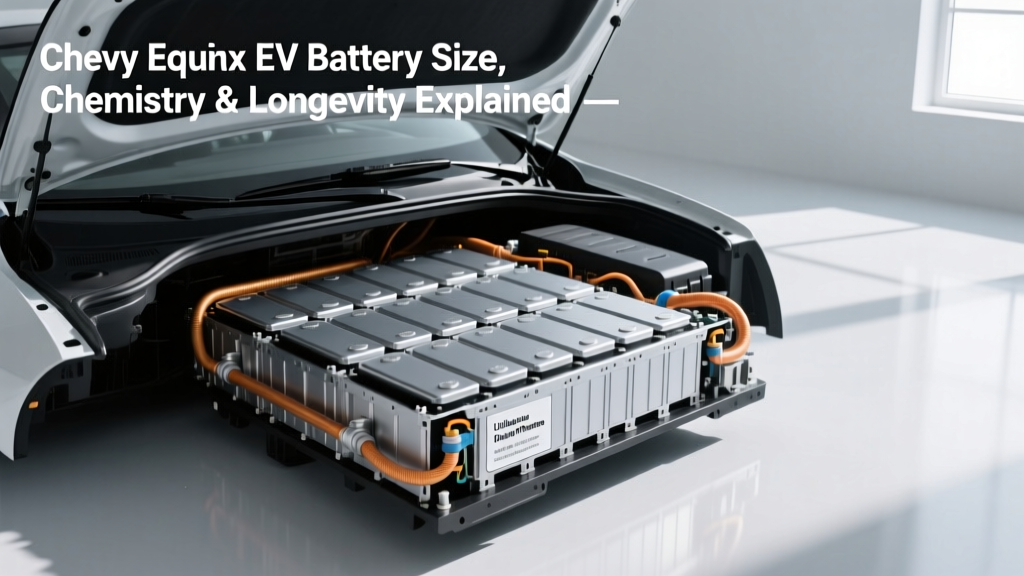
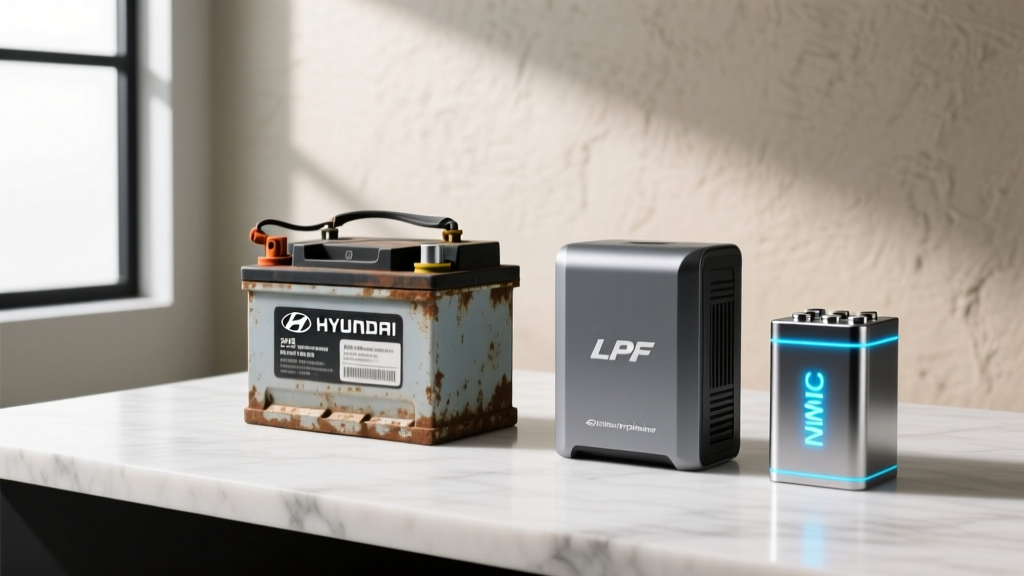
Every EV sold in the US today uses one of two dominant lithium-ion cathode chemistries: LFP (lithium iron phosphate) or NMC/NCA (nickel manganese cobalt / nickel cobalt aluminum). The choice affects range, cost, longevity, and how you should treat the battery day to day.
| Attribute | LFP (Lithium Iron Phosphate) | NMC / NCA (Nickel-Based) |
|---|---|---|
| Energy Density | Lower (~160–180 Wh/kg cell-level) | Higher (~220–280 Wh/kg cell-level) |
| Typical Cycle Life | 3,000–5,000+ cycles to 80% SoH | 1,000–2,000 cycles to 80% SoH |
| Cold-Weather Performance | Moderate — loses more range below 32°F | Better low-temp conductivity |
| Cost per kWh | Lower (~$80–100/kWh pack-level) | Higher (~$110–140/kWh pack-level) |
| Charging to 100% Regularly | Recommended for accurate BMS calibration | Generally discouraged; 80% daily target preferred |
| Thermal Stability / Safety | Excellent — higher thermal runaway threshold | Good — requires more active thermal management |
| Common US Applications (2026) | Tesla Model 3/Y RWD, Ford Mustang Mach-E Select, many Chinese-market imports | Tesla Long Range/Performance, Hyundai Ioniq 5/6, Rivian, GM Ultium platforms |
Which is better? There is no universal winner. LFP is the pragmatic choice for daily commuting and cost-sensitive buyers who can charge to 100% without worry and prioritize cycle life over maximum range. NMC/NCA is better for buyers who need every mile of EPA-rated range, frequently drive in cold climates, or tow heavy loads. Both chemistries have proven capable of exceeding 150,000 miles with manageable degradation when properly maintained.
Real-World Degradation: What the Data Actually Shows
Battery degradation is the gradual, irreversible loss of usable capacity over time and charge cycles. It is measured as a percentage of original capacity — a battery at 90% State of Health (SoH) has lost 10% of its original energy storage ability.
Typical Degradation Curve (Aggregated Fleet Data, NMC and LFP):
- Year 1 / ~15,000 miles: 2–4% capacity loss (initial formation loss, steepest part of the curve)
- Year 3 / ~45,000 miles: 5–8% total loss
- Year 5 / ~75,000 miles: 8–12% total loss
- Year 8 / ~120,000 miles: 10–15% total loss
- Year 10+ / ~150,000+ miles: 12–20% total loss (highly dependent on usage patterns)
Sources: Geotab fleet degradation study, Recurrent Auto battery health reports, manufacturer warranty data.
Several key insights emerge from this data. First, degradation is non-linear — the biggest drops occur in the first year or two, then the curve flattens considerably. Second, LFP batteries consistently show lower degradation rates than NMC at equivalent mileage, largely due to their superior cycle life. Third, temperature management is the single biggest variable within owner control. Vehicles with active liquid thermal management (Tesla, Hyundai/Kia E-GMP, GM Ultium) degrade more slowly than those relying on passive air cooling.
A practical example: a 2023 Tesla Model 3 RWD with a ~60 kWh LFP battery, rated at 272 miles EPA when new, might realistically show 245–255 miles of range at 5 years / 75,000 miles. That's roughly 8–10% degradation — noticeable but far from catastrophic.
Battery Warranty Terms: What Manufacturers Actually Guarantee
Federal law mandates a minimum 8-year / 100,000-mile warranty on EV battery packs for emissions-related components, and most manufacturers align their high-voltage battery warranties to this standard — with some exceeding it. The critical detail is the capacity retention threshold: the point below which the manufacturer considers the battery defective and will replace or repair it.
| Manufacturer | Warranty Period | Mileage Limit | Capacity Retention Threshold |
|---|---|---|---|
| Tesla (Model 3/Y) | 8 years | 100,000–120,000 mi (varies by trim) | 70% |
| Hyundai / Kia (E-GMP) | 10 years | 100,000 mi | 70% |
| GM (Ultium platform) | 8 years | 100,000 mi | 70% (some models 60% for EREV) |
| Ford (Mach-E, F-150 Lightning) | 8 years | 100,000 mi | 70% |
| Rivian | 8 years | 175,000 mi (R1T/R1S) | 70% |
| BMW (iX, i4) | 8 years | 100,000 mi | 70% |
What does the warranty cover? These warranties cover battery capacity falling below the stated threshold under normal use. They also cover manufacturing defects, cell failures, and BMS (battery management system) malfunctions. They do not cover damage from accidents, flooding, improper modifications, or deliberate abuse (such as repeatedly ignoring thermal warnings). Warranty claims typically involve a dealer diagnostic scan to verify SoH, followed by module-level repair or full pack replacement.
According to the U.S. Department of Energy's fueleconomy.gov, the vast majority of EV batteries never require warranty replacement. Industry estimates suggest fewer than 2–3% of battery packs are replaced under warranty, and most of those are due to isolated cell or module failures rather than wholesale degradation.
EV Battery Replacement Costs: The Numbers Behind the Fear
The most common anxiety among prospective EV buyers is the cost of an out-of-warranty battery replacement. While the figure can be substantial, context is essential: most EV batteries last the functional life of the vehicle, and replacement costs have dropped significantly as cell prices have fallen.
| Vehicle / Battery Size | Battery Capacity | Estimated Replacement Cost (Parts + Labor) | Typical Replacement Timeline |
|---|---|---|---|
| Tesla Model 3 RWD (LFP) | ~60 kWh | $12,000–$16,000 | Rarely needed before 200,000+ mi |
| Hyundai Ioniq 5 (NMC) | ~77.4 kWh | $14,000–$20,000 | Rarely needed before 180,000+ mi |
| Ford F-150 Lightning Ext. Range | ~131 kWh | $22,000–$32,000 | Rarely needed before 150,000+ mi |
| Chevrolet Bolt EV/EUV | ~65 kWh | $14,000–$18,000 | Post-recall packs expected to exceed 200,000 mi |
| Rivian R1T (Large Pack) | ~135 kWh | $25,000–$35,000 | Insufficient long-term data; warranty covers to 175,000 mi |
Several factors mitigate the sticker shock. First, module-level repairs are increasingly common — many shops can replace individual degraded modules for $2,000–$5,000 rather than swapping the entire pack. Second, the growing used EV battery market offers refurbished packs at 40–60% of new-pack pricing. Third, pack-level pricing continues to decline: average lithium-ion pack costs fell below $120/kWh in 2025 for the first time, according to BloombergNEF, and are expected to approach $100/kWh by late 2026.
For perspective, a conventional vehicle's engine or transmission replacement at 150,000 miles often costs $4,000–$8,000 — and unlike a battery, those components don't retain partial functionality when they fail.
Factors That Accelerate (or Slow) Battery Degradation
Not all miles are created equal when it comes to battery wear. The following factors have the greatest measurable impact on long-term State of Health:
High-Impact Factors (Accelerate Degradation):
- Frequent DC fast charging above 150 kW: Repeated high-C-rate charging generates internal heat stress. Occasional road-trip fast charging is fine; daily reliance on 350 kW chargers without preconditioning adds up. Data from Geotab shows vehicles that fast-charge more than 3x per week degrade roughly 1–2% faster over 5 years than those primarily using Level 2.
- Sustained high State of Charge (above 90%): Storing an NMC battery at 100% for days or weeks accelerates electrolyte decomposition. LFP is more tolerant but still benefits from not sitting at 100% for extended periods in hot weather.
- Extreme heat exposure: Ambient temperatures above 95°F combined with high SoH create the worst-case degradation scenario. Garage parking and preconditioning help significantly.
- Deep discharges below 10%: Regularly running the battery to near-zero stresses the anode. Most BMS systems include a buffer, but repeatedly hitting the low limit isn't ideal.
Best Practices (Slow Degradation):
- Daily charge target of 80% for NMC, 100% for LFP (per manufacturer guidance)
- Primarily Level 2 home charging at 7–11 kW — gentler on cells than DCFC
- Precondition the battery before fast charging (most EVs do this automatically when a charger is set as the navigation destination)
- Avoid storing the vehicle above 90% or below 20% SoC for more than a few days
- Use scheduled charging to time full charges close to departure, minimizing time spent at high SoC
How to Monitor Your Battery's State of Health
Most modern EVs provide some level of battery health visibility, though the depth of information varies by manufacturer:
- Tesla: The in-car service menu (accessible via a hidden gesture on newer software) shows estimated range at 100% SoC, which you can compare to the original EPA figure to estimate degradation. Third-party tools like TeslaFi or Stats log detailed SoH data over time via the vehicle's API.
- Hyundai/Kia: The infotainment system's EV diagnostics page displays a battery health percentage. Dealer OBD-II scans provide more granular module-level data.
- GM (Ultium): The myChevrolet/myCadillac app includes a battery health indicator. The Ultium platform's wireless BMS provides detailed cell-level monitoring to dealers.
- OBD-II scanners: Universal tools like the OBDLink SX paired with apps such as EV-BatMon or Leaf Spy (for Nissan) can read battery health metrics from most EVs. Expect to see SoH as a percentage, individual cell voltage variance, and battery temperature.
A practical benchmark: if your vehicle's estimated range at 100% charge has dropped more than 10% from its original EPA sticker value within the first 3–4 years, it's worth scheduling a dealer diagnostic to check for anomalous cell behavior that might be covered under warranty.
Dongfeng Solid-State Battery Testing: Separating Progress from Production Reality
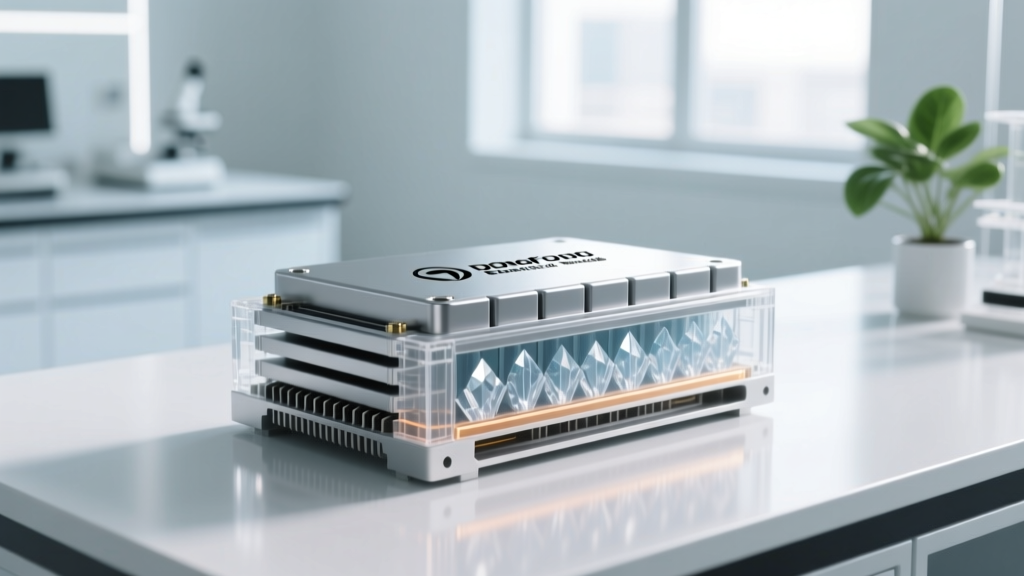
In 2025 and early 2026, China's Dongfeng Motor Corporation made headlines with its solid-state battery testing program, announcing prototype cells that demonstrated energy densities exceeding 350 Wh/kg — roughly 40–50% higher than the best current NMC cells. Dongfeng's testing, conducted in partnership with domestic cell suppliers, reportedly showed improved thermal stability and reduced flammability compared to liquid-electrolyte lithium-ion cells.
Here's what the testing data means — and what it doesn't:
- Energy density gains are real but incremental at the pack level. A 350 Wh/kg cell might yield a ~220–250 Wh/kg pack once structural, cooling, and BMS overhead is included. That translates to meaningful range improvements (potentially 400+ EPA miles in a midsize sedan) but not the "1,000-mile" claims sometimes seen in press releases using the more generous WLTP or CLTC testing cycles.
- Cycle life data is still preliminary. Dongfeng's published testing showed several hundred cycles with low degradation, but commercial viability typically requires validation over 1,000+ cycles under varied temperature and charge-rate conditions. Current NMC cells achieve this reliably; solid-state cells have not yet demonstrated it at production scale.
- Manufacturing scalability is the central challenge. Solid-state cells require fundamentally different production processes — dry-room environments, precise pressure application during cycling, and new electrode fabrication techniques. Scaling from lab prototypes to gigawatt-hour factory output typically takes 5–8 years in the battery industry.
- Cost parity is distant. Current solid-state prototypes are estimated at 3–5x the cost per kWh of mature lithium-ion cells. Industry analysts project cost competitiveness with NMC no earlier than 2032–2035 for mass-market vehicles.
Dongfeng has indicated it plans to introduce semi-solid-state cells (a hybrid approach using a gel-polymer electrolyte rather than a fully solid one) in select Chinese-market vehicles by 2027–2028. Fully solid-state batteries in globally available, affordable EVs remain a 2030s proposition. For US buyers shopping today, this testing is encouraging signal — the technology is advancing — but it should not delay a purchase decision. Current lithium-ion batteries are mature, well-understood, and backed by extensive warranty coverage.
Other solid-state programs worth tracking include Toyota's pilot production line (targeting limited commercial vehicles by 2028–2029), Samsung SDI's prototype demonstrations, and QuantumScape's ongoing validation with Volkswagen Group. None have reached mass production as of mid-2026.
Other Emerging Battery Technologies on the Horizon
Beyond solid-state, several near-term innovations are already reaching production vehicles:
- Silicon-dominant anodes: Companies like Sila Nanotechnologies and Group14 are supplying silicon-blend anodes that increase energy density by 10–20% without the manufacturing disruption of solid-state. These are appearing in select 2025–2026 models and offer a more pragmatic near-term improvement.
- Sodium-ion batteries: CATL and other Chinese manufacturers have begun producing sodium-ion cells for lower-cost, shorter-range EVs. While energy density is ~30% lower than LFP, sodium is abundant and cheap, making it viable for urban commuter vehicles. US availability remains limited.
- Structural battery packs: Tesla's 4680 cell-integrated chassis and GM's Ultium cell-to-pack architecture reduce weight and improve packaging efficiency, yielding 5–10% range gains without changing cell chemistry.
Frequently Asked Questions
How long do EV batteries last in years and miles?
Based on aggregated fleet data from Geotab, Recurrent Auto, and manufacturer reports, the average EV battery retains 85–90% of its original capacity at 100,000 miles and 80–88% at 150,000 miles. In practical terms, most EV batteries will outlast 15 years or 200,000 miles before degrading to the 70% threshold that most warranties define as end-of-life. The vehicle's body, suspension, or electronics are more likely to reach end-of-life before the battery does.
How much does an EV battery cost to replace?
Full pack replacement costs range from approximately $12,000 for a ~60 kWh pack (Tesla Model 3 RWD, Chevrolet Bolt) to $25,000–$35,000 for large packs above 130 kWh (Ford F-150 Lightning Extended Range, Rivian R1T). Module-level repairs are significantly cheaper at $2,000–$5,000. However, actual out-of-pocket replacements are rare — most batteries remain functional well beyond the warranty period, and costs continue to decline as cell prices fall.
What does the EV battery warranty cover?
Standard battery warranties cover capacity loss below a defined threshold (typically 70% of original capacity) over 8 years and 100,000 miles (10 years/100,000 miles for Hyundai/Kia). They also cover manufacturing defects, cell or module failures, and BMS malfunctions. They do not cover damage from accidents, environmental events, or unauthorized modifications. Claims require a dealer diagnostic scan to verify State of Health.
How do I check and maximize my EV battery health?
Monitor your vehicle's estimated range at 100% charge and compare it to the original EPA rating — a drop of more than 10% in the first few years warrants a dealer check. Use OBD-II tools like EV-BatMon for more granular data. To maximize longevity: charge primarily on Level 2, set daily limits to 80% for NMC or 100% for LFP, precondition before fast charging, avoid prolonged storage at extreme SoC levels, and minimize exposure to extreme heat.
LFP vs. NMC — which battery chemistry is better for me?
Choose LFP if you prioritize long cycle life, lower cost, the ability to charge to 100% daily, and enhanced thermal safety — and you don't need maximum range. Choose NMC/NCA if you need the highest possible energy density for long trips, better cold-weather performance, or towing capability. Both chemistries are proven to exceed 150,000 miles with proper care, and both are well-supported by manufacturer warranties.
Will Dongfeng's solid-state battery testing lead to EVs I can buy soon?
Not in the US market in the near term. Dongfeng's solid-state testing represents meaningful R&D progress, and semi-solid-state cells may reach select Chinese-market vehicles by 2027–2028. However, globally available, affordably priced solid-state EVs are not expected before the early-to-mid 2030s. Current lithium-ion technology — particularly LFP for daily use and NMC for range-critical applications — remains the practical choice for 2026 buyers.