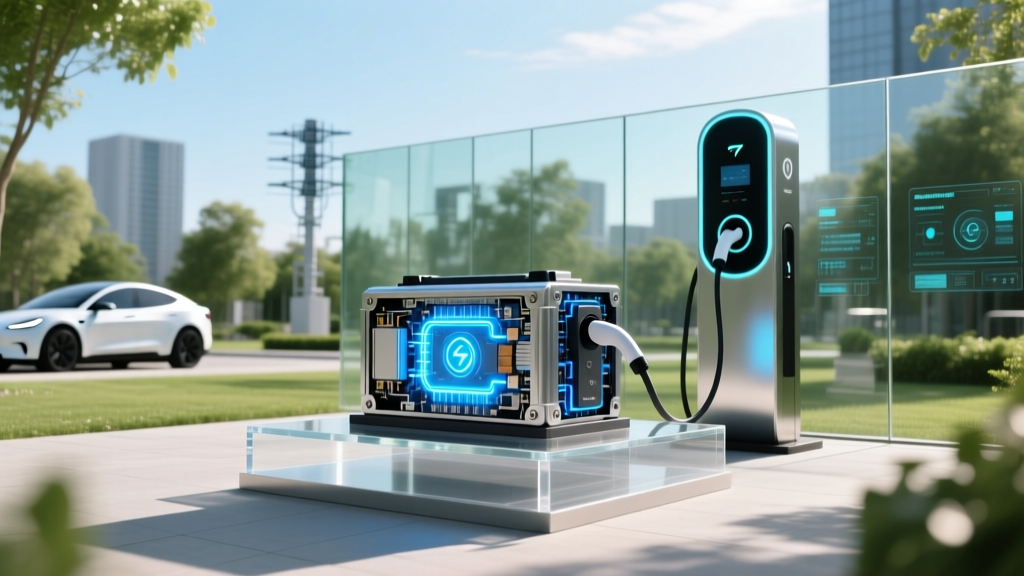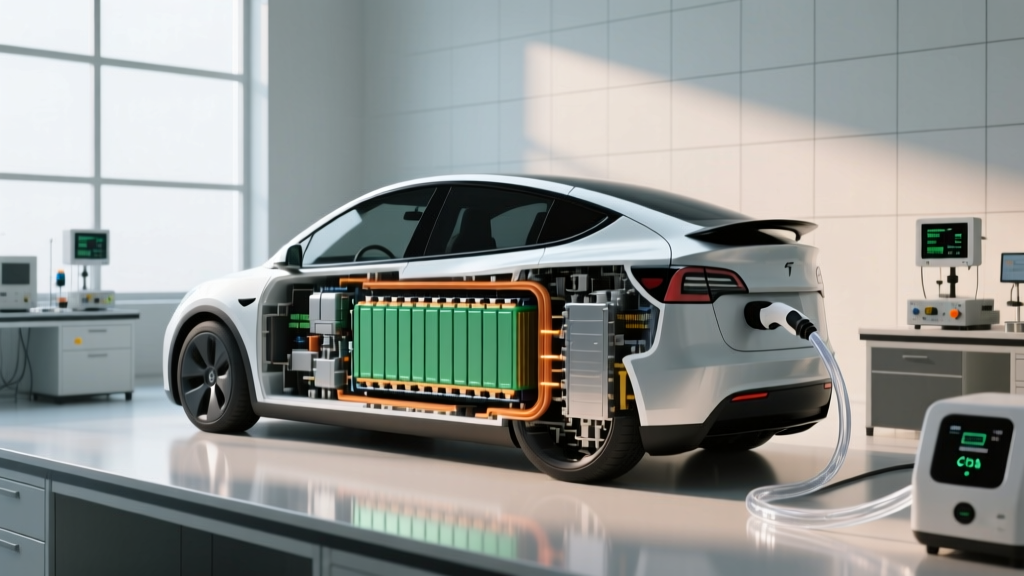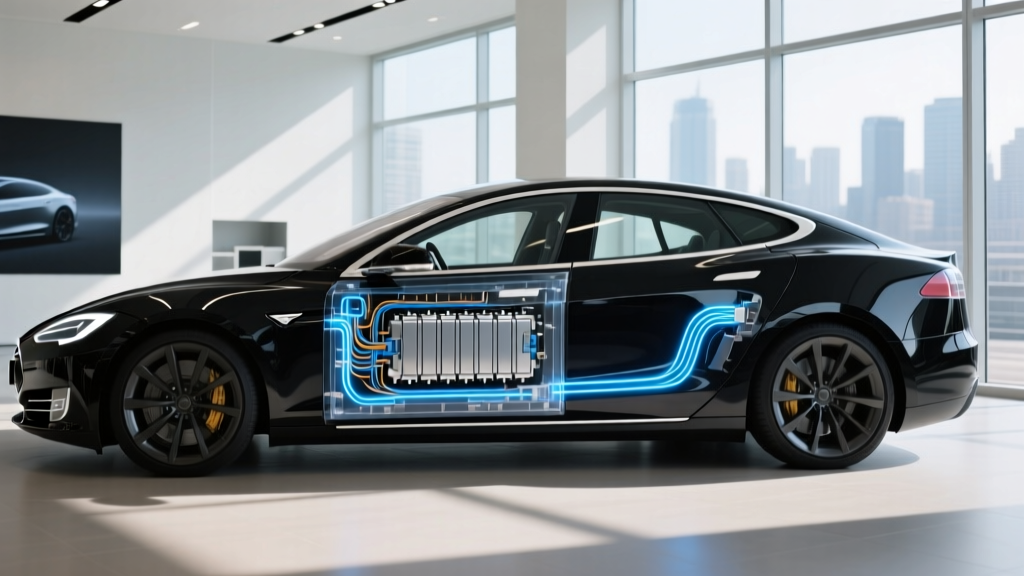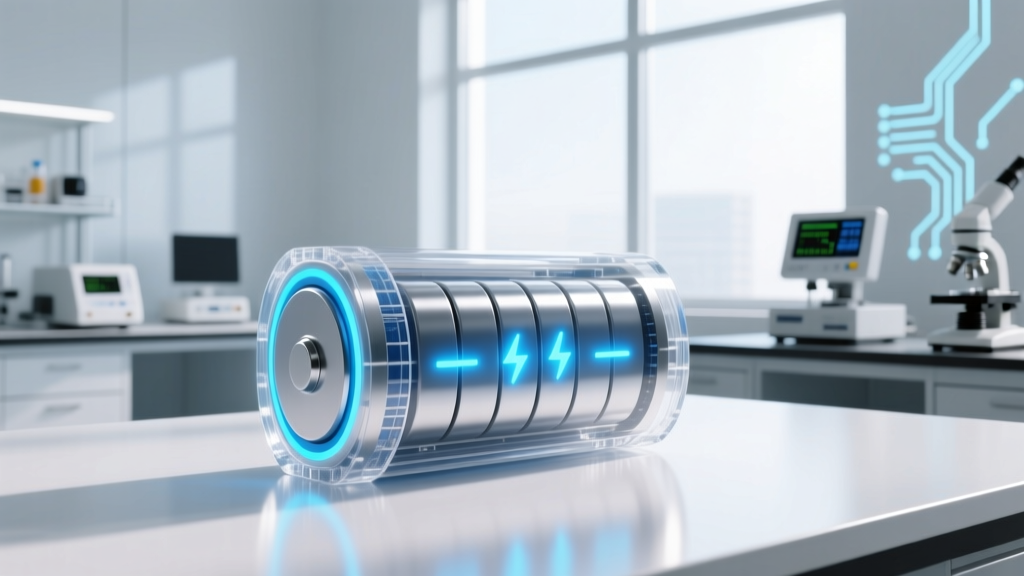
For EV buyers and owners, the high-voltage traction battery is the single most expensive and anxiety-inducing component in the car. How long will it last? What does a replacement cost? And what's coming next? Recent headlines around Dongfeng solid-state battery testing have reignited interest in next-generation energy storage, but understanding where battery technology stands today is just as critical as tracking where it's headed.
This guide breaks down current lithium-ion battery chemistry trade-offs, real-world degradation data, warranty coverage, replacement economics, and daily habits that maximize battery health. We'll also examine what Dongfeng's solid-state prototype testing — and similar efforts across the industry — actually mean for production timelines.
LFP vs. NMC: The Two Battery Chemistries Dominating EVs
Every modern EV uses one of two primary lithium-ion cathode chemistries: LFP (lithium iron phosphate) or NMC/NCA (nickel manganese cobalt / nickel cobalt aluminum). The choice affects range, longevity, cold-weather performance, and price.
LFP batteries, used in base-model Tesla Model 3 and Model Y vehicles as well as many Chinese-market EVs, trade energy density for exceptional cycle life and thermal stability. You can charge LFP packs to 100% daily without accelerating degradation — a major ownership convenience. The downside: lower energy density means less range per kilogram, and LFP cells lose more usable capacity in freezing temperatures compared to NMC.
NMC and NCA packs power most long-range and performance EVs — the Hyundai Ioniq 5, BMW i4, Ford Mustang Mach-E Extended Range, and higher-trim Teslas. These chemistries pack more energy into a smaller, lighter space, enabling 300+ mile EPA ranges. However, NMC degrades faster when routinely charged to 100% or exposed to sustained high temperatures. Most manufacturers recommend an 80% daily charge limit for NMC packs.
| Attribute | LFP (LiFePO₄) | NMC / NCA |
|---|---|---|
| Energy Density | ~160–180 Wh/kg (cell) | ~220–300 Wh/kg (cell) |
| Typical Cycle Life | 3,000–6,000+ cycles | 1,000–2,500 cycles |
| Daily Charge Recommendation | 100% OK | 80% recommended |
| Cold Performance (below 32°F) | Moderate loss (~15–25%) | Better retention (~10–20% loss) |
| Thermal Runaway Risk | Very low | Higher (requires active management) |
| Cost per kWh (cell-level) | ~$60–80 | ~$90–120 |
| Common Applications | Base trims, fleet, Chinese-market EVs | Long-range, performance, premium EVs |
Which is better? There's no universal winner. If you commute short distances, charge at home nightly, and live in a mild climate, LFP is arguably the better ownership experience — charge to 100%, worry less. If you need maximum range for road trips or live in a cold climate where every mile counts in winter, NMC's higher energy density is worth the added care.
How Long Do EV Batteries Actually Last?
The short answer: almost certainly longer than you'll own the car. Real-world fleet data consistently shows modern liquid-cooled EV batteries losing roughly 5–10% of capacity in the first 100,000 miles, with degradation curves flattening significantly afterward.
According to data compiled by Geotab from over 10,000 EVs in fleet service, the average annual degradation rate across all models is approximately 1.8% per year. That means a 10-year-old EV could retain roughly 82% of its original battery capacity — well above most warranty thresholds.
But averages mask significant model-to-model variance. Early-generation Nissan Leaf (passive air-cooled packs) showed notably faster degradation, especially in hot climates. Modern vehicles with active liquid thermal management — essentially every major EV sold since 2020 — perform far better.
Typical Degradation Trajectory (Liquid-Cooled NMC Pack)
| Time / Mileage | Avg. Capacity Retained | Real-World Range Impact (300-mi EPA pack) |
|---|---|---|
| Year 1 / ~12,000 mi | ~96–98% | ~290–295 mi |
| Year 3 / ~36,000 mi | ~92–95% | ~275–285 mi |
| Year 5 / ~60,000 mi | ~88–92% | ~265–275 mi |
| Year 8 / ~96,000 mi | ~83–88% | ~250–265 mi |
| Year 10 / ~120,000 mi | ~80–85% | ~240–255 mi |
Note: LFP packs generally show slower degradation (closer to 1% per year), while frequent DC fast charging and sustained high-temperature exposure can push NMC degradation toward the higher end of these ranges.
Most EV batteries will never need replacement during the vehicle's usable life. Outright battery failure (a cell or module going completely dead) is rare and typically covered under warranty. The more common scenario is gradual capacity loss — your 310-mile EV might offer 260 miles after a decade, which is still practical for most drivers.
What Does the Battery Warranty Actually Cover?
Federal law mandates that EV batteries carry a minimum warranty of 8 years or 100,000 miles (whichever comes first). In California Air Resources Board (CARB) states — which include California, New York, Massachusetts, and several others — the requirement extends to 10 years or 150,000 miles.
However, warranties don't guarantee a like-new battery at 99% capacity. They specify a capacity retention threshold, typically 70% of original capacity. If your battery drops below that threshold within the warranty period, the manufacturer must repair or replace it. In practice, very few EVs fall below 70% within the warranty window.
Battery Warranty Comparison (2025–2026 Models)
| Manufacturer | Warranty Period | Capacity Threshold | Notes |
|---|---|---|---|
| Tesla (Model 3/Y LFP) | 8 yr / 100,000 mi | 70% | Module-level replacement when possible |
| Tesla (Model 3/Y NMC Long Range) | 8 yr / 120,000 mi | 70% | Higher mileage threshold for LR trims |
| Hyundai / Kia | 10 yr / 100,000 mi | 70% | Among the longest coverage periods |
| Ford (Mustang Mach-E, F-150 Lightning) | 8 yr / 100,000 mi | 70% | Covers battery and hybrid/electric components |
| BMW (i4, iX) | 8 yr / 100,000 mi | 70% | Module-replacement strategy to reduce cost |
| Rivian (R1T, R1S) | 8 yr / 120,000 mi | 70% | Covers capacity loss and defects |
Key detail: warranties cover defects and excessive capacity loss, not damage from accidents, flooding, or aftermarket modifications. Read your specific warranty booklet — terms vary by model year and region.
EV Battery Replacement Cost: What You'd Actually Pay
If your battery fails outside the warranty window, replacement is expensive — but context matters. Most EVs will never need a full pack replacement. When they do, costs depend heavily on battery size, chemistry, and whether the manufacturer offers module-level repair.
| Vehicle (Example) | Battery Size | Full Pack Replacement (est.) | Module Repair (if available) |
|---|---|---|---|
| Tesla Model 3 (LFP, ~60 kWh) | 60 kWh | $10,000–$14,000 | $2,000–$4,000 per module |
| Hyundai Ioniq 5 (77.4 kWh NMC) | 77.4 kWh | $14,000–$18,000 | Module replacement available |
| Ford F-150 Lightning (Ext. Range, 131 kWh) | 131 kWh | $22,000–$30,000 | Limited module service |
| Chevrolet Bolt EV (65 kWh NMC) | 65 kWh | $13,000–$16,000 | Post-recall packs have updated chemistry |
| BMW iX xDrive50 (111.5 kWh) | 111.5 kWh | $20,000–$28,000 | Module-level repair supported |
Sources: RepairPal estimates, manufacturer service bulletins, and third-party EV repair shops. Prices reflect 2025–2026 service costs and may vary by region. Labor typically adds $1,500–$3,000.
The silver lining: cell prices have fallen from over $1,000/kWh in 2010 to roughly $100–130/kWh at the pack level in 2025, according to BloombergNEF. Replacement costs will continue declining as the supply of refurbished and recycled battery modules grows. Several companies now offer remanufactured packs at 40–60% below OEM new-pack pricing.
What Dongfeng Solid-State Battery Testing Tells Us About the Future
In 2024–2025, Dongfeng Motor — one of China's largest state-owned automakers — began publicly testing prototype vehicles equipped with semi-solid-state batteries developed in partnership with Chinese battery supplier Ganfeng Lithium. The testing program involves fleet vehicles operating in real-world conditions across multiple Chinese cities, with Dongfeng reporting energy density figures exceeding 350 Wh/kg at the cell level — roughly 40–50% higher than today's best NMC cells.
This is significant, but context is essential. "Semi-solid-state" (also called hybrid solid-state) batteries use a combination of solid electrolyte and a small amount of liquid electrolyte. They represent a stepping stone toward fully solid-state designs, which promise even higher energy density, faster charging, and near-zero fire risk. Dongfeng's testing vehicles are prototypes, not production models available to consumers.
Dongfeng is not alone. Toyota has announced plans for a solid-state battery EV with a targeted 750 km (~466 mile) range by 2027–2028. Samsung SDI is targeting mass production of all-solid-state cells by 2027. QuantumScape, backed by Volkswagen, continues to ship prototype cells to automotive partners for validation. Nissan, BMW, and CATL all have active solid-state R&D programs.
Here's a realistic timeline framework:
- 2025–2027: Semi-solid-state batteries in limited-production Chinese-market EVs (Dongfeng, NIO, others). Low volume, premium pricing.
- 2028–2030: First-generation fully solid-state EVs from Toyota, Samsung SDI partners, and potentially VW/QuantumScape. Likely limited to flagship models with pricing above $60,000.
- 2030+: Solid-state batteries begin reaching mainstream price points as manufacturing scales. This is when meaningful consumer impact occurs.
For anyone buying an EV in 2026, solid-state technology is not a reason to wait. Today's liquid-cooled lithium-ion batteries already deliver 250–400 miles of range, 15–25 minute fast-charging sessions, and 150,000+ mile lifespans. Solid-state will eventually improve all of those metrics, but not within the purchase cycle of most current shoppers.
Factors That Actually Affect Battery Longevity
Not all miles are created equal. Research from the National Renewable Energy Laboratory (NREL) and fleet data from companies like Geotab and Recurrent Auto consistently identify the same high-impact factors:
Battery Care Essentials
- Avoid daily DC fast charging. Occasional road-trip fast charging is fine, but daily use of 150+ kW DC chargers accelerates degradation. The heat generated during high-rate charging stresses cells. If you can charge at home on Level 2 (7–11 kW), do so for daily needs.
- Manage state of charge. For NMC packs, keep daily SoC between 20–80%. For LFP, charging to 100% regularly is actually beneficial — it helps the battery management system (BMS) calibrate accurately. Never leave any EV sitting at 100% for days in hot weather.
- Precondition before fast charging. Most modern EVs automatically precondition the battery when you navigate to a DC fast charger. This warms the cells to optimal temperature (~77–95°F), enabling faster charging and reducing stress. If your car offers manual preconditioning, use it in cold weather.
- Minimize extreme-temperature exposure. Parking in a garage during summer heat waves and using preconditioning in winter both help. Batteries degrade fastest when held at high SoC in high temperatures — the worst combination is a fully charged car sitting in a 100°F parking lot for a week.
- Drive moderately when the battery is cold. Aggressive acceleration on a freezing-cold battery (below 20°F) without preconditioning causes lithium plating, a form of irreversible degradation. Let the car warm the pack first.
- Keep software updated. Over-the-air updates frequently include BMS improvements that optimize charging profiles and thermal management. These updates can measurably extend battery life.
How to Monitor Your Battery's State of Health
State of Health (SoH) is the percentage of your battery's original capacity that remains usable. A new battery is 100% SoH; a battery that holds 85 kWh of its original 100 kWh is at 85% SoH.
Most EVs don't display SoH directly on the dashboard, but there are several reliable ways to check:
- In-car range estimate method: Charge to 100% (or your normal max for NMC), note the displayed range, and compare it to the original EPA-rated range adjusted for your typical driving conditions. This is imprecise but directionally useful.
- OBD-II apps: Tools like Leaf Spy (Nissan), TeslaFi or Tessie (Tesla), and Car Scanner (multi-brand) can read SoH directly from the BMS via the OBD-II port or API. These typically report SoH within 1–2% accuracy.
- Dealer diagnostic: During service visits, ask for a battery health report. Most manufacturers can pull a detailed SoH printout showing individual module voltages and overall capacity.
- Third-party testing: Companies like Recurrent Auto offer free battery health reports that compare your pack's degradation to a fleet of identical vehicles. This is especially useful before buying or selling a used EV.
Track SoH every 6–12 months. If you notice a sudden drop (more than 3–5% in a short period), that could indicate a failing module — which is typically warranty-repairable.
Frequently Asked Questions
How long do EV batteries last in years and miles?
Most modern liquid-cooled EV batteries retain 80–90% of their original capacity after 10 years or 150,000 miles. Fleet data from Recurrent Auto shows that the vast majority of EV batteries outlast the vehicle itself. Catastrophic failure is rare and usually covered under the 8-year/100,000-mile minimum warranty.
How much does it cost to replace an EV battery?
Full pack replacement ranges from roughly $10,000 for a ~60 kWh pack (Tesla Model 3 standard range) to $25,000–$30,000 for large packs like the F-150 Lightning's 131 kWh unit. However, most EVs never need replacement. Module-level repair — swapping individual degraded cell groups — can cost $2,000–$5,000 and is available on many platforms. Cell prices continue to fall, so replacement costs in the 2030s will be significantly lower.
What does the EV battery warranty actually cover?
By federal mandate, EV batteries are warranted for at least 8 years or 100,000 miles. In CARB states, coverage extends to 10 years/150,000 miles. The warranty guarantees the battery will retain a minimum percentage of its original capacity (typically 70%) and covers defects. It does not cover accident damage, flood damage, or capacity loss from abuse (such as repeated 100% charges in extreme heat for NMC packs). Check your specific warranty documentation for exact terms.
How do I check my EV battery health?
Use an OBD-II app like Leaf Spy, TeslaFi, or Car Scanner to read State of Health (SoH) directly from the battery management system. You can also request a battery health report from your dealer during service. For a fleet-comparison perspective, Recurrent Auto provides free reports that benchmark your battery against thousands of identical vehicles.
LFP vs NMC — which battery chemistry should I choose?
Choose LFP if you prioritize longevity, want the convenience of daily 100% charging, and don't need maximum range. LFP is common in base-trim Teslas and many affordable EVs. Choose NMC if you need 300+ miles of EPA range, frequently drive in cold weather, or want the lightest possible pack for performance. NMC requires more careful charging habits (80% daily limit) but offers superior energy density. Neither is objectively "better" — the right choice depends on your driving pattern.
Is solid-state battery technology available now?
No. As of 2026, solid-state and semi-solid-state batteries remain in prototype and limited testing phases. Dongfeng's semi-solid-state testing fleet in China, Toyota's announced 2027–2028 target, and Samsung SDI's 2027 production goal are all pre-commercial. Consumer-available solid-state EVs are realistically a 2028–2030 prospect for premium models, with mainstream pricing likely arriving after 2030. Today's lithium-ion batteries are mature, reliable, and more than adequate for current EV buyers.
Does fast charging damage my EV battery?
Occasional DC fast charging has minimal impact on battery health. However, daily reliance on high-power DC fast charging (150+ kW) does measurably accelerate degradation over time, primarily due to heat stress. The data suggests that owners who charge primarily on Level 2 at home and use DC fast charging only for road trips see degradation rates 20–30% slower than those who fast-charge daily. Modern BMS and thermal management systems mitigate this significantly, but the physics of high-rate lithium intercalation still apply.