Tesla's battery strategy is one of the most scrutinized topics in the electric-vehicle industry. With the company vertically integrating everything from software to seat foam, it's natural to ask: does Tesla make its own batteries? The short answer is both yes and no — Tesla manufactures some cells in-house while simultaneously sourcing from multiple global suppliers. Understanding that supply chain is only half the equation. For buyers and owners, the real questions are what chemistry sits under the floor, how long it will last, and what happens if it needs replacement.
This guide unpacks Tesla's battery sourcing alongside the technical details that actually matter for ownership: LFP versus NMC/NCA chemistry trade-offs, real-world degradation data, warranty coverage, replacement costs, and the habits that extend — or shorten — pack life.
Does Tesla Make Its Own Batteries? The Sourcing Breakdown
Tesla does manufacture battery cells at its own facilities, but it does not produce enough to meet total vehicle demand. The company operates a multi-supplier strategy that has evolved significantly since the Model S launched in 2012:
- Panasonic: Tesla's longest-running partner. Panasonic produces 2170-format NCA (nickel cobalt aluminum) cells at the Gigafactory Nevada joint venture, primarily supplying Model 3 and Model Y Long Range and Performance variants built in Fremont and Austin.
- CATL (Contemporary Amperex Technology Co. Limited): The Chinese battery giant supplies LFP (lithium iron phosphate) prismatic cells for Standard Range / Rear-Wheel-Drive Model 3 and Model Y vehicles. These cells are produced in Shanghai and, increasingly, at CATL facilities that supply global markets.
- LG Energy Solution: Supplies NMC (nickel manganese cobalt) cells, primarily for certain Model 3 and Model Y builds destined for European and Asian markets.
- BYD: Tesla has sourced LFP Blade cells from BYD for Model Y vehicles produced at Giga Berlin, confirming a supply relationship that industry analysts had tracked for years.
- Tesla In-House (4680 cells): Tesla manufactures its proprietary 4680-format cells at pilot lines in Fremont and at Giga Texas. These larger, tabless cells currently supply select Model Y AWD builds from Austin. Production volumes remain limited relative to total demand, and Tesla continues to scale the 4680 line while resolving yield and dry-electrode coating challenges.
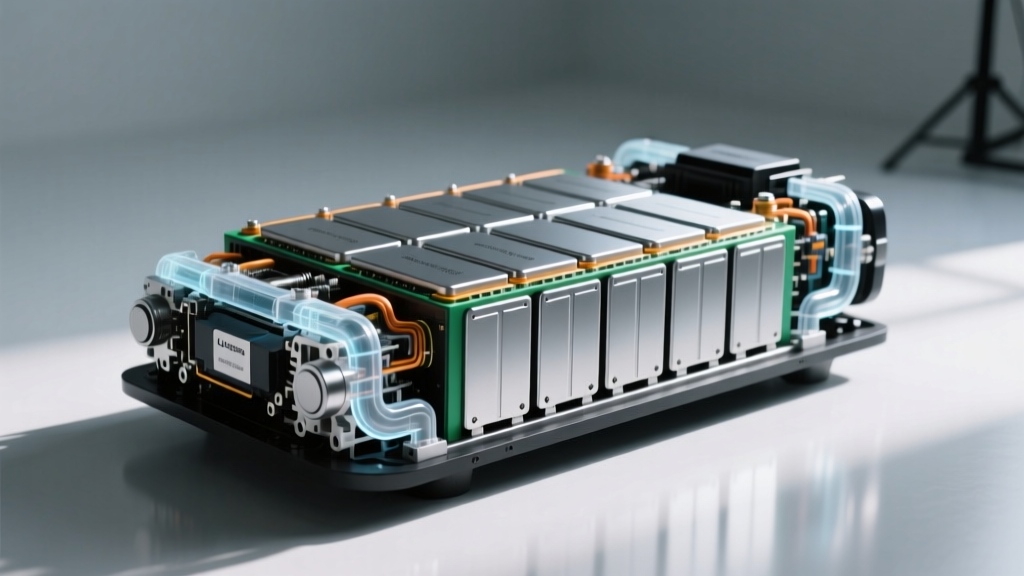
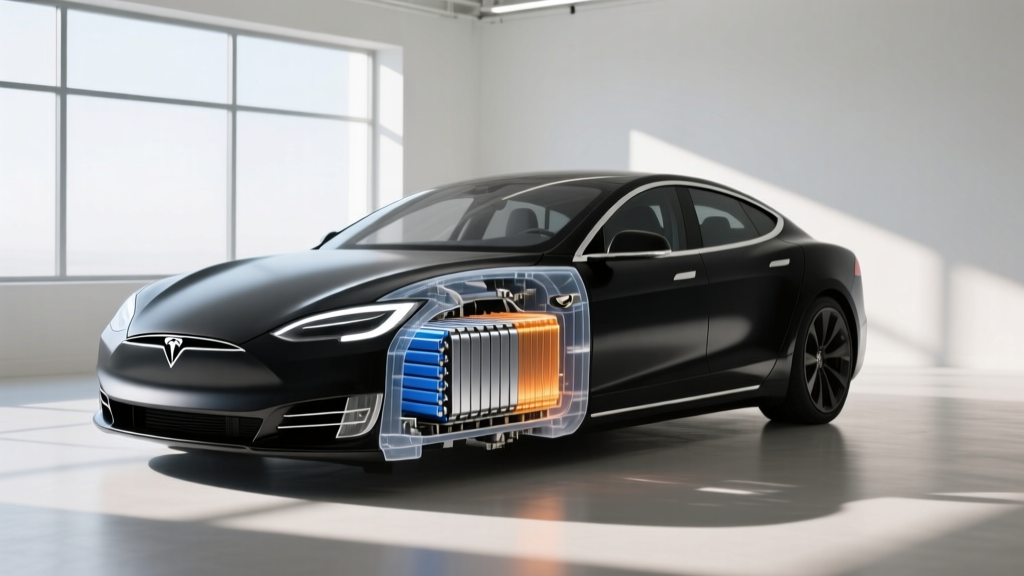
The bottom line: Tesla designs its battery packs, manages the thermal and BMS (battery management system) engineering, and assembles packs at its gigafactories — but it relies on a diversified cell supply chain. Your Tesla's chemistry and format depend on which model, trim, and factory built it.
LFP vs NMC/NCA: Which Tesla Battery Chemistry Do You Have?
Tesla uses two primary cathode chemistries across its lineup, and the differences matter for daily ownership. Here's how they compare:
| Attribute | LFP (Lithium Iron Phosphate) | NMC / NCA (Nickel-based) |
|---|---|---|
| Found in | Model 3/Y RWD (Standard Range) | Model 3/Y Long Range & Performance; Model S/X |
| Energy density | Lower (~160 Wh/kg cell-level) | Higher (~250-270 Wh/kg cell-level) |
| EPA range (typical) | 272 mi (Model 3 RWD) | 341 mi (Model 3 LR AWD) |
| Cycle life | 3,000-5,000+ cycles | 1,000-2,000 cycles |
| Cold-weather performance | More range loss in freezing temps (~30-40%) | Better cold retention (~20-30% loss) |
| Recommended daily SoC | 100% — Tesla recommends charging to full regularly | 80% daily; 100% only for trips |
| Cost per kWh | Lower — no cobalt or nickel | Higher — exposed to nickel/cobalt commodity prices |
| Thermal stability | Excellent — less prone to thermal runaway | Good, but requires more robust BMS management |
| SoC estimation accuracy | Flatter voltage curve makes % estimation harder for BMS | More linear voltage curve — BMS reads SoC more precisely |
Which is better? It depends on your driving pattern. If you commute short distances, charge at home nightly, and live in a mild climate, LFP is arguably superior — it lasts more cycles, costs less, and you can charge to 100% without degradation guilt. If you need maximum range for road trips, live in a cold climate, or want the Performance trim, you'll get an NMC/NCA pack with higher energy density and better winter performance.
How Long Do Tesla Batteries Last? Degradation Data
Tesla batteries are engineered to outlast the useful life of the vehicle. But like all lithium-ion cells, they lose capacity over time and charge cycles. Here's what the data shows:
Real-World Degradation Curve (Tesla fleet data):
- Year 1 / ~15,000 miles: 2-5% capacity loss — the steepest initial drop as cells stabilize
- Years 2-3 / ~30,000-50,000 miles: Gradual taper; total loss typically 5-8%
- Years 4-5 / ~60,000-80,000 miles: Degradation slows significantly; total loss ~8-12%
- Year 8 / ~100,000-120,000 miles: Most packs retain 85-90% of original capacity
- 150,000-200,000 miles: Tesla's own 2023 Impact Report stated that Model 3/Y battery packs retain approximately 85% capacity at 150,000 miles based on fleet telemetry
These figures align with independent analyses from sources like Tesla's Impact Report and third-party fleet-data aggregators. LFP packs generally show slower degradation than NMC/NCA packs over equivalent mileage, though cold-climate LFP owners may see more seasonal range fluctuation.
Key insight: Battery replacement before the vehicle's end of life is rare. The vast majority of Tesla battery packs will retain sufficient capacity (above 70-80%) to remain functional for 200,000+ miles. Outright failure — as opposed to gradual capacity loss — is uncommon and typically covered under warranty.
Tesla Battery Warranty: What's Covered and for How Long
Tesla's battery and drive unit warranty is one of the more straightforward in the EV industry. Here are the current terms:
| Model | Warranty Period | Mileage Limit | Minimum Capacity Retention |
|---|---|---|---|
| Model 3 RWD (LFP) | 8 years | 100,000 miles | 70% |
| Model 3 Long Range / Performance | 8 years | 120,000 miles | 70% |
| Model Y (all trims) | 8 years | 120,000 miles | 70% |
| Model S / Model X | 8 years | 150,000 miles | 70% |
What's covered: Battery failure, defect, or capacity loss below 70% of original kWh within the warranty period. Tesla will repair or replace the pack to bring it above the 70% threshold. The drive unit (motor and inverter) is covered under the same warranty terms.
What's not covered: Normal degradation above 70%, damage from accidents, flooding, or unauthorized modifications. If you charge exclusively at Superchargers and your battery degrades to 72% at year seven — that's considered normal wear.
For context, the 70% threshold is an industry-standard floor. Most Tesla owners will never approach a warranty claim; fleet data consistently shows packs retaining well above 70% even at high mileage.
How Much Does a Tesla Battery Replacement Cost?
If your battery fails outside of warranty — or you're buying a high-mileage used Tesla — replacement cost is a legitimate concern. Here are the current estimated ranges for out-of-warranty replacement:
| Model / Pack | Battery Size (kWh) | Estimated Replacement Cost |
|---|---|---|
| Model 3 RWD (LFP, ~60 kWh) | ~60 kWh usable | $10,000 - $13,000 |
| Model 3/Y Long Range (~75-82 kWh) | ~75-82 kWh usable | $13,000 - $18,000 |
| Model S / Model X (~100 kWh) | ~100 kWh usable | $15,000 - $22,000 |
These figures include the battery pack and labor but can vary by service center, region, and whether Tesla installs a new, remanufactured, or refurbished pack. Tesla increasingly uses remanufactured packs for out-of-warranty replacements, which reduces cost but may carry a shorter warranty on the replacement unit (typically 4 years / 50,000 miles).
When is replacement actually needed? Catastrophic battery failure in Teslas is rare. Most packs that leave service do so due to collision damage or manufacturing defects caught within the warranty period. Capacity degradation alone almost never necessitates a full replacement — a pack at 75% capacity still provides 200+ miles of range in most trims.
Maximizing Battery Life: Care Habits That Matter
Lithium-ion batteries degrade based on three primary stressors: heat, high state of charge, and charge rate. Here's a practical checklist for Tesla owners:
Daily Charging Habits
- NMC/NCA owners: Set daily charge limit to 80%. Use 100% only when departing on a road trip.
- LFP owners: Charge to 100% at least once per week. Tesla explicitly recommends this to help the BMS recalibrate SoC estimation on LFP's flat voltage curve.
- Avoid prolonged storage at 100% or below 10%. If leaving the car for weeks, set SoC to ~50%.
Fast Charging (DC Supercharging)
- Supercharging does accelerate degradation, but the effect is smaller than commonly feared. Tesla's thermal management system actively cools the pack during DC charging.
- Owners who Supercharge exclusively (versus home Level 2) may see 1-3% additional degradation over 100,000 miles — a measurable but not catastrophic difference.
- Preconditioning (which Tesla initiates automatically when you navigate to a Supercharger) warms the pack to optimal charging temperature, reducing lithium plating risk.
Temperature Management
- In extreme heat (above 95°F / 35°C), avoid leaving the car at 100% SoC for extended periods. The battery management system will run cooling, but heat + high SoC is the worst combination for cell longevity.
- In freezing weather, plug in when possible and use scheduled departure preconditioning. A cold battery cannot accept regenerative braking energy efficiently, and range drops of 20-40% are normal in sub-freezing conditions.
- Keep Sentry Mode and cabin overheat protection in mind — these draw from the traction battery and can add low-level cycling in hot climates.
How to Check Your Tesla's Battery Health (State of Health)
Tesla does not display a native "State of Health" (SoH) percentage in the vehicle's UI, unlike some competitors. Here's how owners can estimate pack health:
- Range comparison method: Charge to 100% (or your known max SoC) and compare the displayed rated range to the original EPA figure. A Model 3 LR that originally displayed 341 miles at 100% but now shows 305 miles has approximately 89% SoH. Note that displayed range fluctuates with temperature and recent driving efficiency.
- Third-party apps: Tools like TeslaFi, Tessie, or Stats (iOS) log charge sessions and can estimate SoH over time by tracking kWh added versus SoC change.
- Service center diagnostic: Tesla service can run a battery health test that reads actual pack capacity versus original. Request this if you suspect abnormal degradation or are evaluating a used Tesla purchase.
What's Next? Solid-State and Silicon Anode Batteries
The next generation of EV battery technology is well-documented in research labs but not yet in production vehicles. Here's a realistic timeline:
- Solid-state batteries: These replace the liquid electrolyte with a solid material, promising higher energy density, faster charging, and improved safety. Companies like Toyota, QuantumScape, and Samsung SDI have announced prototype milestones, but mass production for consumer vehicles is not expected before 2028-2030 at the earliest. Tesla has not announced a solid-state program.
- Silicon anode cells: Replacing graphite anodes with silicon can increase energy density by 20-40%. Tesla's 4680 cells already incorporate some silicon in the anode, and suppliers like Sila Nanotechnologies and Group14 are scaling production. Expect incremental silicon-anode adoption across the industry through 2026-2028.
- Sodium-ion batteries: CATL and BYD are producing sodium-ion cells for lower-cost, shorter-range applications. These are unlikely to appear in Tesla vehicles sold in the US market but may serve entry-level models in China.
None of these technologies are currently available in Tesla vehicles. Any claims that solid-state batteries are "just around the corner" should be treated with skepticism — the gap between lab cell and mass-produced, automotive-grade pack typically spans 5-8 years.
Frequently Asked Questions
Does Tesla make its own batteries entirely in-house?
No. Tesla manufactures some 4680-format cells at its Fremont pilot line and Giga Texas, but the majority of cells in Tesla vehicles come from suppliers including Panasonic, CATL, LG Energy Solution, and BYD. Tesla designs the pack architecture, BMS, and thermal management system, and assembles packs at its gigafactories.
How long do Tesla batteries last in real-world use?
Fleet data indicates most Tesla battery packs retain 85-90% of original capacity at 150,000 miles. With proper care, a Tesla battery can reasonably be expected to provide functional service for 200,000+ miles before capacity drops below 70%. Catastrophic failure is rare.
How much does it cost to replace a Tesla battery out of warranty?
Out-of-warranty replacement costs range from approximately $10,000 for a Model 3 RWD LFP pack to $22,000 for a Model S/X 100 kWh pack, including labor. Tesla often uses remanufactured packs for these replacements. However, most owners will never need a replacement — batteries typically outlast the vehicle.
What does Tesla's battery warranty cover?
Tesla covers battery defects and capacity loss below 70% for 8 years / 100,000-150,000 miles depending on the model. The drive unit is covered under the same terms. Normal degradation above the 70% threshold is not covered.
Is LFP or NMC better for a Tesla?
LFP offers longer cycle life, lower cost, and the ability to charge to 100% daily — ideal for commuters and home-charging owners in mild climates. NMC/NCA provides higher energy density (more range per kWh), better cold-weather performance, and is used in Long Range and Performance trims. Neither is universally better; the right choice depends on your driving pattern and climate.
Does frequent Supercharging damage the battery?
Exclusively DC fast-charging adds modestly to degradation — fleet data suggests 1-3% more capacity loss over 100,000 miles compared to primarily Level 2 home charging. Tesla's active thermal management mitigates most of the risk. For most owners, the convenience of Supercharging outweighs the minor long-term impact.
How do I check my Tesla battery's State of Health?
Compare the displayed rated range at 100% SoC to the original EPA figure, or use third-party apps like TeslaFi or Tessie that log charge data and estimate SoH over time. Tesla service centers can also run a formal diagnostic to measure actual pack capacity.