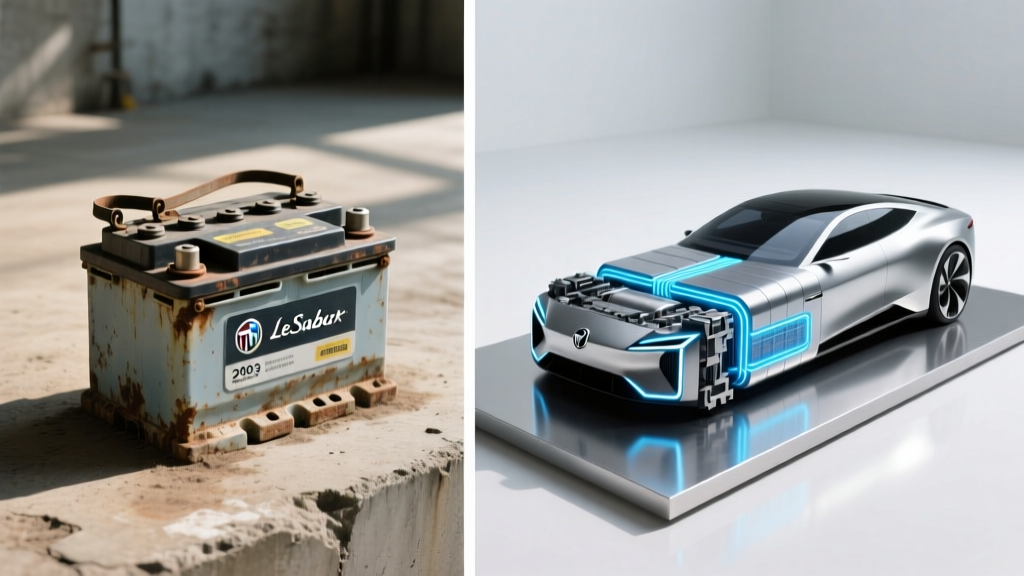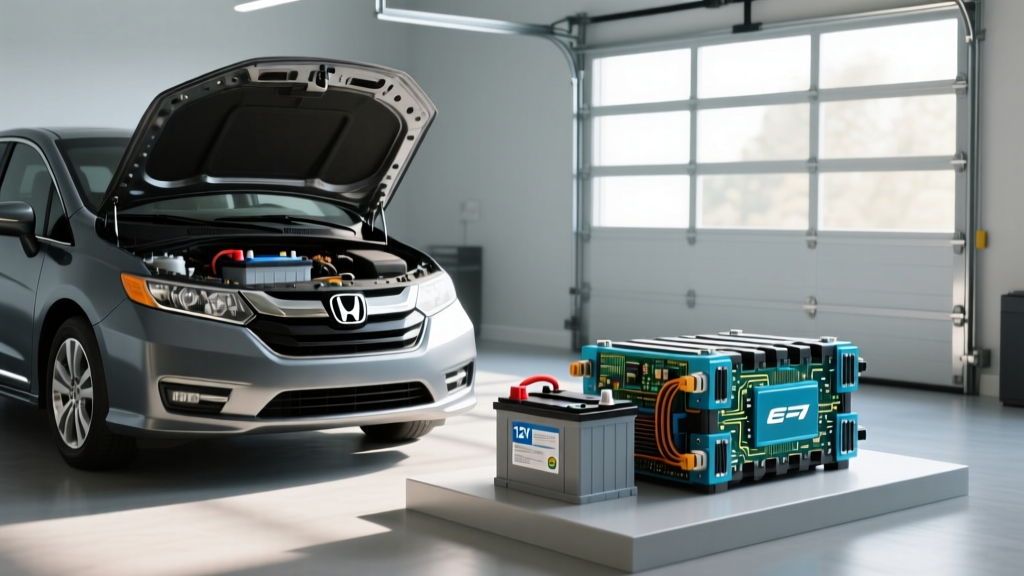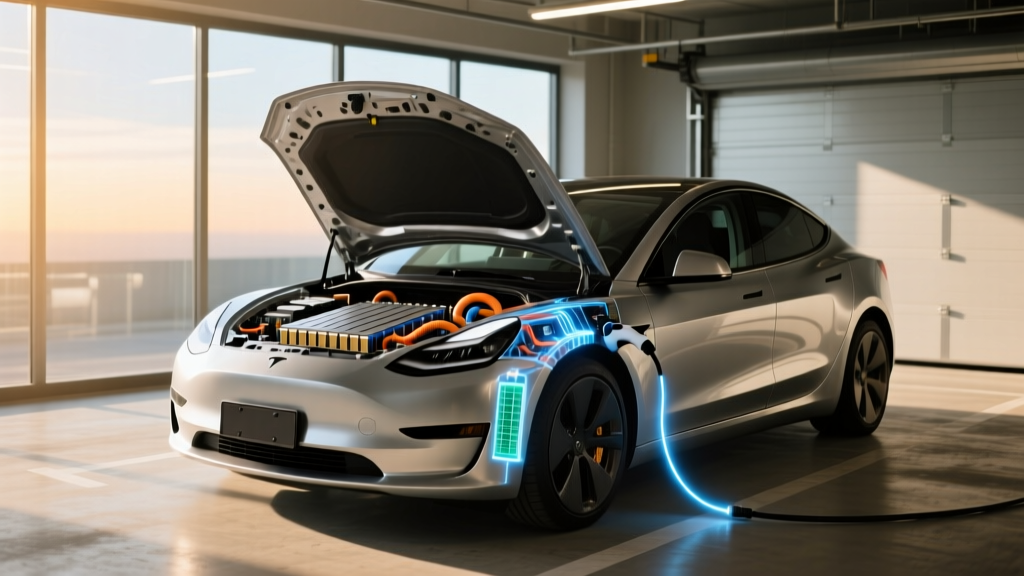
If you've ever searched "does car idle charge battery" and landed here, you're likely transitioning from a gas vehicle to an electric one — or considering the switch. The short answer is no, an electric vehicle does not charge its battery while idling. Unlike a gas car where the alternator tops up the 12V battery whenever the engine runs, an EV's high-voltage traction battery only gains energy when plugged into an external power source or through regenerative braking while decelerating.
But that simple question opens a much bigger conversation about how EV batteries actually work, how long they last, and what you can do to maximize their lifespan. This guide covers everything from chemistry trade-offs to real-world degradation data, warranty coverage, and the emerging tech that will shape the next generation of electric vehicles.
Why Idling Doesn't Charge an EV Battery (and What Actually Does)
In a conventional internal-combustion vehicle, the engine drives an alternator that continuously charges the 12V auxiliary battery whenever the car is running — even at a stoplight. This is what people mean when they ask whether idling charges a car battery.
Electric vehicles operate on an entirely different architecture:
- The high-voltage traction battery (typically 50–100+ kWh) powers the electric motor(s) and determines your driving range. It can only be charged by plugging into a Level 1, Level 2, or DC fast charger, or through regenerative braking.
- The 12V auxiliary battery runs accessories, computers, and safety systems. It's kept charged by a DC-DC converter that draws from the main traction battery — but this depletes the main pack slightly rather than adding energy to it.
So when an EV is "on" but stationary (say, in a drive-through lane or while preconditioning the cabin), it is consuming energy from the traction battery, not generating it. Cabin heating in cold weather can draw 3–6 kW; air conditioning typically 1–3 kW. Over an hour of idling with climate control, you might lose 2–8 miles of range depending on conditions.
The only scenarios where an EV adds energy without being plugged in are:
- Regenerative braking: Converting kinetic energy back into stored electrical energy during deceleration. On a long downhill grade, some EVs can recover meaningful range.
- Solar roof panels: Available on vehicles like the Hyundai Ioniq 5 (Limited trim) or the Lightyear/Aptera concepts, but these add only a trivial amount — roughly 1–4 miles of range per day under ideal sun.
EV Battery Chemistry: LFP vs NMC vs NCA
The two dominant lithium-ion chemistries in today's EVs are LFP (lithium iron phosphate) and NMC/NCA (nickel manganese cobalt / nickel cobalt aluminum). Your choice of chemistry has major implications for range, longevity, charging behavior, and cost.
| Attribute | LFP (Lithium Iron Phosphate) | NMC / NCA (Nickel-based) |
|---|---|---|
| Energy Density | Lower (~160–180 Wh/kg cell-level) | Higher (~230–300 Wh/kg cell-level) |
| Typical EPA Range | 230–310 mi (limited by weight/volume) | 280–400+ mi |
| Cycle Life | 3,000–5,000+ cycles to 80% capacity | 1,000–2,000 cycles to 80% capacity |
| Cold-Weather Performance | Weaker — greater range loss below 32°F, slower cold charging | Better — retains more range and charges faster in cold |
| Recommended Daily SoC | 100% OK (manufacturers recommend periodic full charges for BMS calibration) | 80% for daily use; 100% reserved for trips |
| Cost | Lower — no cobalt or nickel | Higher — commodity-sensitive materials |
| Thermal Stability | Excellent — less prone to thermal runaway | Good — requires more robust thermal management |
| Common In 2026 Models | Tesla Model 3/Y RWD, Ford Mustang Mach-E Select, BYD (non-US) | Tesla Long Range, Hyundai Ioniq 5/6, Rivian, GM Ultium vehicles, BMW iX |
Which is better? It depends on your use case. If you prioritize maximum range and cold-weather usability, NMC/NCA is the stronger pick. If you want the longest possible calendar life, plan to charge to 100% regularly, and want a lower upfront cost, LFP is the winner. For most daily commuters who can charge at home, LFP's cycle-life advantage and 100% SoC tolerance make it a compelling choice — but road-trippers and cold-climate drivers will appreciate NMC's energy density.
How Long Do EV Batteries Actually Last? Real-World Degradation Data
The single most common fear among prospective EV buyers is battery failure. The data, however, tells a reassuring story: most modern EV batteries outlast the vehicles they're installed in.
Here's what real-world data from fleet operators, owner surveys, and manufacturer reports shows:
| Timeframe | Average Capacity Retained | Context / Source |
|---|---|---|
| Year 1 / ~12,000 mi | 95–98% | Initial calibration drop; steepest early loss |
| Year 3 / ~36,000 mi | 90–95% | Geotab fleet data (2024 study of 10,000+ EVs) |
| Year 5 / ~60,000 mi | 86–92% | Tesla Impact Report; Recurrent Auto data |
| Year 8 / ~100,000 mi | 80–90% | Warranty threshold; most packs still functional |
| Year 10+ / 150,000+ mi | 75–85% | Early Nissan LEAF (passive cooling) degraded faster; liquid-cooled packs fare much better |
According to data aggregated by Recurrent Auto, the average EV battery in 2025-model vehicles retains roughly 90–93% of original capacity after three years of typical use. Tesla's own Impact Report has stated that Model 3/Y batteries retain approximately 85% capacity after 200,000 miles — at which point the vehicle itself may be nearing end of life for other reasons.
Key takeaway: battery degradation is real but gradual. You won't wake up one morning to a dead battery. A pack that starts at 310 miles of EPA range might deliver 270–280 miles after five years — still plenty for most daily needs.
Factors That Accelerate (or Slow) Battery Degradation
Not all EV batteries age equally. Your habits and environment play a major role in how quickly capacity declines.
Battery Care Best Practices
- Avoid chronic DC fast charging: Occasional road-trip fast charging is fine, but daily use of 150+ kW DC chargers generates sustained heat that accelerates degradation. If you can charge at home on Level 2 (7–11 kW), do so for daily needs.
- Manage state of charge (SoC): For NMC/NCA batteries, keep daily SoC between 20–80%. For LFP, charging to 100% is acceptable and even recommended periodically for BMS accuracy.
- Avoid extreme SoC in extreme temperatures: Don't leave your EV sitting at 100% SoC in summer heat or below 10% in winter cold for extended periods.
- Use preconditioning: Most EVs allow you to precondition the battery before fast charging or before departure. This brings the pack to its optimal temperature window (roughly 68–95°F / 20–35°C), reducing stress.
- Don't baby it too much: Modern battery management systems (BMS) are sophisticated. They maintain thermal buffers, limit charge rates when the pack is cold, and protect against over-discharge. Drive your car normally — the engineering handles the rest.
- Park in shade or a garage when possible: Sustained high ambient temperatures (above 95°F for weeks) are harder on batteries than cold. A garage or shaded spot meaningfully reduces calendar degradation.
EV Battery Warranty: What's Covered and for How Long
Federal law mandates that EV batteries carry a minimum warranty of 8 years or 100,000 miles (whichever comes first). In California and states that follow CARB (California Air Resources Board) standards, the requirement extends to 10 years or 150,000 miles. Most manufacturers meet or exceed these minimums.
| Manufacturer | Warranty Term | Capacity Threshold | Notes |
|---|---|---|---|
| Tesla (Model 3/Y RWD — LFP) | 8 yr / 100,000 mi | 70% retention | Long Range/Performance: 8 yr / 120,000 mi |
| Hyundai / Kia (Ioniq 5, EV6) | 10 yr / 100,000 mi | 70% retention | Among the longest terms in the industry |
| GM (Ultium — Equinox EV, Blazer EV, Silverado EV) | 8 yr / 100,000 mi | 70% retention (60% for commercial) | Covers battery and electric propulsion components |
| Ford (Mustang Mach-E, F-150 Lightning) | 8 yr / 100,000 mi | 70% retention | Covers high-voltage battery and EV components |
| Rivian (R1T, R1S) | 8 yr / 175,000 mi | 70% retention | Highest mileage threshold among consumer EVs |
| BMW (iX, i4) | 8 yr / 100,000 mi | 70% retention | Transferable to subsequent owners |
What does the warranty actually cover? If your battery degrades below the stated threshold (typically 70% of original capacity) within the warranty period, the manufacturer will repair or replace the battery pack at no cost to you. This covers defects, premature degradation, and cell failures. It does not cover damage from accidents, flooding, or unauthorized modifications.
The 70% threshold is important context: a battery at 70% capacity still provides substantial range. A vehicle with an original 300-mile EPA range would still deliver ~210 miles at the warranty threshold — adequate for most commutes.
EV Battery Replacement Cost: What to Expect
Out-of-warranty battery replacement is the nightmare scenario EV skeptics cite. Here's the reality: it's expensive, but rarely needed within a vehicle's practical lifespan.
| Vehicle | Battery Size (kWh) | Estimated Pack Cost | Installed Cost (with labor) |
|---|---|---|---|
| Tesla Model 3 RWD | ~60 kWh (LFP) | $7,000–$10,000 | $10,000–$14,000 |
| Hyundai Ioniq 5 | 77.4 kWh (NMC) | $10,000–$15,000 | $14,000–$20,000 |
| Ford F-150 Lightning (Extended Range) | 131 kWh (NMC) | $18,000–$28,000 | $22,000–$35,000 |
| Chevrolet Equinox EV | ~85 kWh (Ultium NMC) | $10,000–$16,000 | $14,000–$21,000 |
| Rivian R1T (Max Pack) | ~149 kWh (NMC) | $22,000–$32,000 | $27,000–$40,000 |
When is replacement typically needed? Based on current degradation curves, most EV batteries will retain 75–85% capacity at 150,000 miles and 10+ years of age. Full replacement within the first decade is rare and usually due to a manufacturing defect (covered by warranty) or physical damage rather than natural degradation.
Battery pack costs have dropped roughly 90% since 2010 (from over $1,100/kWh to approximately $110–$140/kWh at the cell level in 2025, per BloombergNEF data). By the time a 2026 EV actually needs a replacement pack in the mid-2030s, prices are projected to fall further. Additionally, a growing market for refurbished and remanufactured packs offers lower-cost alternatives to brand-new OEM replacements.
How to Monitor Your EV Battery Health (State of Health)
State of Health (SoH) is the metric that tells you how much capacity your battery retains compared to when it was new. Here's how to check it:
- In-vehicle displays: Some EVs show battery health directly. Tesla provides a battery health estimate in the service menu (software 2024.38+). Hyundai/Kia includes a SoH readout in the EV diagnostics screen.
- OBD-II dongles and apps: Third-party tools like OBD2 scanners paired with apps such as Leaf Spy (for Nissan LEAF), Scan My Tesla, or Car Scanner ELM OBD2 can read detailed battery telemetry including SoH, cell voltage variance, and pack temperature.
- Recurrent Auto / fleet apps: Services like Recurrent offer free battery health reports that compare your degradation curve to similar vehicles in their database.
- Dealer diagnostic check: Any authorized service center can pull a full battery health report during routine service. Request this before purchasing a used EV.
What to watch for: A healthy battery shows a gradual, linear decline. Sudden drops in range, large cell-voltage imbalances (individual cells deviating more than 0.1V from the pack average), or frequent unexpected SoC recalibrations may indicate a problem worth investigating under warranty.
Emerging Battery Tech: Solid-State, Silicon Anode, and Beyond
Several next-generation technologies promise to reshape EV batteries — but realistic timelines matter more than headline announcements.
- Solid-state batteries: Replace the liquid electrolyte with a solid material, potentially offering 30–50% higher energy density, faster charging, and improved safety. Toyota has announced production intent for 2027–2028, initially in limited-volume vehicles. Samsung SDI and QuantumScape are targeting similar timelines. Widespread, affordable solid-state EVs are not expected before 2030.
- Silicon anode batteries: Replacing graphite anodes with silicon can boost energy density by 20–40%. Companies like Sila Nanotechnologies and Group14 are already supplying silicon-dominant anode materials to manufacturers. Expect to see this technology in production EVs by 2027–2028, initially in premium models.
- Sodium-ion batteries: Use abundant sodium instead of lithium, offering lower cost and good cold-weather performance at the expense of energy density. CATL and BYD are deploying these in Chinese-market vehicles now; US availability is likely 2028+ and initially limited to budget/city-car segments.
- LMFP (lithium manganese iron phosphate): An evolution of LFP that adds manganese for higher voltage and energy density while retaining cost and safety advantages. Tesla and Ford are expected to adopt LMFP cells in mid-range models by 2027.
None of these technologies are available in 2026 production vehicles sold in the US. If you're buying today, current LFP and NMC chemistries are mature, well-tested, and backed by extensive real-world data. Waiting for solid-state means waiting at minimum 3–5 years for limited availability at premium pricing.
Frequently Asked Questions
Does an electric car charge its battery while idling or sitting still?
No. An EV only charges its high-voltage battery when connected to an external power source (Level 1, Level 2, or DC fast charger) or through regenerative braking during deceleration. Idling with climate control on actually consumes battery energy — typically 1–6 kWh per hour depending on heating or cooling demand.
How long do EV batteries last in years and miles?
Based on 2025–2026 fleet data, most liquid-cooled EV batteries retain 80–90% capacity at 100,000 miles and 8+ years. Many will outlast the vehicle itself. The U.S. Department of Energy notes that modern EV batteries are designed for 200,000+ miles of service life with gradual degradation.
How much does it cost to replace an EV battery?
Out-of-warranty replacement costs range from roughly $10,000 for smaller packs (60 kWh) to $35,000+ for large packs (130+ kWh) including labor. However, most EVs will never need a full battery replacement during typical ownership. By the 2030s, pack costs are expected to drop further, and refurbished options will expand.
What does the EV battery warranty cover?
Federal law requires at least 8 years/100,000 miles of coverage (10 years/150,000 miles in CARB states). The warranty covers the battery if capacity drops below a specified threshold — typically 70% of original capacity — due to defects or premature degradation. It does not cover accident damage, flooding, or unauthorized modifications.
LFP vs NMC — which battery chemistry should I choose?
Choose LFP if you want maximum cycle life, plan to charge to 100% regularly, prioritize lower cost, and live in a moderate climate. Choose NMC/NCA if you need maximum range, frequently drive in cold weather, or take regular road trips requiring fast DC charging in low temperatures. Neither is universally "better" — the right choice depends on your driving patterns and climate.
Can I jump-start an EV if the battery is dead?
You can jump-start the 12V auxiliary battery (which powers the computers and contactors) using a standard jump pack or jumper cables, just like a gas car. You cannot jump-start the high-voltage traction battery. If the main pack is fully depleted, the vehicle must be towed to a charger. Never attempt to connect external power to the high-voltage system — it requires professional service equipment.
Does frequent DC fast charging damage my battery?
Occasional DC fast charging has minimal impact. However, exclusive reliance on DC fast charging (150+ kW daily) does accelerate degradation compared to Level 2 home charging. Studies from Idaho National Laboratory showed that vehicles charged exclusively on DC fast chargers exhibited roughly 5–10% more degradation over 50,000 miles compared to Level 2-only charging. For daily use, Level 2 is the sweet spot; save DC fast charging for road trips.
Understanding how your EV battery works — from chemistry to charging habits to warranty coverage — is the best defense against range anxiety and ownership uncertainty. The data consistently shows that modern EV batteries are durable, well-warrantied, and designed to outlast the vehicles they power.