The question do Tesla make their own batteries comes up constantly in EV forums and buyer research — and the honest answer is: yes, partially, but the full picture is far more nuanced than a simple yes or no. Tesla manufactures some of its own battery cells in-house while simultaneously sourcing the majority of its battery supply from major third-party cell makers. Understanding exactly how this works — and what it means for chemistry, longevity, and replacement cost — is essential for anyone considering a Tesla or trying to evaluate EV battery technology broadly.
This guide unpacks Tesla's battery manufacturing strategy as of 2026, explains the two dominant chemistries in their lineup (LFP and NMC/NCA), reviews real-world degradation data, and provides the practical ownership information buyers actually need: warranty coverage, replacement costs, and how to monitor and maximize battery health over the life of the vehicle.
Tesla's Battery Manufacturing: In-House Cells and External Partners
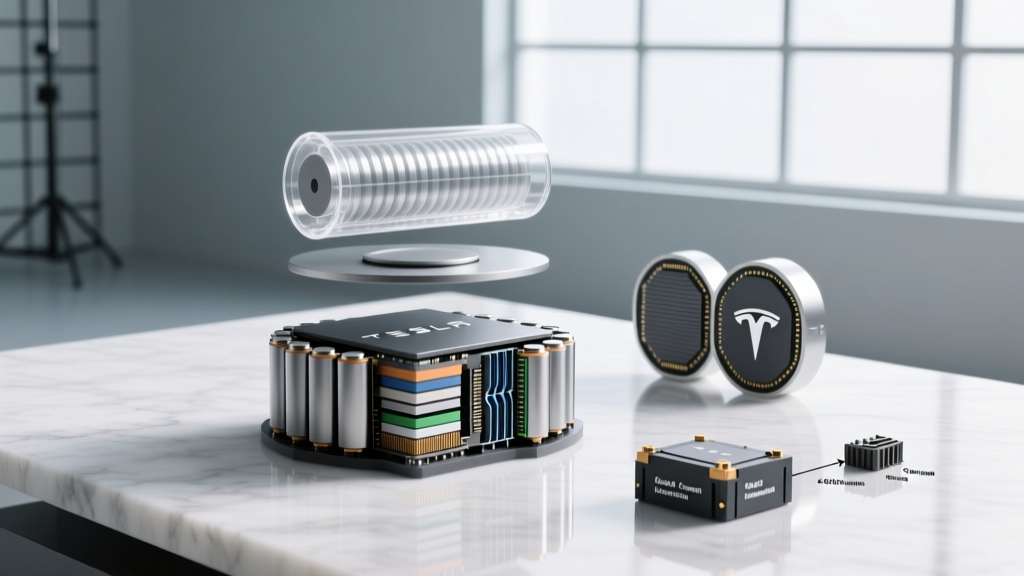
Tesla produces battery cells at its own factories — most notably the 4680-format cells manufactured at facilities in Texas and at the original Gigafactory in Nevada (in partnership with Panasonic). The 4680 cell, named for its dimensions (46 mm diameter, 80 mm height), is a larger cylindrical cell that Tesla introduced to reduce cost per kWh and improve energy density through a tabless electrode design.
However, Tesla's own cell production does not come close to meeting its total vehicle demand. The company sources the bulk of its battery cells from three major external suppliers:
- Panasonic: The longest-running partner, producing 2170-format NCA cells at the Nevada Gigafactory and supplying cells from Japanese factories. Panasonic remains Tesla's primary supplier for Model 3 and Model Y Long Range and Performance variants.
- CATL (Contemporary Amperex Technology Co. Limited): The Chinese battery giant supplies LFP (lithium iron phosphate) prismatic cells, primarily used in the Model 3 and Model Y Standard Range / Rear-Wheel Drive variants sold globally.
- LG Energy Solution: Supplies NMC cells for certain Model 3 and Model Y configurations, particularly vehicles built at Giga Shanghai and Giga Berlin.
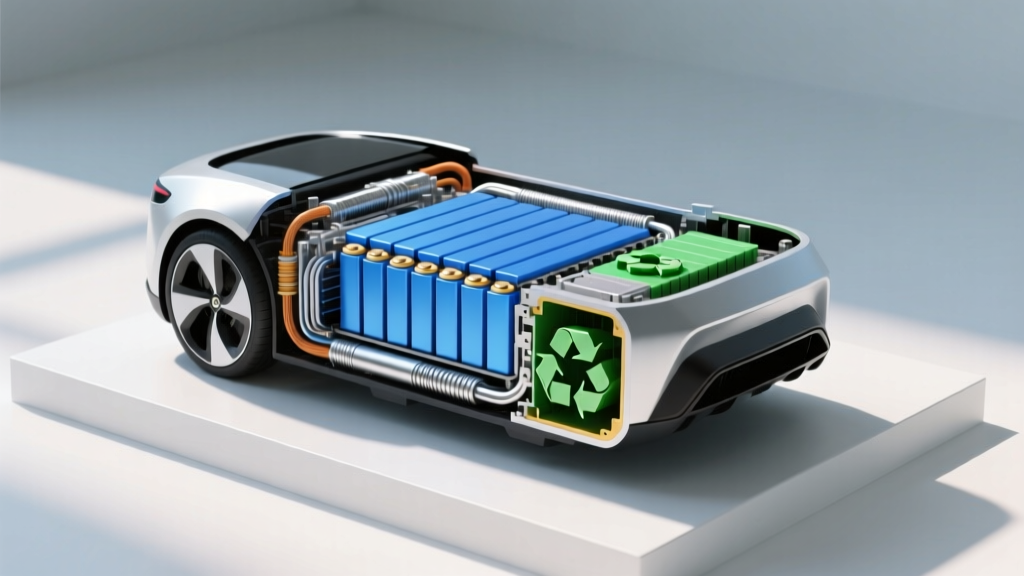
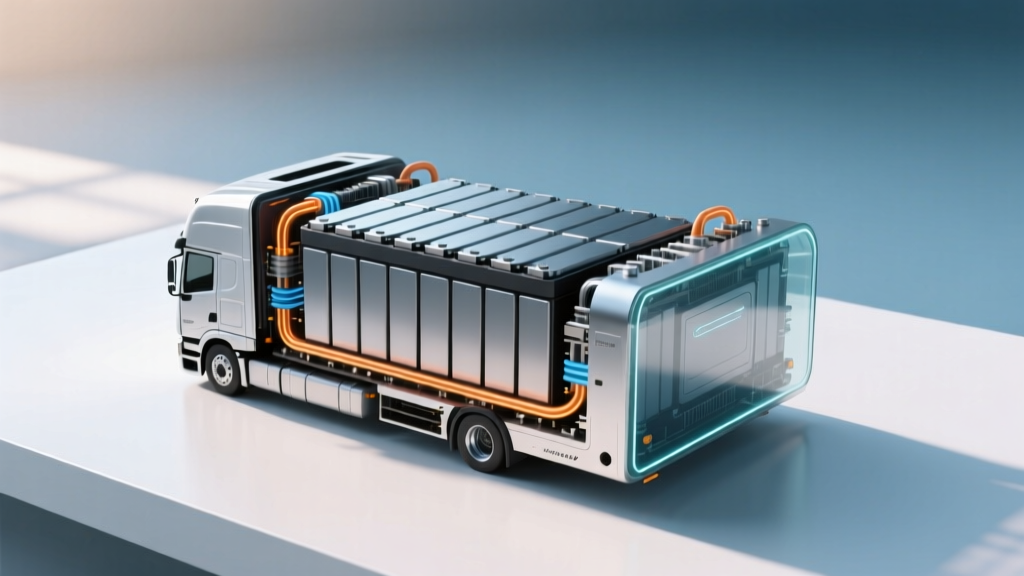
So the precise answer to "do Tesla make their own batteries" is: Tesla manufactures a growing share of its own 4680 cells in-house, but the majority of cells in Tesla vehicles are produced by Panasonic, CATL, and LG Energy Solution. Tesla then assembles these cells into battery packs with its own thermal management systems, structural integration, and battery management software at its vehicle factories.
Battery Chemistry Explained: LFP vs NMC vs NCA
The chemistry inside the cell fundamentally determines an EV battery's energy density, lifespan, cold-weather behavior, cost, and charging characteristics. Tesla uses two primary chemistries across its 2026 lineup, and understanding the trade-offs is critical for buyers choosing between trims.
| Attribute | LFP (Lithium Iron Phosphate) | NMC (Nickel Manganese Cobalt) | NCA (Nickel Cobalt Aluminum) |
|---|---|---|---|
| Used in (Tesla) | Model 3/Y RWD (Standard Range) | Model Y LR (some markets), Model 3 LR (LG cells) | Model 3/Y LR & Performance (Panasonic 2170) |
| Energy Density | Lower (~160–180 Wh/kg cell-level) | Higher (~220–260 Wh/kg) | Highest (~260–280 Wh/kg) |
| Cycle Life | Superior (3,000–5,000+ cycles to 80% SoH) | Moderate (1,000–2,000 cycles) | Moderate (1,000–1,500 cycles) |
| Cold-Weather Performance | Reduced range in freezing temps; slower regen | Better cold performance | Better cold performance |
| Cost | Lower (no cobalt or nickel) | Higher (cobalt, nickel content) | Higher (cobalt, nickel content) |
| Recommended Daily Charge | 100% — Tesla recommends full charge regularly | 80–90% daily; 100% before trips | 80–90% daily; 100% before trips |
| Thermal Stability | Excellent (less prone to thermal runaway) | Good with active management | Good with active management |
| State-of-Charge Estimation | Less accurate (flat voltage curve) | More accurate | More accurate |
LFP vs NMC — Which Is Better and Why?
Neither chemistry is universally "better" — the right choice depends on your driving pattern and climate.
Choose LFP if: You want maximum cycle life, lower cost, and the convenience of charging to 100% daily without degradation concerns. LFP is ideal for commuters who charge at home every night, drive in moderate climates, and prioritize longevity over maximum single-charge range. The trade-off is lower energy density (less range in the same pack size) and reduced cold-weather performance — expect roughly 25–35% range loss in sub-freezing temperatures compared to 15–25% for NMC/NCA.
Choose NMC/NCA if: You need maximum range, frequently drive in cold weather, or regularly take long road trips where every mile of EPA-rated range matters. Long Range and Performance trims use these chemistries for good reason — higher energy density means more kWh in the same physical space. The trade-off is a recommendation to charge to only 80–90% for daily use, reserving 100% for trip days.
How Long Do Tesla Batteries Last? Real-World Degradation Data
EV battery degradation is one of the most researched topics in ownership, and Tesla vehicles generate more public data than any other brand thanks to fleet telemetry studies and owner crowdsourcing.
According to Tesla's own 2023 Impact Report (the most recent detailed disclosure), the average Model 3 and Model Y battery retains approximately 88% of its original capacity after 200,000 miles — meaning roughly 12% degradation over that distance. This aligns closely with independent data compiled by sources like Teslanorth and Recurrent Auto, which track thousands of vehicles longitudinally.
Typical Tesla Battery Degradation Curve (NMC/NCA, 2170 cells):
- Year 1 / ~15,000 miles: 2–4% capacity loss (initial formation loss — steepest part of the curve)
- Year 2–3 / ~30,000–50,000 miles: Additional 2–3% loss (total ~5–7%)
- Year 4–5 / ~60,000–80,000 miles: Gradual linear decline; total ~8–10% loss
- Year 6–8 / ~100,000–150,000 miles: Total ~10–13% loss
- 200,000 miles: ~12–15% loss (fleet average)
LFP batteries (CATL prismatic cells): Show slower degradation in most datasets, with many vehicles retaining 92–95% capacity at 60,000 miles. The longer cycle life of LFP chemistry means the battery will likely outlast the vehicle's structural and mechanical components.
A critical nuance: degradation is not linear. Most lithium-ion cells experience a relatively steep initial drop (the "formation" phase) during the first several thousand miles, followed by a long, gradual linear decline. A battery that has lost 5% in its first year is not on track to lose 5% every year — the rate slows significantly.
Tesla Battery Warranty Terms: What's Covered
Tesla's battery warranty is one of the strongest in the industry, and it applies to the high-voltage traction battery — not the 12V (or 16V lithium) auxiliary battery, which carries a separate, shorter warranty.
| Model / Variant | Battery Warranty | Capacity Retention Threshold | Drive Unit Warranty |
|---|---|---|---|
| Model 3 RWD (LFP) | 8 years / 100,000 miles | 70% minimum retention | 8 years / 100,000 miles |
| Model 3 Long Range / Performance | 8 years / 120,000 miles | 70% minimum retention | 8 years / 120,000 miles |
| Model Y RWD (LFP) | 8 years / 100,000 miles | 70% minimum retention | 8 years / 100,000 miles |
| Model Y Long Range / Performance | 8 years / 120,000 miles | 70% minimum retention | 8 years / 120,000 miles |
| Model S / Model X | 8 years / 150,000 miles | 70% minimum retention | 8 years / 150,000 miles |
| Cybertruck (AWD / Cyberbeast) | 8 years / 120,000 miles | 70% minimum retention | 8 years / 120,000 miles |
The 70% retention threshold means Tesla will repair or replace the battery if its usable capacity drops below 70% of the original rated kWh within the warranty period. In practice, based on the degradation data above, very few batteries fall below this threshold within the warranty window. The warranty also covers manufacturing defects, module failures, and battery management system faults — not just capacity loss.
For reference, the EPA's fuel economy site and Tesla's own owner's manual provide model-specific warranty documentation, and the warranty is fully transferable to subsequent owners at no cost.
EV Battery Replacement Cost: What It Actually Costs and When It's Needed
Battery replacement is the single biggest fear among prospective EV buyers, and it's the area where misinformation is most rampant. Here are the actual numbers based on service reports, out-of-warranty estimates, and industry data as of 2026.
| Model | Battery Size (Usable kWh) | Chemistry | Estimated Replacement Cost |
|---|---|---|---|
| Model 3 RWD | ~57.5 kWh | LFP (CATL) | $10,000 – $13,000 |
| Model 3 Long Range | ~75 kWh | NCA/NMC (Panasonic 2170) | $13,000 – $16,000 |
| Model Y Long Range | ~75 kWh | NCA/NMC (Panasonic 2170) | $13,000 – $16,000 |
| Model S (current gen) | ~95 kWh | NMC | $18,000 – $22,000 |
| Model X (current gen) | ~95 kWh | NMC | $18,000 – $22,000 |
| Cybertruck | ~123 kWh | NMC (4680) | $20,000 – $28,000 (estimated) |
These figures include the battery pack and labor but can vary based on whether Tesla replaces the full pack or individual modules (module-level repair is sometimes possible and significantly cheaper, typically $3,000–$7,000 per module depending on the pack architecture).
When is replacement actually needed? For the vast majority of owners, the answer is: never during their ownership. The degradation data shows that even at 200,000 miles, most Tesla batteries retain 85–90% of capacity. Complete pack failures outside of manufacturing defects are extremely rare. Most EV batteries will outlast the vehicle's body, suspension, and interior — the car is more likely to be totaled in an accident or retired for mechanical reasons before the battery needs replacement.
That said, if you plan to keep a Tesla for 15+ years or drive 300,000+ miles, a battery replacement is a realistic possibility and should be factored into your total cost of ownership calculations.
Factors That Affect Battery Life — and How to Maximize It
Battery longevity isn't purely a function of time and mileage — how you use and charge the battery has a measurable impact on its degradation rate. Here are the factors that matter most, ranked by impact:
Battery Care Best Practices
- Avoid sustained high State of Charge (NMC/NCA): For nickel-based chemistries, sitting at 100% SoC for extended periods accelerates degradation. Set your daily charge limit to 80–90% and only charge to 100% when you're about to drive a long trip. LFP owners can ignore this — charge to 100% regularly as Tesla recommends, since LFP chemistry is not harmed by full-charge storage and benefits from periodic full charges for SoC calibration.
- Minimize DC fast charging frequency: Occasional Supercharger use (road trips) has negligible impact. But daily DC fast charging at high kW generates sustained heat, which accelerates cell wear. If you have home Level 2 charging, use it for daily needs and reserve Supercharging for trips. Tesla's battery preconditioning feature (which warms the pack before arriving at a Supercharger) helps mitigate this — always navigate to the charger via the Tesla app or in-car nav to activate it.
- Manage extreme temperatures: Lithium-ion cells degrade faster when repeatedly exposed to high temperatures (above 95°F / 35°C ambient, which means higher cell temps). Tesla's active thermal management system (liquid cooling/heating) is among the best in the industry, but parking in shade or a garage in hot climates still helps. In extreme cold, precondition the battery before driving to reduce stress.
- Don't let the battery sit at very low SoC: Storing a Tesla at 0–5% for days or weeks can cause irreversible cell damage. If storing the vehicle, Tesla recommends leaving it plugged in with the charge limit set to 50%.
- Use regenerative braking: This doesn't directly affect battery degradation, but it reduces brake wear and ensures the battery is being cycled within healthy parameters. Tesla's blended regen and friction braking system is optimized for this.
How to Check and Monitor Battery Health (State of Health)
Tesla does not display a direct "State of Health" (SoH) percentage in the vehicle's UI the way some competitors do. However, there are several ways to monitor your battery's condition:
Method 1: Range Comparison
The simplest approach is to compare your current displayed range at a known State of Charge to the original EPA-rated range. Charge to 100% (or a known percentage) and note the displayed estimated range. Compare this to the EPA rating for your model when new. For example, if your Model 3 Long Range (EPA 341 miles) shows 310 miles at 100%, that suggests roughly 9% degradation. Note that the displayed range estimate is influenced by recent driving efficiency and temperature — it's an approximation, not a laboratory measurement.
Method 2: Tesla Service Mode (2026 vehicles)
Newer Tesla software versions include a battery health test accessible through Service Mode. This runs a controlled measurement cycle and provides a more accurate capacity assessment. Access varies by software version and model.
Method 3: Third-Party Apps and OBD-II Tools
Apps like Tessie, TeslaFi, and Stats (for iOS) can track your charging data over time and estimate SoH by comparing energy added during charges to the displayed SoC change. For more precise measurements, OBD-II dongles paired with apps like Scan My Tesla can read the BMS-reported nominal full-pack energy (in kWh) directly — this is the most accurate method short of a full discharge test at a service center.
Method 4: Tesla Service Center Diagnostic
If you suspect a warranty claim is warranted, a Tesla Service Center can run a full battery diagnostic that provides an official capacity measurement. This is the only method accepted for warranty claims.
Emerging Battery Technology: Solid-State, Silicon Anode, and What's Realistic
The battery technology landscape is evolving rapidly, but it's important to separate announced breakthroughs from production-ready reality.
Solid-state batteries: These replace the liquid electrolyte with a solid material, promising higher energy density, faster charging, and improved safety. Companies like Toyota, QuantumScape, and Samsung SDI have announced prototypes and pilot production. However, as of 2026, no solid-state battery is in mass production for any consumer EV. Realistic timeline for meaningful market penetration: 2028–2032 for premium vehicles, with cost parity likely not until the mid-2030s. Tesla has not announced a solid-state program; its strategy focuses on incremental improvements to lithium-ion (4680 format, dry electrode manufacturing, silicon anode integration).
Silicon anode cells: Replacing graphite anodes with silicon (or silicon-carbon composites) can increase energy density by 10–30%. Tesla's 4680 cells already incorporate some silicon in the anode, and companies like Sila Nanotechnologies and Group14 are scaling production. This is an incremental improvement already in progress, not a distant-future technology.
Sodium-ion batteries: CATL and other manufacturers are producing sodium-ion cells for lower-cost, lower-range applications. These are unlikely to appear in Tesla vehicles in the near term but could be relevant for entry-level EVs across the industry.
For buyers making decisions today, these emerging technologies should not influence purchase timing. The lithium-ion batteries in current Tesla vehicles are mature, well-understood, and demonstrably long-lasting. Waiting for solid-state is waiting for a technology that is still years from showroom floors.
Frequently Asked Questions
Do Tesla make their own batteries entirely in-house?
No. Tesla manufactures its own 4680-format cells at factories in Texas and Nevada, but the majority of cells in Tesla vehicles are produced by external suppliers: Panasonic (NCA, 2170-format), CATL (LFP, prismatic), and LG Energy Solution (NMC). Tesla designs the battery pack architecture, thermal management system, and battery management software, then assembles cells from multiple sources into finished packs.
How long do EV batteries last in years and miles?
Based on fleet data, Tesla batteries typically retain 85–90% of original capacity at 200,000 miles. In years, most owners will see 15–20+ years of usable battery life before capacity drops to a point where range becomes impractical. LFP batteries generally last longer than NMC/NCA in terms of cycle count.
How much does a Tesla battery cost to replace?
Out-of-warranty replacement costs range from approximately $10,000 for a Model 3 RWD (LFP, ~57.5 kWh) to $22,000+ for a Model S/X (~95 kWh). Module-level repairs, when possible, cost $3,000–$7,000. However, most Tesla batteries never need replacement during typical ownership — degradation data shows 85–90% retention at 200,000 miles.
What does the Tesla battery warranty actually cover?
Tesla warrants the high-voltage traction battery for 8 years / 100,000–150,000 miles (depending on model) with a minimum 70% capacity retention threshold. The warranty covers capacity loss below 70%, manufacturing defects, module failures, and BMS faults. It does not cover the 12V/16V auxiliary battery, which has a separate warranty.
LFP vs NMC — which chemistry should I choose?
Choose LFP (Standard Range/RWD trims) if you want maximum longevity, lower cost, and the convenience of charging to 100% daily. Choose NMC/NCA (Long Range/Performance trims) if you need maximum range, drive in cold climates, or frequently road-trip. Neither is universally superior — it's a trade-off between cycle life and energy density.
Does frequent Supercharging damage the battery?
Occasional Supercharging (road trips, a few times per month) has minimal measurable impact on battery health. Daily DC fast charging generates sustained heat that can accelerate degradation over time. Tesla's preconditioning feature mitigates this. For daily charging, Level 2 home charging at 7–11.5 kW is gentler on the battery and significantly cheaper per kWh.
Can I check my Tesla's battery health myself?
Yes. Compare your displayed range at 100% SoC to the original EPA rating for a rough estimate. Use third-party apps (TeslaFi, Tessie, Stats) to track charging data over time. For the most accurate reading, use an OBD-II reader with Scan My Tesla to access the BMS-reported nominal full-pack energy. For warranty claims, a Tesla Service Center diagnostic is required.
For the latest on Tesla's battery specifications and warranty terms, refer to the official Tesla warranty documentation. For broader EV battery standards and testing protocols, the National Highway Traffic Safety Administration (NHTSA) provides safety and compliance information for all EV battery systems sold in the United States.