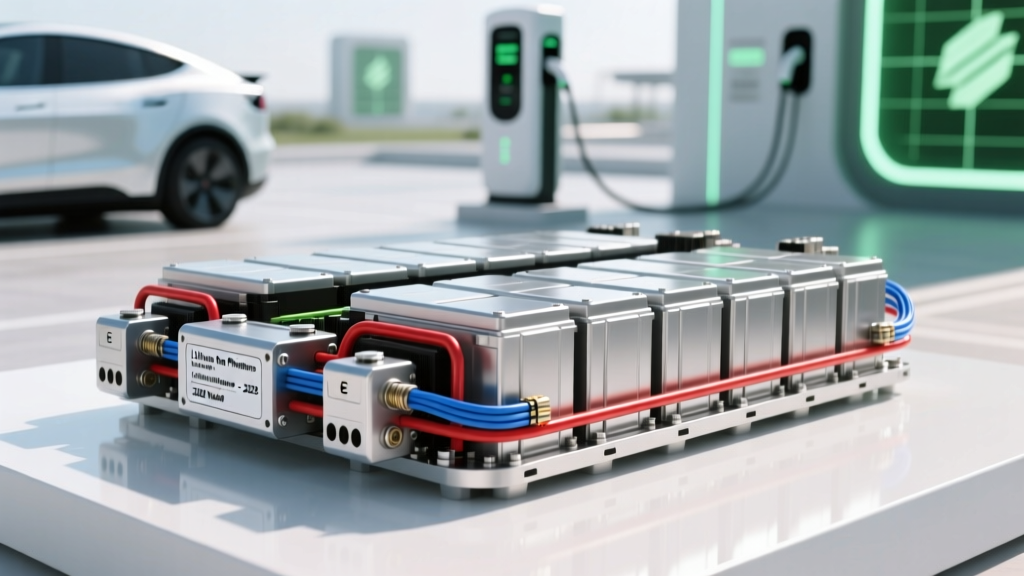
If you have spent any time in EV forums or YouTube rabbit holes, you have likely encountered the idea of building a DIY lithium ion battery pack — salvaging cells from old laptops, buying bulk 18650s, or assembling a custom module to replace a degraded EV traction battery. The appeal is obvious: potentially thousands of dollars in savings on a replacement pack. But the reality of high-voltage EV battery systems makes this one of the most dangerous projects a well-meaning owner can attempt.
This guide will not tell you how to build a DIY lithium ion battery pack. Instead, it will explain why factory-engineered EV battery packs are designed the way they are, what actually happens to them over time, what your warranty covers, and what your real options are when a pack needs service. If you are researching battery replacement, understanding the engineering behind the pack is far more valuable than attempting to replicate it in a garage.
How EV Battery Packs Are Actually Engineered
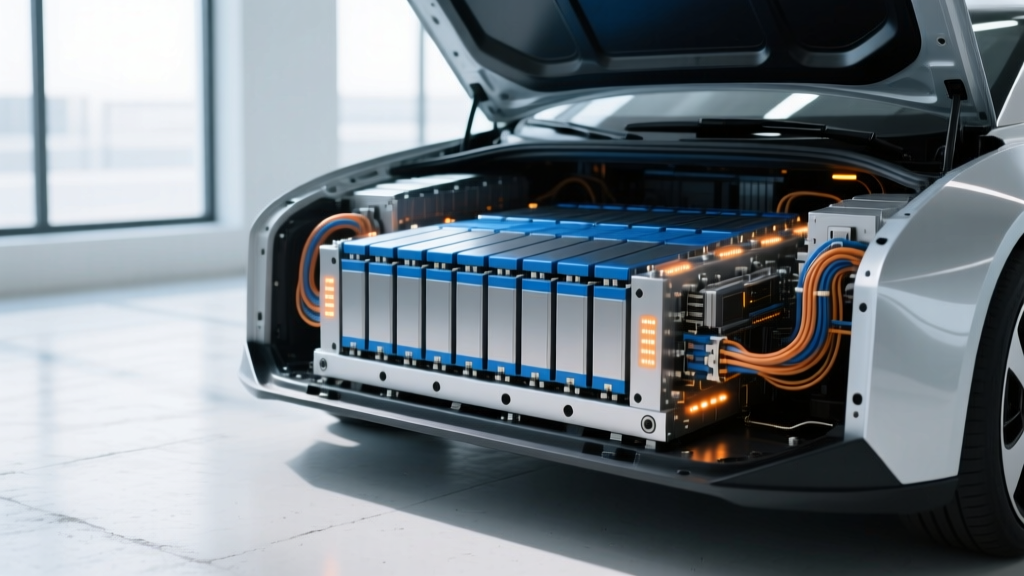
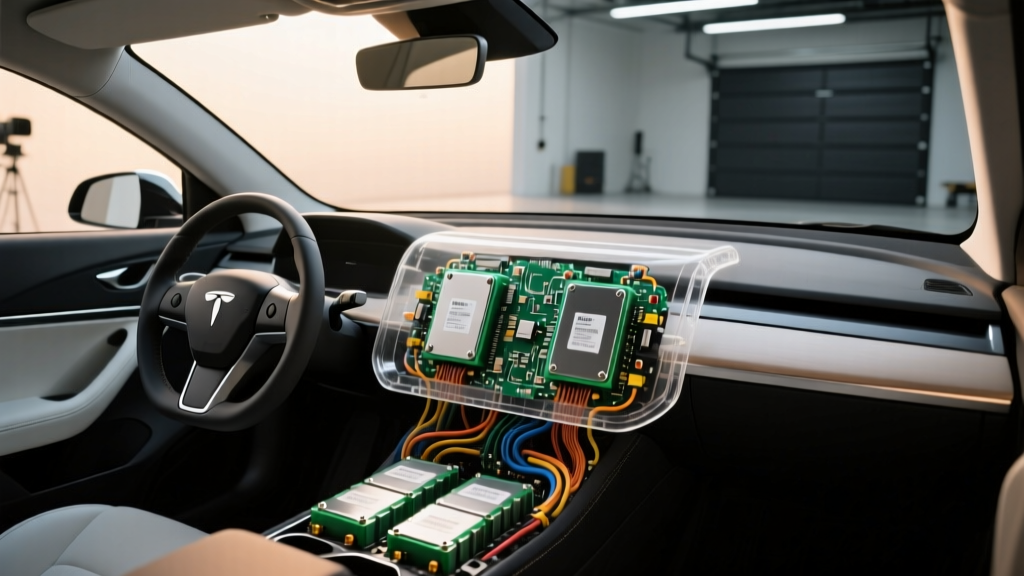
A modern EV traction battery is not simply a collection of lithium-ion cells wired together. It is a tightly managed system of thermal regulation, cell balancing, high-voltage contactors, and a Battery Management System (BMS) that monitors individual cell voltages, temperatures, and current flow hundreds of times per second. The BMS in a Tesla Model 3 or Hyundai Ioniq 5, for example, manages thousands of individual cylindrical or pouch cells, ensuring none drift outside safe voltage windows (typically 2.5V to 4.2V per cell for NMC chemistry).
A DIY lithium ion battery pack almost never replicates this level of management. Hobbyist BMS boards available online are designed for low-voltage applications — e-bikes, solar storage, or power tools — not the 400V to 800V architectures found in modern EVs. A single cell failure in an improperly managed pack can trigger thermal runaway, a self-sustaining chemical fire that burns at over 1,000°F and cannot be extinguished with standard fire suppression.
Factory packs also undergo rigorous UN38.3 transport testing, UL certification, and crash testing per NHTSA FMVSS standards. No DIY build can match this validation.
LFP vs NMC: Understanding Your EV's Battery Chemistry
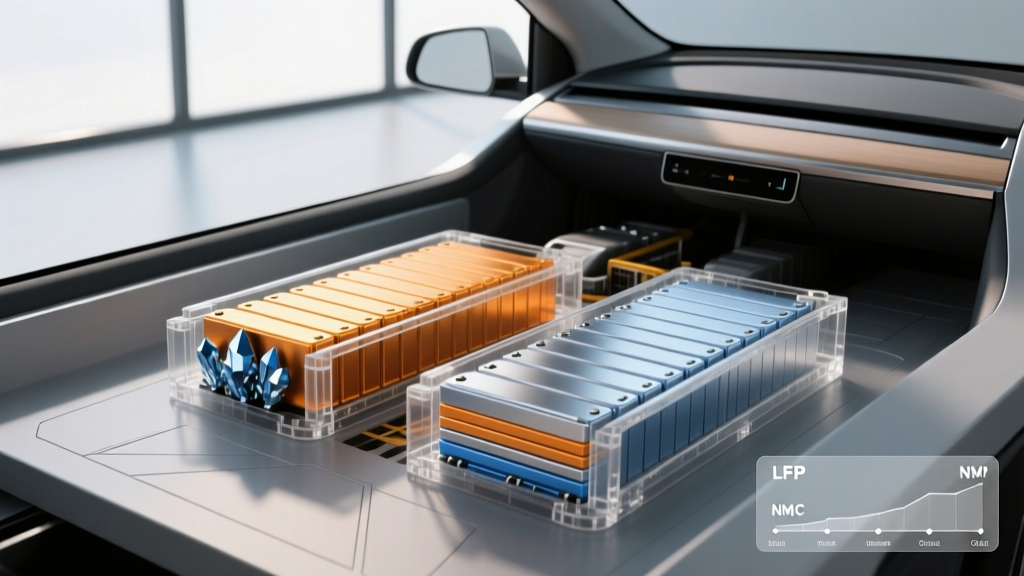
The two dominant chemistries in 2026 EV battery packs are NMC (nickel manganese cobalt) and LFP (lithium iron phosphate). Your vehicle uses one or the other, and the chemistry fundamentally affects range, longevity, and charging behavior.
| Attribute | LFP (Lithium Iron Phosphate) | NMC / NCA (Nickel-based) |
|---|---|---|
| Energy Density | Lower (~160 Wh/kg cell-level) | Higher (~250-300 Wh/kg cell-level) |
| Cycle Life | 3,000-5,000+ cycles to 80% SoH | 1,000-2,000 cycles to 80% SoH |
| Cold-Weather Performance | Reduced — slower charging below 32°F | Better low-temp charge acceptance |
| Thermal Stability | Superior — higher runaway threshold (~518°F) | Lower threshold (~410°F), requires more active cooling |
| Cost per kWh | Lower — no cobalt or nickel | Higher — commodity metal pricing exposure |
| State of Charge Accuracy | Flat voltage curve makes SoC estimation harder | Steeper curve — easier SoC estimation |
| Common 2026 Vehicles | Tesla Model 3/Y RWD, Ford Mustang Mach-E Select (LFP option), Rivian R1S Standard | Hyundai Ioniq 5, Kia EV6, BMW iX, Chevrolet Equinox EV, Tesla Long Range/Performance |
Which is better? Neither is universally superior. LFP excels in longevity and safety — Tesla recommends LFP-equipped vehicles can be charged to 100% daily without accelerated degradation. NMC offers higher energy density, meaning more range in the same physical package, but benefits from being kept between 20-80% SoC for daily use. If you prioritize a vehicle you plan to keep for 15+ years, LFP's cycle life advantage is significant. If you need maximum range per charge for road trips, NMC still wins on energy density.
How Long Do EV Batteries Actually Last?
The fear that EV batteries need frequent replacement is largely a myth carried over from early-2010s EVs with small, passively cooled packs. Real-world degradation data from 2026 tells a very different story.
Typical Degradation Curve (NMC Pack, Liquid-Cooled):
- Year 1 / 15,000 miles: ~2-4% capacity loss (initial formation loss)
- Year 3 / 45,000 miles: ~5-8% total loss
- Year 5 / 75,000 miles: ~8-12% total loss
- Year 8 / 120,000 miles: ~10-15% total loss
- Year 10 / 150,000 miles: ~12-18% total loss
Source: Recurrent Auto battery data analysis, Geotab fleet degradation studies. LFP packs typically show 2-5% less loss at equivalent mileage.
A 2024 Hyundai Ioniq 5 with a 77.4 kWh (usable) NMC pack rated at 303 miles EPA might realistically show ~260-275 miles of range at 100,000 miles — a noticeable but manageable reduction. The vast majority of liquid-cooled EV battery packs outlast the vehicle's useful economic life. According to data aggregated by fueleconomy.gov, battery-related failures requiring full pack replacement remain well under 2% of EVs within the warranty period.
However, degradation is not purely linear. Calendar aging (time-based chemical changes) and use-based aging (charge cycles, temperature exposure) both contribute. A garage-kept vehicle in San Diego will degrade less than one parked outside in Phoenix or regularly DC fast-charged in Minnesota winters.
What the Battery Warranty Actually Covers
Federal law mandates a minimum EV battery warranty of 8 years / 100,000 miles (in California Air Resources Board states, it extends to 10 years / 150,000 miles). Here is how the major manufacturers structure coverage in 2026:
| Manufacturer | Warranty Term | Capacity Threshold | Notes |
|---|---|---|---|
| Tesla (Model 3/Y) | 8 yr / 120,000 mi (LR/AWD); 8 yr / 100,000 mi (RWD) | 70% retention | LFP RWD: 8yr/100k mi |
| Hyundai / Kia | 10 yr / 100,000 mi | 70% retention | Among the longest standard coverage |
| Ford (Mach-E, F-150 Lightning) | 8 yr / 100,000 mi | 70% retention | Transferable to second owner |
| GM (Ultium-based) | 8 yr / 100,000 mi | 70% retention (estimated) | Some models offer extended fleet warranties |
| Rivian | 8 yr / 175,000 mi | 70% retention | Higher mileage cap than most competitors |
| BMW | 8 yr / 100,000 mi | 70% retention | Includes high-voltage components beyond cells |
The critical detail: warranty coverage triggers when the pack drops below the stated threshold (usually 70% of original capacity). A pack at 72% SoH at 95,000 miles is functioning "within spec" even though you have lost nearly a third of your original range. Warranties cover defects and abnormal degradation — not the gradual, expected capacity loss that occurs with normal use.
EV Battery Replacement Cost: What You Would Actually Pay
If your battery falls outside warranty coverage and needs replacement, the cost is substantial — but full replacements are rare. Most out-of-warranty service involves replacing individual modules rather than the entire pack.
| Vehicle | Battery Size | Full Pack (Parts + Labor) | Single Module Repair |
|---|---|---|---|
| Tesla Model 3 RWD (LFP) | ~60 kWh | $12,000 - $16,000 | $1,500 - $3,000 |
| Hyundai Ioniq 5 | 77.4 kWh | $15,000 - $22,000 | $2,000 - $4,500 |
| Ford F-150 Lightning (Extended) | 131 kWh | $25,000 - $35,000 | $3,000 - $6,000 |
| Chevrolet Equinox EV | ~85 kWh | $14,000 - $20,000 | $2,000 - $4,000 |
| BMW iX xDrive50 | 111.5 kWh | $22,000 - $30,000 | $3,500 - $6,000 |
This is precisely why the DIY lithium ion battery pack concept appeals to cost-conscious owners. But consider: a replacement pack includes a fresh warranty (typically 3-5 years on the replacement), professional installation, BMS calibration, and proper high-voltage system reintegration. A DIY pack offers none of this and introduces catastrophic safety risk.
Module-level repair is increasingly the standard. Specialized EV shops can identify the degraded or failed module(s), replace only those, and rebalance the pack — often restoring 90%+ of original capacity at a fraction of a full-pack cost.
Factors That Accelerate Battery Degradation
Not all miles are equal when it comes to battery wear. These are the factors that measurably accelerate capacity loss:
Battery Care Checklist — Maximize Your Pack's Lifespan
- Limit DC fast charging: Occasional road-trip fast charging is fine. Daily DC fast charging (especially at 150+ kW) increases thermal stress. If you have home Level 2 access, use it for daily needs.
- Avoid extreme SoC for storage: Do not leave the vehicle at 100% or below 10% for extended periods. For storage over 2 weeks, target 50-60% SoC.
- LFP exception: Tesla and other manufacturers recommend periodic 100% charges for LFP packs to recalibrate the BMS. Follow your specific vehicle's guidance.
- Precondition before fast charging: Use your vehicle's navigation-routed preconditioning (available on Tesla, Hyundai/Kia, Ford, GM) to warm the battery before arriving at a DC charger. Cold batteries charged at high power suffer lithium plating — a permanent, irreversible capacity loss mechanism.
- Minimize exposure to extreme heat: Parking in direct sunlight in 100°F+ climates for months on end accelerates calendar aging. A garage or shaded spot meaningfully reduces thermal load.
- Use scheduled charging: Set your vehicle to finish charging just before departure rather than sitting at high SoC overnight. This reduces time spent at voltage extremes.
- Drive moderately in extreme cold: Below 20°F, battery internal resistance increases significantly. Gentle initial driving allows the pack to self-warm before demanding high current.
How to Check Your Battery's State of Health
Monitoring your battery's State of Health (SoH) is straightforward in 2026, with multiple options available:
In-vehicle diagnostics: Many 2026 models (Hyundai, Kia, BMW, Rivian) display a battery health percentage or degradation indicator in the settings menu. Tesla does not natively show SoH percentage but displays estimated range at 100% charge, which you can compare to the original EPA rating.
OBD-II + app solutions: Third-party tools like LeafSpy (Nissan Leaf), Scan My Tesla, or Car Scanner with an OBD-II Bluetooth adapter can pull detailed cell-level data, including individual cell voltage variance, pack impedance, and estimated SoH percentage.
Dealer diagnostic reports: Request a battery health report during service visits. Most manufacturers can provide a detailed printout showing pack capacity vs. original spec.
Real-world tracking: The simplest method — track your actual miles per kWh over time. If your vehicle originally achieved 3.5 mi/kWh and you now see 3.0 mi/kWh under similar driving conditions, that roughly correlates to ~14% degradation (though driving habits and weather must be controlled for).
Emerging Battery Technology: What Is Coming (And When)
Several next-generation battery technologies are in development. None are available in production EVs as of 2026, but timelines are becoming clearer:
Solid-state batteries: Toyota, Samsung SDI, and QuantumScape are the most prominent developers. Toyota has announced a solid-state battery targeting 2027-2028 production with claims of 750+ km range and 10-minute fast charging. However, Toyota has repeatedly delayed solid-state timelines, and initial deployment will likely be limited to low-volume, premium models. Mass-market availability before 2030 remains uncertain.
Silicon-dominant anodes: Companies like Sila Nanotechnologies and Group14 are replacing graphite anodes with silicon composites, potentially boosting energy density 20-40%. Mercedes-Benz's EQG and select 2027+ models are expected to incorporate silicon-anode cells. This is nearer-term than solid-state and may appear in limited production within 1-2 years.
Sodium-ion batteries: CATL and BYD are developing sodium-ion cells that eliminate lithium entirely, offering lower cost and better cold-weather performance at the expense of energy density. These are likely destined for budget EVs and stationary storage rather than long-range passenger vehicles.
None of these technologies are reasons to delay a current EV purchase. Today's lithium-ion packs already deliver 150,000-200,000+ mile usable lifespans with proper care, and the cost per kWh continues to decline.
The Verdict on DIY Battery Packs for EVs
A DIY lithium ion battery pack is a project suited to low-voltage hobby applications — solar storage, e-bikes, or educational demonstrations. For a 400V+ EV traction battery, the risks of thermal runaway, improper cell balancing, lack of crash protection, and absent warranty coverage make it a non-starter for any vehicle you intend to drive on public roads.
The practical path for EV owners concerned about battery longevity is straightforward: understand your chemistry, follow the care guidelines above, monitor SoH periodically, and rely on the extensive factory warranty that covers the vast majority of degradation scenarios. If you do face an out-of-warranty battery issue, module-level repair at a qualified EV shop is the cost-effective and safe alternative.
Frequently Asked Questions
How long do EV batteries last in years and miles?
Modern liquid-cooled EV batteries typically retain 70-85% of original capacity at 150,000 miles or 10 years. Most will function adequately for 200,000+ miles before capacity loss becomes a practical inconvenience. LFP chemistry packs often exceed these figures due to superior cycle life.
How much does an EV battery cost to replace in 2026?
Full pack replacement ranges from approximately $12,000 for a Tesla Model 3 RWD to $35,000 for a Ford F-150 Lightning Extended Range. However, full replacements are rare — most out-of-warranty service involves individual module replacement at $1,500-$6,000 depending on the vehicle.
What does the EV battery warranty cover?
Federal minimum is 8 years / 100,000 miles against capacity dropping below 70% of original. CARB states extend to 10 years / 150,000 miles. Coverage includes defects and abnormal degradation. Normal gradual capacity loss above the threshold is not a warranty claim. Check IRS.gov for related credit and incentive details that may offset ownership costs.
How do I check and maximize my EV battery health?
Use your vehicle's built-in diagnostics, third-party OBD-II apps, or dealer service reports to monitor State of Health. Maximize longevity by limiting daily DC fast charging, avoiding prolonged storage at extreme SoC levels, preconditioning before fast charging in cold weather, and parking in shade when possible in hot climates.
LFP vs NMC — which battery chemistry is better for me?
Choose LFP if you plan to keep your vehicle 10+ years, want maximum cycle life, prefer the ability to charge to 100% daily, and do not need absolute maximum range. Choose NMC if you need the longest possible range per charge, regularly drive in very cold climates, or prioritize energy density for towing and cargo-heavy use cases. Both chemistries are proven and reliable in 2026 production vehicles.
Can I build a DIY lithium ion battery pack to save money on a replacement?
While technically possible for low-voltage applications, building a DIY pack for an EV traction system is extremely dangerous and not recommended. Factory packs undergo extensive safety certification, include sophisticated thermal management and BMS controls, and carry warranty protection. The fire risk from improper cell balancing, lack of crash protection, and inadequate thermal management at 400V+ makes this project unsuitable for road vehicles.