Why "Disconnecting a Battery" in an EV Is Not a DIY Job
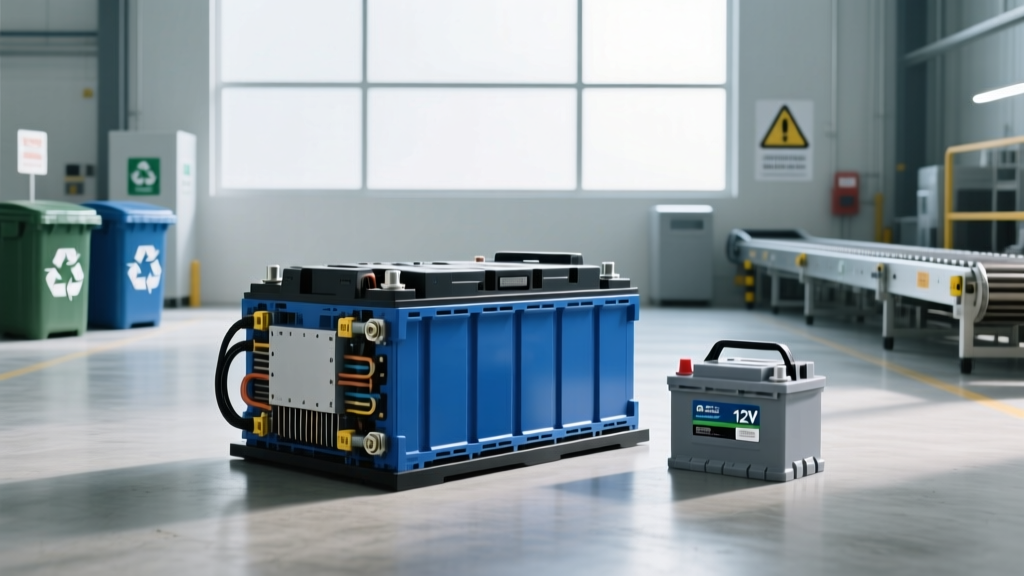
When a gas-car owner hears "disconnect the battery," they grab a 10mm wrench and pull the negative terminal. In a battery-electric vehicle, that instinct is dangerous. An EV actually carries two batteries: a 12V auxiliary battery (which powers the infotainment, lights, and door locks) and a high-voltage traction battery — typically 400V or 800V — that stores 50 to 130+ kWh of energy and drives the wheels.
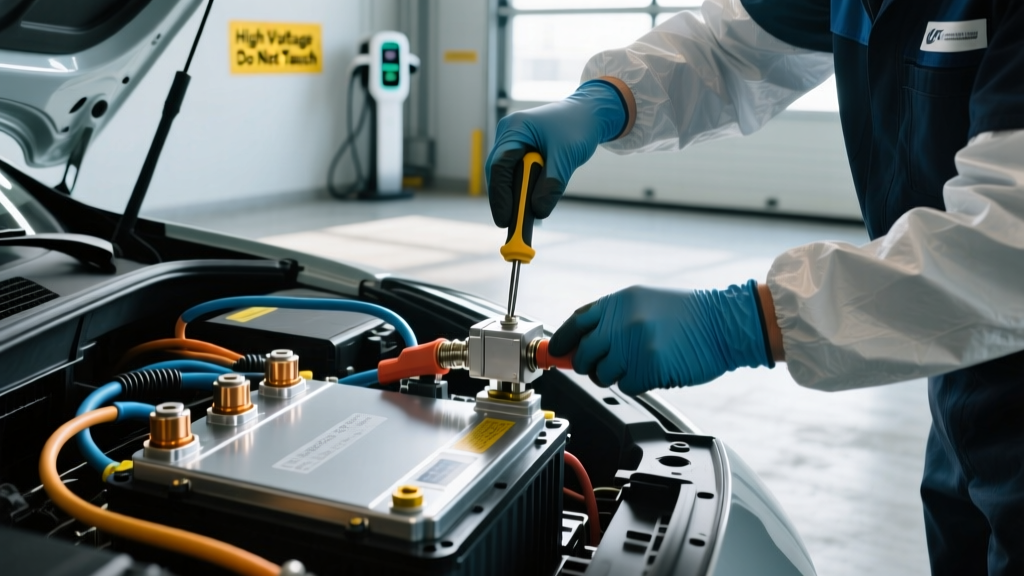
Disconnecting the 12V battery on most EVs is straightforward and sometimes necessary for resets or towing prep. But disconnecting the high-voltage traction battery involves orange-sheathed cabling carrying enough voltage to be lethal. This work is reserved for manufacturer-certified high-voltage technicians using insulated tools, lockout/tagout procedures, and voltage verification meters. If you're reading this because you're considering a traction-battery removal for repair, storage, or salvage: stop, and call a qualified EV service center.
This guide covers what you can safely do, how EV batteries actually age, what replacement really costs in 2026, and how to maximize the pack's useful life.
LFP vs NMC: The Chemistry Behind Your Pack
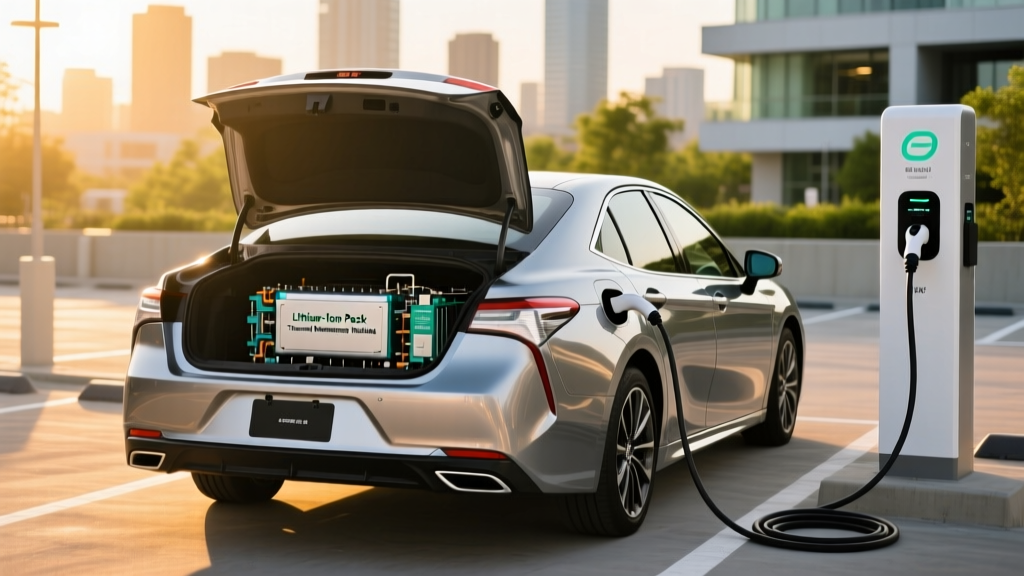
The two dominant lithium-ion chemistries in 2026 EVs are NMC/NCA (nickel-manganese-cobalt / nickel-cobalt-aluminum) and LFP (lithium iron phosphate). The choice affects range, longevity, charging behavior, and cold-weather performance.
| Attribute | LFP (e.g., Tesla Model 3 RWD, BYD, base Ford Mustang Mach-E) | NMC/NCA (e.g., Hyundai Ioniq 5, Rivian, long-range Tesla) |
|---|---|---|
| Energy density | Lower (~160–180 Wh/kg cell-level) | Higher (~230–270 Wh/kg cell-level) |
| Typical cycle life | 2,000–3,500+ full cycles | 1,000–2,000 full cycles |
| State-of-charge flexibility | Can be charged to 100% daily; recommended weekly | Better kept 20–80% daily; 100% only for trips |
| Cold-weather performance | Weaker; larger range loss below freezing | Better low-temp discharge and charge acceptance |
| Cost per kWh (pack-level) | Lower — ~$100–120/kWh in 2026 | Higher — ~$130–160/kWh in 2026 |
| Cobalt/nickel content | None | Yes — sourcing and cost exposure |
Which is better? For a commuter who charges at home nightly and lives in a mild climate, LFP is the stronger long-term pick: longer cycle life, lower cost, no 80% daily cap anxiety. For road-trippers, cold-climate drivers, or anyone prioritizing maximum range per kWh, NMC/NCA remains the better fit. Neither is universally superior — it depends on your driving and charging pattern.
How Long Do EV Batteries Actually Last?
The short answer: in most cases, longer than the car around them. Real-world fleet data from Recurrent Auto and manufacturer telemetry show median degradation of roughly 5–8% over the first 100,000 miles for liquid-cooled packs, with the curve flattening after the initial break-in period.
Typical capacity retention by mileage (liquid-cooled NMC packs, fleet median):
- Year 1 / 15,000 mi: ~95–97% State of Health (SoH)
- Year 3 / 45,000 mi: ~92–94% SoH
- Year 5 / 75,000 mi: ~89–92% SoH
- Year 8 / 120,000 mi: ~85–90% SoH
- Year 10 / 150,000 mi: ~82–88% SoH
Sources: Recurrent Auto fleet data, Geotab longitudinal study.
LFP packs in moderate climates are tracking even better — Tesla's Model 3 RWD fleet shows many units above 90% SoH at 100,000 miles. Air-cooled packs (notably older Nissan Leaf) degrade faster, particularly in hot climates, and are no longer representative of mainstream 2026 designs.
A battery is generally considered "end of first life" at 70–80% SoH — the threshold where range loss becomes noticeable. Most 2026 packs are engineered to hit 200,000+ miles before reaching that point.
What Does the Battery Warranty Actually Cover?
Federal law mandates a minimum 8 years / 100,000 miles warranty on EV battery packs (10 years / 150,000 miles in CARB states like California, New York, and Massachusetts). Most manufacturers exceed the federal floor.
| Model | Warranty Term | Capacity Retention Threshold |
|---|---|---|
| Tesla Model 3 RWD (LFP) | 8 yr / 100,000 mi | 70% SoH |
| Tesla Model Y LR (NMC) | 8 yr / 120,000 mi | 70% SoH |
| Hyundai Ioniq 5 | 10 yr / 100,000 mi | 70% SoH |
| Ford F-150 Lightning | 8 yr / 100,000 mi | 70% SoH |
| Rivian R1T / R1S | 8 yr / 175,000 mi | 70% SoH |
| Chevrolet Equinox EV | 8 yr / 100,000 mi | 60% SoH |
What's covered: Defects, premature capacity loss below the stated threshold, and module/pack replacement to bring SoH above the threshold. What's typically excluded: Damage from accidents, floods, improper modifications, or use outside manufacturer guidelines (e.g., sustained 100% storage on NMC). Always read your specific warranty booklet — thresholds and exclusions vary.
EV Battery Replacement Cost: What Owners Actually Pay
This is the most fear-driven topic in EV ownership, and context matters. Most EV batteries never need replacement under normal ownership. When they do, it's usually after 150,000+ miles — often beyond first or second ownership. Out-of-warranty replacement costs in 2026:
| Vehicle / Pack Size | Parts (battery) | Labor | Total Range |
|---|---|---|---|
| Tesla Model 3 RWD (~60 kWh LFP) | $8,000–$11,000 | $1,500–$2,500 | $9,500–$13,500 |
| Hyundai Ioniq 5 (~77 kWh NMC) | $12,000–$16,000 | $2,000–$3,000 | $14,000–$19,000 |
| Ford F-150 Lightning Ext. (~131 kWh) | $18,000–$25,000 | $2,500–$4,000 | $20,500–$29,000 |
| Chevrolet Bolt EV (~65 kWh NMC) | $9,000–$13,000 | $1,500–$2,500 | $10,500–$15,500 |
| Rivian R1T Max Pack (~149 kWh) | $22,000–$30,000 | $3,000–$4,500 | $25,000–$34,500 |
Two important trends are pushing these numbers down: (1) cell-level pricing has fallen roughly 15% since 2023, and (2) more independent EV shops now perform module-level repairs — replacing only the degraded modules rather than the whole pack — for $3,000–$8,000 on common platforms. This is a meaningful option once the factory warranty expires.
Five Factors That Accelerate (or Preserve) Battery Life
Chemistry sets the ceiling, but your habits determine where on the curve your pack lands. The biggest longevity levers, ranked by impact:
- Heat exposure. Sustained pack temperatures above 95°F (35°C) accelerate electrolyte breakdown. Park in shade or a garage when possible; precondition the cabin (and pack) while plugged in before hot-day driving.
- State-of-charge habits. For NMC/NCA packs, daily charging to 80% rather than 100% can roughly double cycle life. LFP owners should charge to 100% at least weekly to keep the BMS calibration accurate.
- DC fast-charging frequency. Occasional Supercharger / Electrify America stops are fine. Daily DCFC on a hot pack without preconditioning adds wear — modern thermal management mitigates this significantly, but Level 2 home charging remains gentler.
- Deep discharges. Regularly running below 10% SoH stresses cells. Aim to recharge before hitting 15%.
- Long-term storage. If storing an EV for 30+ days, leave it at ~50% SoC in a cool location. Never store at 100% or below 20%.
How to Check Your Battery's State of Health
Owners have three practical paths to monitor SoH:
- In-car displays. Tesla's Service Mode (accessible via the software menu) shows pack health metrics. Hyundai/Kia's EV app reports SoC trends. Rivian surfaces SoH in service reports.
- OBD-II dongles + apps. Tools like OBDeleven, Leaf Spy (Nissan), and Scan My Tesla read the BMS directly for cell voltage spread, Ah capacity, and degradation estimates. Expect ~$30–$80 for a quality adapter.
- Dealer or independent EV shop. A formal SoH report is increasingly requested for used-EV transactions — ask for it before purchase, especially for vehicles over 80,000 miles.
Watch for cell imbalance — a widening voltage spread between modules is often the earliest sign of pack issues, sometimes preceding visible range loss.
Emerging Tech: Solid-State, Silicon Anodes, and Realistic Timelines
Several next-generation battery technologies are in pilot or early production in 2026, but none are yet mainstream in U.S.-market consumer EVs:
- Solid-state batteries (Toyota, Samsung SDI, QuantumScape) promise ~40% higher energy density and faster charging. Toyota has announced limited 2027–2028 production for premium models; volume availability is realistically 2029+.
- Silicon-dominant anodes (Sila Nanotechnologies, Group14) are entering production in 2026–2027 and improve energy density ~15–20% without a full chemistry overhaul.
- Sodium-ion packs (CATL) are shipping in budget Chinese-market vehicles; U.S. availability remains unannounced and is likely limited to stationary storage first.
None of these change today's purchase decision. Current LFP and NMC packs already outlast most ownership horizons. Treat announced tech as forward-looking, not a reason to delay a 2026 purchase.
Frequently Asked Questions
Can I disconnect the 12V battery on my EV myself?
Yes, on most models — the 12V battery is accessible under the hood or in the frunk area, and disconnecting the negative terminal is safe with basic tools. This is sometimes needed for hard resets or before towing. Consult your owner's manual; some vehicles (Tesla, Rivian) require a specific shutdown sequence via the touchscreen first.
Is it ever safe for an owner to disconnect the high-voltage traction battery?
No. The HV pack carries 400–800V DC and stores enough energy to be lethal. Even with the vehicle off, capacitors and cells retain charge. Traction-battery disconnection, removal, or repair must be performed by a certified high-voltage technician using proper PPE, insulated tools, and lockout procedures.
How long do EV batteries last in years and miles?
Modern liquid-cooled packs are designed for 200,000+ miles before falling below 70–80% SoH. Calendar life is typically 15–20 years. Most EVs are retired for reasons unrelated to the battery (body damage, electronics, economics) before the pack fails.
Does frequent DC fast charging ruin the battery?
Not by itself. Modern thermal management (active liquid cooling, charge-curve tapering above 80%) has reduced DCFC wear substantially. Daily DCFC on a hot, un-preconditioned pack adds measurable wear over years; occasional road-trip fast charging has negligible long-term impact.
Should I wait for solid-state batteries before buying an EV?
Realistically, no. Solid-state packs are 3–5 years from volume production in affordable U.S. models. Today's LFP and NMC packs already deliver 200,000+ mile lifespans with 8–10 year warranties. Waiting means forgoing current §30D tax credits and years of fuel savings.
What voids an EV battery warranty?
Common exclusions: accident damage, flood/submersion, unauthorized modifications (aftermarket cooling, pack tampering), use as a stationary power source without manufacturer approval, and — on some NMC packs — documented sustained 100% SoC storage over months. Normal use, including DC fast charging, does not void the warranty.