If you've researched EV battery longevity, you've likely encountered the term dendrites — microscopic, needle-like structures that can form inside lithium-ion cells over time. While battery engineers have spent decades mitigating dendrite formation, understanding what they are, how they relate to degradation, and what you can do to prolong your EV's battery life is essential for any current or prospective electric vehicle owner.
This guide breaks down the science of dendrites in lithium-ion batteries, how modern EV battery management systems (BMS) keep them in check, and the practical ownership data you need — from degradation curves and warranty terms to replacement costs and daily care habits.
What Are Dendrites in a Lithium-Ion Battery?
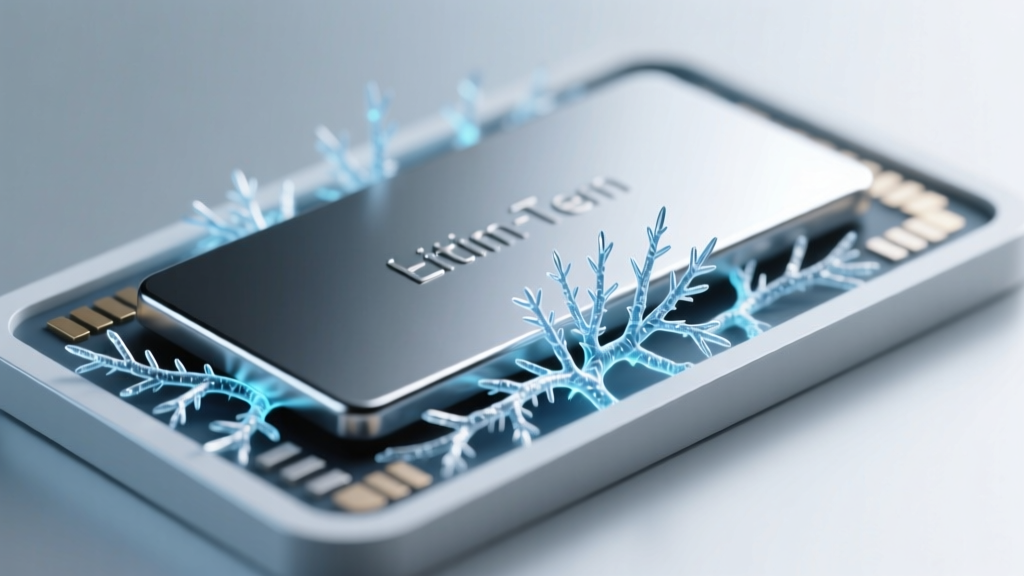
Dendrites are tiny, branching metallic structures that can grow on the anode (negative electrode) of a lithium-ion cell during charging. They form when lithium ions don't intercalate smoothly into the anode material — typically graphite — and instead plate as metallic lithium on the surface. Over repeated charge cycles, these deposits can grow into tree-like projections.
Why does this matter? In extreme cases, dendrites can pierce the separator membrane between the anode and cathode, causing an internal short circuit. This is one reason early lithium-metal batteries were considered unsafe for consumer use. In modern EV batteries, however, multiple engineering safeguards — including electrolyte additives, ceramic-coated separators, and sophisticated BMS algorithms — dramatically reduce dendrite risk under normal operating conditions.
Dendrite formation accelerates under specific conditions:
- Fast charging at low temperatures: Cold electrolyte slows ion diffusion, increasing lithium plating risk
- Charging to very high state of charge (SoC) repeatedly: High voltage stress promotes side reactions
- Extremely high charge rates (C-rates): Pushing ions faster than the anode can absorb them
- Aging cells with degraded electrolyte: Decomposed additives lose their protective function
The good news: your EV's BMS actively manages charge speed, temperature, and voltage windows to minimize these conditions. When you precondition your battery before a DC fast-charge session, for example, the thermal management system is warming the cells to an optimal temperature — partly to prevent lithium plating and dendrite formation.
Battery Chemistry: LFP vs. NMC and Dendrite Susceptibility
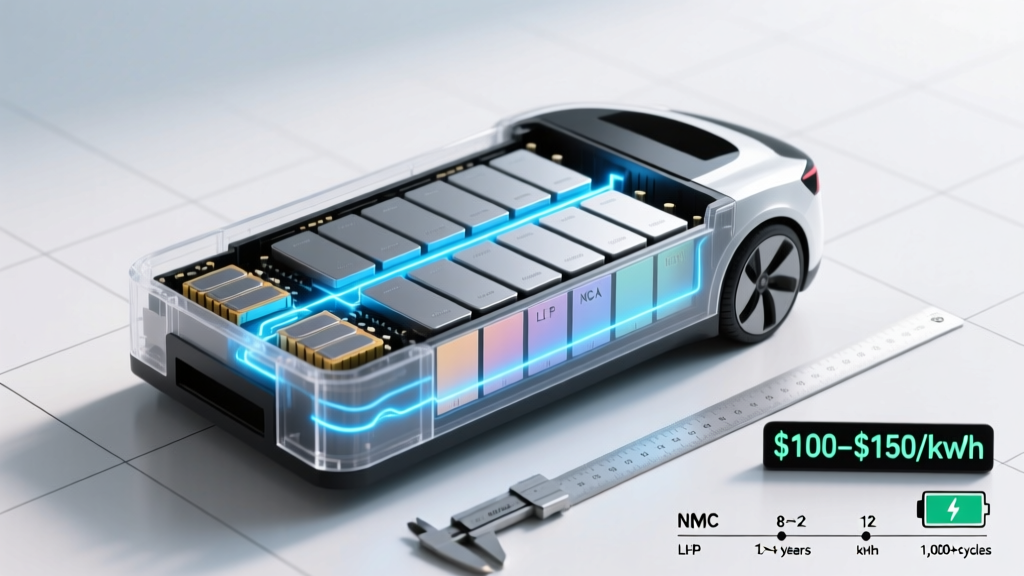
Not all lithium-ion chemistries behave identically when it comes to dendrite formation. The two dominant EV battery chemistries — lithium iron phosphate (LFP) and nickel manganese cobalt (NMC) — have different anode operating voltages, cycle-life characteristics, and degradation profiles.
| Attribute | LFP (LiFePO₄) | NMC / NCA |
|---|---|---|
| Energy density | ~160–180 Wh/kg (cell-level) | ~220–300 Wh/kg (cell-level) |
| Cycle life | 3,000–5,000+ cycles to 80% SoH | 1,000–2,500 cycles to 80% SoH |
| Dendrite risk profile | Lower — higher anode voltage reduces Li plating | Moderate — lower anode potential increases plating risk at high C-rates |
| Cold-weather performance | Weaker — reduced power output below 32°F | Better — maintains discharge capability in cold |
| Cost per kWh | ~$90–$110 (pack-level, 2026) | ~$120–$150 (pack-level, 2026) |
| Recommended daily charge limit | 100% (LFP tolerates full SoC well) | 80% for daily use; 100% for trips only |
| Common in (2026 models) | Tesla Model 3/Y RWD, Ford Mustang Mach-E Select, BYD models | Tesla Long Range, Hyundai Ioniq 5/6, BMW iX, Rivian, GM Ultium |
LFP chemistry's higher anode operating voltage (approximately 3.2V nominal vs. NMC's 3.7V) means the anode sits at a less negative potential during charging, which thermodynamically reduces the tendency for lithium metal to plate out and form dendrites. This is one reason LFP cells achieve significantly longer cycle life — often exceeding 4,000 cycles before reaching 80% state of health (SoH).
NMC cells, while offering superior energy density (enabling longer EPA range in a given pack size), require more careful charge management. Keeping daily charges to 80% and avoiding DC fast charging in extreme cold without preconditioning are practical ways to reduce dendrite-promoting conditions in NMC packs.
How Long Do EV Batteries Actually Last? Degradation Data
The question most EV shoppers ask: will the battery outlast the car? Based on fleet data, manufacturer testing, and third-party studies, the answer for most modern EVs is yes.
- Year 1 / ~15,000 miles: 2–5% capacity loss (initial settling)
- Year 3 / ~45,000 miles: 5–9% total loss
- Year 5 / ~75,000 miles: 8–14% total loss
- Year 8 / ~120,000 miles: 10–20% total loss (warranty threshold territory)
- Year 10+ / ~150,000+ miles: 15–25% total loss for NMC; 10–15% for LFP
Sources: Geotab fleet battery health study, Recurrent Auto battery data reports, manufacturer warranty filings.
Several factors influence where your battery falls on this curve. Frequent DC fast charging (especially at 150+ kW without adequate preconditioning) can add 1–3% additional loss over 100,000 miles compared to predominantly Level 2 home charging. Habitually charging NMC cells to 100% and leaving them at full SoC in hot weather accelerates electrolyte decomposition. And consistently draining below 10% SoC stresses the cell in ways that promote anode degradation.
Notably, dendrite-related failures are rare in modern EVs precisely because BMS systems prevent the conditions that cause them. Most degradation you'll experience is calendar aging (electrolyte breakdown over time) and cycle wear (gradual loss of active lithium inventory), not catastrophic dendrite shorts.
Battery Warranty Coverage: What's Protected and for How Long
Federal law mandates that EV batteries sold in the United States carry a minimum warranty of 8 years or 100,000 miles (whichever comes first). California Air Resources Board (CARB) states extend this to 10 years or 150,000 miles. Most manufacturers exceed the federal minimum.
| Manufacturer | Warranty Period | Capacity Retention Threshold | Coverage Details |
|---|---|---|---|
| Tesla (Model 3/Y) | 8 yr / 120,000 mi (LR/AWD); 8 yr / 100,000 mi (RWD) | 70% SoH | Defects + capacity below threshold |
| Hyundai / Kia | 10 yr / 100,000 mi | 70% SoH | Defects + capacity below threshold |
| GM (Ultium platform) | 8 yr / 100,000 mi | 70% SoH | Defects + capacity below threshold |
| Ford (Mach-E, F-150 Lightning) | 8 yr / 100,000 mi | 70% SoH | Defects + capacity below threshold |
| Rivian | 8 yr / 175,000 mi | 70% SoH | Defects + capacity below threshold |
| BMW | 8 yr / 100,000 mi | 70% SoH | Defects + capacity below threshold |
The capacity retention threshold is critical: if your battery degrades below 70% of its original usable capacity within the warranty period, the manufacturer will repair or replace it at no cost. In practice, very few owners hit this threshold within the warranty window — the degradation data above shows most packs retain 80–90% SoH at 8 years under normal use.
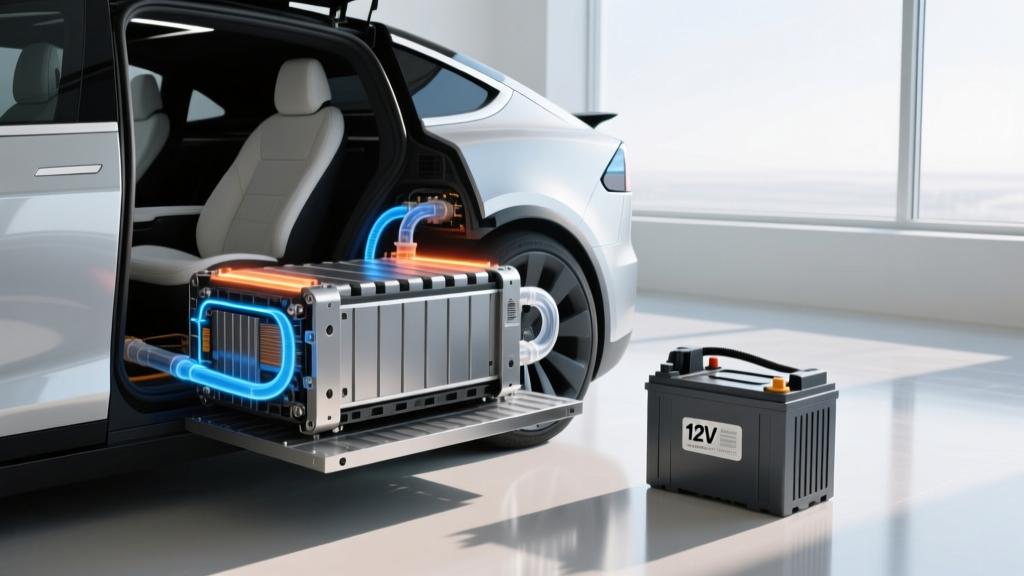
Warranties typically do not cover damage from accidents, flooding, improper modifications, or use of non-approved charging equipment. They also exclude the 12V auxiliary battery, which is covered under the separate bumper-to-bumper warranty.
EV Battery Replacement Cost: What to Expect
Out-of-warranty battery replacement is the single biggest cost fear among EV buyers. Here's the reality: most EV batteries will never need a full replacement during the vehicle's useful life. But if one is required — due to a defect outside warranty, physical damage, or extreme degradation — costs are significant.
| Vehicle / Pack Size | Battery Capacity | Estimated Replacement Cost (Parts + Labor) |
|---|---|---|
| Tesla Model 3 RWD (LFP) | ~60 kWh | $10,000 – $14,000 |
| Tesla Model Y Long Range | ~75 kWh | $13,000 – $18,000 |
| Hyundai Ioniq 5 | 77.4 kWh | $14,000 – $20,000 |
| Ford F-150 Lightning Extended Range | ~131 kWh | $22,000 – $32,000 |
| GMC Hummer EV | ~212 kWh | $35,000 – $45,000+ |
| Chevrolet Bolt EV/EUV | ~65 kWh | $9,000 – $14,000 |
These figures are trending downward. Pack-level battery costs have fallen from roughly $200/kWh in 2020 to approximately $100–$140/kWh in 2026, according to BloombergNEF and industry analysts. Module-level repairs (replacing individual defective modules rather than the entire pack) can reduce costs by 40–60% and are increasingly offered by independent EV shops.
For context, a conventional vehicle's transmission replacement can cost $3,000–$7,000, and an engine rebuild $4,000–$10,000. The EV battery is the functional equivalent of the entire powertrain — and it typically lasts longer than an ICE powertrain with proper care.
Factors That Affect Battery Life (and Dendrite Formation)
Your daily habits have a measurable impact on how quickly your battery degrades and whether conditions favorable to dendrite growth develop. Here's a practical checklist:
- ✅ Charge to 80% daily (NMC/NCA): Set your charge limit to 80% for routine use. Reserve 100% charges for road trips. LFP owners can charge to 100% regularly.
- ✅ Precondition before DC fast charging: Use your EV's navigation to route to a fast charger — this triggers battery preconditioning, warming cells to ~95–105°F for optimal ion flow and reduced plating risk.
- ✅ Minimize DC fast charging when possible: Level 2 home charging (7–11 kW) is gentler on cells. Reserve 150–350 kW DC fast charging for road trips.
- ✅ Avoid leaving the car at very low or very high SoC in extreme heat: If parking at an airport for a week in July, leave the car at ~50% SoC and plugged in if possible.
- ✅ Don't fast-charge a cold battery: If your EV doesn't support preconditioning, drive for 15–20 minutes before hitting a fast charger in winter.
- ✅ Use regenerative braking moderately in cold weather: Aggressive regen on a cold battery can stress cells similarly to fast charging.
- ✅ Keep tires properly inflated and alignment checked: Reducing rolling resistance reduces energy demand per mile, slightly reducing cycle count on the battery.
How to Monitor Your EV Battery's State of Health
State of Health (SoH) is the percentage of your battery's original usable capacity that remains available. A new EV with a 75 kWh usable battery at 90% SoH effectively has 67.5 kWh available.
Several methods exist to check SoH:
- In-vehicle displays: Tesla's service menu (accessible via the software screen) shows estimated range vs. original. Hyundai/Kia's infotainment system includes an EV battery health readout on newer models.
- OBD-II diagnostic apps: Tools like Leaf Spy (Nissan Leaf), Scan My Tesla, or OBDeleven (VW/Audi) can read SoH directly from the BMS via the OBD-II port.
- Dealer diagnostics: Any authorized service center can run a full battery health report, typically during annual service visits.
- Third-party services: Companies like Recurrent Auto offer free battery health reports that compare your pack's degradation to a fleet of identical vehicles.
- Manual calculation: Fully charge to 100%, note the displayed range, and compare it to the EPA-rated range when new. A 2023 Ioniq 5 with an EPA range of 303 miles displaying 268 miles at 100% has approximately 88% SoH (accounting for temperature and driving-style variance).
Most EV owners will see SoH decline slowly and predictably. If you notice a sudden drop in range or an unusual imbalance between cell groups (visible in diagnostic apps), schedule a service appointment — this could indicate a defective module rather than normal degradation.
Emerging Battery Technology: Solid-State and Beyond
The EV industry is actively pursuing next-generation battery technologies that aim to eliminate dendrite formation entirely:
Solid-state batteries replace the liquid electrolyte with a solid ceramic, polymer, or sulfide-based conductor. Because there's no liquid medium for lithium to plate unevenly, dendrite growth is theoretically suppressed — though in practice, some solid electrolyte designs have shown dendrite penetration through grain boundaries in the ceramic. Toyota, Samsung SDI, and QuantumScape are leading development, with Toyota announcing limited production in its 2027–2028 EVs. Expect solid-state packs to offer 400–500+ miles of EPA range with 10-minute fast charging, but at a significant cost premium initially.
Silicon-dominant anodes (from companies like Sila Nanotechnologies and Group14) replace graphite with silicon, which can store roughly 10x more lithium ions per unit mass. This dramatically increases energy density. However, silicon anodes swell significantly during charging (~300% volume expansion), which creates mechanical stress that can itself promote uneven lithium deposition. Current implementations use silicon-graphite composites (5–15% silicon) to balance gains with stability. Mercedes-Benz's upcoming G-Class EV is expected to feature a silicon-anode pack.
Lithium-metal anodes represent the theoretical endgame — pure lithium metal as the anode material. The challenge is that lithium metal is precisely where dendrites form most aggressively. Companies like Solid Power and Factorial Energy are developing protective layers and engineered electrolytes to manage this. Commercial availability for consumer EVs is not expected before 2030 at the earliest.
For today's buyers, current-generation lithium-ion batteries (both LFP and NMC) are mature, well-understood, and backed by extensive warranty coverage. The practical advice remains: buy the EV that meets your range and budget needs today, follow the care guidelines above, and let the technology evolve for your next vehicle.
Frequently Asked Questions
Are dendrites dangerous in my EV battery?
Under normal operating conditions, no. Modern EV battery management systems prevent the conditions that cause significant dendrite growth — extreme overcharging, fast charging at very low temperatures, and voltage excursions. Dendrite-related thermal events in production EVs are exceedingly rare and are typically associated with manufacturing defects or physical damage, not normal use.
Does fast charging cause dendrites?
Fast charging alone doesn't cause dendrites, but fast charging a cold battery without preconditioning can promote lithium plating on the anode, which is the precursor to dendrite formation. This is why your EV's BMS limits charge speed when cells are cold and why preconditioning (warming the battery before a DC fast-charge session) is important. A preconditioned battery charging at 250 kW is under far less plating stress than a cold battery charging at 50 kW.
How long do EV batteries last in years and miles?
Most modern EV batteries (2020–2026 models) retain 80–90% of their original capacity after 8 years and 100,000–120,000 miles. LFP-equipped vehicles often show even less degradation. Many packs will remain functional for 15+ years and 200,000+ miles, albeit with reduced range. The battery will typically outlast other major vehicle components.
How much does it cost to replace an EV battery?
Full battery pack replacement ranges from approximately $9,000 for a Chevrolet Bolt to $32,000+ for a Ford F-150 Lightning Extended Range, including labor. However, most replacements are covered under the 8-year/100,000-mile federal warranty (or 10-year/150,000-mile in CARB states), and module-level repairs can cost 40–60% less than a full pack swap. Battery costs continue to decline year over year.
LFP vs NMC — which battery chemistry is better for me?
Choose LFP if you want maximum cycle life, lower cost, and can charge to 100% daily without concern — ideal for commuters and high-mileage drivers who can accept slightly lower range per kWh. Choose NMC if you need maximum range in a given pack size, better cold-weather performance, and don't mind managing charge limits (80% daily). Both chemistries are well-proven in 2026 production EVs with strong warranty coverage.
What does the EV battery warranty actually cover?
The federal minimum is 8 years/100,000 miles against defects and capacity loss below 70% of original SoH (CARB states: 10 years/150,000 miles). This covers manufacturing defects, cell failures, and abnormal degradation. It does not cover physical damage from accidents, water intrusion, aftermarket modifications, or normal wear below the 70% threshold. The 12V auxiliary battery is covered separately under the bumper-to-bumper warranty.