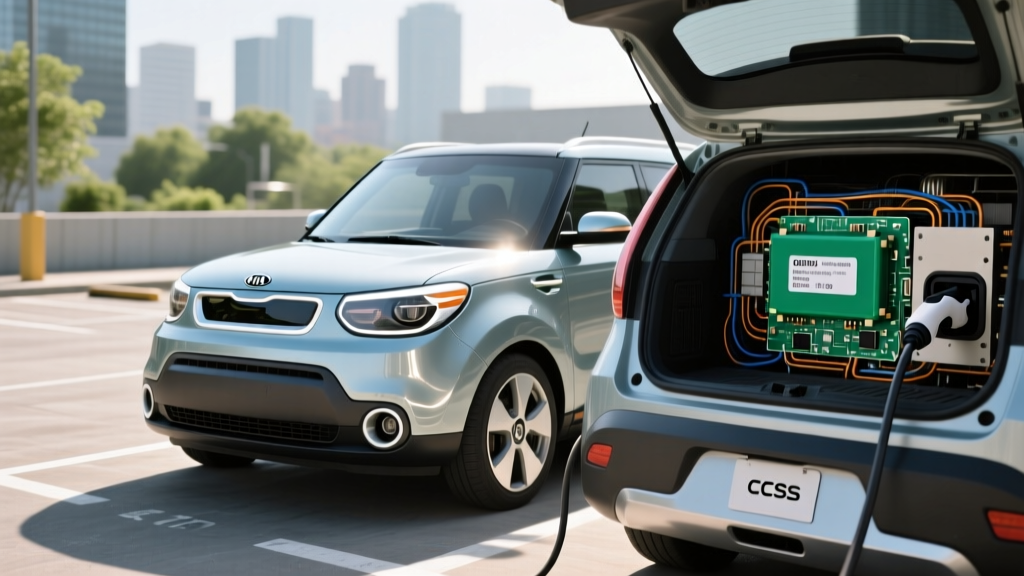
The phrase "defective EV batteries" generates thousands of searches every month, fueled by viral stories of $20,000 replacement bills and bricked vehicles. But for the vast majority of electric-vehicle owners, the high-voltage traction battery is the most durable component in the car. The real issue isn't sudden failure — it's the slow, measurable loss of capacity over time, and knowing where the line between normal degradation and a genuine warranty-covered defect actually falls.
This guide breaks down the chemistry, the data, the warranty fine print, and the real-world costs so you can buy, own, and eventually sell an EV with confidence in what's under the floor.
How Long Do EV Batteries Actually Last?
Modern EV traction batteries are engineered to outlast the conventional mechanical components around them. The industry standard warranty — mandated at the federal level and adopted by every major automaker selling in the U.S. — covers the high-voltage battery for at least 8 years or 100,000 miles, whichever comes first. In California Air Resources Board (CARB) states, that extends to 10 years or 150,000 miles.
But warranties define the minimum acceptable performance, not the expected lifespan. Real-world fleet data tells a longer story:
- Tesla's 2025 Impact Report showed Model S/X batteries retained roughly 85% of original capacity after 200,000 miles. Model 3/Y vehicles showed similar retention curves with LFP packs demonstrating even flatter degradation in the first 100,000 miles.
- Geotab's fleet study (covering over 10,000 EVs across multiple brands) found an average annual degradation rate of approximately 1.8% per year, meaning a typical EV battery retains about 82% capacity after 10 years of average use.
- Recurrent Auto's 2025 data on Chevrolet Bolt, Nissan LEAF, and Ford Mustang Mach-E fleets showed median range retention between 83% and 91% at the 6-year mark, with LFP-equipped vehicles clustering at the higher end.
The takeaway: a well-maintained EV battery from a 2024–2026 model-year vehicle is statistically likely to retain 75–85% of its original capacity at 150,000 miles. True "defective EV batteries" — those that fail catastrophically or degrade far outside the normal curve — are rare and almost always caught within the warranty period.
LFP vs NMC vs NCA: Chemistry Trade-Offs That Affect Longevity
Not all EV batteries are built the same. The cathode chemistry determines energy density, cycle life, cold-weather behavior, cost, and how the battery ages. In 2026, the two dominant chemistries in the U.S. market are LFP (lithium iron phosphate) and NMC/NCA (nickel manganese cobalt / nickel cobalt aluminum).
| Attribute | LFP (Lithium Iron Phosphate) | NMC / NCA (Nickel-Based) |
|---|---|---|
| Energy Density | Lower (~160–200 Wh/kg cell-level) — heavier pack for same range | Higher (~250–300 Wh/kg cell-level) — lighter, more compact |
| Cycle Life | 3,000–5,000+ full cycles before 80% retention | 1,000–2,000 full cycles before 80% retention |
| Cold Performance | More range loss in freezing temps (15–30% reduction typical) | Better cold-weather retention (~10–20% reduction) |
| State of Charge Flexibility | Can be charged to 100% daily without significant harm | Best kept 20–80% for daily use; 100% only for trips |
| Cost | ~15–25% cheaper per kWh to manufacture | Higher cost due to nickel and cobalt content |
| Thermal Stability | Higher — less prone to thermal runaway | Lower — requires more robust thermal management |
| Common in (2026 U.S.) | Tesla Model 3/Y RWD, Ford Mustang Mach-E Select, Rivian Standard | Hyundai Ioniq 5/6, Chevy Equinox EV, BMW iX, long-range AWD trims |
Which is better? It depends on your use case. If you charge at home nightly, drive under 40 miles daily, and live in a moderate climate, LFP's superior cycle life and 100%-charge tolerance make it the more durable and lower-maintenance choice. If you need maximum range in a lighter package, regularly road-trip in cold weather, or tow, NMC/NCA delivers the energy density to do it — but requires more disciplined charging habits for long-term health.
Understanding Degradation: What the Data Actually Shows
Battery degradation is not linear. Most EV batteries experience a steeper initial drop — typically 2–5% in the first year or 20,000 miles — as the solid electrolyte interphase (SEI) layer stabilizes. After that, degradation slows to a gradual, near-linear decline.
Typical Degradation Curve (NMC Battery, Average Use):
- Year 1 / ~15,000 mi: 95–97% capacity retained (initial drop)
- Year 3 / ~45,000 mi: 91–94% retained
- Year 5 / ~75,000 mi: 87–91% retained
- Year 8 / ~120,000 mi: 82–87% retained
- Year 10 / ~150,000 mi: 78–84% retained
Sources: Geotab fleet data (2025), Recurrent Auto battery health reports, Tesla Impact Report 2025. LFP packs typically show 2–4% higher retention at equivalent mileage.
What separates normal aging from a genuinely defective EV battery? Automakers define the threshold in the warranty. If your battery drops below the guaranteed retention percentage within the warranty window, it qualifies for repair or replacement. If it degrades 4% in year one but holds steady afterward, that's normal chemistry — not a defect.
What Does the Battery Warranty Actually Cover?
Every new EV sold in the U.S. includes a high-voltage battery warranty, but the details vary by manufacturer. Here's how the major brands structure coverage for 2026 model-year vehicles:
| Manufacturer | Warranty Period | Capacity Threshold | Notable Details |
|---|---|---|---|
| Tesla | 8 yr / 120,000 mi (Model S/X); 8 yr / 100,000 mi (Model 3/Y) — 120k for LR/AWD | 70% retention | Covers defects and excessive degradation below threshold |
| Hyundai / Kia | 10 yr / 100,000 mi | 70% retention | Among the longest coverage in the industry |
| Ford | 8 yr / 100,000 mi | 70% retention | Covers battery components and capacity loss |
| General Motors (Chevy/Cadillac) | 8 yr / 100,000 mi | 70% retention (60% on some commercial) | Ultium platform; module-level repair capability |
| Rivian | 8 yr / 175,000 mi | 70% retention | Highest mileage threshold among major OEMs |
| BMW | 8 yr / 80,000 mi | 70% retention | Lower mileage cap; extended plans available |
Key details buyers miss:
- The warranty covers defects AND excessive degradation. If your battery drops below the stated threshold (e.g., 70% capacity) within the warranty period, the manufacturer must repair or replace it — even if there's no "defect" in the traditional sense.
- Module-level repair is increasingly common. Rather than replacing the entire pack, many OEMs (GM, Hyundai, BMW) can diagnose and swap individual modules, reducing downtime and cost.
- Transferability varies. Most factory battery warranties transfer to subsequent owners, which supports resale value. Always confirm with the manufacturer.
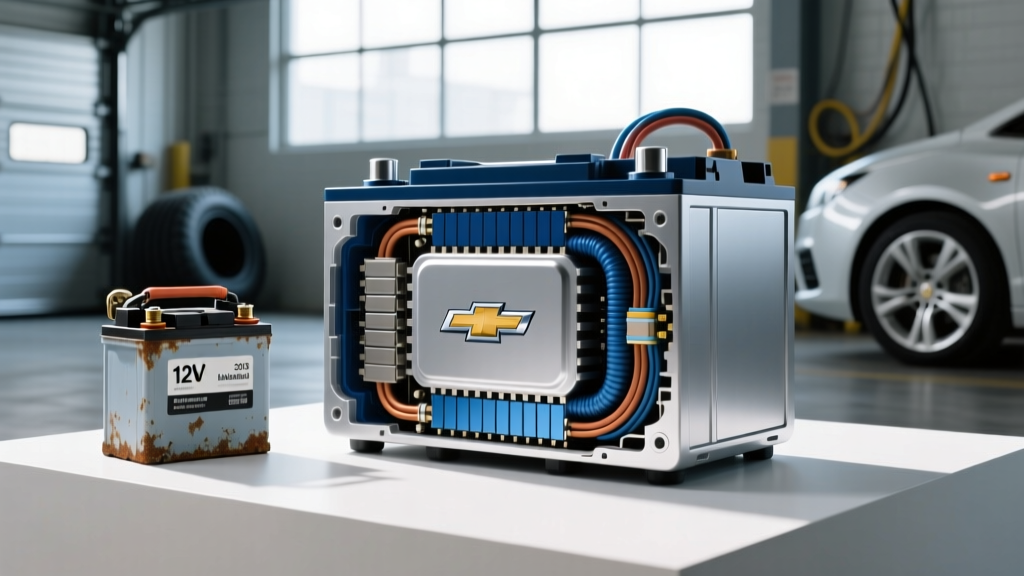
- The 12V auxiliary battery is NOT covered under this warranty. That small battery (which powers lights, infotainment, and computers) has its own separate, shorter warranty — typically 3 years / 36,000 miles.
EV Battery Replacement Cost: When and How Much
Out-of-warranty battery replacement is the single biggest fear for prospective EV buyers. The numbers are significant, but context matters: most EVs will never need a full pack replacement during their usable life.
| Vehicle / Pack Size | Battery Capacity | Estimated Replacement Cost (Parts + Labor) | When Typically Needed |
|---|---|---|---|
| Nissan LEAF (40 kWh) | 40 kWh | $6,500–$9,000 | 10+ years; early LEAFs had air-cooled packs that degraded faster |
| Chevy Bolt EV/EUV (65 kWh) | 65 kWh | $9,000–$14,000 | Rarely — most covered under recall/warranty; liquid-cooled |
| Tesla Model 3 (LFP, ~60 kWh) | ~60 kWh | $10,000–$13,000 | Extremely rare within 200k mi; LFP longevity is exceptional |
| Tesla Model S/X (100 kWh) | ~100 kWh | $13,000–$18,000 | 150,000–250,000 mi in early models; newer packs more durable |
| Hyundai Ioniq 5 (77.4 kWh) | 77.4 kWh | $11,000–$16,000 | Rare; 10yr/100k warranty provides long coverage window |
| Ford F-150 Lightning (Extended, 131 kWh) | 131 kWh | $18,000–$28,000 | Very large pack; module repair may reduce out-of-pocket cost |
| Rivian R1T/R1S (Max Pack, ~149 kWh) | ~149 kWh | $22,000–$32,000 | Early data limited; 175k-mile warranty is longest in class |
Important context on these figures:
- Prices reflect 2025–2026 aftermarket and OEM estimates. Battery pack costs have declined roughly 80% since 2013 (per BloombergNEF), and that trend continues, though raw-material volatility can cause short-term spikes.
- Many replacements involve module-level repair, not full pack swaps. A single failed module might cost $1,500–$4,000 to replace rather than $15,000+ for a full pack.
- Refurbished and remanufactured packs are increasingly available from third-party specialists at 40–60% of new OEM pricing.
- For most 2024–2026 model-year EVs, the battery will still hold 75%+ capacity at 150,000 miles — meaning replacement is a concern primarily for very high-mileage drivers or second/third owners of older vehicles.
Factors That Accelerate Battery Degradation
Not all miles are equal when it comes to battery wear. The following factors have measurable, data-backed effects on how quickly your pack loses capacity:
What Hurts Battery Health
- Frequent DC fast charging above 150 kW — Repeatedly charging at peak rates generates heat that stresses cells. Occasional road-trip fast charging is fine; daily reliance on 350 kW chargers accelerates wear. Studies show vehicles that DC fast charge more than 3x per week degrade roughly 1–3% faster over 5 years than those primarily using Level 2.
- Consistently charging NMC/NCA to 100% — High states of charge increase internal pressure and accelerate electrolyte breakdown. For daily driving, set your charge limit to 80% (or 90% max). LFP batteries are the exception — they tolerate and even benefit from regular 100% charges for cell balancing.
- Letting the battery sit at very low SoC (below 10%) for extended periods — Deep discharge can cause copper dissolution in the anode. If storing the vehicle, leave it at 40–60% SoC.
- Extreme heat exposure — Sustained ambient temperatures above 95°F, especially combined with high SoC, accelerate chemical degradation. Garage parking in hot climates measurably extends battery life.
- Aggressive driving with frequent high-power discharge — Repeated hard acceleration and high-speed driving generate internal heat. This is a minor factor compared to charging habits, but it adds up over hundreds of thousands of miles.
What Protects Battery Health
- Level 2 home charging as your primary routine — Slower charging generates less heat and is gentler on cells.
- Moderate state of charge (20–80% for NMC, any SoC for LFP with periodic 100%)
- Preconditioning before fast charging — Most modern EVs warm or cool the battery to optimal temperature before a DC fast-charge session. Enable navigation-based preconditioning (Tesla, Hyundai, Ford, GM all offer this) to ensure the pack is ready.
- Thermal management system maintenance — The liquid cooling/heating loop that keeps your battery at safe temperatures requires periodic coolant checks. Follow the manufacturer's service schedule.
- Garage parking in extreme climates — Keeping the vehicle out of sustained 100°F+ heat or -10°F cold reduces passive stress on the pack.
How to Check and Monitor Your Battery's State of Health
State of Health (SoH) is the metric that tells you how much capacity your battery retains relative to when it was new. A battery at 90% SoH holds 90% of its original kWh capacity. Here's how to track it:
1. In-Vehicle Displays: Some manufacturers now include SoH or battery health indicators directly in the infotainment system. Hyundai/Kia's EV models show estimated battery health in the settings menu. Tesla displays rated range, which you can compare to the original EPA figure as a proxy for SoH (though software updates and tire changes can affect this).
2. Third-Party Apps and OBD-II Readers: Tools like Recurrent Auto, OBDeleven (for VW/Audi/Porsche), and generic OBD-II Bluetooth readers paired with apps such as Car Scanner or EV Health can pull battery management system (BMS) data including SoH percentage, cell voltage variance, and total energy throughput. Expect to spend $30–$80 on a compatible OBD-II dongle.
3. Dealer Diagnostics: Any authorized service center can run a full battery health report, typically showing individual module voltages and overall SoH. Some brands offer this free during routine service; others charge a diagnostic fee of $100–$150.
4. The Manual Method: Charge to 100%, note the displayed range, and compare it to the original EPA-rated range. If your 2024 Ioniq 5 originally showed 303 miles at 100% and now shows 270, that's approximately 89% SoH. This isn't perfectly precise (temperature and driving style affect the estimate), but it's directionally useful.
When to be concerned: If SoH drops below 85% within the first 5 years or 60,000 miles, or if you see sudden range losses of 10%+ between software updates, schedule a dealer diagnostic. That pattern may indicate a defective module rather than normal aging.
Emerging Battery Technology: What's Next (and When)
The battery landscape is evolving rapidly, but it's critical to separate what's in production from what's still in the lab.
Solid-State Batteries: These replace the liquid electrolyte with a solid material, promising higher energy density (potentially 400+ Wh/kg), faster charging, and improved safety. Toyota has announced limited production of solid-state-equipped vehicles for 2027–2028, initially in low volumes and likely in Japan-market models first. Samsung SDI and QuantumScape are targeting 2028–2030 for broader automotive deployment. As of 2026, no mass-market EV sold in the U.S. uses a solid-state battery.
Silicon Anode Technology: Companies like Sila Nanotechnologies and Group14 are integrating silicon into the graphite anode to boost energy density by 10–20%. The Mercedes G-Class 580e (2025 model year) was among the first production vehicles to use silicon-anode cells from Group14. Expect this technology to appear in more premium EVs through 2027–2028, with cost reductions enabling mainstream adoption by approximately 2030.
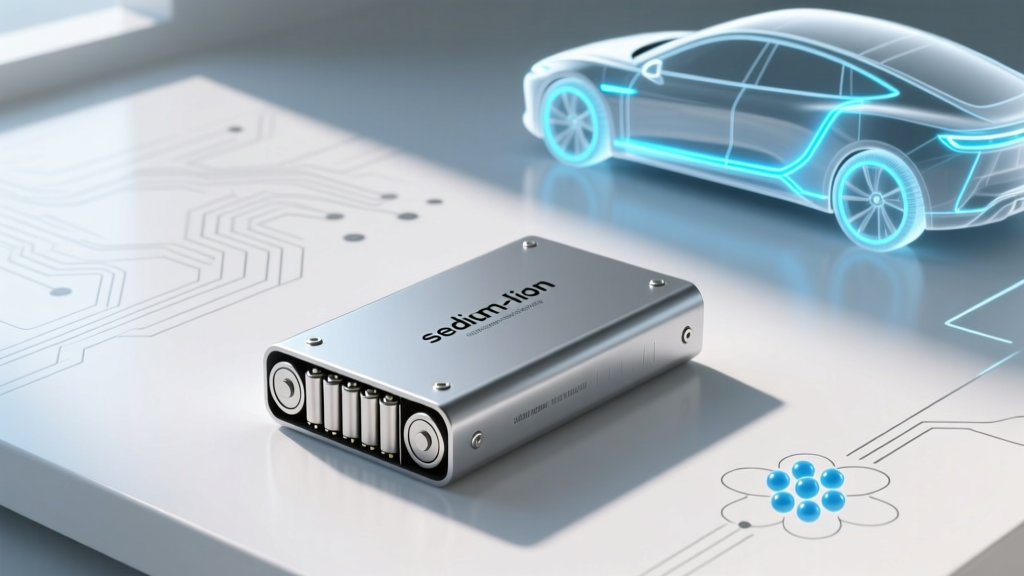
Sodium-Ion Batteries: CATL and BYD have begun deploying sodium-ion packs in Chinese-market vehicles, offering lower cost and excellent cold-weather performance at the expense of energy density. U.S. availability remains uncertain, but these could appear in entry-level models or stationary storage by 2028–2029.
What this means for today's buyer: Current lithium-ion batteries (both LFP and NMC) are mature, well-understood, and backed by extensive warranty coverage. Waiting for solid-state or next-gen chemistry means waiting 3–5+ years for limited availability at premium pricing. The batteries in 2026 model-year EVs are already dramatically better than those from 2018–2020 in terms of cycle life, thermal management, and cost per kWh.
Frequently Asked Questions
How long do EV batteries last in years and miles?
Based on fleet data from Geotab, Recurrent Auto, and manufacturer reports, modern EV batteries typically retain 78–85% of original capacity at 150,000 miles or 10 years. Many will exceed 200,000 miles before reaching the 70% threshold that triggers a warranty claim. The battery is generally the longest-lasting major component in the vehicle.
How much does it cost to replace an EV battery out of warranty?
Replacement costs range from approximately $6,500 for a small pack (40 kWh Nissan LEAF) to $28,000–$32,000 for large packs (Ford F-150 Lightning Extended, Rivian Max Pack). Most mainstream EVs (60–80 kWh) fall in the $9,000–$16,000 range including labor. Module-level repairs are often significantly cheaper. Battery costs continue to decline, though raw material prices introduce volatility.
What does the EV battery warranty actually cover?
Federal law mandates a minimum of 8 years / 100,000 miles for the high-voltage battery (10 years / 150,000 miles in CARB states). Coverage includes manufacturing defects, component failures, and capacity loss below the manufacturer's stated threshold (typically 70% retention). The warranty covers diagnosis, parts, and labor. It does not cover damage from accidents, flooding, or improper modifications. The 12V auxiliary battery is covered separately under the basic vehicle warranty.
How do I check my EV battery's health?
You can monitor State of Health (SoH) through in-vehicle displays (available on Hyundai, Kia, and some other brands), OBD-II readers with EV-compatible apps like Car Scanner, dealer diagnostic reports, or by comparing your 100%-charge displayed range to the original EPA rating. Check SoH at least twice a year, and schedule a dealer visit if you see sudden drops exceeding 5% over a short period.
LFP vs NMC — which battery chemistry is better for longevity?
LFP batteries offer superior cycle life (3,000–5,000 cycles vs. 1,000–2,000 for NMC), tolerate daily 100% charging, and are more thermally stable. They're the better choice for drivers who want minimal charging-habit management and maximum calendar life. NMC/NCA offers higher energy density (more range in a lighter package) and better cold-weather performance, making it preferable for long-range, cold-climate, and towing use cases — but it requires more disciplined charging (20–80% daily) for optimal longevity.
Are defective EV batteries common?
No. Catastrophic battery failures are rare. According to NHTSA data and manufacturer recall records, the rate of defective battery packs requiring full replacement under warranty is estimated at well under 1% for most major manufacturers. Most warranty claims involve individual module replacements rather than full pack swaps. The far more common scenario is gradual, normal degradation — which is covered if it falls below the warranty threshold.
Does fast charging damage my EV battery?
Occasional DC fast charging (2–3 times per week or fewer) has a minimal effect on long-term battery health in modern EVs with active thermal management. Daily reliance on high-power DC fast charging (150–350 kW) can accelerate degradation by 1–3% over 5 years compared to primarily Level 2 charging. Preconditioning the battery before fast charging — a feature built into most 2024–2026 EVs — significantly reduces this impact by warming or cooling cells to their optimal charging temperature.
Sources referenced: fueleconomy.gov (EPA range and efficiency data), IRS §30D clean vehicle credit guidelines, manufacturer warranty documentation from Tesla, Hyundai, Ford, GM, Rivian, and BMW, Geotab EV fleet degradation study (2025), Recurrent Auto battery health data, BloombergNEF battery price survey.