The Cybertruck Extended Battery at a Glance
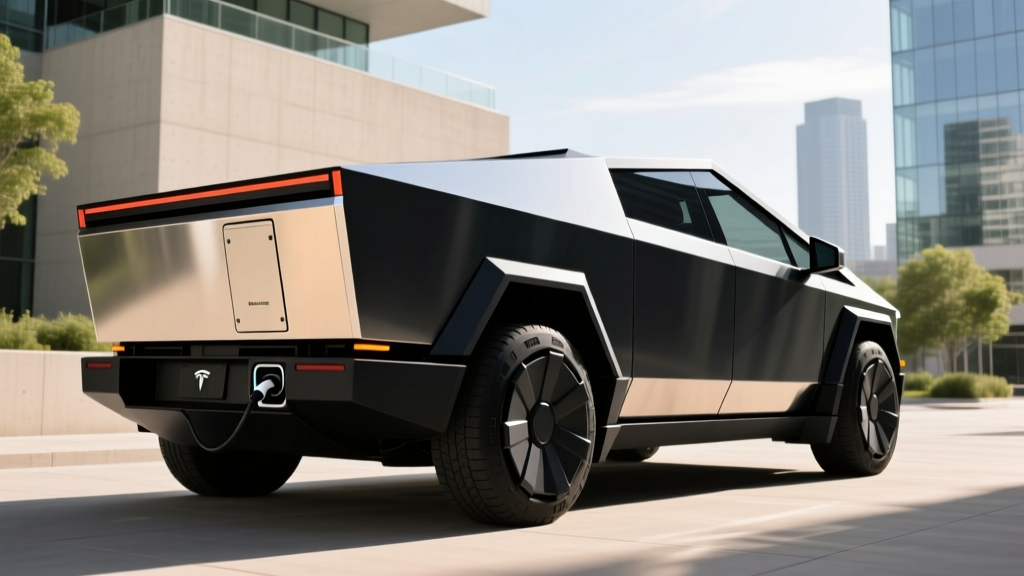
Tesla's Cybertruck AWD (the volume seller) ships with what Tesla calls the "Large" battery — a ~123 kWh usable NMC (nickel manganese cobalt) pack that underpins the truck's EPA-rated 340-mile range. For buyers cross-shopping the F-150 Lightning Extended Range (131 kWh, 320 mi EPA) or the Rivian R1T Max Pack (141 kWh, 350+ mi EPA), the Cybertruck's battery sits squarely in the competitive middle on capacity but leads on efficiency thanks to Tesla's 4680 cell architecture and integrated thermal management.
This guide breaks down the chemistry, degradation trajectory, warranty coverage, and long-term ownership economics of the Cybertruck's extended battery — with real data points, not marketing copy.
| Spec | Value |
|---|---|
| Battery Usable Capacity | ~123 kWh |
| Chemistry | NMC (4680 cylindrical cells) |
| EPA Range | 340 miles |
| Real-World Highway Range | ~270–295 mi (70 mph, mild weather) |
| Cold-Weather Range (20°F) | ~230–260 mi (est. 25–30% loss) |
| Peak DC Fast Charge Rate | ~250 kW (V3 Supercharger) |
| 10–80% DC Charge Time | ~30–35 minutes |
| Level 2 Charge Rate | 11.5 kW (48A) |
| 0–60 mph | 3.9 seconds |
| Horsepower | 600 hp (dual motor AWD) |
| Base MSRP (AWD) | $79,990 (before incentives) |
| Battery Warranty | 8 years / 150,000 miles, ≥70% retention |
NMC Chemistry in the Cybertruck: Why Tesla Chose It
The Cybertruck AWD uses NMC (Nickel Manganese Cobalt) chemistry in Tesla's 4680 cell format — a larger cylindrical cell (46mm diameter, 80mm height) that Tesla manufactures in-house at its Texas Gigafactory. This is distinct from the LFP (Lithium Iron Phosphate) chemistry Tesla uses in the standard-range Model 3 and Model Y.
For a heavy, performance-oriented truck, NMC delivers the energy density required to hit 340 miles without making the pack prohibitively heavy. The trade-offs are meaningful, however, and worth understanding before you buy.
| Factor | NMC (Cybertruck AWD) | LFP (Tesla Model 3 RWD / some base trims) |
|---|---|---|
| Energy Density | High (~250–270 Wh/kg cell-level) | Moderate (~160–180 Wh/kg cell-level) |
| Typical Cycle Life | 1,000–2,000 full cycles | 3,000–5,000+ full cycles |
| Cold-Weather Performance | Better low-temp discharge & charge acceptance | Reduced performance below 32°F; slower DC charging when cold |
| Cost (per kWh) | Higher (cobalt/nickel commodity exposure) | Lower (iron/phosphate abundant) |
| Recommended Daily SoC | 80% for daily; 100% for trips | 100% daily is fine (Tesla recommends periodic full charges) |
| Thermal Runaway Risk | Slightly higher (mitigated by pack engineering) | Very low (inherently stable chemistry) |
| Best For | Max range, towing, cold climates, performance | Daily commuting, high-mileage fleet, warm climates |
Bottom line: NMC is the right call for the Cybertruck. A 123 kWh LFP pack would add several hundred pounds and reduce payload/towing capacity — unacceptable in a truck. If Tesla ever offers a Cybertruck RWD or standard-range variant, LFP becomes plausible, but for the AWD and Cyberbeast trims, NMC is necessary.
How Long Will the Cybertruck Battery Last? Degradation Data
This is the question every EV buyer asks, and the answer is better than most expect. Tesla's 4680 NMC cells are a newer format, but the underlying chemistry is well-characterized. Here's what the data tells us:
Projected Cybertruck Battery Degradation Curve (NMC, 123 kWh):
- Year 1 / 15,000 mi: ~3–5% capacity loss (initial formation loss is normal for NMC)
- Year 3 / 45,000 mi: ~7–10% total loss (~111–114 kWh remaining usable)
- Year 5 / 75,000 mi: ~10–13% total loss (~107–111 kWh remaining)
- Year 8 / 120,000 mi: ~13–18% total loss (~101–107 kWh remaining)
- Year 10 / 150,000 mi: ~15–22% total loss (~96–105 kWh remaining)
Sources: Tesla Battery Care, Recurrent Auto battery degradation study, aggregated fleet data from Tesla owners. Individual results vary based on charging habits, climate, and usage.
At 150,000 miles, a Cybertruck with a well-maintained pack should still deliver roughly 260–285 miles of range (down from the original 340). That's still more daily utility than most drivers need, and it's well above the 70% retention threshold that triggers a warranty claim.
For context, Recurrent's fleet analysis of over 15,000 Tesla vehicles shows that the vast majority of Model S/X/3/Y packs retain above 85% capacity at 100,000 miles. The Cybertruck's larger thermal mass and active liquid cooling should produce similar or better results, though long-term 4680-specific data is still accumulating.
What Does the Cybertruck Battery Warranty Cover?
Tesla provides one of the stronger battery warranties in the EV truck segment. Here's the exact coverage:
| Component | Duration | Mileage Limit | Capacity Threshold |
|---|---|---|---|
| High-Voltage Battery | 8 years | 150,000 miles (whichever comes first) | ≥70% retention |
| Drive Unit(s) | 8 years | 150,000 miles | N/A (defect coverage) |
| Vehicle Limited Warranty | 4 years | 50,000 miles | Bumper-to-bumper |
What triggers a claim: If your Cybertruck's battery falls below 70% of its original usable capacity (roughly 86 kWh remaining out of 123 kWh) within 8 years or 150,000 miles, Tesla will repair or replace the pack to bring it above that threshold. This covers cell-level degradation and manufacturing defects.
What's NOT covered: Damage from accidents, flooding, or unauthorized modifications. Cosmetic issues that don't affect function. Capacity loss from consistently ignoring Tesla's charging recommendations (though this is difficult for Tesla to prove and rarely contested).
How it compares: Ford covers the F-150 Lightning battery at 8 years/100,000 miles (≥70%), and Rivian covers the R1T at 8 years/175,000 miles (≥70%). Tesla's 150,000-mile threshold sits between the two — adequate for most owners but less generous than Rivian for high-mileage drivers.
Cybertruck Battery Replacement Cost: What to Expect
Let's address the elephant in the room. Yes, EV battery replacements are expensive — but they are also rare within the first 10–15 years of ownership. Here's the current cost landscape:
| Vehicle / Pack Size | Estimated Replacement Cost | Typical Replacement Timeline |
|---|---|---|
| Cybertruck AWD (~123 kWh NMC) | $18,000–$28,000 | 15–20+ years (if ever) |
| F-150 Lightning Extended (131 kWh NMC) | $20,000–$30,000 | 15–20+ years |
| Rivian R1T Max Pack (141 kWh NMC) | $22,000–$32,000 | 15–20+ years |
| Tesla Model 3 LR (~79 kWh NMC) | $12,000–$18,000 | 15–20+ years |
| Tesla Model 3 RWD (~60 kWh LFP) | $8,000–$13,000 | 20+ years |
When is replacement actually needed? Most EV batteries outlive the vehicles they're installed in. A Cybertruck battery reaching 70–75% capacity at 200,000 miles still provides ~240 miles of range — perfectly usable for daily driving. Full pack replacement typically becomes relevant only when individual cell failures cause imbalances that can't be resolved by module-level repair, or when capacity drops below ~60% (often 200,000–300,000+ miles).
Tesla's 4680 pack uses a structural battery design where cells are bonded into the pack enclosure. This makes module-level repair more difficult than in older packs (like the Model S 85 kWh), potentially pushing replacement costs toward the higher end of the range. However, Tesla has been refining its service procedures, and costs are expected to decline as the 4680 platform matures and third-party repair options emerge.
Maximizing Cybertruck Battery Health: What Actually Works
You can't stop degradation, but you can slow it significantly. Here's what the data supports:
Daily Charging Habits
- Set charge limit to 80% for daily use. NMC cells experience accelerated degradation when held at 100% SoC for extended periods. Tesla's onboard software defaults to this for a reason.
- Charge to 100% only when you need the full range — road trips, towing days. Try to depart shortly after reaching 100% rather than letting it sit fully charged overnight.
- Avoid regularly draining below 10% SoC. Deep discharges stress NMC chemistry. Plug in when you hit 15–20%.
Fast Charging
- DC fast charging is fine in moderation — Tesla's thermal management is robust. But if you have reliable Level 2 home charging, use it for daily needs and save Supercharging for road trips.
- Always precondition before fast charging. Set a Supercharger as your navigation destination and the truck will warm the battery to optimal temperature, improving charge speed and reducing stress. This can cut your 10–80% time from 40+ minutes (cold) to ~30 minutes (preconditioned).
Temperature Management
- Park in shade or a garage when possible. Sustained high battery temperatures (above 104°F / 40°C) accelerate calendar degradation. The Cybertruck's active thermal management mitigates this while driving, but a parked truck in Arizona sun soaks heat for hours.
- In cold weather, use scheduled departure to precondition the battery while plugged in. This preserves range and ensures regenerative braking functions normally (regen is limited when the battery is cold).
Long-Term Storage
- If storing the Cybertruck for more than two weeks, leave it plugged in with the charge limit set to 50%. This is the ideal storage SoC for NMC chemistry.
Monitoring Battery Health (State of Health / SoH)
Tesla doesn't expose a direct "battery health percentage" in the Cybertruck's interface the way some competitors (like Hyundai/Kia) do. Here's how to assess your pack's condition:
Method 1 — Range Comparison: Charge to 100% and note the displayed range. Compare it to the original EPA figure (340 mi). A new Cybertruck at 100% should display approximately 340 miles. If you're seeing 310 miles at 100% after 30,000 miles, that's roughly 9% degradation — normal and expected.
Method 2 — Energy Screen: The Cybertruck's Energy app tracks consumption over time and provides projected range based on recent driving patterns. While not a direct SoH readout, consistent drops in projected range at a given SoC can indicate degradation.
Method 3 — Third-Party Apps: Tools like TeslaFi or Tessie log detailed charge session data, including kWh added vs. SoC change. By comparing how much energy it takes to charge from, say, 20% to 80% over time, you can calculate a reasonably accurate SoH percentage. (Example: if 20→80% used to add 73 kWh and now adds 67 kWh, your SoH is roughly 67/73 = 91.8%.)
Method 4 — Tesla Service: If you suspect abnormal degradation, Tesla Service can run a battery health diagnostic. This is typically done during warranty claim evaluations and provides a precise capacity measurement.
What's Next: Solid-State, Silicon Anodes, and Future Battery Tech
The battery landscape is evolving quickly, but it's critical to separate what's in labs from what's in production vehicles.
Silicon Anode Cells: Tesla's 4680 cells already incorporate some silicon in the anode (replacing a portion of the traditional graphite). This improves energy density incrementally. Expect continued refinement in 2026–2028 model years, yielding 5–10% range improvements without changing pack size. This is real, in-production technology — not vaporware.
Solid-State Batteries: Companies like Toyota, QuantumScape, and Samsung SDI are pursuing solid-state cells that promise higher energy density, faster charging, and improved safety. However, no solid-state battery is currently in a production vehicle sold in the US. Toyota has announced a 2027–2028 target for limited production; most analysts expect meaningful solid-state availability in mainstream EVs no earlier than 2029–2030. If you're buying a Cybertruck today, you're getting proven NMC lithium-ion — and that's a good thing for reliability and serviceability.
LFP Advancements: CATL and BYD are pushing LFP energy density higher with cell-to-pack designs. A future Cybertruck RWD variant could plausibly use an advanced LFP pack, but this is speculative and unannounced by Tesla.
Bottom line: The Cybertruck's 4680 NMC pack represents the current state of production-ready battery technology. It's not a placeholder — it's the real deal, and it will serve well for 15+ years of typical ownership.
Frequently Asked Questions
How long do EV batteries last in years and miles?
Modern NMC batteries like the Cybertruck's are designed to last 15–20 years or 200,000–300,000+ miles before capacity drops below 70%. Most EV batteries are retired when the vehicle is totaled or scrapped, not because the battery failed. Data from Recurrent Auto shows that the average Tesla battery retains approximately 85–90% capacity at 100,000 miles.
How much does a Cybertruck battery cost to replace?
Estimated at $18,000–$28,000 for a full pack replacement out of warranty. However, full replacement is rare — most degradation-related service involves module-level repairs at lower cost. And the vast majority of Cybertruck batteries will never need replacement during typical ownership (8–12 years).
What does the Cybertruck battery warranty actually cover?
Tesla covers the high-voltage battery for 8 years or 150,000 miles (whichever comes first) against capacity loss below 70% of original capacity and manufacturing defects. If your pack falls below this threshold, Tesla will repair or replace it at no cost. The drive unit(s) carry the same 8yr/150,000mi coverage.
Is it bad to Supercharge my Cybertruck every day?
Not catastrophically, but it's not ideal. Frequent DC fast charging (multiple times per week) accelerates degradation slightly compared to Level 2 home charging. Tesla's thermal management limits the damage, but if you have a home Level 2 charger, use it for daily needs. Save Supercharging for road trips. The difference might be 2–4% additional capacity loss over 100,000 miles.
LFP vs NMC — which chemistry is better for a truck?
For a heavy, performance-oriented truck like the Cybertruck, NMC is the better choice. It delivers the energy density needed for 340+ miles of range without excessive weight. LFP excels in daily commuter vehicles where cycle life and cost matter more than maximum range per pound. If a Cybertruck RWD or fleet-oriented variant launches, LFP could make sense there.
Can I check my Cybertruck's battery health myself?
Tesla doesn't show a direct SoH percentage, but you can estimate it by charging to 100% and comparing displayed range to the original 340-mile EPA figure. Third-party apps like TeslaFi or Tessie provide more granular tracking by logging kWh added per charge session.
Does cold weather permanently damage the Cybertruck battery?
No. Cold weather temporarily reduces range (expect 25–30% loss at 20°F) and limits regenerative braking, but it does not cause permanent damage. The Cybertruck's active thermal management protects the pack. Just be sure to precondition before driving and before fast charging to maintain efficiency and charge speed.
Will a future software update improve my Cybertruck's range?
Possibly, but incrementally. Tesla has a history of extracting small efficiency gains via OTA updates (improved thermal management algorithms, refined regen profiles). Don't expect dramatic range increases — physics limits what software alone can achieve. A 2–5% improvement over the vehicle's lifetime is plausible.