If you own or are considering a Tesla Cybertruck, one question inevitably surfaces: what happens if the massive battery pack needs replacing? The Cybertruck's structural battery pack is one of the largest in any consumer EV, and its replacement cost reflects that scale. But before the sticker shock sets in, it's critical to understand the actual probability of needing a replacement, what Tesla's warranty covers, and how modern EV battery degradation data tells a far more reassuring story than internet rumors suggest.
This guide breaks down the Cybertruck battery replacement cost with real numbers, examines Tesla's battery warranty in detail, compares the cell chemistry inside the Cybertruck to alternatives on the market, and gives you actionable steps to maximize your pack's lifespan over 200,000+ miles.
How the Cybertruck's Battery Pack Is Built
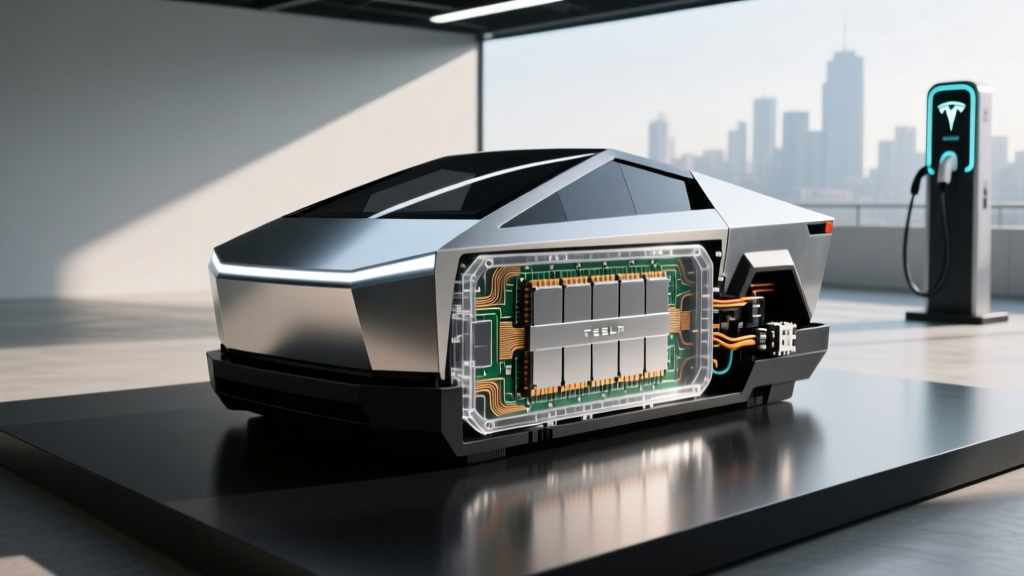
The Tesla Cybertruck uses a structural battery pack integrated into the vehicle's stainless steel exoskeleton. The AWD and Cyberbeast trims feature an estimated ~123 kWh usable battery capacity, built around Tesla's 4680-format cells. These cells use a nickel-based chemistry (NMC/NCA variant) with a dry-coated cathode and silicon-enhanced anode — a design Tesla has been refining since initial 4680 production began at Giga Texas.
The structural pack serves double duty: it stores energy and acts as a load-bearing component of the chassis. This integration reduces overall vehicle weight and increases torsional rigidity, but it also means that a full pack replacement is a more involved procedure than swapping a modular battery in an older EV platform. The pack is not designed to be user-serviceable or partially replaced — if cells fail beyond warranty thresholds, the entire structural unit is typically replaced as one assembly.
Cybertruck Cell Chemistry vs. Common EV Alternatives
| Attribute | Tesla 4680 (NMC/NCA) | LFP (Prismatic) | Legacy NMC 2170 |
|---|---|---|---|
| Energy Density | High (~260 Wh/kg cell-level) | Lower (~160-180 Wh/kg) | High (~250 Wh/kg) |
| Typical Cycle Life | 1,000–1,500 cycles | 3,000–5,000+ cycles | 1,000–1,500 cycles |
| Cold-Weather Performance | Better (nickel chemistry) | Reduced at low temps | Better |
| Cost per kWh | Mid-range (scaling down) | Lowest | Higher (legacy format) |
| Vehicles Using It | Cybertruck, Model Y (some) | Model 3 RWD, Model Y RWD | Model S/X, older Model 3/Y |
The trade-off is clear: the Cybertruck's nickel-based 4680 cells prioritize energy density and cold-weather range retention over the extreme cycle life that LFP (lithium iron phosphate) chemistry offers. For a heavy, 6,800+ lb truck needing 300+ miles of EPA-estimated range, that energy density is non-negotiable. LFP simply can't pack enough kWh into the available volume without adding unacceptable weight.
Cybertruck Battery Replacement Cost: The Real Numbers
Let's address the headline question directly. Based on Tesla service data, out-of-warranty estimates from independent EV shops, and comparable large-pack replacements across the industry, here is the current cost landscape for a Cybertruck battery replacement:
| Cost Component | Estimated Range | Notes |
|---|---|---|
| Battery Pack (Parts) | $20,000 – $30,000 | 123 kWh structural pack; 4680 cells |
| Labor (Removal & Install) | $2,000 – $4,500 | Structural pack requires chassis work |
| Coolant & Ancillary Parts | $500 – $1,200 | Thermal management fluid, seals, connectors |
| Diagnostics & Calibration | $300 – $800 | BMS reprogramming, software validation |
| Total Estimated Cost | $22,800 – $36,500 | Out-of-warranty, before tax or disposal credits |
For context, a Model 3 Long Range pack replacement (82 kWh, 2170 cells) typically runs $13,000–$18,000 out of warranty. The Cybertruck's larger capacity and structural integration push costs significantly higher. However, this figure must be weighed against probability: Tesla's own data and third-party fleet analyses indicate that the vast majority of EV battery packs last the lifetime of the vehicle without requiring full replacement.
When replacements do occur outside of warranty, they are most commonly triggered by:
- Manufacturing defects that manifest early (typically covered under warranty)
- Physical damage from collisions or underbody impacts (covered by insurance)
- Extreme degradation well beyond normal wear — rare with modern thermal management
Tesla's Battery Warranty: What's Actually Covered
Tesla provides a battery and drive unit warranty on the Cybertruck that is consistent with its other vehicles. Understanding the exact terms is essential before worrying about out-of-pocket replacement costs.
| Warranty Term | Cybertruck Coverage |
|---|---|
| Duration | 8 years or 120,000 miles (whichever comes first) |
| Capacity Retention Threshold | Minimum 70% of original capacity |
| What Triggers a Claim | Battery SoH drops below 70% under normal use |
| What's Covered | Repair or replacement of battery pack and drive unit |
| What's NOT Covered | Physical damage, misuse, unauthorized modifications, flood/fire |
| Transferable? | Yes — warranty follows the VIN, not the owner |
The 70% retention threshold is the industry standard — Tesla's warranty documentation aligns with federal requirements and matches competitors like Ford, Hyundai, and Rivian. In practical terms, a Cybertruck starting with ~123 kWh usable capacity would need to degrade below ~86 kWh for a warranty claim to apply. Given that the EPA-estimated range for the AWD trim is approximately 340 miles, a 70% threshold still leaves roughly 238 miles of range — more than adequate for most daily driving.
According to Tesla's Impact Report, the average Tesla battery retains approximately 88% of its original capacity after 200,000 miles. If this trend holds for the 4680 structural pack (and early fleet data suggests it will), most Cybertrucks will never approach the 70% warranty threshold during the warranty period — or likely ever.
EV Battery Degradation: What the Data Shows
Battery degradation is the gradual, irreversible loss of total capacity over time and charge cycles. It is not the same as range fluctuation from temperature or driving style. Here's what real-world data tells us about how EV batteries — including nickel-based packs like the Cybertruck's — degrade over time:
Typical Degradation Curve for NMC/NCA EV Batteries
| Milestone | Average Capacity Retained | Notes |
|---|---|---|
| Year 1 / 15,000 mi | ~95–97% | Initial "break-in" loss; steepest early drop |
| Year 3 / 45,000 mi | ~92–94% | Curve flattens significantly |
| Year 5 / 75,000 mi | ~89–92% | Linear, slow decline phase |
| Year 8 / 120,000 mi | ~85–89% | Still above warranty threshold |
| Year 10 / 150,000 mi | ~82–87% | Projected based on fleet data |
| Year 15 / 200,000+ mi | ~78–85% | End-of-life for most vehicles |
Sources: Tesla Impact Report fleet data, Recurrent Auto battery studies, Geotab fleet analysis. Individual results vary based on climate, charging habits, and thermal management.
The Cybertruck's active thermal management system — which includes liquid cooling and heating of the battery pack — is a critical factor in slowing degradation. Vehicles with robust thermal management consistently show lower degradation rates than passively cooled packs. The 4680 cell's tabless design also reduces internal resistance and heat generation during charging, which should theoretically improve longevity over older 2170-format cells.
Factors That Accelerate Battery Degradation
Not all miles are created equal when it comes to battery wear. Understanding what stresses a lithium-ion pack helps you make informed decisions about daily use and long-term care.
Battery Health Best Practices for Cybertruck Owners
- Avoid sustained 100% State of Charge: Nickel-based cells experience the most stress at the top and bottom of their SoC range. For daily driving, set your charge limit to 80–90%. Reserve 100% for road trips.
- Minimize DC fast charging when possible: Frequent use of 250 kW Superchargers generates significant heat. The Cybertruck's thermal management mitigates this, but Level 2 home charging (11.5 kW) remains gentler on the pack over thousands of cycles.
- Don't let the battery sit at very low SoC: Storing the Cybertruck below 10% for extended periods accelerates calendar degradation. If storing for weeks, aim for 50% SoC.
- Use preconditioning: The Cybertruck's navigation-to-charger feature automatically warms or cools the battery before you arrive at a Supercharger. This reduces charging stress and improves charge speed. Always navigate to a charger rather than driving there without a route set.
- Extreme heat is worse than extreme cold: While cold temporarily reduces range, sustained high ambient temperatures (100°F+) accelerate chemical degradation. Park in shade or garages when possible in hot climates.
- Don't obsess over perfection: The BMS (Battery Management System) handles the heavy lifting. Occasional 100% charges, DC fast charging on road trips, and cold-weather driving are all fine. The goal is consistent good habits, not anxiety-inducing perfection.
LFP vs. NMC/NCA: Why the Cybertruck Uses Nickel Cells
Tesla offers LFP (lithium iron phosphate) batteries in the Model 3 Rear-Wheel Drive and Model Y RWD, where the chemistry's lower energy density is acceptable because the vehicles are lighter and range targets are more modest. The Cybertruck is neither light nor modest.
At a curb weight exceeding 6,800 lbs (AWD trim) and a towing capacity of up to 11,000 lbs, the Cybertruck demands maximum energy density from its battery pack. LFP cells at ~160–180 Wh/kg would require a physically larger and heavier pack to achieve the same ~123 kWh capacity — adding weight that further reduces efficiency and range in a vicious cycle. Nickel-based 4680 cells at ~260 Wh/kg solve this problem.
The trade-offs are real, however:
- Cycle life: LFP cells can endure 3,000–5,000+ full charge cycles before reaching 80% capacity. Nickel cells typically manage 1,000–1,500 cycles. For a Cybertruck with 340 miles of range, 1,200 cycles equals roughly 408,000 miles — still well beyond the typical vehicle lifespan.
- Calendar aging: Both chemistries degrade over time regardless of use, but nickel cells are slightly more susceptible to capacity loss when stored at high SoC in hot conditions.
- Cost: LFP cells are cheaper to manufacture (no nickel or cobalt), which is why Tesla can price the Model 3 RWD lower. The Cybertruck's premium pricing absorbs the higher cell cost.
- Safety: LFP chemistry is inherently more thermally stable and less prone to thermal runaway. Nickel cells require more robust BMS and thermal management — which the Cybertruck has in abundance.
For Cybertruck owners, the nickel chemistry is the correct engineering choice. The energy density advantage is essential, and the longevity trade-off is largely academic given the cycle-life-to-mileage math above.
How to Check Your Cybertruck's Battery Health
Tesla does not expose a direct State of Health (SoH) percentage in the Cybertruck's touchscreen interface the way some competitors do. However, owners have several methods to monitor battery condition:
- Tesla App — Energy Screen: Track your Wh/mi consumption over time. A gradual increase in average consumption (e.g., from 400 Wh/mi to 430 Wh/mi over 30,000 miles) can indicate degradation, though driving style and tire condition also affect this metric.
- Range at Full Charge: Periodically charge to 100% and note the displayed range. Compare this to the original EPA estimate and your own baseline. Tesla's displayed range is calculated from the pack's current usable capacity, so a drop from 340 to 310 miles at 100% over two years suggests roughly 9% degradation.
- Third-Party OBD-II Tools: Devices like the OBDLink SX paired with apps such as TeslaFi or Scan My Tesla can read BMS-reported data including nominal full pack capacity, energy remaining, and cell voltage variance. This provides the closest approximation to a dealer-level SoH reading.
- Service Center Diagnostic: If you suspect abnormal degradation, a Tesla Service Center can run a full pack diagnostic. This is typically free if you have an active concern, and it generates an official SoH report that would support a warranty claim if needed.
Cell voltage variance is a particularly useful metric. In a healthy pack, all cell groups should read within 10–20 mV of each other at rest. Variance exceeding 50 mV may indicate an imbalanced or degraded cell group — something the BMS usually manages, but worth monitoring in high-mileage vehicles.
When Is a Battery Replacement Actually Needed?
The honest answer: for the overwhelming majority of Cybertruck owners, never during their ownership. Here's the realistic framework:
- Under 8 years / 120,000 miles: If degradation exceeds 30%, it's a warranty claim. Tesla replaces the pack at no cost. Manufacturing defects typically surface in the first 2–3 years and are covered.
- 8–12 years / 120,000–200,000 miles: Most packs will retain 78–88% capacity. You may notice reduced range but the vehicle remains fully functional. Replacement is rarely economically justified — you're more likely to sell or trade the vehicle.
- 200,000+ miles: If the pack drops below 70% and you intend to keep driving, an out-of-warranty replacement may be considered. At this mileage, however, the vehicle's resale value is typically lower than the replacement cost, making it a personal decision about the truck's overall condition.
Physical damage from accidents is a separate scenario. If the structural pack is compromised in a collision, insurance typically covers the replacement — and the cost is factored into the claim, not your pocket. The Cybertruck's stainless steel exoskeleton and reinforced underbody provide substantial pack protection, but severe impacts can still reach the battery.
Emerging Battery Technology: What's on the Horizon
While the Cybertruck's current 4680 cells represent the state of production-ready battery technology in 2026, several next-generation developments are in various stages of development:
- Silicon-dominant anodes: Tesla's 4680 cells already use a silicon-enhanced anode, but future iterations may increase silicon content further, boosting energy density by 10–20%. This is an incremental evolution already underway, not a distant promise.
- Solid-state batteries: Companies like Toyota, QuantumScape, and Samsung SDI have demonstrated solid-state prototypes with higher energy density and faster charging. However, mass production at automotive scale remains unproven. Realistic availability in a production vehicle like a future Cybertruck refresh: 2029–2032 at the earliest. Do not delay a purchase waiting for solid-state.
- Sodium-ion batteries: CATL and others have begun producing sodium-ion cells for lower-range, lower-cost applications. These are unlikely to appear in a heavy-duty truck like the Cybertruck due to their lower energy density, but they may power future compact EVs.
- Dry electrode manufacturing: Tesla's ongoing refinement of dry-coated electrode production (already used in 4680 cells) is steadily reducing manufacturing cost and energy consumption. This should translate to lower replacement pack costs over time.
The practical takeaway: battery technology improves incrementally every year, and replacement pack costs are trending downward as manufacturing scales. A Cybertruck battery replacement in 2035 will almost certainly cost less in real dollars than one in 2026.
Frequently Asked Questions
How long do Cybertruck batteries last in years and miles?
Based on Tesla's fleet data for nickel-based packs, the Cybertruck's 4680 battery should retain approximately 85–89% of its original capacity at 120,000 miles (8 years) and 78–85% at 200,000+ miles. In practical terms, this means the battery will likely outlast the vehicle's useful life. Most EVs are scrapped for reasons unrelated to battery failure — body damage, electronics issues, or simply owner upgrades.
How much does a Cybertruck battery cost to replace out of warranty?
Current estimates place a full structural pack replacement between $22,800 and $36,500, including parts, labor, coolant, and calibration. This is higher than most EVs due to the Cybertruck's ~123 kWh capacity and structural integration. However, this cost is only relevant if the pack fails outside the 8-year/120,000-mile warranty — which fleet data suggests is uncommon.
What does Tesla's Cybertruck battery warranty cover?
Tesla covers the battery pack and drive unit for 8 years or 120,000 miles, whichever comes first. If the pack degrades below 70% of its original capacity under normal use during that period, Tesla will repair or replace it at no cost. The warranty is transferable to subsequent owners and follows the vehicle's VIN.
Can I check my Cybertruck battery's State of Health myself?
Tesla doesn't display a direct SoH percentage on the touchscreen, but you can monitor capacity by charging to 100% and comparing the displayed range to your baseline. For more precise data, third-party OBD-II tools like TeslaFi can read BMS-reported nominal full pack capacity and cell voltage variance. A Tesla Service Center can also run a full diagnostic on request.
Is LFP better than the Cybertruck's NMC/NCA battery?
"Better" depends on the application. LFP offers superior cycle life (3,000–5,000 cycles vs. 1,000–1,500) and lower cost, but significantly lower energy density. For a 6,800+ lb truck needing 340 miles of range, LFP would require a heavier, larger pack that compromises efficiency and performance. The Cybertruck's nickel-based 4680 cells are the correct engineering choice for this vehicle's requirements.
Does frequent Supercharging damage the Cybertruck battery?
DC fast charging generates more heat than Level 2 charging, and heat is the primary accelerator of lithium-ion degradation. However, the Cybertruck's active liquid thermal management system significantly mitigates this effect. Occasional Supercharging on road trips has a negligible impact on long-term battery health. Daily Supercharging will accelerate degradation slightly compared to daily Level 2 home charging, but the difference is measured in single-digit percentage points over 100,000 miles — not a pack-killing concern.
Will a Cybertruck battery replacement cost less in the future?
Almost certainly, yes. Battery cell costs have declined approximately 80–90% over the past decade (from over $1,000/kWh to roughly $100–130/kWh at the cell level in 2026). As 4680 production scales and dry-electrode manufacturing matures, replacement pack costs should continue to decrease. A replacement in 2032–2035 may cost significantly less than today's estimates.