The Real Cost of Replacing Electric Car Batteries in 2026
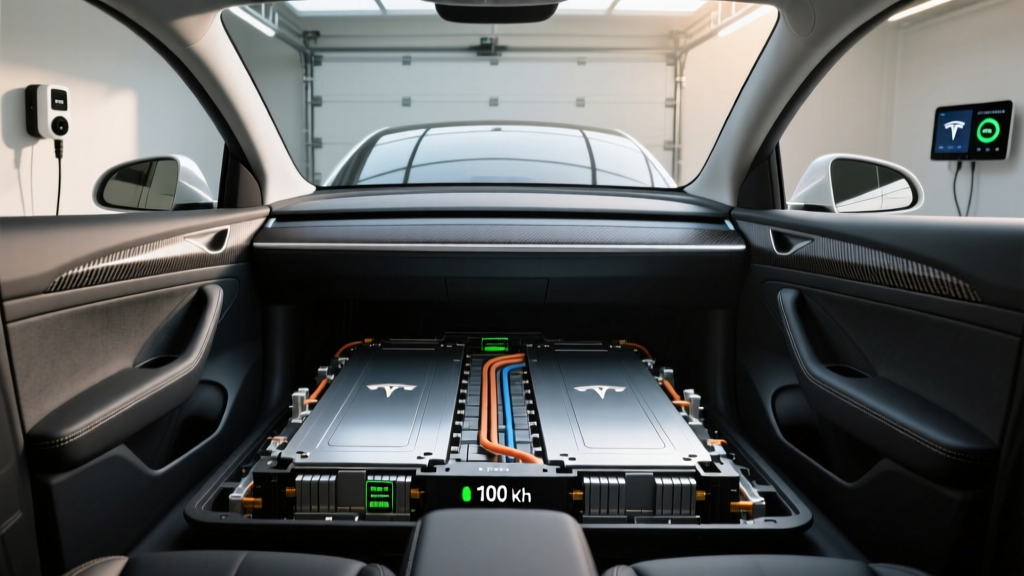
If you're researching the cost of replacing electric car batteries, you've probably seen headlines ranging from $5,000 to over $25,000. The truth depends heavily on the vehicle, battery size, chemistry, and whether you need a full pack replacement or a module-level repair. In 2026, the average out-of-warranty EV battery replacement runs between $5,500 and $22,000 for most mainstream models, though luxury and large-pack vehicles can exceed that.
Here's the critical context that most cost discussions miss: the vast majority of EV owners will never need to replace their traction battery. Modern lithium-ion packs are engineered to outlast the vehicle's useful life. According to data from manufacturer warranty claims and fleet operators, most batteries retain 85–95% of their original capacity after 150,000 miles. Catastrophic failure is rare; gradual degradation is the norm.
This guide breaks down exact replacement costs by model, degradation data from real-world fleets, warranty coverage specifics, and the chemistry choices that affect longevity and price.
How Much Does an EV Battery Cost to Replace?
Replacement cost is driven by battery capacity (measured in kWh), chemistry type, vehicle architecture, and labor complexity. Below are 2026 estimated out-of-warranty replacement costs for popular models, based on manufacturer service bulletins, dealer parts pricing, and independent EV shop data.
| Vehicle | Battery (kWh) | Chemistry | Est. Replacement Cost | Notes |
|---|---|---|---|---|
| Nissan Leaf (40 kWh) | 40 | NMC | $6,500 – $9,000 | Older architecture; module repair sometimes possible |
| Chevrolet Bolt EV/EUV | 65 | NMC | $9,000 – $14,000 | Post-recall pack; improved thermal management |
| Tesla Model 3 (Standard Range) | 60 (LFP) | LFP | $8,000 – $12,000 | LFP packs cost less per kWh; widely available |
| Tesla Model Y (Long Range) | 75 | NMC/NCA | $12,000 – $16,000 | Structural pack; labor-intensive removal |
| Hyundai Ioniq 5 (Long Range) | 77.4 | NMC | $11,000 – $15,500 | E-GMP platform; 800V architecture |
| Ford Mustang Mach-E (Extended Range) | 91 | NMC | $14,000 – $18,000 | Large pack; limited third-party options |
| Ford F-150 Lightning (Extended Range) | 131 | NMC | $18,000 – $25,000+ | Largest consumer pack; highest replacement cost |
| Rivian R1T/R1S (Max Pack) | 149 | NMC | $20,000 – $25,000+ | Proprietary pack; dealer-only replacement currently |
| BMW i4 eDrive40 | 81.5 | NMC | $14,000 – $19,000 | BMW dealer network required |
| Toyota bZ4X | 71.4 | NMC | $10,000 – $14,500 | Toyota offers 10-year/150,000-mi warranty |
Key cost factors:
- Battery size (kWh): The single biggest cost driver. At current pricing, replacement cells and packs average $130–$180 per kWh installed, though luxury and proprietary packs command premiums.
- Chemistry: LFP (lithium iron phosphate) cells are cheaper to produce than NMC (nickel manganese cobalt), translating to lower replacement costs.
- Labor: Structural battery packs (Tesla Model Y, some newer platforms) require more disassembly, adding $1,500–$3,000 in labor.
- Module vs. full pack: Some older vehicles (Nissan Leaf, early BMW i3) allow individual module replacement at $1,500–$4,000 per module, though this is becoming less common as integrated packs dominate.
How Long Do EV Batteries Last? Degradation Data
EV batteries don't "die" like a phone battery might — they gradually lose capacity over time and charge cycles. The industry defines end-of-life as the point where a battery can no longer hold 70–80% of its original capacity. For most modern EVs, reaching that threshold takes well beyond typical ownership periods.
Real-World Degradation Benchmarks
Based on aggregated fleet data, owner reports, and manufacturer studies:
| Milestone | Typical Capacity Retained | Range Impact (example: 300-mi EPA vehicle) |
|---|---|---|
| 1 year / 15,000 miles | 95–98% | ~285–294 miles effective |
| 3 years / 45,000 miles | 90–95% | ~270–285 miles effective |
| 5 years / 75,000 miles | 86–93% | ~258–279 miles effective |
| 8 years / 120,000 miles | 80–90% | ~240–270 miles effective |
| 10 years / 150,000 miles | 75–88% | ~225–264 miles effective |
| 15 years / 200,000+ miles | 70–82% | ~210–246 miles effective |
Sources: Recurrent Auto fleet data, Tesla Impact Reports, Geotab longitudinal study.
Several important nuances:
- LFP batteries generally show slower degradation than NMC, often retaining 90%+ capacity at 100,000 miles. Tesla's LFP-equipped Model 3 Standard Range vehicles have demonstrated this in fleet data.
- Early rapid degradation (2–5% in the first year) is normal — this is the battery "settling." The curve flattens significantly afterward.
- Calendar aging matters alongside mileage. A 10-year-old EV with 40,000 miles may show similar degradation to one with 80,000 miles, because chemical processes continue regardless of use.
- Thermal management is the biggest differentiator. Liquid-cooled packs (Tesla, Hyundai E-GMP, Ford, GM Ultium) degrade far slower than passively cooled packs (older Nissan Leaf).
What Does the EV Battery Warranty Cover?
Federal law mandates a minimum 8-year/100,000-mile warranty on EV battery packs. In California and states that follow CARB (California Air Resources Board) emissions standards, that extends to 10 years/150,000 miles. Many manufacturers exceed these minimums.
| Manufacturer | Warranty Period | Capacity Threshold | CARB-State Extension |
|---|---|---|---|
| Tesla (Model 3/Y LFP) | 8 yr / 120,000 mi | 70% retention | Not specified beyond federal |
| Tesla (Model 3/Y Long Range) | 8 yr / 120,000 mi | 70% retention | Not specified beyond federal |
| Hyundai / Kia (E-GMP) | 10 yr / 100,000 mi | 70% retention | Varies; check dealer |
| GM (Ultium platform) | 8 yr / 100,000 mi | 70% retention (60% for Bolt) | 10 yr / 150,000 mi in CARB states |
| Ford (Mach-E, Lightning) | 8 yr / 100,000 mi | 70% retention | Varies by state |
| Toyota (bZ4X) | 10 yr / 150,000 mi | 70% retention | Standard nationwide |
| Volkswagen (ID.4) | 8 yr / 100,000 mi | 70% retention | Varies by state |
| Rivian | 8 yr / 175,000 mi | 70% retention | Not specified |
| BMW | 8 yr / 80,000 mi | 70% retention | Varies by state |
What triggers a warranty claim:
- The battery falls below the stated capacity threshold (usually 70% of original kWh) within the warranty period.
- A manufacturing defect causes cell failure, thermal fault, or electrical malfunction.
- The warranty covers parts and labor for replacement or repair to bring the pack above the threshold.
What voids a warranty:
- Unauthorized modifications to the battery management system (BMS) or powertrain.
- Using non-approved charging equipment that causes damage (rare but documented).
- Physical damage from collisions, flooding, or underbody impacts.
- Failure to follow manufacturer service intervals (coolant checks, BMS diagnostics).
According to fueleconomy.gov, battery warranty claims remain rare — most manufacturers report claim rates well under 1% of vehicles sold.
LFP vs NMC Battery Chemistry: Longevity and Cost Trade-Offs
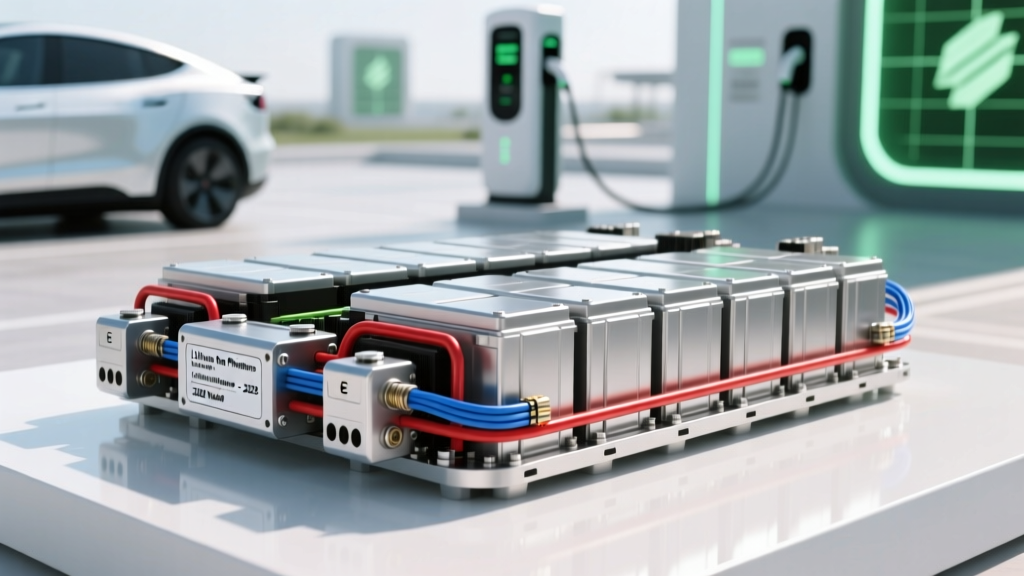
Battery chemistry directly affects replacement cost, degradation rate, and usable lifespan. The two dominant chemistries in 2026 consumer EVs are LFP (lithium iron phosphate) and NMC (nickel manganese cobalt), with NCA (nickel cobalt aluminum) appearing in some Tesla and Panasonic cells.
| Attribute | LFP (Lithium Iron Phosphate) | NMC (Nickel Manganese Cobalt) |
|---|---|---|
| Energy Density | Lower (~160–180 Wh/kg cell-level) | Higher (~220–280 Wh/kg cell-level) |
| Cycle Life | 3,000–5,000+ cycles to 80% | 1,000–2,500 cycles to 80% |
| Calendar Aging | Slower degradation at rest | Moderate; temperature-dependent |
| Cold-Weather Performance | Weaker — more range loss below 32°F | Better low-temp discharge capability |
| Charging to 100% | Can charge to 100% daily without significant harm | Best kept at 80% daily; 100% for trips only |
| Cost (cell-level) | ~$80–$110/kWh | ~$110–$150/kWh |
| Thermal Stability | Excellent — lower thermal runaway risk | Good with active thermal management |
| Common Vehicles (2026) | Tesla Model 3 RWD, some BYD models, entry-level packs | Most long-range EVs: Model Y LR, Ioniq 5, Mach-E, F-150 Lightning |
| Replacement Cost Impact | Lower per-kWh cost; longer lifespan | Higher per-kWh cost; may need replacement sooner in high-use scenarios |
Which is better for longevity? LFP wins on pure cycle life and tolerance for full-charge habits. If you plan to keep your EV for 15+ years or drive high annual mileage, LFP offers a measurable advantage. NMC wins on range-per-kWh and cold-weather usability — the reason most long-range and AWD models still use it.
Which is cheaper to replace? LFP, by a meaningful margin. A 60 kWh LFP pack replacement may cost $8,000–$12,000, while a 77 kWh NMC pack in a comparable vehicle runs $11,000–$15,500. The gap widens for larger packs.
Factors That Accelerate Battery Degradation
While modern BMS (battery management systems) protect the pack from the worst abuse, owner habits still influence long-term health. Based on data from Geotab's study of 6,300+ EVs, these factors measurably accelerate degradation:
What Hurts Battery Health
- Frequent DC fast charging (3+ times/week): Adds ~1–3% additional degradation over 100,000 miles compared to predominantly Level 2 charging. The high current and heat stress cells. Occasional road-trip fast charging is fine.
- Routinely charging to 100% (NMC batteries): Sustained high state of charge stresses NMC cathodes. Tesla, Ford, and Hyundai all recommend 80% daily limits for NMC vehicles.
- Letting the battery sit at 0% or near-zero for days: Deep discharge can cause copper dendrite formation and permanent cell damage. Keep storage SoC between 30–60%.
- Extreme heat exposure: Prolonged parking in 100°F+ ambient temps without thermal management active. Liquid-cooled packs mitigate this, but passive-cooled vehicles (older Leaf) are vulnerable.
- Extreme cold charging without preconditioning: Charging a frozen battery at high power causes lithium plating on the anode — permanent capacity loss. Always precondition in winter.
What Preserves Battery Health
- Level 2 home charging as your primary method: Slower charge rates generate less heat.
- Keep daily SoC between 20–80% (NMC) or 0–100% (LFP): Follow manufacturer guidance for your chemistry.
- Use scheduled charging/departure features: These minimize time spent at high SoC and enable preconditioning.
- Park in shade or a garage during extreme heat: Reduces calendar aging from thermal exposure.
- Drive regularly: Batteries prefer moderate, regular use over long idle periods.
How to Check Your EV Battery Health (State of Health)
State of Health (SoH) is the percentage of original capacity your battery can currently hold. A new battery is 100% SoH; one that holds 60 kWh of its original 75 kWh is at 80% SoH.
Methods to Check SoH
1. In-vehicle diagnostics: Many 2024+ EVs display battery health in the settings menu. Tesla shows degradation curves in the app. Hyundai/Kia provides SoH percentage via the infotainment system on newer models. Check your owner's manual for the exact path.
2. OBD-II dongle + app: Third-party tools like OBDeleven, Leaf Spy (Nissan Leaf), or Scan My Tesla can read BMS data directly, including SoH, cell voltage variance, and cycle count. A quality OBD-II adapter costs $30–$80.
3. Dealer diagnostic check: Most dealers can pull a full battery health report during service visits. Some manufacturers (Hyundai, BMW) include this in scheduled maintenance. Ask specifically for a "battery capacity test" or "SoH report."
4. Third-party EV inspection services: Companies like Recurrent and certified EV inspectors can provide independent battery health assessments — useful when buying a used EV.
5. Manual range tracking: Charge to a known SoC (e.g., 80%), note the displayed range, and compare to the original EPA range at the same SoC. This is imprecise (temperature and driving style affect displayed range) but gives a rough trend over time.
When to be concerned: If your SoH drops below 80% within the warranty period, you likely qualify for a warranty replacement or repair. If you're seeing more than 3–4% degradation per year after the first year, consult your dealer.
When Is Battery Replacement Actually Needed?
Most EV batteries are replaced for one of three reasons:
- Physical damage: Collision, flood, or underbody impact that compromises the pack enclosure. This is typically covered by collision insurance, not the battery warranty.
- Manufacturing defect: Cell imbalance, internal short, or BMS failure. Covered under warranty if within the coverage period.
- Capacity degradation below usability threshold: When range loss makes the vehicle impractical for the owner's needs. This is rare before 200,000+ miles on liquid-cooled packs.
The narrative that EV batteries need replacement every 5–8 years like a timing belt is not supported by data. According to Recurrent's analysis of over 15,000 EVs, fewer than 1.5% of vehicles required battery replacement outside of recall campaigns. The battery is, in practice, one of the most durable components in an electric vehicle.
Emerging Battery Tech: Solid-State and Beyond
Looking forward, next-generation battery chemistries promise to further reduce replacement costs and extend lifespans:
- Solid-state batteries: Companies like Toyota, QuantumScape, and Samsung SDI are developing solid-state cells that replace the liquid electrolyte with a solid material. Promised benefits include 2–3x cycle life, faster charging, and improved safety. Toyota has announced solid-state EVs for limited production around 2027–2028, but mass-market availability remains preliminary and unconfirmed for most buyers before 2030.
- Silicon-dominant anodes: Replacing graphite anodes with silicon can boost energy density by 20–40%. Companies like Sila Nanotechnologies and Group14 are supplying early production cells. Expect these in premium models by 2027–2028.
- Sodium-ion batteries: CATL and BYD are producing sodium-ion cells for lower-cost, shorter-range EVs. These use no lithium or cobalt, potentially slashing replacement costs. US-market availability is announced but not yet confirmed for 2026–2027 models.
These technologies are worth tracking but should not influence a current purchase decision. Today's lithium-ion batteries already deliver 15–20 year usable lifespans for most owners.
Frequently Asked Questions
How long do EV batteries last in years and miles?
Most modern liquid-cooled EV batteries last 15–20 years or 200,000+ miles before degrading to 70–80% capacity. LFP chemistries often exceed this. Passively cooled older vehicles (pre-2018 Nissan Leaf) may see faster degradation at 10–12 years.
How much does it cost to replace an electric car battery?
In 2026, out-of-warranty replacement costs range from approximately $5,500 for smaller packs (40 kWh, older models) to $25,000+ for large packs (130+ kWh in trucks and luxury SUVs). Most mainstream crossovers and sedans fall in the $9,000–$16,000 range including labor.
Does my car insurance cover battery replacement?
Collision and comprehensive coverage typically covers battery damage from accidents, flooding, or falling objects. Insurance does not cover degradation or wear. If the battery fails within the manufacturer's warranty period, the warranty — not insurance — applies.
Can I replace just part of the battery instead of the whole pack?
Some vehicles (older Nissan Leaf, BMW i3) support module-level replacement, which can cost $1,500–$4,000 per module. Most modern EVs use integrated, structurally bonded packs that require full replacement. Check with your dealer or a qualified EV service center.
Is it worth replacing the battery on an older EV?
It depends on the vehicle's overall condition, the replacement cost relative to the car's value, and your needs. A $9,000 battery replacement on a well-maintained vehicle worth $18,000 may make sense. A $20,000 replacement on a $15,000 vehicle usually does not. Consider the total cost versus purchasing a newer EV with a fresh warranty.
Do EV batteries degrade in cold climates?
Cold weather causes temporary range loss (15–30% at 20°F) but does not cause permanent degradation as long as the battery is preconditioned before charging. Permanent damage occurs when charging a frozen battery at high power without preconditioning — modern BMS systems prevent this by limiting charge rate until the pack warms.
LFP vs NMC — which battery chemistry is better?
LFP offers longer cycle life, lower replacement cost, and tolerance for daily 100% charging, but has lower energy density and worse cold-weather range. NMC provides more range per kWh and better cold performance, but degrades faster if routinely charged to 100%. For high-mileage, long-ownership buyers, LFP has the edge. For maximum range and cold-climate drivers, NMC is preferred.
Where can I find official warranty and battery information?
Check your vehicle's owner's manual, the manufacturer's website, or fueleconomy.gov for EPA and warranty data. For federal tax credit eligibility related to battery sourcing, consult the IRS §30D guidance.