Why the Cost of Battery Storage Per kWh Matters for EV Owners
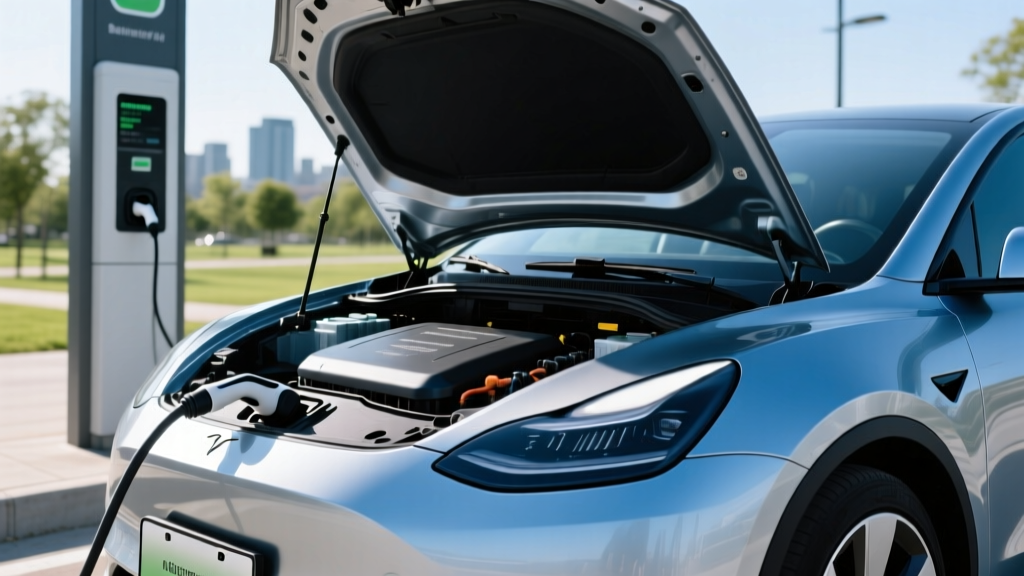
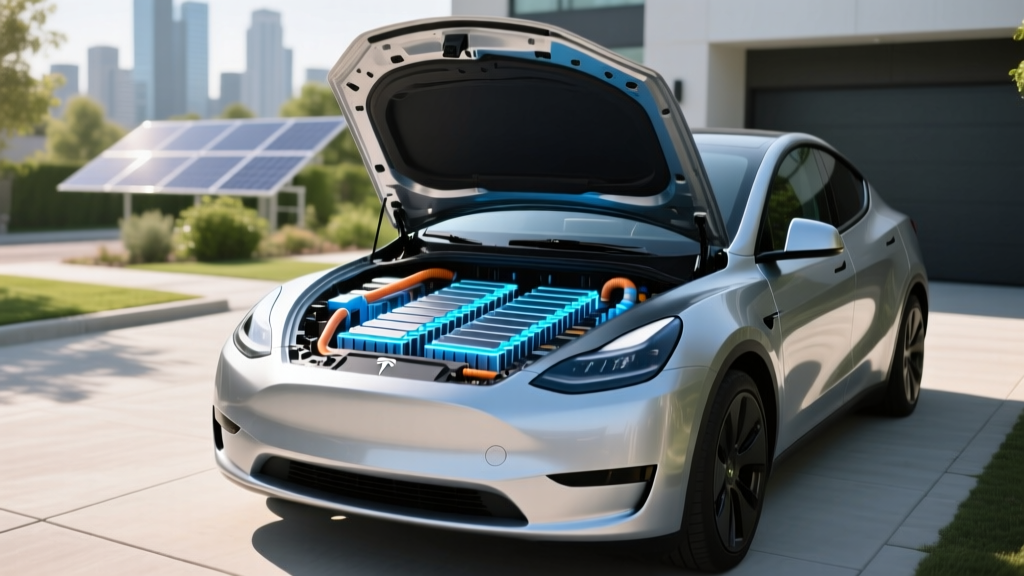
The single most expensive component in any electric vehicle is its high-voltage traction battery. For a 2026 model-year EV with a 75–100 kWh pack, the battery represents roughly 25–40% of the vehicle's total manufacturing cost. Understanding the cost of battery storage per kWh isn't just an academic exercise for industry analysts — it directly shapes the price you pay at the dealership, the long-term value of your vehicle, and the (rare but real) expense of an out-of-warranty replacement.
As of early 2026, industry-average battery pack pricing has settled to approximately $110–$140 per kWh at the cell-to-pack level, according to BloombergNEF and BloombergNEF's annual battery price survey. That's a dramatic drop from the $1,200/kWh seen in 2010 and the ~$150/kWh of 2022. But what does that translate to for a real buyer facing a potential replacement, or comparing chemistries when choosing a new EV? Let's break it down with exact numbers.
LFP vs NMC/NCA: Chemistry Trade-Offs That Affect Cost Per kWh
Not all kWh are created equal. The two dominant lithium-ion chemistries in 2026 EVs — LFP (lithium iron phosphate) and NMC/NCA (nickel manganese cobalt / nickel cobalt aluminum) — deliver different trade-offs in energy density, cycle life, cold-weather performance, and raw cost.
| Attribute | LFP (Lithium Iron Phosphate) | NMC / NCA (Nickel-Based) |
|---|---|---|
| Cell-level cost (2026 est.) | $75–$95/kWh | $100–$130/kWh |
| Energy density (cell-level) | 160–180 Wh/kg | 220–300 Wh/kg |
| Typical cycle life (to 80% SoH) | 3,000–5,000+ cycles | 1,000–2,000 cycles |
| Cold-weather performance | Moderate — greater range loss below 32°F | Better low-temp discharge capability |
| Max recommended daily SoC | 100% (no penalty) | 80% for daily; 100% for trips |
| Common in (2026 examples) | Tesla Model 3 RWD, BYD Seal, Ford Mustang Mach-E Select (LFP variant) | Hyundai Ioniq 5, Chevy Equinox EV, Tesla Model Y Long Range, BMW iX |
| Thermal runaway risk | Very low | Low, but higher than LFP |
Which is better? It depends on your use case. If you prioritize longevity and plan to keep your EV for 10+ years or 200,000+ miles, LFP's superior cycle life and tolerance for 100% daily charging make it the pragmatic pick — even though you sacrifice some range per pound. If you need maximum range in a lighter package (for towing, road trips, or cold climates), NMC/NCA still wins on energy density. From a pure cost per kWh standpoint, LFP is 20–30% cheaper at the cell level, and that savings increasingly shows up in base-trim MSRPs.
How Long Do EV Batteries Actually Last? Real Degradation Data
The fear that EV batteries need frequent, expensive replacement is the single biggest misconception in the EV space. The data tells a different story: most modern packs are engineered to outlast the vehicle itself.
Typical degradation curve (NMC and LFP, 2020–2026 model years):
- Year 1 / 15,000 mi: 2–4% capacity loss (initial settling)
- Year 3 / 45,000 mi: 5–8% total loss
- Year 5 / 75,000 mi: 7–10% total loss
- Year 8 / 120,000 mi: 10–15% total loss
- Year 10 / 150,000 mi: 12–18% total loss (LFP often at the lower end)
These figures align with large-scale fleet data published by Geotab's battery health study, which tracked over 10,000 EVs. The average annual degradation rate across all chemistries was approximately 1.8% per year, and the rate slows significantly after the first two years. Tesla's own 2024 Impact Report showed its fleet retaining an average of 85% capacity at 200,000 miles.
Put another way: a 2026 Hyundai Ioniq 5 with a 77.4 kWh NMC battery and an EPA-estimated 305 miles of range will likely still deliver ~260–275 real-world miles at 100,000 miles — still more than adequate for daily driving.
Battery Warranty Terms: What's Covered and What Isn't
Federal law mandates a minimum EV battery warranty of 8 years / 100,000 miles (10 years / 150,000 miles in CARB states like California, New York, and Massachusetts). Most manufacturers meet or exceed this baseline.
| Manufacturer (2026 MY) | Warranty Period | Capacity Retention Threshold |
|---|---|---|
| Tesla (Model 3 / Y) | 8 yr / 120,000 mi (LR/AWD); 8 yr / 100,000 mi (RWD) | 70% |
| Hyundai / Kia | 10 yr / 100,000 mi | 70% |
| Ford (Mach-E, F-150 Lightning) | 8 yr / 100,000 mi | 70% |
| General Motors (Ultium-based) | 8 yr / 100,000 mi | 70% |
| BMW | 8 yr / 100,000 mi | 70% |
| Rivian | 8 yr / 175,000 mi | 70% |
What triggers a warranty claim? If your battery's State of Health (SoH) drops below the stated threshold (typically 70% of original capacity) within the warranty period, the manufacturer must repair or replace it at no cost. In practice, very few owners ever hit this threshold. The warranty covers defects and abnormal degradation — it does not cover physical damage from collisions, flooding, or unauthorized modifications.
EV Battery Replacement Cost: What You'd Actually Pay
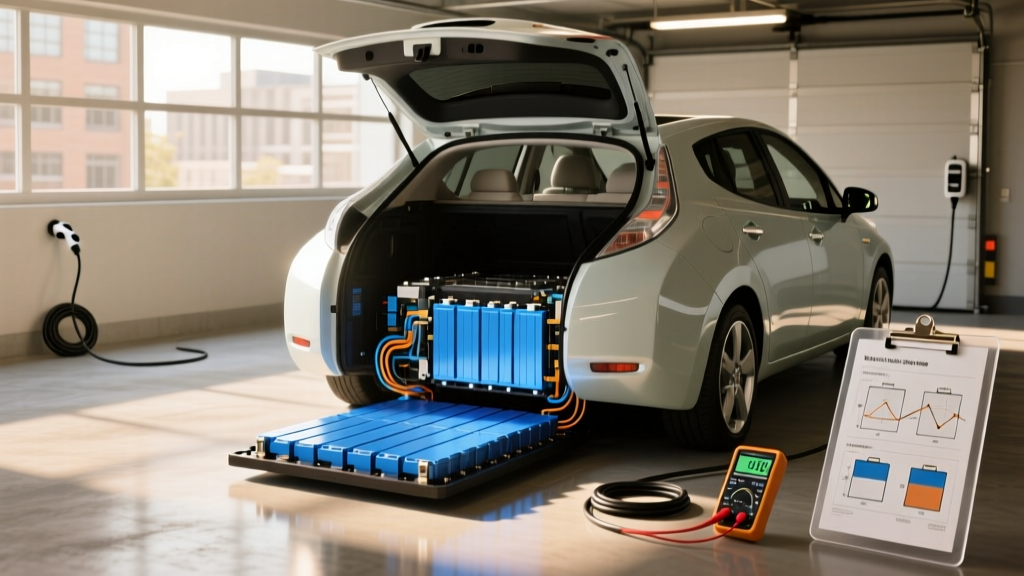
Out-of-warranty battery replacement remains the elephant in the room for used-EV buyers and long-term owners. Here's what the numbers look like in 2026, reflecting both OEM replacement packs and the declining cost of battery storage per kWh at the wholesale level.
| Vehicle / Battery Size | Chemistry | Est. Replacement Cost (Parts + Labor) | Typical Replacement Timeline |
|---|---|---|---|
| Tesla Model 3 RWD (60 kWh, LFP) | LFP | $8,000–$11,000 | Rarely needed before 250,000+ mi |
| Hyundai Ioniq 5 (77.4 kWh) | NMC | $12,000–$16,000 | 200,000+ mi under normal use |
| Ford F-150 Lightning Extended (131 kWh) | NMC | $20,000–$28,000 | 200,000+ mi |
| Chevrolet Equinox EV (85 kWh) | NMC (Ultium) | $13,000–$17,000 | 200,000+ mi |
| BMW iX xDrive50 (111.5 kWh) | NMC | $18,000–$25,000 | 200,000+ mi |
Two critical context points: First, most EV batteries never need full replacement. Module-level repairs (replacing a few degraded cells rather than the entire pack) are increasingly common and cost $2,000–$5,000. Second, by the time a 2026 EV needs an out-of-warranty battery in the mid-2030s, replacement costs will likely be 30–50% lower than today's figures thanks to continued declines in the cost of battery storage per kWh and the maturation of the refurbished-pack market.
Factors That Accelerate (or Preserve) Battery Health
Degradation isn't purely a function of time. How you charge, drive, and store your EV has a measurable impact on long-term State of Health.
- Avoid chronic DC fast charging: Occasional road-trip fast charging is fine, but daily use of 150+ kW DC chargers can accelerate degradation by 1–3% over 5 years compared to Level 2 home charging. The heat generated at high charge rates stresses cell chemistry.
- Manage State of Charge (SoC) habits: For NMC/NCA batteries, set your daily charge limit to 80% and only charge to 100% when you need the full range. LFP batteries are the exception — manufacturers like Tesla and BYD recommend periodic 100% charges for accurate BMS calibration.
- Minimize extreme-temperature exposure: Parking in a garage during sub-20°F winters or extreme summer heat reduces thermal stress. Preconditioning your battery (warming it via the app before driving or charging) is one of the most effective things you can do in cold climates.
- Don't let your EV sit at 0% or 100% for extended periods: If storing for more than a week, aim for 40–60% SoC. Leaving a fully charged EV unplugged in a hot garage for weeks accelerates calendar degradation.
- Use regenerative braking wisely: Moderate regen settings reduce the charge/discharge micro-cycles that contribute to wear, though the effect is minor compared to SoC and temperature management.
How to Check and Monitor Your Battery's State of Health
Knowing your battery's State of Health (SoH) — the percentage of original capacity remaining — is essential for resale value, warranty claims, and peace of mind.
OEM methods: Most 2026 EVs display SoH or a battery health indicator in the vehicle's infotainment system or companion app. Tesla provides a battery health readout under Settings > Service. Hyundai's Bluelink app shows estimated range vs. original, from which SoH can be derived. BMW's iDrive includes a dedicated battery health screen.
Third-party tools: OBD-II dongles paired with apps like OBDeleven, Leaf Spy (for Nissan Leaf), or Scan My Tesla can pull granular cell-level data including individual module voltage variance, which is a more sensitive health indicator than overall SoH. Services like Recurrent Auto offer battery health reports that compare your degradation to a fleet average for your specific model.
When to be concerned: If you observe a sudden drop in range that doesn't correlate with temperature (e.g., losing 15%+ range in mild weather over a few weeks), or if individual cell voltage variance exceeds 200 mV, schedule a dealer diagnostic. This could indicate a failing module rather than normal degradation.
Emerging Battery Technology: What's Next and When
The cost of battery storage per kWh will continue to decline as new chemistries and manufacturing techniques reach production scale. Here's a realistic timeline for the technologies most likely to affect EV buyers:
Solid-state batteries: Promising 30–50% higher energy density, faster charging (potentially 10–80% in under 10 minutes), and improved safety, solid-state cells replace the liquid electrolyte with a solid ceramic or polymer layer. Toyota, Samsung SDI, and QuantumScape have all demonstrated prototype cells, but mass production at automotive scale remains the bottleneck. Realistic timeline: limited production in luxury EVs beginning 2028–2029; mainstream availability 2031–2033. Expect early solid-state EVs to carry a significant price premium.
Silicon-dominant anodes: Replacing graphite anodes with silicon can boost energy density by 20–40%. Companies like Sila Nanotechnologies and Group14 are already supplying silicon-carbon composite anodes for 2025–2026 model-year vehicles (notably in the Mercedes-Benz G-Class EV and select Panasonic cells). This is not a future promise — it's shipping now, incrementally reducing the cost per kWh of next-gen packs.
Sodium-ion batteries: CATL and BYD have begun producing sodium-ion cells for lower-cost, shorter-range EVs in China. Sodium-ion eliminates lithium and cobalt entirely, with cell costs potentially below $60/kWh. Realistic US timeline: 2028+ for entry-level EVs or as range-extender supplements. Energy density is 30–40% lower than LFP, limiting range, but for urban commuter EVs, the economics are compelling.
All of these technologies are announced or in limited production — none are widely available in 2026 US-market EVs. Buyers should make purchasing decisions based on today's proven LFP and NMC chemistries, which already deliver excellent longevity and value.
Frequently Asked Questions
How long do EV batteries last in years and miles?
Most 2026-era EV batteries are designed to retain 70–85% of original capacity after 150,000–200,000 miles (roughly 10–15 years of average US driving at 13,500 miles/year). LFP chemistries often exceed 3,000 full charge cycles before hitting 80% SoH, which translates to well over 200,000 miles. Complete battery failure before 200,000 miles is statistically rare.
How much does an EV battery cost to replace in 2026?
Out-of-warranty replacement costs range from approximately $8,000 for a smaller LFP pack (e.g., Tesla Model 3 RWD, 60 kWh) to $28,000 for a large NMC pack (e.g., F-150 Lightning Extended Range, 131 kWh). These costs include parts and labor. However, the vast majority of EVs never require a full pack replacement — module-level repairs at $2,000–$5,000 are more common when issues arise.
What does the EV battery warranty actually cover?
Federal minimum is 8 years / 100,000 miles (10 years / 150,000 miles in CARB states). The warranty guarantees the battery will retain at least 70% of its original capacity. If degradation exceeds that threshold within the warranty period, the manufacturer replaces or repairs the battery at no cost. Physical damage, unauthorized modifications, and improper storage are excluded.
How do I check my EV battery's health?
Use your vehicle's built-in battery health screen (available on most 2026 models via the infotainment system or companion app). For more granular data, an OBD-II scanner with EV-specific software can read individual cell voltages and State of Health percentage. Third-party services like Recurrent Auto provide comparative fleet reports.
LFP vs NMC — which battery chemistry should I choose?
Choose LFP if you prioritize longevity, plan to keep your EV 10+ years, charge at home daily (LFP tolerates 100% SoC), and don't need maximum range. Choose NMC/NCA if you need the longest possible range per charge, regularly drive in very cold climates, or tow heavy loads. Both chemistries are proven and well-warranted — the "right" choice depends entirely on your driving profile.
Is the cost of battery storage per kWh still dropping?
Yes. Industry-wide pack-level costs have fallen from over $1,200/kWh in 2010 to approximately $115–$140/kWh in 2025–2026, per BloombergNEF data. Continued declines are expected as LFP adoption grows, manufacturing scales, and silicon-anode and sodium-ion technologies mature. This trend directly reduces both new-vehicle pricing and eventual replacement costs.